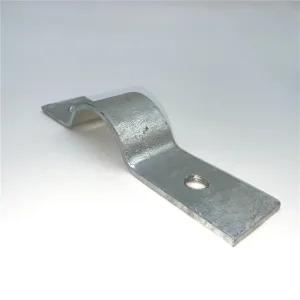
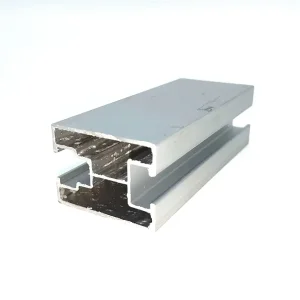
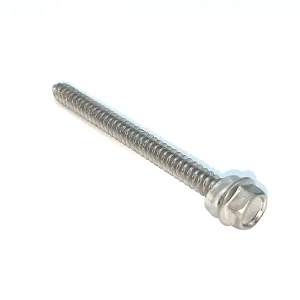
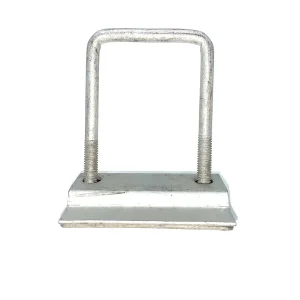
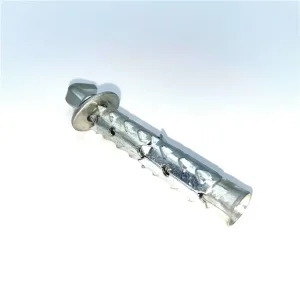
Primary Industrial Lineup: Solar PV Pressure Plates & Fasteners
Featured OEM/ODM certified single and multi-hole clamping components manufactured directly in China's fastener hub.
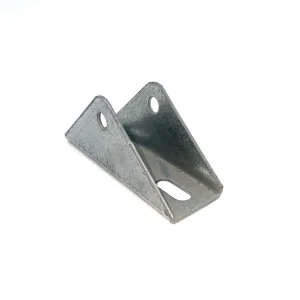
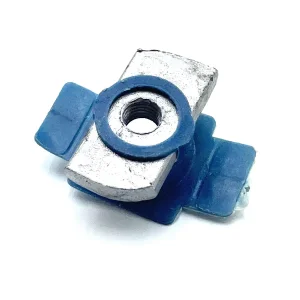
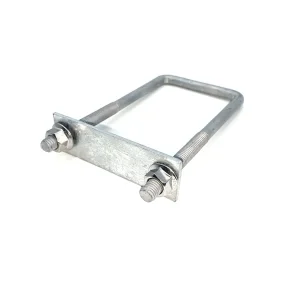

Global Industrial Landscape & Single Hole Clamping Systems
A comprehensive examination of single-hole pressure plate mechanical design, finite element load dispersion, and market adoption across utility-scale photovoltaic infrastructure.
Mechanical Structural Optimization
Single hole pressure plates (often serving as end clamps and mid clamps in solar framing) are engineered to concentrate clamping load without introducing localized stress cracking to panel glass or frame flanges. Modern cold-forged and precision-extruded profiles distribute torque loads evenly across contact margins.
Metallurgical Superiority & Alloys
Manufactured using structural-grade AL6005-T5/T6 and hot-dip galvanized Q235B/Q355B carbon steel, these plates maintain ultimate tensile strengths surpassing 260 MPa. Anodized surface oxide film thicknesses (≥12μm) prevent galvanic micro-corrosion when mated with stainless hardware.
Field Assembly & Velocity Gains
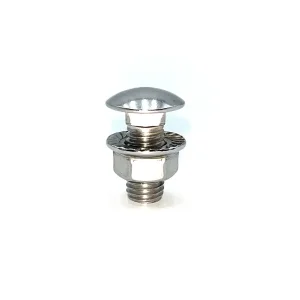
The single-hole mounting architecture enables rapid pre-assembly with T-head bolts and anti-rotation springs. EPC field data indicates a 35% reduction in installation man-hours per megawatt compared to multi-fastener configurations, substantially lowering balance of system (BOS) costs.
Supply Chain Resilience & Handan Yongnian Manufacturing Scale
Why China's "Fastener Capital" ecosystem establishes an unassailable commercial and manufacturing benchmark for global structural solar mounting procurement.
Agglomeration Ecosystem
Situated in Yongnian District, Handan City, manufacturers operate within the world's dense fastener manufacturing cluster. Immediate colocation with billet casting, cold heading, hot-dip galvanizing, and automated anodizing facilities reduces domestic intra-logistics lead times to hours.
Vertical QC Integration
From metallurgical spectroscopic alloy verification at coil intake to ISO 9227 salt spray testing and UTM static tensile testing, strict random inspection protocols ensure zero batch variance across million-unit production runs intended for overseas export.
High-Throughput Automation
Automated progressive stamping dies and CNC punching stations operate at throughput speeds in excess of 120 cycles per minute. Integrated optical sorting equipment filters out minor burrs or hole-pitch deviations down to ±0.05mm tolerance limits automatically.
Engineering Specifications: Single-Hole Clamping Hardware
Technical benchmarks for structural design engineers, project developers, and EPC procurement specialists.
| Parameter / Metric | Anodized Aluminum (AL6005-T5/T6) | Hot-Dip Galvanized Carbon Steel (Q235B) | Austenitic Stainless Steel (SUS304 / SUS316) |
|---|---|---|---|
| Yield Strength (Rp0.2) | ≥ 240 MPa | ≥ 235 MPa | ≥ 205 - 220 MPa |
| Tensile Strength (Rm) | ≥ 260 MPa | 370 – 500 MPa | ≥ 520 MPa |
| Surface Protection | Anodized Clear / Black (10–15 μm) | Hot-Dip Galvanized (≥ 65 μm / 500g/m²) | Passivated / Electro-polished |
| Corrosion Class (ISO 9223) | C1 to C3 (Commercial & Inland) | C3 to C4 (Industrial & Agricultural) | C4 to C5-M (Marine & Chemical) |
| Standard Fastener Hole Pitch | Ø9.0mm / Ø11.0mm (For M8 / M10 Bolts) | Ø11.0mm / Ø13.0mm (For M10 / M12 Bolts) | Ø9.0mm / Ø11.0mm (Customizable) |
| Typical Wind Load Resistance | Up to 60 m/s (System Verified) | Up to 65 m/s | Up to 70 m/s Extreme Load |
Industrial Use-Cases & Environmental Deployments
Engineered hardware configurations tailored to diverse topographical challenges and operational environments worldwide.
Commercial & Industrial (C&I) Rooftops
Trapezoidal metal sheets, standing seam profiles, and concrete flat roofs require lightweight clamping systems that deliver high pull-out resistance without adding excessive dead load. Single hole pressure plates provide precise module framing alignment in high-wind conditions.
Utility-Scale Ground Arrays
Covering hundreds of hectares, ground-mount tracker and fixed-tilt systems demand extreme component repeatability. Our single hole plates integrate ribbed contact serrations that bite through anodized oxide coatings on PV module flanges, maintaining continuous electrical grounding continuity.
Coastal & Offshore Solar Farms
Near-shore floating PV (FPV) and island microgrids experience persistent salt fog, high humidity, and cyclic wave vibration. Pairing SUS316 single hole pressure plates with UV-stabilized EPDM isolation buffers stops bimetallic galvanic degradation for 25+ years.
Industry Trends & Next-Generation Hardware Design
How evolving module form factors, bifacial generation, and automated mechanical installers are transforming fastener production.
Ultra-Large Wafer Module Clamping
With 210mm and 182mm solar modules exceeding 600W to 700W, surface areas have expanded beyond 2.8 m², driving higher static snow (5400 Pa) and dynamic wind (2400 Pa) load requirements. We have increased pressure plate flange widths to 40mm–50mm to mitigate edge micro-cracking.
Integrated Grounding Pins & Clips
Streamlined balance-of-system requirements prioritize single hole plates with integrated stainless steel grounding teeth (SUS301 grounding clips). These eliminate copper grounding lugs and separate earthing cables, simplifying UL 467 / UL 2703 compliance across the entire racking structure.
Zinc-Aluminum-Magnesium (ZAM) Steel
In utility-scale tracker mounts, high-strength cold-formed steel plates coated with ZAM alloys (Zn-Al-Mg) are rapidly gaining ground over standard hot-dip galvanizing. ZAM provides superior self-healing edge corrosion resistance at reduced material thickness and competitive raw material cost.
Frequently Asked Questions (Technical & Commercial FAQ)
Key metallurgical, mechanical, and procurement insights addressing global procurement considerations.
What is the mechanical difference between single-hole and double-hole pressure plates?
How is galvanic corrosion prevented between aluminum pressure plates and stainless steel fasteners?
What torque values should be applied to single hole mounting pressure plates?
Can Youlong manufacture customized single hole pressure plates according to proprietary drawings?
What quality testing reports are provided prior to export dispatch?
Supplementary Solar Structural Hardware & Heavy Fasteners
Complete structural component solutions from foundation anchors to rail guide profiles.