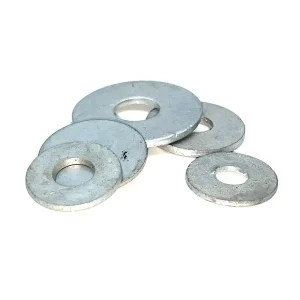
High-Integrity Fasteners & PV Mounting Core Components
Explore precision-engineered self-anchoring bolts, solar clamps, and brackets calibrated for demanding dynamic loads.
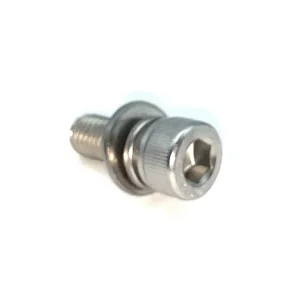
Best Stainless Steel Hex Socket Combination Bolt Suppliers, Companies
View Detail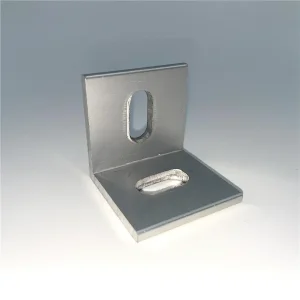
China High-Quality Aluminum Alloy Angle Bracket for Solar PV Mounting - China Suppliers & Factory Direct Offers Manufacturer, Manufacturers
View Detail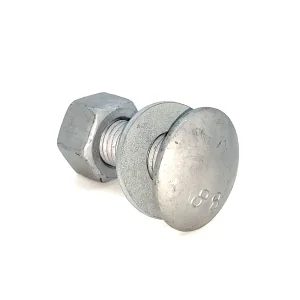
Buy Heavy-Duty Hot-Dip Galvanized Carriage Bolt - China Factory Supplies for Superior Corrosion Resistance Suppliers, Companies
View Detail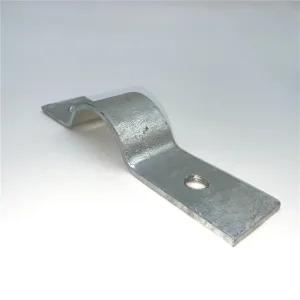
Buy Solar PV Mounting Stainless Steel Hoop Manufacturer, Companies
View Detail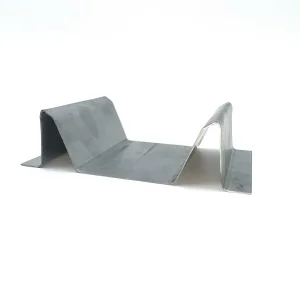
China Durable M-Type Aluminum Water Channel for Solar PV Systems - China Suppliers & Factory for Rainwater Drainage Companies, Product
View Detail
China China Stainless Steel Hex Socket Combination Bolt - Factory Direct, Anti-Loosening, Corrosion Resistant, Suppliers Welcome Manufacturer, Supplier
View Detail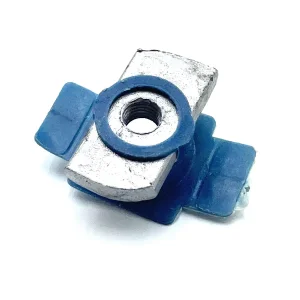
China Ergonomic Labor-Saving Plastic Wing Nut from China Suppliers - Durable Factory-Made Fastening Solution Suppliers, Factory
View Detail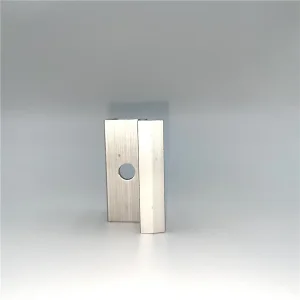
Best Premium Aluminum Side Clamps for Solar PV Panels - Quality from China Suppliers and Factory Suppliers, Company
View DetailThe Global Commercial & Industrial Landscape of Self-Anchoring Screws
Analyzing structural mechanical self-undercutting anchor bolts, dynamic shear thresholds, and cross-border project demands.
Mechanical Interlocking Mechanics
Unlike standard friction-based expansion sleeves, self-anchoring screws feature hardened cutting threads or flanged expansion mandrels that produce a micro-undercut into cracked and non-cracked concrete. This eliminates creeping under constant cyclic tensile fatigue.
High-Seismic Qualification (C1/C2)
Global civil regulations mandate ETA Option 1 qualification for cracked concrete substrates under seismic movement. China's top manufacturers deploy multi-stage heat treatment ensuring ductile core properties while achieving a surface hardness > 550 HV for thread cutting.
Integrated Cluster Supply Ecosystem
Operating from China's primary fastener hub in Yongnian, Handan, manufacturers benefit from localized cold-heading coil supply, closed-loop electro-galvanizing, sherardizing, and high-precision thread rolling, guaranteeing volume scaling at competitive unit metrics.
Cumulative volume distributed across European, Southeast Asian, and North American energy infrastructure projects.
Validated multi-layer zinc flake and A4-70 austenitic stainless variants surviving 2,000+ hours in neutral salt spray (ASTM B117).
Automated dimensional sorting preserving a PPM defect rate below 50 for large-scale automated torque-driving installations.
CNC-milled forging tooling ensures consistent pitch engagement, minimizing insertion torque while maximizing pull-out capacity.
Macro-Industry Use Cases & Substrate Interface Analysis
Bridging the structural load paths between structural steel framing, composite materials, and reinforced concrete.
Solar Photovoltaic Structures
Mounting baseplates to precast concrete ballast blocks or drilled concrete piers. Self-anchoring fasteners resist uplift wind shear without hydraulic torque drift or post-installation expansion stresses.
Automated Logistics Warehouses
High-bay rack footings demand tight edge-distance tolerances. Because self-anchoring undercut screws exert minimal burst pressure, they anchor closer to concrete slab slab edges than traditional drop-in anchors.
Curtain Wall & Façade Assemblies
Absorbing high dead-loads and dynamic wind suction on building envelopes. Our bi-metal self-anchoring anchors combine high-corrosion austenitic head shanks with carbon steel hardening cutting teeth.
Heavy Transportation Infrastructure
Tunnel lighting conduits, acoustic barriers, and metro catenary supports subject to constant air-pulse vibrations. Mechanical interlock completely prevents backing out over 50-year service cycles.
Engineering Specification Matrix: Atmospheric Conditions vs. Metallurgy
Prevent premature hardware failure by aligning site-specific corrosive environments with precise fastener alloys.
| ISO 9223 Category | Operational Environment | Recommended Fastener Metallurgy | Surface Treatment / Coating | Mechanical Anchor Mechanism |
|---|---|---|---|---|
| C1 - C2 | Inland solar farms, arid environments, climate-controlled interiors | Carbon Steel 1022A / 10B21 Boron Steel | Blue-White Zinc Plated (≥8μm) | Direct Thread Self-Tapping Concrete Screw |
| C3 | Urban perimeters, moderate industrial humidity, commercial roofs | AISI 304 (A2-70) Stainless / High-Tensile Carbon | Hot-Dip Galvanized (≥45μm) / Ruspert 1000Hrs | Undercut Mechanical Expansion Anchor Set |
| C4 | Chemical refining perimeters, processing facilities, coastal hinterlands | AISI 316 (A4-70 / A4-80) Marine Grade Stainless | Passivated + Ultra-low Friction Polymer Sealer | Sleeve Anchor with Independent Undercut Ring |
| C5-I / C5-M | Offshore substations, salt-spray marine splash zones, heavy chemical | Bi-Metal (316 Shank + Hardened Carbon Thread Tip) / 1.4529 | Multi-Layer Zinc-Nickel Flake Co-polymeric Diffusion | Self-Tapping Heavy Concrete Anchor with EPDM Washer |
Manufacturing Technology Roadmap: Toward Industry 4.0
How China's leading self-anchoring hardware plants advance metallurgy, environmental sustainability, and installation ergonomics.
Bi-Metal Friction Welding Precision
Next-gen anchoring combines grade 316 austenitic stainless steel bodies for permanent atmospheric resistance with cold-welded alloyed tips capable of tapping into 50+ MPa concrete without thread dulling.
Cr-Free Eco-Friendly Surface Chemistry
Eliminating hexavalent and trivalent chromium through non-electrolytic zinc flake immersion. This completely avoids hydrogen embrittlement risks in structural 10.9-grade tensile fasteners while satisfying REACH/RoHS.
Digital Traceability & Smart Batch Marking
Micro laser-etched matrix codes on fastener heads allow automated onsite torque validation scanners to verify steel heat numbers, yield tolerances, and installation depth directly back to factory inspection sheets.
Frequently Asked Questions on Self-Anchoring Systems
Essential guidance for procurement officers, structural designers, and cross-border project managers.
What is the mechanical difference between self-anchoring screws and sleeve anchor bolts?
Sleeve anchor bolts depend on friction generated when an internal cone forces a steel collar outwards against the borehole wall, introducing high radial bursting stress. Self-anchoring screws cut threads directly into the borehole wall, creating a mechanical interlock with lower radial tension, enabling closer spacing and reduced edge clearances.
Can self-anchoring concrete screws be unscrewed and reused?
While self-anchoring screws can be cleanly removed without leaving protruding studs (making them ideal for temporary bracing), direct reuse in structural anchor holes is subject to engineering approval. The thread-cutting teeth experience abrasive wear during the initial drive; reusing them may result in lowered pull-out capacity unless tested with specialized thread gauges.
How do you mitigate galvanic corrosion between stainless anchors and aluminum PV rails?
When dissimilar metals are exposed to electrolytic moisture, galvanic cells form. To protect the aluminum anodized layer, our engineering line pairs A2/A4 stainless bolts with UV-stabilized EPDM vulcanized washers, polyimide isolation bushings, or specialized delta-seal zinc-flake coatings that provide insulating barrier protection.
What documentation and certifications are provided for international shipping?
Standard export orders include Mill Test Certificates according to EN 10204 3.1, Neutral Salt Spray (NSS) test verification, full dimensional optical batch inspection charts, tensile and shear proof reports, Certificate of Origin (CO), and formal ETA/CE compliance data files upon contractual request.
High-Performance Anchoring & Photovoltaic Structural Components
Complete your supply specification with our proven portfolio of self-drilling screws, guide rails, clips, and heavy-duty structural bolts.
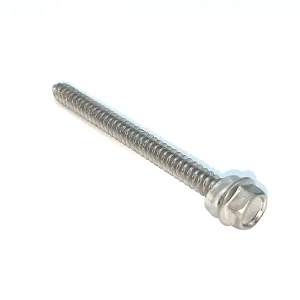
China High-Quality Stainless Steel Self-Drilling Screws - China Suppliers & Factory for Metal, Plastic, and Wood Fastening Manufacturers, Product
View Detail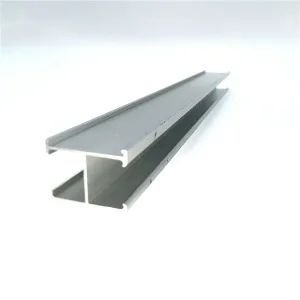
Best Solar PV 3040 Aluminum Alloy Guide Rail Company, Products
View Detail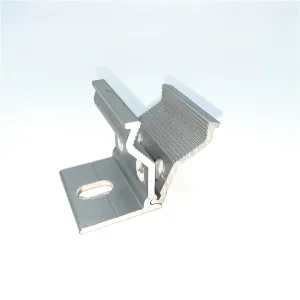
Best China Suppliers Factory Solar PV Clip Lock Aluminum Clip for Metal Roof Photovoltaic Installation Supplier, Products
View Detail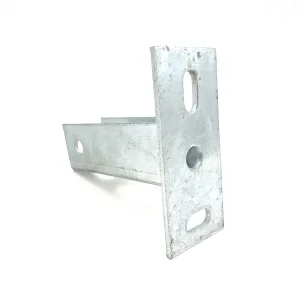
China High-Strength Aluminum Alloy Solar PV Mounting Base - Durable Support from China Suppliers and Factory Suppliers, Companies
View Detail
Buy China Suppliers Factory Heavy-Duty Stainless Steel PV Mounting Hoop for Round Pipe and Bracket Fixing Manufacturer, Manufacturers
View Detail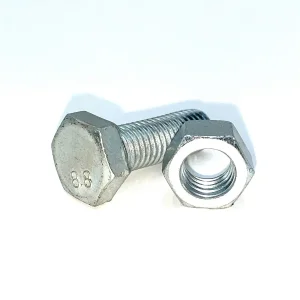
Buy High-Strength Hex Bolt from China Factory - Reliable Fastening Solutions by Trusted Suppliers Manufacturers, Suppliers
View Detail
Best China Suppliers Factory Stainless Steel Hex Socket Combination Bolt with Flat Washer - Corrosion Resistant & Anti-Loosening Design Factories, Companies
View Detail