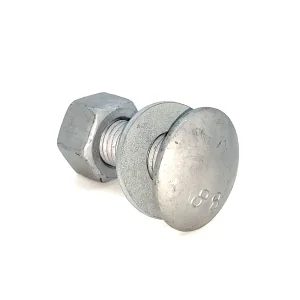
China Heavy-Duty Hot-Dip Galvanized Carriage Bolts - China Suppliers & Factory for Superior Anti-Corrosion Fastening Solutions Suppliers, Company
View Product
Engineered cold-formed carbon steel and high-tensile stainless steel anchors manufactured direct from China's industrial fastener capital.
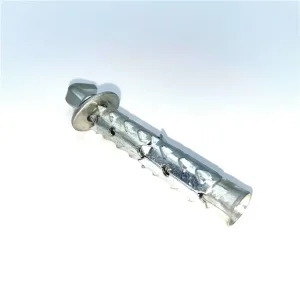
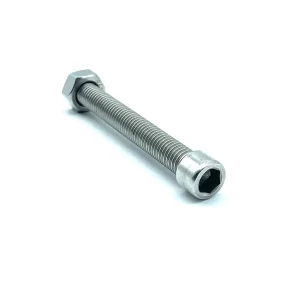
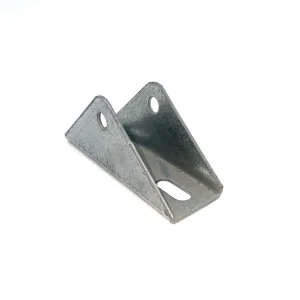
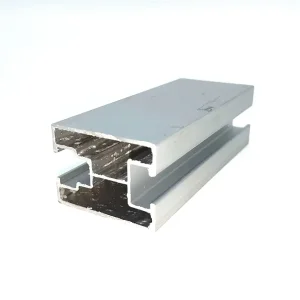
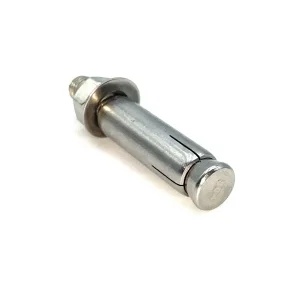
In structural engineering, the distinction between standard mechanical expansion bolts and self-anchoring undercut systems defines catastrophic boundary lines between anchor displacement and structural stability.
Traditional friction sleeve anchors exert permanent radial outward pressure against the borehole walls. In cracked concrete (Condition B) or thin-slab foundations common in commercial rooftop solar installations, this expansion creates high burst stress. Self-anchoring undercut bolts form an interlock that does not rely exclusively on side-friction, preventing premature edge breakout.
Utility photovoltaic trackers and coastal substations experience sustained harmonic vibration and fluctuating cyclic wind uplift. The engineered fish-scale friction profiles and precision undercuts distribute tensile load along the mechanical keyway, safeguarding installations against creep deformation and anchor slip under 30-year fatigue cycles.
A PV mounting assembly is only as dependable as its anchor point into the substrate. By unifying the structural chain—from base concrete self-anchoring hardware through reinforced aluminum rails (PV 3040) up to module clamping plates—our manufacturing eliminates interface incompatibilities and galvanic micro-corrosion.
Across diversified geological topographies and extreme environmental sectors, self-anchoring bolts resolve unique physical assembly constraints.
Installed across arid regions in the Middle East and Western China, concrete footings experience extreme diurnal thermal swings (-5°C to 55°C). Self-anchoring mechanical sleeves compensate for micro-expansion discrepancies between substrate and steel, retaining tight pre-torque values where chemical epoxies degrade or liquefy.
Thermal Stability: -40°C to +120°COperating in aggressive ISO 12944 C5-M marine atmospheres, our marine-grade A4-80 (SS316) self-anchoring hardware and specialized hot-dip galvanized units (layer thickness ≥86μm) deliver verifiable salt spray corrosion resistance exceeding 1,000 to 2,000 hours without red rust development.
Passes ASTM B117 & ISO 9227When anchoring bracket hardware into older masonry, hollow block, or unreinforced concrete walls, standard expansion plugs shatter surrounding brickwork. The fish-scale expansion mechanism activates localized load transfer zones, preventing wall fracture and securing structural perimeter envelopes.
High Shear Capacity: Hollow/Solid SubstratesLocated in the heart of China’s premier fastener epicenter, Handan Youlong Fastener leverages vertical manufacturing ecosystems to insulate global EPC clients from supply chain disruptions.
| Supply Chain Dimension | Conventional Sourcing Broker | Youlong Integrated Cluster Direct Factory | Procurement Advantage |
|---|---|---|---|
| Raw Material Sourcing | Multiple tier re-sellers; erratic metallurgical heat tracing | Direct pipeline with premier steel mills; 100% mill test certificates (MTR) | Consistent raw yield strength and certified carbon/alloy chemistry |
| Cold Forging & Stamping | Outsourced job shops; uncoordinated lead times | Continuous in-house automated cold heading, precision CNC & blanking | Tolerances controlled within ISO 898-1 strict DIN/ASME envelopes |
| Surface Metallurgy | Remote finishing plants prone to regional environmental halts | Closed-loop, environmentally compliant hot-dip galvanizing & sherardizing lines | Coating uniformity, defect-free root threads, salt spray resilience |
| Logistics Velocity | Fragmented transport; multiple cross-dock handling delays | Integrated bulk shipping conduits to Tianjin Port and major rail freight arteries | Container loading lead times compressed by 35% on high-volume runs |
The transition toward mega-watt renewable energy structures demands higher load capabilities and automated status verification.
Moving beyond standard electro-plating, our R&D roadmap introduces micro-thin non-electrolytically applied zinc-flake matrices. This coating provides cathodic protection without risk of hydrogen embrittlement in Grade 8.8 and 10.9 high-tensile anchor rods.
Collaborating with university materials laboratories, Youlong is pioneering optical torque-indicator anchor collars. In-field technicians can inspect and verify complete expansion locking with visual indicator changes, drastically cutting EPC commissioning labor costs.
For chemical and extreme offshore solar deployments, select product lines are adopting 2205 Duplex stainless steel. This alloy yields double the mechanical strength of 316 stainless while delivering exceptional pitting resistance equivalent numbers (PREN ≥ 35).
Procuring structural anchor hardware from China is supported by transparent documentation, traceable metallurgical verification, and responsive engineering assistance.
Every commercial production run is accompanied by a certified Inspection Certificate 3.1 detailing chemical heat analysis, yield point, ultimate tensile strength, elongation, and charpy impact resistance values according to European and American codes.
Have custom embedment depths or regional code constraints? Our CAD/CAM tooling facility fabricates custom dies and produces functional prototypes within 7 to 10 working days, backed by in-house hydrostatic pull-out tensile testing verification.
We work with international forwarders to offer bonded warehousing, custom palletization with moisture-proof wrapping, and barcoded project-phase staging, ensuring site installers receive hardware aligned with construction schedules.
Technical clarity for structural designers, quality assurance directors, and import managers specifying self-anchoring hardware.
Wedge anchors depend entirely on continuous radial friction against the concrete hole walls, which can slip if the concrete develops seismic micro-cracks. Self-anchoring bolts utilize an undercut or specialized fish-scale mechanical collar that forms a positive mechanical interlock into the concrete matrix, securing high loads with minimal continuous radial burst pressure.
The fish-scale patterned surface provides progressive stepped points of contact. When tightened, each scale-like rib engages against the irregularities of the brick or low-density concrete substrate, distributing shear and tensile forces over an elongated area rather than concentrating strain at a single fracture point.
In addition to manufacturing rails and bolts from compatible alloys (such as SS304/SS316 with specific passivation treatments), we provide specialized isolating EPDM washers and high-dielectric nylon bushings. These barriers physically prevent electronic transfer between dissimilar metals in wet outdoor environments.
Our quality assurance laboratory conducts random lot testing on calibrated universal tensile testing machines. Clients receive comprehensive test certificates indicating proof load, yield capacity, tensile rupture load, and salt spray test hours in compliance with ASTM E488 and ISO 898 standards.
Extend your project durability with precision aluminum extruded rails, clamping systems, and specialized foundation fixings.