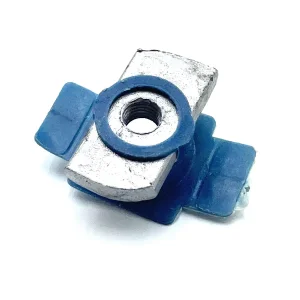
High-Performance Structural Fasteners & PV Components
Engineered for mission-critical tensile resistance, low thermal expansion, and seamless reusability in high-load structural frameworks.
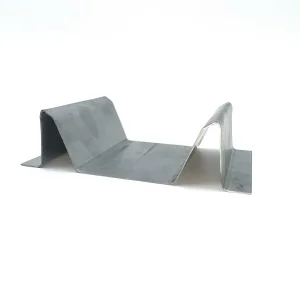
China Durable M-Type Aluminum Water Channel for Solar PV Systems
View Product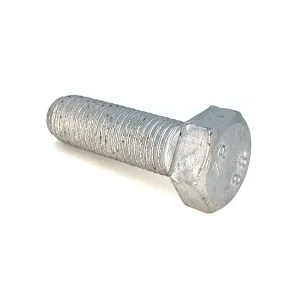
China Heavy-Duty Hot-Dip Galvanized Hex Bolts - High Strength
View Product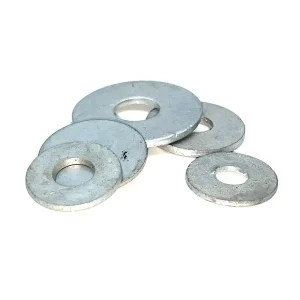
Best Stainless Steel Flat Washer Manufacturers, Companies
View Product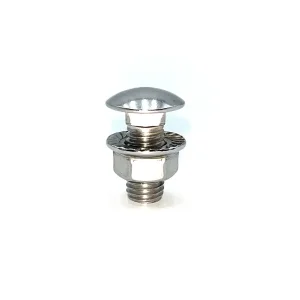
China High-Quality Stainless Steel Carriage Bolt Suppliers
View Product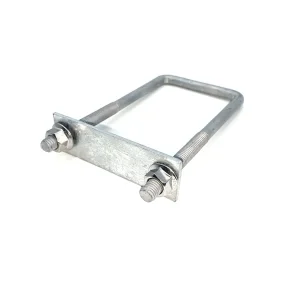
High-Strength Solar PV Double-Hole Pressure Plate Durable Aluminum
View Product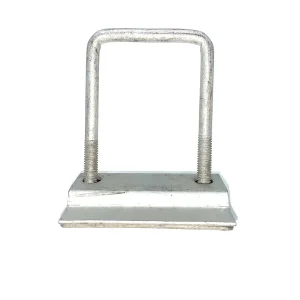
Double-Hole Pressure Plate for Solar PV Mounting Systems
View Product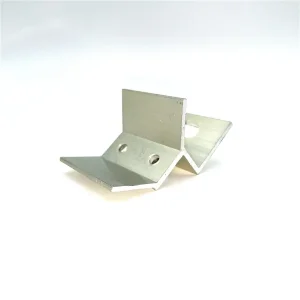
Best Solar PV Trapezoidal Metal Roof Clamp Supplier, Products
View Product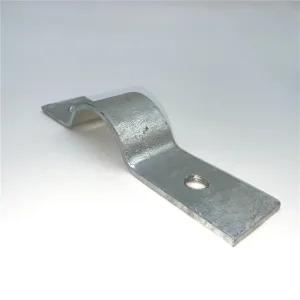
Solar PV Mounting Stainless Steel Hoop Manufacturer Companies
View ProductTechnological Evolution of Removable Concrete Screw Anchoring
Transitioning from stress-inducing expansion anchors to high-yield, friction-free thread tap systems in modern geotechnical and structural engineering.
Elimination of Radial Bursting Stress
Traditional sleeve and wedge anchors rely on outward radial mechanical force to expand inside the substrate. This creates immense internal hoop stress, restricting edge distances and minimum anchor spacing. Removable screw anchors tap directly into concrete via continuous helical thread geometry, intermeshing without outward expansion force.
- Up to 50% tighter edge and spacing tolerances
- Preserves structural integrity in cracked concrete (C20/25 to C50/60)
100% Non-Destructive Extractability
Industrial applications frequently demand temporary bracing, modular retrofits, or equipment repositioning. Chemical resin capsules and standard mechanical studs leave protruding threaded rods that must be torched or flush-cut, ruining slabs. Screw anchors back out cleanly via reverse torque without surface defacement.
- Re-usable thread gauging for temporary shoring
- Instant zero-protrusion slab handover for new tenants
Immediate Full-Load Bearing Capacity
Chemical anchoring options mandate strict curing schedules ranging from 45 minutes to 24 hours depending on ambient temperature and humidity. Removable concrete screws achieve structural lock instantly upon torquing, driving down labor cycles and enabling fast-track installation for civil EPC contractors.
- Zero curing time required in sub-zero or humid conditions
- Standard impact wrench installation lowers man-hours by 60%
China Industry 4.0: Resilient Fastener Manufacturing Infrastructure
Strategically situated in Yongnian, Handan—the fastener capital of China—our facility fuses automated cold forming, heat treatment metallurgy, and intelligent logistics.
Controlled Metallurgy & Dual-Hardening
Screw anchors require a precise thermodynamic balance: the core must remain ductile to prevent catastrophic shear under dynamic or seismic oscillation, while the tip and self-tapping serrations must exceed 55-60 HRC to cut into hard aggregate concrete without stripping threads.
- High-frequency induction thread-case hardening
- Boron-alloyed steel (10B21) & Bi-Metal (SS316+Carbon Tip) options
Full Cluster Cost & Freight Optimization
With an indigenous industrial ecosystem surrounding our Yongnian production lines, cold-heading rod stock, hot-dip galvanizing baths, zinc-flake coating plants, and robotic packaging lines operate within a 15-kilometer radius. This tight integration strips out freight transit buffers and cuts production lead times down to standard sprint deliveries.
- Scalable from LCL consolidations to mega-scale FCL shipments
- Zero-delay container trucking to Tianjin Port
Digital Traceability & EN 10204 3.1 Auditing
Every single pallet is laser-marked with heat-lot identifiers linking directly to raw steel heat certs, micro-hardness profiles, case-depth logs, and tensile destructive test reports. Global EPC contractors receive uncompromised auditing records verifying that anchors meet strict international standards.
- Standard ASTM F606 / ISO 898-1 tensile compliance
- Third-party testing support (SGS, TÜV Rheinland)
Structural Anchoring Systems: Performance & Material Matrix
A comprehensive engineering breakdown to guide geotechnical engineers and project managers in choosing optimal anchoring hardware for specific environments.
| Anchor Technology | Load Mechanism | Installation Speed | Removability | Edge Distance (Ccr) | Suitable Substrates |
|---|---|---|---|---|---|
| Removable Screw Anchor (Boron / Bi-Metal) | Mechanical Thread Interlock | < 30 Seconds | 100% Non-Destructive | Minimal (3.5 × d) | Cracked/Non-Cracked Concrete, Precast, Solid Brick |
| Traditional Expansion Wedge Anchor | Frictional Expansion Wedge | Moderate (~2-3 mins) | Destructive (Cut Off) | High (7.0 × d) | Solid Concrete (Non-Cracked Preferred) |
| Chemical / Resin Adhesive Stud | Chemical Adhesion Bond | Slow (Wait Cure Time) | Destructive (Core Out) | Low (4.0 × d) | Hollow Block, Masonry, High-Grade Concrete |
| Drop-in Sleeve Anchor | Internal Plug Expansion | Moderate (~3 mins) | Internal Flush Bolt Only | High (8.0 × d) | Uncracked Concrete Slabs, Overhead Anchoring |
Mission-Critical Application Scenarios
From extreme desert thermal cycling to coastal wind-driven salt spray, discover how our fasteners secure infrastructure across the world.
Utility-Scale Solar Ballast Anchoring
Ground-mount arrays on precast concrete ballasts require anchors that endure massive cyclical uplift forces without micro-fracturing concrete over a 25-year lifespan. Our zinc-flake coated concrete screw anchors eliminate long-term wedge slippage and resist high-amplitude dynamic wind fluttering.
- Pre-engineered torque limits reduce installation errors
- Compatible with automated pneumatic drivers
Formwork Bracing & Heavy Precast Erection
Civil building developers utilize large-diameter removable anchors (M12-M20) to lock heavy wall formwork, push-pull props, and edge protection railings into position. When the pour is complete and cures, crews extract the fasteners within seconds, relocating them to consecutive vertical floors.
- Reusable across multiple cycle pours with thread gauges
- No leftover hazards or protruding metal bolts
Logistics Warehousing Automation & Pallet Racks
Modern distribution hubs implement robotic automated guided vehicles (AGVs) and high-bay racking systems requiring accurate anchor placements. Because screw anchors have minimal edge burst, racking uprights can be anchored closely to saw-cut expansion joints without cracking base concrete.
- Seismic Category C1/C2 performance verified
- Countersunk & hex head styles for smooth clearance
Frequently Asked Questions by Structural Engineers & Buyers
In-depth responses covering installation tolerances, reuse limits, metallurgy, and international procurement standards.
How many times can a removable screw anchor be reused safely?
For non-permanent applications such as concrete formwork or temporary scaffolding, screw anchors can be reused provided their threads pass inspection using an engineered cylindrical go/no-go ring gauge. If the front cutting teeth maintain sharpness and don't pass into the no-go threshold, reuse is safe. For permanent, code-governed installations (e.g., solar racking, structural building columns), single installation is required by international building codes to preserve full load safety factors.
What surface coatings are used to avoid hydrogen embrittlement?
High-tensile carbon steel screw anchors (grade 10.9 or 12.9 equivalent) are susceptible to hydrogen embrittlement if processed using standard acid pickling and electro-galvanizing. Our factory utilizes mechanical shot-blasting followed by premium Non-Electrolytic Zinc Flake coatings (such as Geomet or Dacromet) or Sherardizing. This delivers 1,500+ hours of ASTM B117 salt spray protection without introducing acid-induced hydrogen stress.
How do borehole preparation and drill tolerances impact anchor pullout capacity?
Unlike expansion anchors that rely solely on mechanical expansion wedges, concrete screw anchors require strict drill bit tolerances conforming to ANSI B212.15 or PGM standards. Dust remaining in the pilot hole can pack at the base and prematurely seize the fastener, causing over-torquing or shallow embedment. We recommend drilling at least 15mm deeper than the intended anchor embedment depth and clearing debris with compressed air.
What is the advantage of Bi-Metal screw anchors in coastal solar plants?
Bi-Metal anchors combine an Austenitic A4-70 (AISI 316) stainless steel shank and head with a laser-welded, induction-hardened carbon steel cutting tip. The hardened carbon tip cuts the female thread profile through tough concrete aggregate, while the stainless steel body delivers long-term corrosion resistance (C4/C5 marine atmospheric exposure) without stress corrosion cracking risks.
Precision Fasteners & Structural Mounting Hardware
Explore our full range of engineered fastening components, in stock and ready for immediate global export.
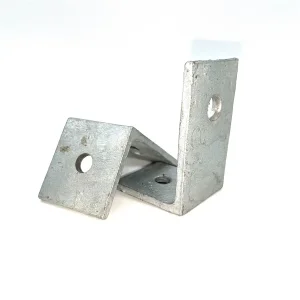
China Heavy-Duty Solar PV Mounting Stainless Steel Angle Bracket
View Product
China Heavy-Duty Hot-Dip Galvanized Hex Bolts Outdoor Use
View Product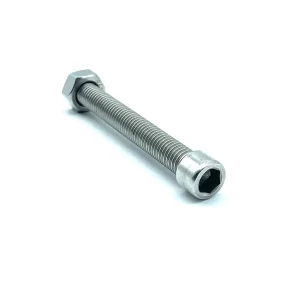
Best High-Strength Stainless Steel Hex Socket Cap Screw
View Product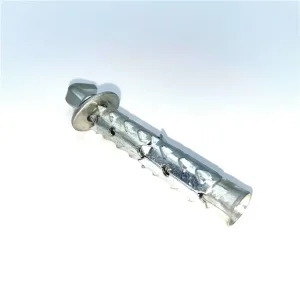
Best Heavy-Duty Fish Scale Expansion Bolt Anti-Slip Design
View Product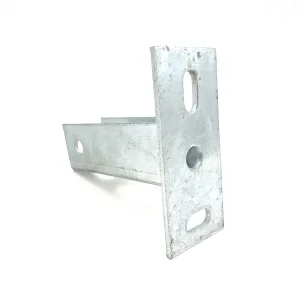
Buy High-Strength Solar PV Mounting Aluminum Alloy Base
View Product
Best China Suppliers M-Type Aluminum Water Channel for Solar PV
View Product
Trapezoidal Metal Roof Clamp for Solar PV Installation No Drilling
View Product