Direct From Production Lines
Featured Industrial Fasteners & PV Mounting Hardware
Explore our certified batch-manufactured anchor assemblies, heavy-duty structural attachments, and PV framing components engineered for high shear and tension ratings.
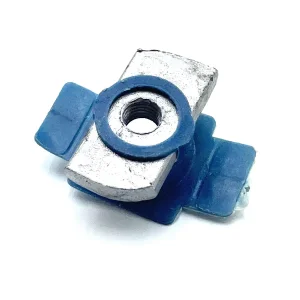
Ergonomic Plastic Wing Nut Suppliers in China - Durable Tool-Free Fastening
View Product Specs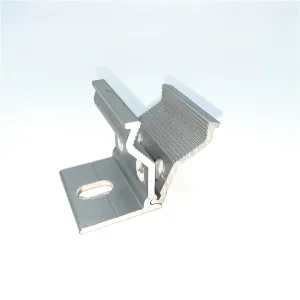
Aluminum Clip Lock for Metal Roof Solar PV Installation, No Drilling Required
View Product Specs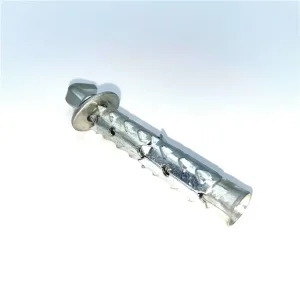
Heavy-Duty Fish Scale Expansion Bolt - High-Strength Carbon Steel Supplier
View Product Specs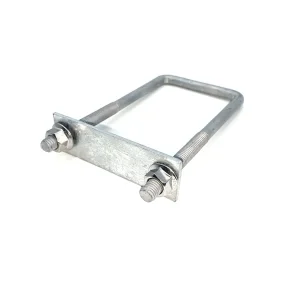
High-Strength Solar PV Double-Hole Pressure Plate - Durable Aluminum Alloy
View Product Specs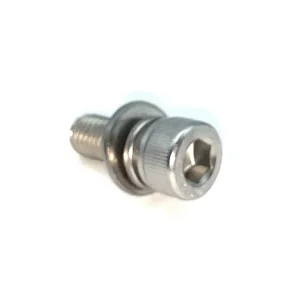
Stainless Steel Hex Socket Combination Bolt Suppliers - Corrosion Resistant
View Product Specs
Best Stainless Steel Hex Socket Combination Bolt Suppliers, Companies
View Product Specs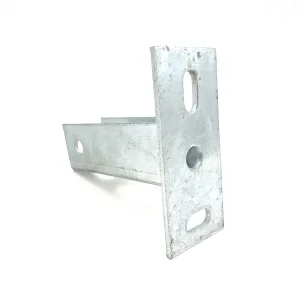
High-Strength Solar PV Mounting Aluminum Alloy Base - Support Factory
View Product Specs
Technical Whitepaper: Mechanical Anchorage Mechanics
Engineering Architecture of Rawlplug Shield Anchors (Loose Bolt & Projecting Type)
A comprehensive examination of three-piece and four-piece segmented expansion mechanics, stress dissipation envelopes in cracked versus non-cracked concrete, and shear dynamics under dynamic loading.
Radial Expansion Physics
The standard Rawlplug-style shield anchor functions via a precision-machined internal tapered wedge drawn longitudinally into a multi-segmented pressed steel sleeve. As the bolt is tightened to designated installation torque (Tinst), radial contact forces transmit into the internal circumference of pre-drilled masonry, creating continuous friction resistance.
- Multi-segment design distributes force uniformly around 360 degrees.
- Retaining clips prevent premature sleeve expansion during insertion.
- Ideal for dense brickwork, hard stone, and standard C20/25 to C50/60 concrete.
Cracked Concrete vs. Solid Substrate
Modern Eurocode 2 (EN 1992-4) mandates precise engineering evaluations regarding base material behavior. When concrete fissures open due to cyclic bending moments or seismic tremors, traditional friction anchors risk tension reduction. Shield anchors bridge minor micro-cracking by maintaining deep mechanical keying through pressed external ribs.
- Deep embedding overcomes cone-breakout stress concentration.
- Optimal performance in high-compression building foundations.
- Fish-scale serrations resist rotational slipping during bolt actuation.
Dynamic Shear & Edge Distance Ratios
Proper anchoring calculations depend heavily on characteristic edge distances (Ccr,N) and intermediate spacing (Scr,N). Operating close to the edge requires controlled sleeve displacement to avoid substrate splitting. Shield anchors dissipate localized shock loads from machinery vibration and gust forces on PV structures.
- Resilient against cyclic fatigue caused by horizontal shear vectors.
- Available in projecting stud, hook bolt, and loose bolt configurations.
- Engineered collapse mechanisms ensure full fixture flushness.
Technical Comparison: Heavy-Duty Shield Anchors vs. Wedge & Chemical Anchors
| Fastener Type | Base Material Suitability | Installation Speed | Removability / Fixture Flush | Dynamic / Vibration Tolerance | Installed Cost Factor |
|---|---|---|---|---|---|
| Rawlplug Shield Anchor (Loose Bolt) | Concrete, Solid Brickwork, Hard Stone | High (Immediate Load) | 100% Removable bolt leaves flush shield | High (Multi-segment expansion absorbs vibration) | Economic / Highly Scalable |
| Wedge Anchor (Through Bolt) | Cracked & Non-cracked Concrete only | High (Direct drive-in) | Non-removable (Stud projects above surface) | Moderate (Susceptible to sleeve relaxation) | Low - Moderate |
| Chemical Injection Resin | Hollow block, Aerated concrete, Solid masonry | Low (Curing time required) | Requires burning or cutting flush | Extremely High (Stress-free bonding) | High (Resin + Cartridge waste) |
| Sleeve Anchor (Thin Wall) | Lightweight concrete, Cinder block | High | Partially removable | Low (Prone to shearing under heavy cycling) | Low |
Yongnian Cluster Competitiveness
Why Tier-1 Importers Source Shield Anchors from Handan, China
Located in Yongnian District, Hebei—widely recognized as China's Fastener Capital—Handan Youlong Fastener combines vertical raw material integration with high-precision automated stamping lines.
Upstream Steel Integration
Direct proximity to premier Hebei steel producers provides immediate access to certified structural carbon steels (Q235B, 10B21, 35CrMo) and precision stainless coil (SS304/A2-70, SS316/A4-80), cutting raw material transit overhead.
Automated Progressive Stamping
Our workshop integrates continuous high-speed progressive stamping presses. Each shield segment is cut, formed, punched with fish-scale grooves, and calibrated in a unified continuous stroke with minimal human error.
Scale Economics & Pricing
Producing over 300,000 cumulative tonnes across our core product families yields unmatched component-level economy. We supply OEM buyers and distributors with factory-direct pricing that outpaces Western manufacturing hubs.
Agile Supply Chain Logistics
With direct expressway and rail links to Tianjin Port and Qingdao Port, bulk container freight departs within verified production cycles, backed by complete bill of lading and export customs compliance processing.
Reliability & Risk Mitigation
Engineering Compliance, Salt Spray Protection & Local Support
Procuring overseas hardware demands uncompromised quality documentation. We mitigate supply chain vulnerabilities via exhaustive mechanical property testing, strict anti-corrosion finishes, and localized logistics support.
Mill Test Certificates & EN 10204 3.1
Every Rawlplug shield anchor and bolt batch is shipped with complete material traceability. We supply verified 3.1 chemical composition analysis, elongation reports, proof load testing, and dimensional inspection sheets according to DIN/ISO standards.
Advanced Surface Treatment Technologies
To resist ISO 9223 C1 through C5 aggressive atmospheric corrosion, our finishes include Yellow/Clear Zinc Electroplating (Cr3+ RoHS compliant, 5–12µm), Hot-Dip Galvanizing (EN ISO 10684, >45µm), Geomet/Dacromet flake zinc coatings, and marine-grade A4 stainless steel.
Regional Warehousing & OEM Packaging
To empower regional distributors across North America, Europe, the Middle East, and Latin America, we provide customized barcode labeling, bespoke retail color packaging, private labeling, and consolidation support for high-mix SKU orders.
Field Engineering Deployment
High-Load Application Environments for Shield Anchoring Systems
From industrial manufacturing plants to renewable energy megaprojects, our expansion assemblies secure vital infrastructure against static loads, wind shear, and dynamic fatigue.
Solar PV Foundations & Inverter Skids
Utility solar arrays and commercial rooftop frames demand concrete anchorage that sustains continuous uplifting wind gusts. Shield expansion bolts anchor heavy-duty purlin bases, central inverter housings, and transformer ballast pads securely.
Structural Steelwork & Curtain Walls
Engineered facade frameworks, external architectural panels, column baseplates, and perimeter safety barriers utilize shield anchors for their outstanding shear capacity and flush removability during building maintenance or retrofitting.
Heavy Machinery & Industrial Crane Tracks
Factory stamping equipment, automotive assembly lines, conveyor rails, and overhead crane guides generate substantial dynamic cycling. Three-piece heavy shield anchors dampen operational harmonic vibration without backing out.
Industry Intelligence & Horizon Scanning
Emerging Trends Reshaping Anchor Manufacturing & Global Procurement
How automation, decarbonization mandates (EU CBAM), seismic performance upgrades, and digital building modeling (BIM) impact tier-1 fastener manufacturing.
CBAM & Low-Carbon Steel
The European Carbon Border Adjustment Mechanism (CBAM) requires transparent embodied emissions accounting. Our manufacturing roadmap leverages EAF (Electric Arc Furnace) recycled feedstock to reduce scope 1 and 2 carbon intensity.
C1/C2 Seismic Qualification
Global standards bodies increasingly require mechanical anchors to satisfy EOTA TR 049 seismic categories C1 and C2 for life-safety attachments, prompting continuous refinement in wedge tapers and sleeve metallurgy.
BIM Integration & 3D Modeling
Modern EPC procurement teams integrate anchor hardware into digital twin environments. Youlong provides accurate 3D CAD step files and load calculation matrices directly to structural engineering workflows.
Hexavalent Chromium Phase-out
Eco-friendly passivation is non-negotiable. Our surface processing lines utilize trivalent chromium zinc plating and zinc flake micro-layers that deliver superior salt spray corrosion resistance without hazardous effluents.
Procurement Knowledge Base
Frequently Asked Questions: Technical Engineering & Global Sourcing
In-depth insights into fastener specifications, factory capabilities, custom manufacturing, and international trade compliance.
What is the structural difference between Loose Bolt and Projecting Bolt Shield Anchors?
Loose bolt shield anchors feature an internal nut and removable threaded hex bolt, enabling equipment or steelwork to be positioned over the drilled hole before the bolt is inserted. Crucially, removing the bolt leaves the shield flush with the concrete surface. Projecting stud shield anchors utilize a permanently protruding threaded stud onto which base plates are seated and clamped with a surface nut.
How does Handan Youlong ensure high tensile and shear consistency across large production batches?
We perform 100% incoming raw material spectroscopy, continuous in-line optical sorting for thread geometry, and randomized mechanical break tests (tensile pull-out and shear loading) on universal hydraulic test frames. Every production heat is fully documented from wire rod billet through automated cold forming and controlled heat treatment.
Which protective coating is recommended for coastal or high-humidity PV installations?
For high-corrosion ISO 9223 C4 and C5 environments (marine shorelines, offshore substations, high-salinity desert ground mounts), we strongly recommend Grade 316 (A4) austenitic stainless steel. For cost-optimized structural foundations, hot-dip galvanizing with a minimum 45µm zinc thickness or specialized multi-layer zinc flake (Geomet) coatings providing over 1,000 hours of neutral salt spray resistance (ASTM B117) are optimal.
Can Youlong fabricate custom shield anchor geometries or stamp proprietary brand logos?
Yes. As a primary manufacturer with in-house tooling and die-making workshops, we support OEM/ODM designs. We regularly fabricate customized sleeve lengths, specialized cone taper angles, fish-scale friction profiles, and apply customer head marks or brand stamps onto bolt heads and shield bodies according to approved engineering drawings.
What is the typical production lead time and minimum order quantity (MOQ) for international orders?
Standard catalog shield anchor sizes (M6, M8, M10, M12, M16, M20) generally require a 15 to 25-day production cycle for full container load (FCL) orders. The MOQ is typically 10,000 pieces per specification, though mixed-product consolidation containers combining shield bolts, PV rails, carriage bolts, and strut channel accessories are welcomed.
How does improper hole drilling or dust cleaning compromise anchor working loads?
Mechanical expansion anchors rely purely on friction and mechanical interlock. Unremoved drill dust cushions the expansion shield, dropping the friction coefficient by up to 50% and causing premature slip. We provide comprehensive technical data sheets specifying exact drill bit diameters, minimum embedment depths, hole cleaning procedures, and calibrated tightening torques.
Complete Fastening Portfolio
Precision Bolts, Mounts & Industrial Connectors
Review additional structural fasteners manufactured in Handan to international tolerances for global infrastructure, solar, and industrial contracting.
Solar PV Clip Lock Aluminum Clip for Metal Roof Photovoltaic Installation
View Product Specs
Ergonomic Labor-Saving Plastic Wing Nut - Durable Fastening Solution
View Product Specs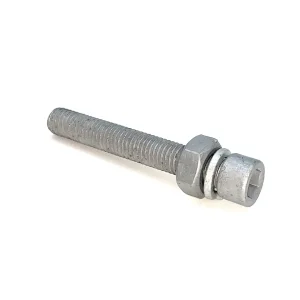
High-Strength Hex Socket Bolt Suppliers - Durable Carbon Steel Fasteners
View Product Specs
Stainless Steel Hex Socket Combination Bolt with Flat Washer Anti-Loosening
View Product Specs
Trapezoidal Metal Roof Clamp for Solar PV Installation - High Strength
View Product Specs
Durable Solar PV Mounting Purlin Connector - Reliable Fastener Factory
View Product Specs
Best Hex Socket Bolt Manufacturer, High Precision Manufacturers
View Product Specs