
Featured Photovoltaic Mountings & Grid Structural Fasteners
Engineered for extreme environmental endurance. Our certified structural assembly units ensure faultless electrical grounding, wind shear resistance, and structural integrity for smart utility corridors.
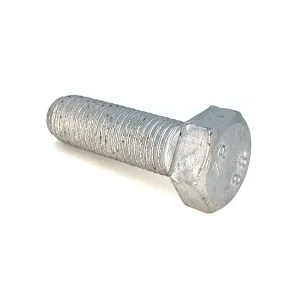
Heavy-Duty Hot-Dip Galvanized Hex Bolts
Buy China Heavy-Duty Hot-Dip Galvanized Hex Bolts - High Strength Fasteners from Leading Suppliers and Factory Supplier, Factories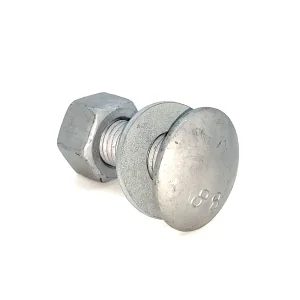
Galvanized Carriage Bolt For Superior Corrosion
China Heavy-Duty Hot-Dip Galvanized Carriage Bolt - China Suppliers & Factory for Superior Corrosion Resistance Supplier, Factories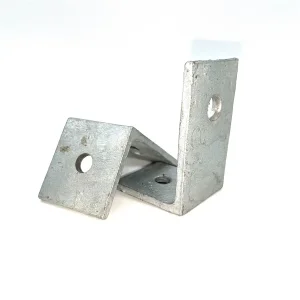
Heavy-Duty Stainless Steel PV Angle Bracket
Buy China Suppliers Factory Heavy-Duty Stainless Steel PV Angle Bracket for Solar Mounting Systems Suppliers, Company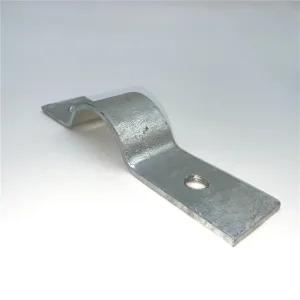
Solar PV Mounting Stainless Steel Hoop
Buy Solar PV Mounting Stainless Steel Hoop Manufacturer, Companies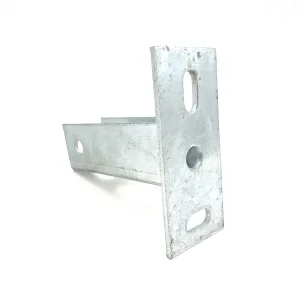
High-Strength Aluminum PV Mounting Base
Best High-Strength Aluminum Alloy Solar PV Mounting Base from China Suppliers & Factory for Ground and Rooftop Installations Product, Products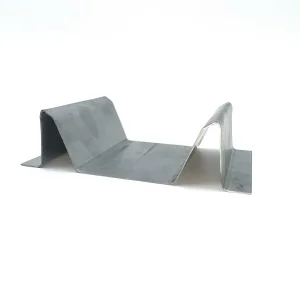
Durable M-Type Aluminum Water Channel
China Durable M-Type Aluminum Water Channel for Solar PV Systems - China Suppliers & Factory for Rainwater Drainage Companies, Product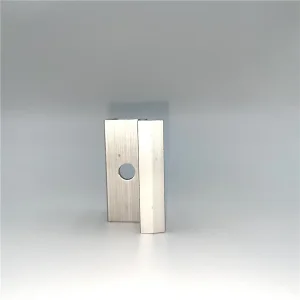
Premium Aluminum Side Clamp for PV Panels
Best Premium Aluminum Side Clamp for Solar PV Panels - Top China Suppliers & Factory for Robust Installation Solutions Suppliers, Companies
Stainless Steel Mounting Hoop for Pipe Fixing
Buy China Suppliers Factory Heavy-Duty Stainless Steel PV Mounting Hoop for Round Pipe and Bracket Fixing Manufacturer, ManufacturersState-of-the-Art Optical Ground Wire (OPGW) Cable Systems
An Optical Ground Wire (OPGW) serves a dual functional paradigm within modern electrical infrastructure: acting simultaneously as a conventional shield wire to ground lightning surges and providing an embedded, high-bandwidth optical fiber communications core. Sourcing directly from an established China OPGW manufacturer provides global utilities access to ultra-high quality, cost-engineered fiber architectures designed for mission-critical grid resilience.
Central Stainless Steel Tube
Engineered with hermetically laser-welded SUS304 or SUS316 stainless steel tubes housing up to 144 optical fibers. Injected with hydrogen-scavenging, thixotropic water-blocking gel, this design ensures optimal lateral crush protection, high thermal capacity, and low optical attenuation under catastrophic lightning discharge environments.
Stranded Multi-Tube Layer Design
Configured with multiple stainless steel loose tubes helically stranded alongside aluminum-clad steel (ACS) and aluminum alloy (AA) wires. Designed specifically for ultra-high voltage (500kV to 1000kV UHV) transmission corridors, offering massive fiber density, high fault current capacity, and mechanical load dissipation over wide spans.
Lightning Surge Optimization
Dynamic balancing of high-conductivity aluminum alloys and high-tensile ACS conductors prevents core temperature runaway during short-circuit events (up to 400°C momentary arc flash). Mechanical structural simulation ensures the optical core experiences zero strain even at Maximum Working Tension (MWT).
Dual-wavelength OTDR verified zero-loss joints
Using tier-1 low-loss single-mode G.652D/G.655 core
Tailored high-current dissipation architectures
Corrosion-resistant ISO 9223 C5 marine tested
China Manufacturing Advantages in OPGW & Hardware Assembly
China's dominance in extra-high voltage (EHV) and ultra-high voltage (UHV) electrical networks has catalyzed an unrivaled manufacturing ecosystem. Partnering with a specialized Chinese manufacturer unlocks distinct competitive and technical dividends for international utility operators.
Vertically Integrated Supply Chain
From electrolytic aluminum processing and continuous wire drawing to in-house laser tube welding and planetary stranding, Chinese factories maintain total control over raw material inputs. This end-to-end integration eradicates supply friction, guarantees tight mechanical tolerances, and insulates international procurement teams from sudden global market volatilities.
Field Validation Across Extreme Climates
Cables manufactured in China have undergone testing in the world's most geographically punishing proving grounds: from the high-altitude, sub-zero icing stresses of the Tibetan Plateau to the hypersaline coastal typhoons along the South China Sea. This engineering heritage ensures that every OPGW design is intrinsically ruggedized for extreme field scenarios.
Rigorous International Compliance
Fully compliant with international engineering standards including IEEE 1138, IEC 60794-4-1, ITU-T G.652/G.655, and ASTM B415. Our facilities operate under strict ISO 9001, ISO 14001, and ISO 45001 governance, supplying complete mill test certificates, salt spray reports, and factory acceptance test (FAT) documentation prior to export packaging.
Global Industry Trends: The Smart Grid Transformation
The global transition toward decentralized clean energy requires power lines to serve as intelligent data expressways. The OPGW industry is experiencing fundamental technological transformations to satisfy escalating data bandwidth and automated monitoring demands.
Distributed Fiber Sensing
Modern OPGW lines are embedded with Distributed Temperature Sensing (DTS) and Distributed Acoustic Sensing (DAS). Real-time telemetry detects conductor thermal overload, galloping oscillations, icing accumulation, and mechanical impact before physical line collapse occurs.
Fiber Density Densification
Transitioning from low-density architectures (12-24 cores) to ultra-dense configurations (72, 96, 144, and up to 288 cores). This empowers electrical utility operators to commercialize surplus fiber bandwidth, leasing dark fiber corridors directly to telecommunication carriers and cloud hyperscalers.
Corrosion Barrier Upgrades
Substitution of traditional galvanized coatings with high-purity continuous Aluminum Clad Steel (ACS 20.3% IACS conductivity) and anti-corrosion grease impregnation. This prevents micro-galvanic cell generation between dissimilar metals in coastal or heavy industrial acid rain microclimates.
Ultra-High Fiber Count Ribbons
Integration of optical fiber ribbon modules within robust steel tubes. Ribbon technology significantly accelerates mass-fusion splicing efficiency in field joints, cutting transmission line maintenance downtime and installation costs by more than 40%.
Macro Industry Solutions & Application Environments
OPGW deployment requires precise customization based on structural tower parameters, geographic wind loading, short-circuit current availability, and spans. Below are specialized solutions engineered for demanding global deployment scenarios.
| Deployment Environment | Key Engineering Challenge | Recommended Cable Architecture | Mechanical & Optical Parameters |
|---|---|---|---|
| Coastal & Offshore Corridors | Extreme saline-alkali aerosol exposure, severe marine galvanic corrosion | Single/Double Layer thick-clad Aluminum-Clad Steel (ACS) with fully grease-sealed steel tubes | Zero galvanized steel; Grade 316L stainless steel tube; ISO 9223 C5 marine certified |
| High-Voltage Transmission Grids (220kV - 500kV) | Massive lightning surge current dissipation, extreme thermal shock on optical core | Multi-strand composite: Outer layer high-conductivity AA wires; Inner layer high-tensile ACS | High short-circuit rating (> 150 kA²·s); operating temperature capacity up to 300°C momentary |
| Alpine & Heavy Ice Zones | Heavy ice accretions, high mechanical wind-gust drag, sub-zero embrittlement | High-strength ACS structural reinforcement with minimal aerodynamic outer diameter | Rated Tensile Strength (RTS) exceeding 180 kN; functional operating range down to -50°C |
| Cross-River / Mountain Super Spans | Extended span distances (> 1,500m), cyclic aeolian vibration fatigue | Dual concentric layers of ultra-high strength ACS wires encasing central core | High modulus of elasticity; matched with helical armor rods and Stockbridge vibration dampers |
Navigating Global Procurement Requirements
When multinational EPC contractors, power utilities, and regional telecommunications consortia source OPGW infrastructure from China, a rigorous procurement framework is required to guarantee operational performance over 40+ years.
Technical Specification Alignment
Procurement documents must clearly delineate short-circuit current requirements (I²t), RTS (Rated Tensile Strength), Maximum Working Tension (MWT), Everyday Stress (EDS), and sagging margins under peak wind/ice loads. Precise engineering ensures the correct ratio between aluminum alloy (conductivity) and ACS (tensile strength).
Factory Acceptance Testing (FAT)
Standard quality auditing mandates type tests and factory acceptance routines witnessed by third-party inspectors (e.g., SGS, Bureau Veritas). Core verifications include tensile proof loading, crush resistance, impact testing, water penetration, lightning arc tests, and fiber attenuation mapping using calibrated OTDR instruments.
Turnkey Hardware & Fitting Kits
OPGW cables cannot be deployed in isolation. Experienced procurement teams consolidate cable purchases with factory-matched preformed dead-end tension sets, suspension clamps, downlead clamps, Stockbridge vibration dampers, and hermetic metal optical joint splice boxes to prevent fitting-induced cable slippage or microbending losses.
Frequently Asked Questions: Technical & Operational
Authoritative insights addressing critical engineering, manufacturing specifications, and international logistics criteria for utility engineers and buyers.
What is the structural difference between Central Stainless Tube and Stranded Multi-Tube OPGW?
Central Stainless Steel Tube OPGW incorporates a single, centrally located stainless steel tube containing all optical fibers, surrounded by one or two layers of aluminum-clad steel and aluminum alloy wires. It provides a compact diameter, lighter weight, and excellent cost efficiency for medium spans. Stranded Multi-Tube OPGW houses fibers within multiple stainless steel tubes helically wound around a central core, offering superior thermal mass, higher short-circuit fault current capability, and ultra-high fiber capacities (up to 144 cores or higher) for long spans and UHV transmission lines.
How does an OPGW cable prevent optical attenuation during lightning strikes?
When lightning strikes an OPGW cable, severe electrical current passes through the outer metallic strands, generating intense thermal energy. The cable is designed with high-conductivity Aluminum Clad Steel (ACS) and aluminum alloy strands that safely channel the lightning current to earth. The central stainless steel tube, filled with thixotropic gel, isolates the fibers from radial mechanical pressures and functions as a thermal shield. This ensures that internal temperatures around the optical fibers remain well below critical limits, preventing thermal degradation or microbending attenuation spikes.
What documentation and test certificates are provided with export shipments?
All export shipments are accompanied by comprehensive Quality Dossiers, which include Mill Test Certificates (MTC), Raw Material Traceability Sheets, In-Process Inspection Reports, and Optical Time Domain Reflectometer (OTDR) trace test charts for every single fiber core across 1310nm and 1550nm wavelengths. For project-specific requirements, third-party Type Test Reports according to IEEE 1138 or IEC 60794 standards (covering Aeolian vibration, short-circuit, tensile test, water ingress, and temperature cycling) are provided prior to vessel dispatch.
Can you manufacture OPGW cables matching specific tower load and clearance constraints?
Yes. Every high-voltage transmission line has unique civil and mechanical design parameters. Our technical engineering division routinely designs customized OPGW cross-sections to match existing tower load limitations, sag-tension profiles, short-circuit current curves, and ice/wind loading envelopes. By adjusting the ratio of aluminum alloy wires to aluminum-clad steel wires, we achieve the precise balance of electrical conductivity, mechanical breaking strength (RTS), and thermal resistance specified by your structural engineers.
Industrial Mounting & Clamping Hardware Components
Precision-manufactured structural hardware, water-channel profiles, and high-tensile connection components designed for durable deployment across electrical power lines and renewable mounting infrastructure.
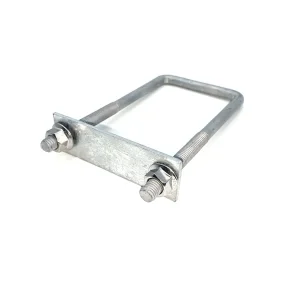
Double-Hole Pressure Plate For Solar Systems
Buy China Suppliers Factory Double-Hole Pressure Plate for Solar PV Mounting Systems - Durable Aluminum Alloy Factory, Factories
Solar PV M-Type Aluminum Water Channel
China Solar PV M-Type Aluminum Water Channel Manufacturer, Supplier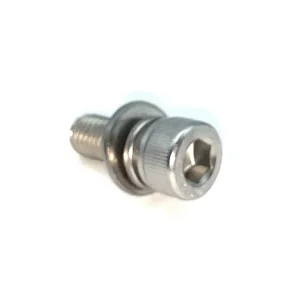
Stainless Steel Hex Socket Combination Bolt
China China Suppliers Factory Stainless Steel Hex Socket Combination Bolt with Washer - Corrosion Resistant and Durable Suppliers, Company
Corrosion-Resistant Hex Socket Bolt Units
Buy China Stainless Steel Hex Socket Combination Bolt Suppliers - Corrosion Resistant Factory Direct Fasteners Manufacturer, Companies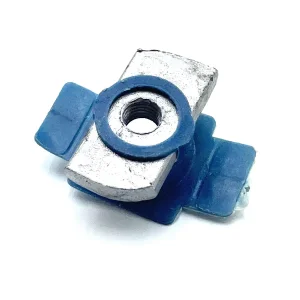
Industrial Grade Plastic Wing Nut Components
China Plastic Wing Nut Suppliers, Factories
Premium Aluminum Side Clamps For PV Systems
China Premium Aluminum Side Clamps for Solar Panels - China Suppliers & Factory for Rooftop & Ground Mounting Systems Companies, Products
Ergonomic Plastic Wing Nut Fasteners
China China Suppliers Plastic Wing Nut - Ergonomic, Corrosion-Resistant Fastener | Factory Direct Quality Manufacturers, Factories
Heavy-Duty Outdoor Fastening Carriage Bolt
China Heavy-Duty Hot-Dip Galvanized Carriage Bolt - China Suppliers & Factory for Robust Outdoor Fastening Solutions Factories, Products