
Precision Fastening & Heavy-Duty Structural Anchors (Part I)
Engineered clamping accessories, structural splices, and mechanical fasteners optimized for dual service in industrial mounting and electrical earth bond stability.
-
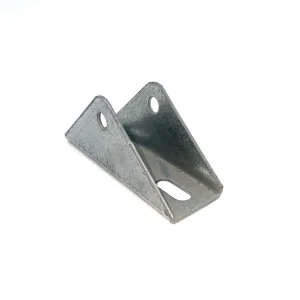
Buy China Factory Premium Three-Hole Solar PV Mounting Connectors - Reliable Suppliers for Outdoor Installation Suppliers, Companies
-
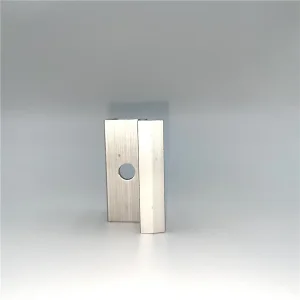
Buy Premium Aluminum Side Clamps for Solar PV Panels - China Suppliers & Factory for Reliable Mounting Solutions Suppliers, Factories
-
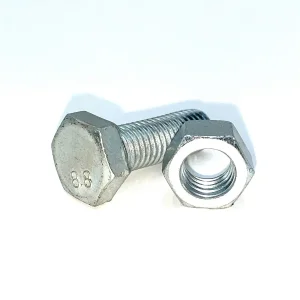
Buy High-Strength Hex Bolt from China Suppliers - Durable Carbon Steel Factory Fasteners for Machinery and Construction Manufacturer, Company
-
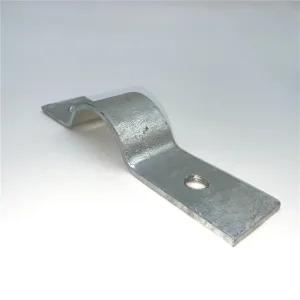
China China Suppliers Factory Heavy-Duty Stainless Steel Solar PV Mounting Hoop for Round Pipe and Bracket Fixing Factories, Product
-
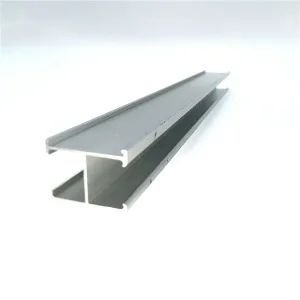
Best Solar PV 3040 Aluminum Alloy Guide Rail Company, Products
-
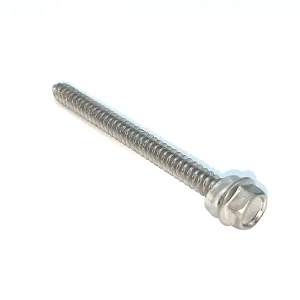
Buy High-Quality Stainless Steel Self-Drilling Screws from China Factory - Suppliers of Fasteners for Metal, Plastic, and Wood Manufacturers, Products
-
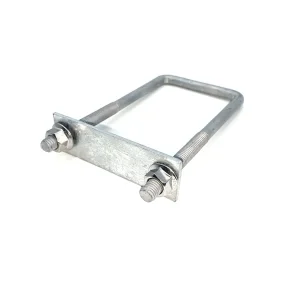
Best High-Strength Double-Hole Pressure Plate for Solar PV Mounting Systems | China Suppliers & Factory Manufacturer, Product
-
Buy Stainless Steel Hex Socket Cap Screw Manufacturer, Supplier

Global Industrial Reality & Grounding Arc Stability
MIG welding is fundamentally an electrical loop where the work return clamp and ground cable determine arc impedance, voltage drop, and spatter control across mission-critical fabrication yards.
Harmonic Arc Interference Suppression
Inferior ground return cables lead to inductive voltage drops that fool digital inverter synergic tracking algorithms. When pulsed MIG welding high-alloy steels, stray capacitance and high contact impedance introduce erratic spatter, arc wander, and poor root fusion.
Tier-1 Chinese factories utilize rope-lay conductor geometry (Class 6 extra-flexible stranding) ensuring negligible skin effect losses even during high-frequency secondary pulsing waveforms.
Automated Robotic Welding Cell Integration
High-throughput robotic manufacturing demands continuous duty cycle performance without thermal runaway at clamp terminations. High torsional flex fatigue resistance prevents catastrophic strand rupture inside continuous rotary manipulators.
Our standardized cable designs incorporate cross-linked vulcanized jackets that resist physical abrasion, chemical lubricant immersion, and continuous mechanical flexing cycles.
Ground Path Security & Safety Compliance
Faulty earth returns risk dangerous parasitic currents traveling through bearing races, crane hoists, or sensitive CNC microcontrollers. Establishing low-resistance, direct-clamped ground paths protects machinery infrastructure and human operators alike.
Comprehensive compliance with IEC 60974-12, EN 50525-2-81, and UL 1276 guarantees absolute grounding continuity across multi-station welding lines.
Localized Deployment Scenarios & Operational Rigor
From frigid offshore shipyard fabrication to desert photovoltaic tracker construction, specialized ground return cables adapt to extreme local ambient dynamics.
Marine Yards & Offshore Jacket Fabrication
Coastal salt spray and high atmospheric chlorides trigger galvanic attack on bare copper junctions. Heavy-duty ground leads in marine environments deploy tinned fine copper strands jacketed in Chlorosulfonated Polyethylene (Hypalon/CSP).
Equipped with solid brass C-clamps or screw-type heavy ground vices, these assemblies eliminate pitting, maintain galvanic neutrality against naval structural steels, and withstand direct offshore exposure.
Utility Solar Trackers & Substation Grounding
Utility-scale photovoltaic installations require rapid field welding of torque tubes, driven pile piers, and foundation anchor cages. Extended ground loops (35m to 70m) run through harsh UV environments, dry desert sand, and gravel.
Optimized cross-sections (70mm² to 95mm²) prevent dangerous line drop that could starve 400A flux-cored field welding guns, ensuring uniform penetration across high-tensile steel tracker assemblies.
Automotive Chassis & Robotic Tooling Cells
High-speed GMAW cells welding structural automotive cradles cycle every 45 seconds. Ground cables routed through articulated 6-axis robot dress packs endure continuous twisting, extreme lateral shear, and constant hot weld spatter contact.
Specialized silicone-jacketed and polyurethane-armored ground links with hydraulic hexagonal-crimped lugs eliminate internal friction fatigue, operating over 5,000,000 flex cycles without dielectric breakdown.
China Factory Ecosystem Resilience & Metallurgy Standards
From raw cathode smelting in Jiangxi to cold-heading clusters in Yongnian, integrated manufacturing ecosystems deliver unbeatable turnaround speed and strict metallurgical consistency.
Direct Vertical Upstream Sourcing
Leading Chinese manufacturers source directly from national electrolytic copper refining centers, maintaining strict ASTM B172 tolerances. Direct continuity from continuous rod casting to multi-die fine wire drawing eliminates oxygen inclusion and embrittlement.
In-House Elastomeric Compounding
Automated Banbury rubber compounding lines produce proprietary EPDM/Neoprene blends. Unlike assembly-only exporters, full-process factories customize jacket shore hardness, flame-retardant oxygen index (LOI > 32), and color codes to buyer OEM specs.
Automated Terminal Swaging & Testing
Every assembled cable undergoes 100% automated electrical loop resistance verification, high-potential insulation proof testing (up to 2000V AC), and calibrated hydraulic pull-off tensile tests to ensure 100% terminal crimp retention under drop shocks.
| Cable Size (AWG / mm²) | Strand Configuration (OFC) | Outer Diameter (Nom.) | Max DC Resistance @ 20°C | Ampacity (60% Duty Cycle) | Ampacity (100% Continuous) |
|---|---|---|---|---|---|
| 6 AWG (16 mm²) | 510 × 0.20 mm | 8.8 mm | 1.21 Ω/km | 135 A | 105 A |
| 4 AWG (25 mm²) | 796 × 0.20 mm | 10.1 mm | 0.780 Ω/km | 180 A | 140 A |
| 2 AWG (35 mm²) | 1114 × 0.20 mm | 11.6 mm | 0.554 Ω/km | 230 A | 175 A |
| 1/0 AWG (50 mm²) | 1592 × 0.20 mm | 13.5 mm | 0.386 Ω/km | 295 A | 230 A |
| 2/0 AWG (70 mm²) | 2228 × 0.20 mm | 15.4 mm | 0.272 Ω/km | 375 A | 290 A |
| 3/0 AWG (95 mm²) | 3024 × 0.20 mm | 17.8 mm | 0.206 Ω/km | 460 A | 355 A |
| 4/0 AWG (120 mm²) | 3822 × 0.20 mm | 19.6 mm | 0.161 Ω/km | 540 A | 420 A |
Technical Roadmap: The Next Decade in Welding Ground Architecture
From smart diagnostic current-sensing returns to eco-responsible halogen-free polymers, Chinese research institutions and tier-1 cable factories are pioneering intelligent grounding.
Smart Clamps with Integrated IoT Sensors
Development of ground return clamps with integrated Hall-effect current sensors and surface thermocouples. These transmit instantaneous return amperage and terminal contact temperature directly to centralized welding MES (Manufacturing Execution Systems).
Early detection of loose mechanical ground contacts prevents false porosity alarms and alerts automated workcell supervisors to high resistance buildup prior to thermal breakdown.
Nanocomposite & Graphene Conductor Hybrids
Laboratory trials with graphene-coated copper microstrands reduce high-frequency AC skin resistance by up to 14%. This breakthrough enables a reduction in overall cable mass without sacrificing cross-sectional current handling capability.
The resulting lighter cable assemblies dramatically reduce operator wrist fatigue in high-duty manual shipyard structural fabrication environments.
Halogen-Free Low-Smoke Polymers (LSZH)
Accelerated transition toward cross-linked thermoplastic elastomers (XL-TPE) that yield zero toxic halogen emission (HCl < 0.5%) when scorched by weld spatter in confined spaces such as tunnel construction, mining galleries, and submarine hull partitions.
Full compliance with European Construction Products Regulation (CPR) and RoHS 3 standards guarantees global export and field compliance.
Localized Support, Custom Engineering & Audit Assurance
China's manufacturing clusters combine massive scale with customized OEM engineering, technical documentation packages, and complete export compliance.
Complete Mill Test Certificates (EN 10204 3.1)
Every export production batch is delivered with full traceability: chemical composition spectrographic data of copper rod inputs, tensile yield charts of outer elastomer jackets, and electrical resistivity verification certificates.
Bespoke Termination Configurations
Factory pre-assembly of specialized termination hardware: heavy-duty brass ground vices, G-type rotating clamps for pipe welding, twist-lock 50-70mm² Dinse connectors, and copper bell-mouth crimp lugs with custom hole pitch.
Expedited Logistics & DDP Project Supply
Positioned near major international container ports (Tianjin, Qingdao, and Shanghai), our global forwarding network manages complete customs export protocols, phased project container staging, and direct DDP job-site dispatch worldwide.
Frequently Asked Technical & Procurement Questions
Detailed answers addressing electrical performance, conductor selection, duty cycles, and international factory verification protocols.
Pulsed MIG machines switch between background and peak currents at frequencies from 50 to 500 Hz. If the ground cable is undersized or exhibits loose inductive stranding, loop impedance surges during peak pulse transitions. This induces instantaneous voltage collapse, destabilizing the digital droplet-transfer feedback loop and causing excessive spatter or weld pool freezing.
Building wire (e.g., THHN or standard Class 2) employs a few stiff strands that fatigue quickly when bent repeatedly. Class 6 welding cable uses thousands of ultra-fine 0.20 mm or 0.15 mm oxygen-free copper strands arranged in complex rope-lay bundles. This offers maximum flex-fatigue life and minimizes micro-void resistance when dragging cables across shop floors.
CCA cables are not recommended for continuous heavy-duty industrial welding. Aluminum has approximately 61% the conductivity of copper and a far lower melting point, causing localized terminal overheating under 60-100% duty cycles. Pure OFC copper prevents terminal oxidation and guarantees continuous current delivery without thermal overload.
Qualified factories perform micro-ohmmeter tests across the crimp seam to verify contact resistance stays under 5 micro-ohms. Samples are then subjected to destructive pull-off tests (minimum 2500 N for 70mm² assemblies) and thermal imaging under continuous rated ampacity load to verify no localized hotspot formation occurs.
Precision Fastening & Heavy-Duty Structural Anchors (Part II)
Corrosion-resistant stainless carriage fasteners, angle brackets, pressure plates, and custom mounting sets manufactured to exact international standards.
-
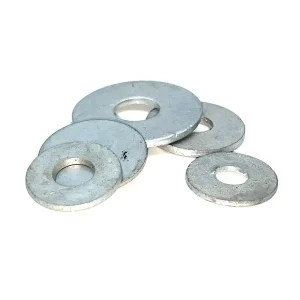
Buy High-Quality Stainless Steel Flat Washer from China Suppliers - Durable Factory Direct 304/316 Washers for Fastening Manufacturer, Company
-
China Stainless Steel Self-Drilling Screw Manufacturer, Manufacturers
-
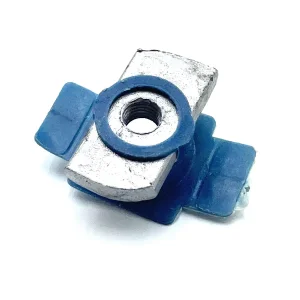
Buy Ergonomic Plastic Wing Nut Suppliers in China - Durable Tool-Free Fastening from Trusted Factory Factory, Product
-
China High-Strength Double-Hole Pressure Plate for Solar PV Systems - China Suppliers & Factory Company, Product
-
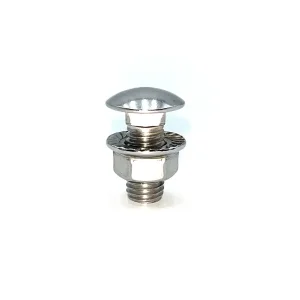
China High-Quality China Stainless Steel Carriage Bolt Suppliers - Durable Factory Direct Fasteners for Various Applications Product, Products
-
Buy High-Quality Aluminum Angle Bracket for Solar PV Mounting - Reliable China Suppliers & Factory Factories, Product

-
China High-Strength Hex Bolt from China Factory - Reliable Fasteners from Trusted Suppliers Company, Companies
-
Best High-Strength Stainless Steel Hex Socket Cap Screw - China Suppliers & Factory for Durable Fastening Solutions Manufacturers, Company