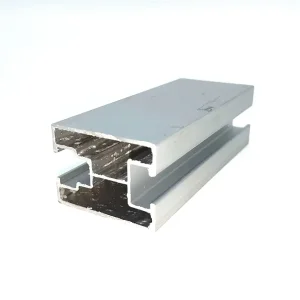
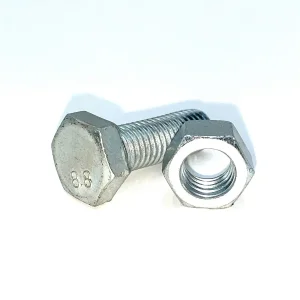
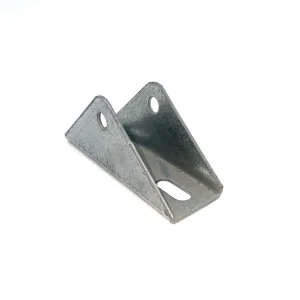
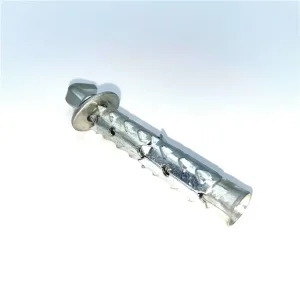
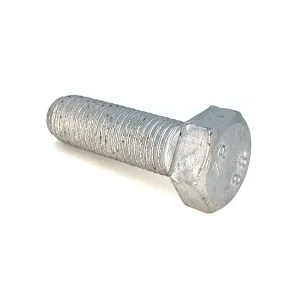
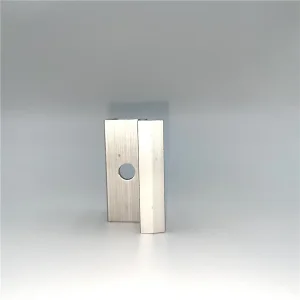
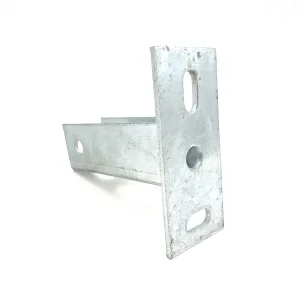
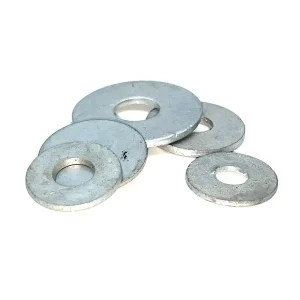
Featured Photovoltaic Hardware & Structural Fasteners (Batch 01)
Engineered directly in Yongnian, Handan City—China's Fastener Capital. Explore our heavy-duty solar PV mounting brackets, expansion anchors, and matching high-tensile hardware designed for seamless integration with M6-M12 flange assemblies.

The Engineering Role of M6 Serrated Flange Nuts in Modern Assembly
An executive analysis of why leading global manufacturers are phasing out traditional split lock washers in favor of integrated serrated flange locking hardware across critical load-bearing joints.
In high-vibration and cyclic-load industrial applications, threaded fastener joint integrity represents one of the most critical factors determining structural longevity, operational uptime, and safety compliance. Among standard metric hardware, the M6 Serrated Flange Nut (commonly specified under DIN 6923, ISO 4161, and EN 1661, or ASME B18.16.4 for inch-metric hybrid drawings) stands out as an indispensable component. Combining an integrated circular washer flange with precision-stamped unidirectional or bi-directional radial teeth, this fastener eliminates the human-error risk of misplaced separate spring washers while drastically optimizing assembly cycle time.
The Mechanical Mechanics: Locking Dynamics Under Junker Vibration Testing
Unlike standard plain flange nuts that rely strictly on bolt stretch pre-load friction, serrated flange nuts utilize an active mechanical biting action. As the nut is torqued into position, the angled serrations on the underside of the flange glide over the mating surface in the clockwise direction. Upon achieving specified clamp pre-load (typically 8.8 to 11.2 kN for Grade 8.8 / Class 8 carbon steel fasteners), the steep, hardened ratchet-like teeth embed into the bearing substrate material.
Under transverse dynamic loading—as benchmarked by the standard Junker Vibration Test (DIN 65151 / ISO 16130)—standard nut and washer pairs frequently experience rotational back-off within 200 to 400 vibration cycles once the prevailing friction coefficient drops. In contrast, the M6 serrated flange nut requires a breakaway torque that is typically 1.15 to 1.35 times higher than the original tightening torque. Any counter-clockwise rotational tendency forces the serrations to bite deeper into the substrate, physically resisting back-off and mitigating joint relaxation.
Engineering Warning on Surface Integrity & Galling
Because the radial serrations intentionally bite into the mating surface (depth: 0.12 mm to 0.22 mm), serrated flange nuts should not be specified on surfaces where anti-corrosion barrier coatings (e.g., thin powder paints or architectural clear anodizing) must remain cosmetically or functionally unbreached, unless cathodic continuity (such as solar panel electrical grounding bonding) is explicitly intended.
Total Cost of Ownership (TCO): Procurement Savings in Automated Assembly
From an enterprise procurement perspective, specifying integrated M6 serrated flange nuts reduces the bill of materials (BOM) complexity by 50% compared to a two-piece hex nut plus split washer combination. On automated production lines, bowl-feeders handling integrated flange nuts have an average cycle jam rate of less than 0.002%, compared to 0.08% for interlocking helical spring lock washers. Furthermore, labor audits across European and North American industrial equipment plants indicate an average assembly time saving of 3.8 seconds per fastening point.
Technical Specification Matrix: DIN 6923 / ISO 4161 M6 Flange Nuts
Dimensional fidelity, thread pitch tolerances, proof loads, and serration geometry data for technical procurement teams and mechanical design engineers.
| Parameter / Dimensional Attribute | DIN 6923 Standard (Metric Coarse) | ISO 4161 Equivalent | High-Precision OEM Deviation Limit |
|---|---|---|---|
| Nominal Thread Diameter (d) | M6 x 1.0 mm | M6 x 1.0 mm | Tolerance 6H (Internal Thread Plug Gauge) |
| Width Across Flats (s) | 10.00 mm (max: 10.00 / min: 9.78 mm) | 10.00 mm (max: 10.00 / min: 9.78 mm) | ±0.08 mm (Socket tooling anti-camout) |
| Flange Diameter (dc) | 14.20 mm max / 13.00 mm min | 14.20 mm max / 13.00 mm min | 14.20 mm max (Uniform radial thickness) |
| Total Nut Height (m) | 6.00 mm max / 5.70 mm min | 6.00 mm max / 5.70 mm min | Thread engagement ratio ≥ 0.85d |
| Flange Edge Thickness (c) | 1.10 mm min | 1.10 mm min | Prevents flange curling under proof stress |
| Serration Teeth Count & Angle | 24 to 36 radial teeth (typically 24) | 24 to 36 radial teeth | Ramp angle: 28° / Locking face: 88°–90° |
| Core Hardness (HV / HRC) | Class 8: 180–302 HV | Class 10: 272–353 HV | Property Class 8 & 10 | Carburized case depth: 0.15–0.25 mm (for carbon steel) |
| Proof Load Stress (Sp) | Class 8: 15,200 N | Class 10: 18,800 N | 880 MPa / 1040 MPa equivalent | 100% verified via destruction batch sampling |
Global Procurement Demands Across Core Strategic Sectors
How M6 serrated flange nuts provide high-reliability mechanical anchoring and electrical continuity across renewable energy, automotive, and industrial infrastructure.
Solar PV Mounting & Grounding Bonding
In photovoltaic racking, M6 serrated flange nuts (often paired with stainless steel carriage bolts or T-bolts) serve a dual purpose: structural clamping and electrical bonding (UL 2703 compliance). The radial teeth cut through non-conductive clear anodized aluminum oxide layers (Al2O3) on guide rails and mid/end clamps, establishing an equipotential path for lightning protection and system grounding without requiring auxiliary grounding pins.
Automotive Body-in-White (BIW) & EV Enclosures
Tier-1 automotive suppliers specify M6 Property Class 10 serrated flange nuts for electrical wiring brackets, battery management system (BMS) trays, and chassis sub-shielding. With automated nut-running spindles requiring precise torque-to-yield tracking, Youlong's tightly controlled coefficient of friction (μ = 0.12–0.18) prevents premature thread strip-out while ensuring zero back-off under relentless road vibration.
HVAC Ducting & Cable Ladder Assemblies
Commercial HVAC ducting and electrical cable tray suspensions require tens of thousands of M6 connections installed overhead. Using standard DIN 6923 flange nuts completely removes the requirement for two-handed manual washer placement, increasing mechanical installation velocity on high-rise construction projects by upwards of 30% while meeting seismic restraint building codes.
Metallurgical Matrix: Selecting the Optimum Alloy and Coating
Fasteners perform only as well as their metallurgical grade and surface chemistry. Match your operating environment to the correct alloy-coating pairing.
Carbon Steel Class 8 / 10
Composition: Medium carbon steel (1035/1045) or alloy steel (40Cr), quenched and tempered. Ideal for general structural connections, mechanical engineering, and high tensile pre-loads.
Stainless Steel A2-70 (AISI 304)
Composition: 18/8 Austenitic Cr-Ni steel. Provides non-magnetic properties, exceptional ductility, and proven atmospheric corrosion resistance across urban, rural, and light commercial rooftop installations.
Marine Stainless A4-80 (AISI 316)
Composition: Austenitic stainless enhanced with 2.0%–3.0% Molybdenum. Essential for high chloride environments, coastal solar projects within 5 km of sea spray, and chemical processing plants.
Non-Electrolytic Zinc Flake
Coatings: Geomet 500A/B, Dacromet, or Delta-Protekt. Produces zero hydrogen embrittlement risk (crucial for Class 10 heat-treated nuts), with thin 5–15 μm film thickness preserving thread pitch fidelity.
Localization Support, Supply Chain Resilience & Compliance
Eliminate overseas purchasing friction with structured quality control, complete legal compliance documentation, and multi-tier logistics coordination.
As international supply chains balance supply diversification and risk management, Handan Youlong Fastener Co., Ltd. bridges the gap between massive Chinese factory-floor manufacturing efficiency and stringent Western compliance standards. Based directly within Yongnian District—the manufacturing epicenter responsible for over 45% of China's aggregate fastener output—our industrial footprint guarantees unmatched upstream steel billet raw material security, continuous wire drawing lines, in-house multi-station cold formers, and certified heat-treatment access.
Transparent Compliance: 3.1 MTR, RoHS 3 & REACH Compliance
Every commercial consignment exported by Youlong is supported by standard EN 10204 Type 3.1 Material Test Reports (MTR). These documents record precise heat numbers, spectrographic chemical composition (Carbon, Manganese, Phosphorus, Sulfur, Silicon, Chromium, Nickel, Molybdenum), measured proof tensile stress, and Vickers/Rockwell core and surface hardness test results.
Furthermore, all our zinc-electroplated, zinc-nickel alloy, and zinc flake finishes strictly conform to the EU Directive 2011/65/EU (RoHS 3)—guaranteeing 100% absence of hexavalent chromium (Cr6+), lead, mercury, and cadmium—as well as compliance with the European Chemicals Agency (ECHA) REACH Regulation (EC 1907/2006) for Substances of Very High Concern (SVHC).
Export Packaging & High-Speed Automated Feeder Packaging
Recognizing that M6 fasteners are frequently deployed in automated automated robotic bowl feeders, Youlong employs an export packing standard engineered to prevent transit damage, thread burring, and moisture oxidation during 45-day maritime crossings:
- Primary Packaging: Heavy-duty sealed 25 kg poly-lined woven cartons or multi-wall corrugated inner boxes (2,000 to 5,000 pcs per box with batch tracking barcodes).
- Secondary Palletizing: Heat-treated solid ISPM-15 compliant fumigated wooden pallets (Euro-standard 800 x 1200 mm or US standard 48 x 40 inches).
- Weather Shielding: Multiple stretch-wrap layers with moisture-absorbing silica desiccant pouches and edge-board corner protectors, rated for four-tier container stacking.
Technology Roadmap: Next-Generation Fastener Manufacturing
How our smart manufacturing upgrades in Handan are redefining quality assurance, cold-forming precision, and carbon footprint accountability.
Multi-Station Cold Forging
Transitioning all M6 lines to 6-station high-speed cold formers. Eliminating micro-voids in internal thread blanks while maintaining unbroken grain flow lines across the serrated flange perimeter.
Inline 100% Optical Sorting
Deploying dual-camera glass dial sorting stations running at 800 parts per minute. AI models detect incomplete serrations, microscopic thread chips, and flange diameter runouts to reach <10 PPM defect rates.
Micro-Encapsulated Topcoats
Introducing factory-applied integrated lubricants with micro-encapsulated threadlockers. Provides consistent tightening torque without manual thread-locking fluids on job sites.
CBAM & ESG Traceability
Implementing batch-level Product Carbon Footprint (PCF) tracking to support European Carbon Border Adjustment Mechanism (CBAM) declarations, using green electric annealing furnaces.
Frequently Asked Questions: B2B Procurement & Engineering
Direct answers to the most common engineering, metallurgical, and international logistics questions asked by fastener importers and EPC project managers.
What is the critical mechanical difference between DIN 6923 and ISO 4161 for M6 Flange Nuts?
Can M6 serrated flange nuts be re-used after being torqued to full pre-load?
How do M6 serrated flange nuts achieve UL 2703 solar grounding compliance?
What tightening torque is recommended for M6 serrated flange nuts across different grades?
- Stainless Steel A2-70 / A4-70: 8.5 Nm to 10.5 Nm (using anti-seize paste to prevent cold welding/galling).
- Carbon Steel Class 8 (Zinc Plated, μ=0.14): 9.0 Nm to 11.5 Nm.
- Carbon Steel Class 10 (Geomet / Dacromet, μ=0.12): 13.0 Nm to 15.5 Nm.
What is the minimum order quantity (MOQ) and production lead time for export shipments?
Featured Photovoltaic Hardware & Structural Fasteners (Batch 02)
Full catalog integration: reinforced aluminum guide profiles, heavy-duty hot-dip galvanized bolts, and specialized PV connectors completing the load path.