
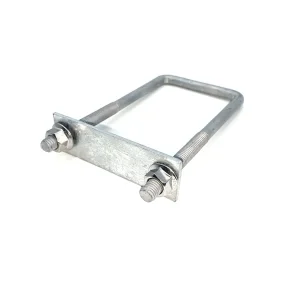
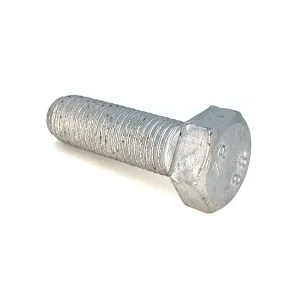
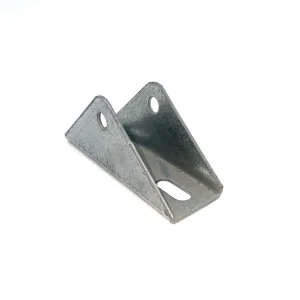
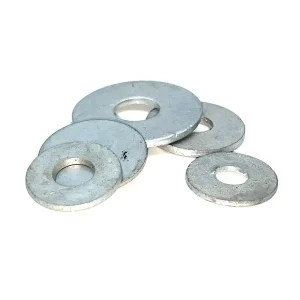
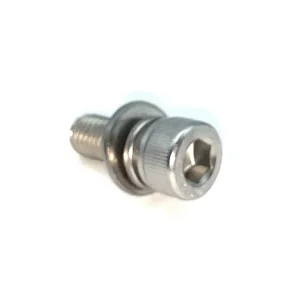
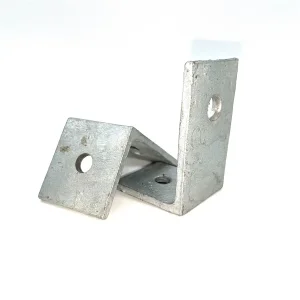
Featured Photovoltaic Mounting & Grounding Fasteners
Direct-from-factory high-conductivity bonding connectors, galvanized hardware, and structural brackets engineered for low-impedance electrical paths.
Physics-Driven Lightning Grounding Cable Engineering & Surge Attenuation
A granular analysis of transient surge dissipation, thermal capacity under short-circuit stress, and electrochemical surface protection in critical energy networks.
In lightning down-conductor networks and earth termination grids, high-frequency transients display characteristics radically distinct from standard 50/60 Hz power-frequency earthing. When a lightning flash strikes a photovoltaic structure or wind turbine nacelle, the current rise time ($\mathrm{d}i/\mathrm{d}t$) regularly exceeds $10^{10}\,\mathrm{A/s}$. Under these extreme conditions, the inductive reactance ($\omega L$) completely dominates the overall circuit impedance. A down-conductor cable engineered with improper stranding geometry or excessive self-inductance will generate tremendous transient potential differences ($V(t) = L \cdot \mathrm{d}i/\mathrm{d}t + R \cdot i$), triggering lethal side-flashing across adjacent PV module arrays, inverter enclosures, and foundation pylons.
Chinese industrial manufacturing clusters have revolutionized conductor production by incorporating metallurgical micro-alloying and continuous horizontal casting. Modern lightning grounding cables sourced from verified tier-1 Chinese manufacturers utilize oxygen-free high-conductivity bare copper (OFHC, achieving $\ge 100\%$ IACS conductivity), high-tensile copper-clad steel (CCS with metallurgical bonding thickness exceeding $10\%$ of radius), and tin-plated stranded conductors designed specifically to withstand harsh soil chemistry and chemical atmospheric pollutants.
Skin Effect & High-Frequency Dispersion
Multi-strand concentric lay geometry maximizes conductor surface area, dramatically suppressing high-frequency impedance during direct strokes with fast 1.2/50 µs and 10/350 µs waveforms.
- Conductor types: Class 2 stranded bare / tinned copper
- Lowers self-inductance below $1.0\,\mathrm{\mu H/m}$
Short-Circuit Fault Capacity (IEC 60364-5-54)
Conductors are precision sized according to the adiabatic thermal equation $S = \sqrt{I^2t}/k$, maintaining mechanical integrity without thermal annealing or fusing during asymmetric fault currents.
- Cross sections: $25\,\mathrm{mm^2}$ to $240\,\mathrm{mm^2}$
- Thermal withstand factor: $k = 176$ for bare copper
Electrochemical Passivation & C5 Protection
Integrating tin plating or sacrificial zinc coatings mitigates galvanic potential discrepancies ($>0.15\,\mathrm{V}$) when interfacing copper earthing leads with aluminum PV rails and galvanized piles.
- Neutralizes galvanic reaction cells
- Surpasses 1,000-hour ASTM B117 salt spray
Industrial Cluster Advantages of China Grounding Manufacturers
How Handan and Yongnian’s centralized raw materials, precision forging, and vertical integration establish global cost and quality benchmarks.
Cumulative global shipments of structural and electrical connection hardware.
Delivering turnkey BOM fulfillment across 40+ countries and regions.
In-line laser micrometer verification and automated torque testing.
MTC according to EN 10204 3.1 with continuous raw material tracking.
The manufacturing ecosystem located in Yongnian District, Handan City (Hebei Province)—recognized globally as the "China Fastener Capital"—provides an unmatched industrial synergy for lightning protection cables, structural clamps, grounding lugs, and foundation anchor assemblies. Unlike fragmented overseas facilities where wire drawing, cold-heading, hot-dip galvanizing, and packaging occur in geographically detached hubs, the Handan industrial cluster features full vertical integration within an 8-kilometer radius.
This geographic density drastically collapses supply chain lead times and overhead. From blast-furnace hot-rolled wire rods to precision drawing, multi-strand twisting, and automated continuous extrusion of PVC/LSZH jackets, each manufacturing station operates with computerized process synchronization. In-house hot-dip galvanizing facilities maintain zinc kettle baths with high-purity electrolytic zinc (Zn content $\ge 99.995\%$), yielding uniform coating thicknesses exceeding $85\,\mathrm{\mu m}$ (compliant with ISO 1461 and ASTM A153). Consequently, global renewable developers procuring from Youlong secure significant cost efficiencies—upwards of 20% to 35% compared to European or North American domestic intermediaries—without sacrificing tensile strength, metallurgical density, or impulse surge capacity.
Engineering Standards & Localized Statutory Assurance
Full compliance matrix aligning international lightning protection codes, mechanical load requirements, and third-party laboratory verification.
| Standard System | Standard Reference | Test Criteria & Metric Verification | Certified Performance Level |
|---|---|---|---|
| International Electrotechnical | IEC 62561-1 / IEC 62561-2 | Lightning protection system components (LPSC) - Requirements for conductors and earth electrodes. | Class H Tested (100 kA 10/350 µs) |
| North American Safety | UL 467 / UL 2703 | Grounding and bonding equipment for PV racking, metallic structures, and earth current dissipation. | UL Listed / ETL Compatible |
| Lightning Risk Management | IEC 62305-1 ~ 4 / NFPA 780 | Physical damage protection to structures and life hazard reduction via equipotential bonding. | LPL Level I, II, III, IV Certified |
| Power Substation Earthing | IEEE Std 80 / IEEE Std 837 | Qualifying permanent connections used in substation grounding; severe thermal shock & mechanical pull-out. | Surpasses Tensile & Acid Ageing |
| Surface Protection & Salt Spray | ISO 9227 / ASTM B117 / ISO 12944 | Continuous neutral salt spray (NSS) assessing pitting, white rust, and red rust formation. | C5-M Coastal / C5-I Industrial Rated |
To eliminate compliance risks for cross-border EPC contractors, our manufacturing engineering protocols incorporate strict localized support. Our technical liaison team provides site-specific soil resistivity evaluation models, ensuring that whether your installation is situated in the high-salinity coastal flats of the Middle East, the freezing permafrost regions of Scandinavia, or the acidic soil basins of Southeast Asia, each bill of materials matches exact statutory and electrochemical constraints. Mill Test Certificates (MTCs), complete chemical spectral analysis (XRF), tensile elongation certificates, and microscopic coating cross-section reports accompany every crated container.
Global EPC Procurement Architecture: De-risking Hardware Supply Chains
Resolving the challenges of multi-tier vendor fragmentation, interface incompatibilities, and hidden life-cycle failures in renewable balance-of-system (BOS) projects.
Single-Point BOM Consolidation
Sourcing cables, structural grounding clamps, bonding washers, and foundation expansion fasteners from independent manufacturers induces critical interface mismatches. Youlong provides unified mechanical-electrical compatibility, eliminating site re-machining and installation bottlenecks.
Theft Deterrence & Copper Alternatives
High scrap values make pure copper cables vulnerable to theft in expansive utility installations. We engineer high-strength Copper-Clad Steel (CCS) conductors with matching conductivity characteristics, zero secondary scrap value, and triple the tensile break load of copper.
Staged Containerized Logistics
Utility-scale projects demand synchronized delivery matched with field civil stages. We support phased sea-freight shipping schedules aligned with your foundation driving, racking assembly, and electrical tie-in milestones, cutting demurrage and warehousing costs.
Localized Application Scenarios & Installation Methodologies
Engineered earthing topologies developed for the world’s most demanding geographical environments and electrical topographies.
1. Utility-Scale Ground-Mounted Solar Arrays
In massive desert or tracker-based solar farms spanning hundreds of hectares, ground-fault potential loops represent an operational hazard. Our grounding systems feature continuous bare tinned copper conductors clamped securely across anodized aluminum rails with our double-hole pressure plates and tooth-biting bonding washers.
- Direct penetration through anodized surface layers
- Eliminates hazardous electrical touch-potential ($\le 50\,\mathrm{V}$)
- Maintains structural earth loop impedance below $1.0\,\Omega$
2. Floating Solar (FPV) & Coastal Installations
Floating photovoltaic plants installed over retention reservoirs, hydropower dams, or coastal tidal flats face constant movement and continuous 100% relative humidity. We supply marine-grade 316 stainless steel bonding brackets, heavy-coating galvanized anchor hardware, and highly flexible tinned stranded copper cables.
- Class 5 ultra-flexible fine-stranded conductors
- High resistance to flexural mechanical fatigue
- Withstands extreme saline electrolyte immersion
3. Wind Power Substations & Industrial Plants
High-voltage switchyards, wind turbine bases, and heavy industrial facilities face severe step-and-touch voltage hazards during ground faults. Our heavy-duty cross-section copper grounding conductors ($95\,\mathrm{mm^2}$ to $240\,\mathrm{mm^2}$) form deeply buried earth grids with exothermic or compression lugs, ensuring complete safety.
- Rapid dissipation of $40\,\mathrm{kA}$ short-circuit pulses
- Heavy-duty mechanical pull-out strength
- Compliant with IEEE 80 touch/step calculations
Emerging Technology Trends in Grounding & Surge Protection
Next-generation innovations reshaping grounding conductor manufacturing and asset health monitoring.
1500V DC Architecture Compatibility
As PV plant system voltages shift universally from 1000V DC to 1500V DC, sustained DC fault arcs become significantly more destructive. Advanced conductor alloys prevent catastrophic insulation breakdown and thermal runaway under extended DC earth-leakage faults.
Smart Cathodic Resistance Sensors
The integration of IoT soil-probe sensors within Chinese earthing conductor assemblies allows utility managers to track real-time earth loop degradation, soil moisture content, and electrolytic loss without costly manual trench testing.
Graphene-Enhanced Conductive Concrete
In high-resistivity rocky terrains, grounding cables are backfilled with graphene-modified bentonite backfill materials, slashing high ground resistance values by up to 60% while permanently sealing copper from ground water oxidation.
Frequently Asked Questions by Global Engineering Teams
In-depth technical answers addressing material selection, electrochemistry, production tolerances, and export certification.
What is the metallurgical difference between bare copper, tinned copper, and Copper-Clad Steel (CCS) for lightning grounding?
How do Youlong grounding fasteners resolve galvanic corrosion between aluminum racking and copper conductors?
Can Youlong customize grounding components and cable lugs based on EPC proprietary drawings?
What quality documentation accompanies export shipments for cross-border customs and client audits?
What are the lead times for container-scale utility orders from your Handan manufacturing lines?
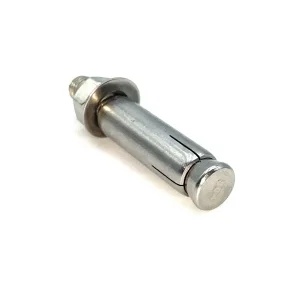
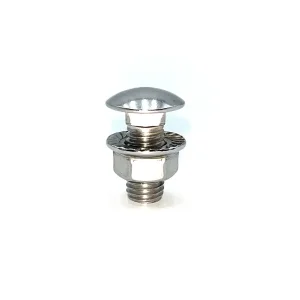
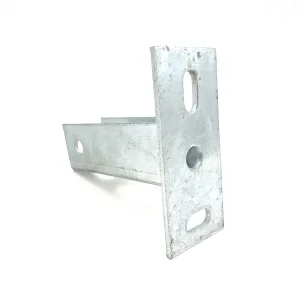
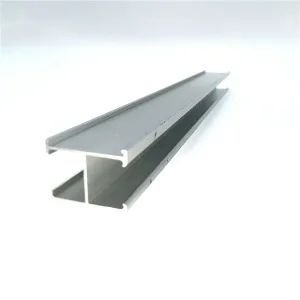
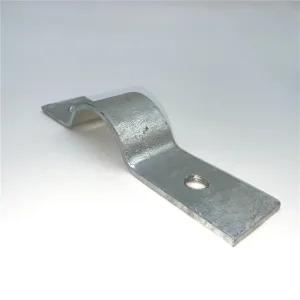
Structural Foundation, Rails & Earthing Anchor Hardware
Complete load-path hardware from concrete embedment anchors to heavy extruded PV mounting rails, engineered to withstand structural wind uplift and ground current stress.
Accelerate Your Project Procurement with Direct Engineering Support
Connect with our senior technical engineering team in Handan, China. Request full technical product catalogs, 3D CAD models, material mill test certifications, or submit your proprietary drawings for a prompt proposal.