Precision Structural Fixings & PV Cladding Hardware
Engineered for high-load hollow wall cavities, concrete foundations, and industrial photovoltaic racking architectures.
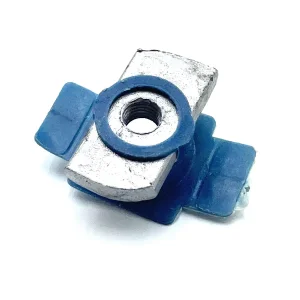
The Engineering Mechanics of Installing A Toggle Bolt in High-Stress Substrates
Why modern prefabricated construction, MEP duct suspension, and curtain wall engineering demand scientifically validated cavity anchors.
In structural hardware nomenclature, installing a toggle bolt represents the quintessential mechanical response to the fundamental engineering challenge: generating high tensile pull-out resistance ($\mathrm{N_{Rd}}$) within low-strength or hollow-core substrate cross-sections. Unlike conventional mechanical expansion anchors—which rely strictly on radial friction and lateral hoop stress against continuous solid concrete walls—a toggle bolt operates on the principle of rear-flange bearing surface dispersal. When anchored into hollow concrete masonry units (CMU), gypsum drywall partition assemblies, autoclaved aerated concrete (AAC), or cold-formed steel architectural sandwich panels, toggle fixings bypass substrate brittleness by projecting heavy-gauge metallic wings across an expanded surface area behind the hidden blind cavity.
As global EPC contractors transition toward modular lightweight construction and fast-track industrial envelopes, Handan Youlong Fastener Co., Ltd. has pioneered advanced manufacturing protocols for heavy-duty toggle systems, stainless steel expansion fixtures, and integrated photovoltaic sub-frame connectors. Headquartered within the internationally recognized Yongnian Fastener Industrial Cluster (Handan City, Hebei Province), our operations integrate multi-stage cold forging, precision stamping, automated spring-wing assembly, and computerized metallurgical heat treatment. This whitepaper analyzes the mechanical behavior, corrosion countermeasures, regulatory frameworks, and operational methodologies defining tier-one hollow-wall anchor production across China's manufacturing ecosystem.
Blind-Cavity Load Dispersal
Toggle bolts transform point-source axial tension into wide-span flexural bearing resistance. By distributing loads across dual spring-actuated carbon or stainless wings, the punching-shear failure cone on the rear gypsum or masonry face-shell is expanded by more than 400% compared to standard sleeve anchors.
Dynamic Shear vs. Tension Equilibrium
In seismic MEP ducting and vibrating industrial solar facade mounts, toggle assemblies withstand severe transverse shear forces ($V_{\mathrm{Rd}}$). Precision-rolled thread stems (Grades 4.8, 8.8, SS304, SS316) prevent thread stripping under sustained cyclic oscillations.
Controlled Clamping Torque Control
Improper torque application is the primary cause of core crushing in hollow gypsum boards and terracotta facades. Our precision-calibrated fasteners provide predictable tensioning thresholds, preserving substrate structural integrity during continuous high-speed pneumatic tooling installation.
Engineering Protocol: How to Correctly Install A Toggle Bolt in Commercial Structures
A rigorous, field-proven methodology designed to eliminate drywall blowout, screw cross-threading, and loss of rear-cavity grip.
Calibrated Pilot Boring
Drill a circular clearance aperture according to the wing's collapsed diametric footprint (e.g., 1/2" hole for 3/16" toggle; 5/8" hole for 1/4" toggle). Keep drilling perpendicular to prevent substrate delamination.
Pre-Assembly Alignment
Pass the machine bolt through the mounting bracket, fixture flange, and load-distribution flat washer prior to threading on the spring-actuated toggle wing. Thread wing tips facing the bolt head.
Cavity Insertion & Snap
Compress the spring-loaded metallic wings flush against the bolt shank. Insert the mechanism completely through the bored hole until wings clear the wall thickness and snap fully open inside the void.
Counter-Tension Torquing
Pull the bolt head forward firmly so the open wings grip the interior wall face, locking the nut. Tighten with a torque-limited screwdriver until the fixture is clamped flat. Avoid over-torquing.
Substrate Holding Capacity & Dimensional Specifications
Reference test values obtained from Youlong Fastener Quality Inspection Labs under monotonic tension loading (Safety Factor $\Omega = 4.0$).
| Bolt Thread Diameter | Bore Hole Size ($\varnothing$) | Min. Cavity Clearance | 1/2" Gypsum Board ($N_{\mathrm{rec}}$) | Hollow Concrete CMU ($N_{\mathrm{rec}}$) | Ultimate Shear ($V_{\mathrm{rec}}$) |
|---|---|---|---|---|---|
| M4 (3/16") | 11.0 mm (7/16") | 35.0 mm | 310 N (~70 lbs) | 1,120 N (~250 lbs) | 890 N (~200 lbs) |
| M6 (1/4") | 14.0 mm (9/16") | 42.0 mm | 480 N (~108 lbs) | 1,850 N (~415 lbs) | 1,560 N (~350 lbs) |
| M8 (5/16") | 18.0 mm (11/16") | 50.0 mm | 650 N (~146 lbs) | 2,680 N (~602 lbs) | 2,450 N (~550 lbs) |
| M10 (3/8") | 22.0 mm (7/8") | 60.0 mm | 820 N (~184 lbs) | 3,450 N (~775 lbs) | 3,800 N (~854 lbs) |
| M12 (1/2" Heavy Duty) | 28.0 mm (1-1/8") | 75.0 mm | Not Recommended | 5,100 N (~1,146 lbs) | 5,800 N (~1,300 lbs) |
High-Value Industrial & Infrastructure Applications
Where high reliability, non-destructive hollow fastening, and harsh exterior durability converge.
Solar BIPV & Metal Sandwich Panels
Mounting secondary cable conduits, inverter enclosures, and collector channels to perforated steel deckings or insulated PIR sandwich panels where through-bolting is impossible. Marine-grade stainless steel SS304/SS316 toggles provide lifelong galvanostatic stability without thermal-bridge degradation.
Commercial MEP Seismic Trapeze Runs
Heavy mechanical ductwork, fire sprinkler mains, and high-voltage cable trays routed along hollow ceiling precast slabs and ribbed metal decks. Heavy-gauge carbon steel toggle bolts offer ductile deformation characteristics during low-frequency seismic shocks.
Healthcare & Modular Architectural Walls
Anchoring intensive-care wall arms, MRI room shielding, and heavy sanitary casework into double-layer drywall partition systems with light-gauge cold-formed steel studs. Strap-toggle architectures deliver zero-rattle, hygienic anchor points.
Strict Global Compliance & Metallurgical Integrity
Every shipment is backed by dimensional inspection, raw material trace reports, and accelerated salt chamber testing.
International Building Standards
Engineered to comply with ASTM C1002 (steel framing fixings), ASTM B117 (salt spray testing), DIN EN ISO 898-1 (mechanical properties of carbon steel), and European Technical Assessment (ETA) hollow-masonry assessment guidelines.
Advanced Surface Passivation
Available with electro-galvanized yellow/clear chromate (5–12 $\mu\mathrm{m}$), hot-dip galvanization ($>55\,\mu\mathrm{m}$ for C3/C4 microclimates), Geomet/Dacromet flaking, and passivation-treated Austenitic Stainless Steel (AISI 304 & 316) for aggressive offshore environments.
Full Lot Traceability & Testing
Complete traceability from certified steel ingot melting to final threaded delivery. Comprehensive Mill Test Certificates (EN 10204 3.1), micro-hardness assays, optical sorting verification, and axial proof-load data supplied with every export container.
The Next Generation of Intelligent Blind-Cavity Anchors
How automation, composite metallurgy, and embedded sensor technologies are revolutionizing building fixings.
The structural hardware industry is undergoing an unprecedented shift toward smart structural health monitoring (SHM) and decarbonized building hardware. Traditional spring-wing toggle bolts, while mechanically sound, are limited by manual assembly times and lack of real-time post-installation tension feedback. Handan Youlong Fastener's technical R&D department is actively executing our 10-year technological innovation blueprint:
1. Nanocomposite Polymer Wings
Developing carbon-fiber-reinforced polymer (CFRP) toggle wings that eliminate thermal bridging in passive buildings (Passivhaus standards) while reducing overall fixture weight by 45% without reducing pull-out load limits.
2. RFID & Stress Sensor Integration
Prototyping washer assemblies embedded with micro-piezoelectric RFID chips, enabling maintenance engineers to scan wall anchors with handheld sensors and verify exact retained torque without invasive disassembly.
3. Robotics-Ready Fastener Geometry
Standardizing anchor drive heads with magnetic recess collars and pre-aligned strap guides engineered for automatic feeding by drywall finishing drones and robotic MEP installation platforms.
Frequently Asked Questions on Installing A Toggle Bolt & Sourcing from China
In-depth structural answers addressing load limits, failure modes, substrate selection, and factory procurement.
How does a toggle bolt compare to a plastic wall anchor or molly bolt in load capacity?
Can you reuse a toggle bolt after unscrewing it from a wall?
What is the minimum cavity depth required behind the wall for a toggle bolt?
How do Youlong Fasteners prevent galvanic corrosion between aluminum solar rails and steel fasteners?
Why is Handan (Yongnian) considered the primary global hub for fastener supply?
What is the standard lead time and Minimum Order Quantity (MOQ) for custom OEM toggle orders?
Structural Extrusions, Precision Threading & Mounting Connectors
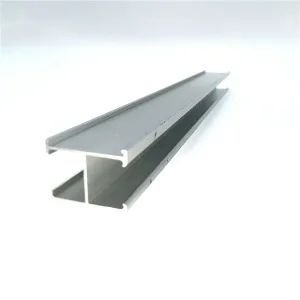
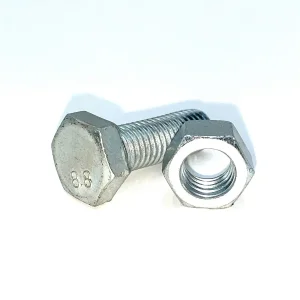
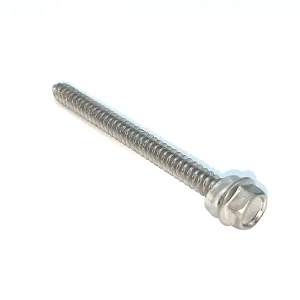
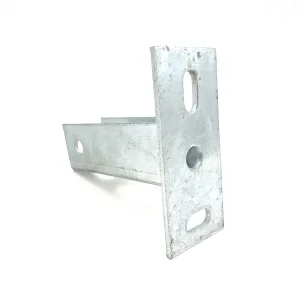
Complete assembly balance: pairing toggle wall anchors with solar purlin rails, hex bolts, self-drilling screws, and clamp hardware.