Featured Precision Fastening & Structural Hardware
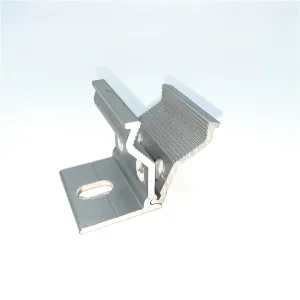
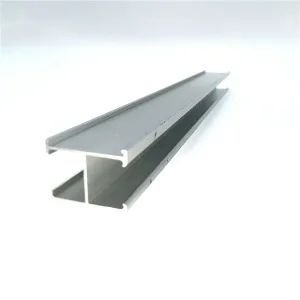
Integrated mounting assemblies and structural connection components for large-scale utility installations.


Global Procurement Dynamics for Hot Dip Galvanized Structural Tubing
An engineering breakdown of macroeconomic factors driving high-durability hollow structural sections (HSS/SHS).
Utility-Scale Photovoltaics
Global demand for utility-scale solar farms requires robust ground-mount tracker systems and fixed structures capable of resisting torsion, wind shear, and prolonged ground moisture. Hot Dip Galvanized Square Pipes provide the uniform radius and structural stiffness necessary to support modern bifacial PV modules across multi-megawatt installations.
Industrial Warehousing & EPC
Modern automated logistics hubs and heavy industrial plants demand square hollow sections (SHS) with strict dimensional tolerances and certified axial load capabilities. Galvanized square tubing eliminates the necessity of field painting, significantly accelerating construction schedules and reducing total cost of ownership (TCO).
Coastal & Offshore Infrastructure
Deployments in aggressive atmospheric marine conditions (ISO 9223 C4/C5 categories) require structural elements engineered to resist chloride-induced pitting. The multi-layered metallurgical zinc-iron alloy created during hot-dip galvanizing offers self-healing sacrificial galvanic protection superior to standard barrier coatings.
Metallurgical Architecture & Manufacturing Precision
Comprehensive technological pathway from carbon steel slitting to high-temperature molten zinc immersion.
Steel Grade Selection
Engineered utilizing premium low-carbon and micro-alloyed structural coils (Q235B, Q355B, ASTM A500 Grades B/C, and S355J2H). Rigorous chemical composition tracking controls silicon (Sandelin curve management) and phosphorus contents to guarantee optimum zinc-iron intermetallic growth.
HFW & Inline Sizing
High-Frequency Welding (HFW/ERW) ensures continuous longitudinal seam integrity. Precision inline de-beading removes internal and external weld flash, followed by multi-stand cold forming to maintain perpendicular corners, flat facets, and minimal twist or bend tolerances.
Chemical Pre-Treatment
Prior to zinc dipping, sections undergo eight-stage surface preparation: acid pickling (hydrochloric bath) to eliminate mill scale and oxides, multi-stage cascading rinse, fluxing (zinc ammonium chloride), and controlled pre-heating to prevent thermal shocking.
Thermal Zinc Immersion
Immersion into a 99.995% high-purity molten zinc bath maintained precisely at 445°C - 455°C. This activates solid-state diffusion, forming four distinct metallurgical phases: Gamma (75% Fe, 25% Zn), Delta (90% Zn, 10% Fe), Zeta (94% Zn, 6% Fe), and Eta (pure zinc outer skin).
| Dimensional Range (mm) | Wall Thickness (mm) | Applicable Standards | Zinc Layer Coating | Typical Applications |
|---|---|---|---|---|
| 20 × 20 to 100 × 100 | 1.2 – 6.0 | ASTM A500, EN 10219, GB/T 6728 | 220 – 350 g/m² (30 – 50 µm) | Solar Tracking Rails, Greenhouse Frames |
| 120 × 120 to 250 × 250 | 3.0 – 12.0 | ASTM A500 Gr. B/C, EN 10210, AS/NZS 1163 | 400 – 600 g/m² (55 – 85 µm) | Heavy Truss Columns, Equipment Skids |
| 300 × 300 to 500 × 500 | 6.0 – 20.0 | ISO 657-14, EN 10210 S355J2H, JIS G3466 | 610 – 850 g/m² (85 – 120 µm) | Highway Gantries, Coastal Structural Piling |
Compliance, Quality Assurance & Global Certifications
Rigorous multi-stage verification protocols complying with international metallurgical standards.
Coating Uniformity & Adhesion
Each batch undergoes magnetic thickness gauge verification (ISO 2178 / ASTM B499) across both flat faces and corner radii. Knife edge cross-hatch and hammer testing according to ASTM A123 ensure that the intermetallic bond is completely ductile and free from peeling or flaking under structural deflection.
Mechanical & Tensile Validation
Destructive tests are executed on coupon samples harvested from both mother tube bodies and longitudinal weld lines: Yield strength (ReH), ultimate tensile strength (Rm), elongation percentage, and Charpy V-Notch impact testing down to -40°C for arctic structural engineering contracts.
NDT & Hydrostatic Inspection
Seamless structural integrity is corroborated through 100% online eddy current inspection and ultrasonic weld flaw detection. For pressurized or conduit purposes, continuous hydrostatic testing guarantees baseline performance without joint weepage or micro-fissuring.
Strategic Supply Chain & Project-Tailored Fabrication
Integrated processing hubs delivering cut-to-length, pre-punched, and bundled structural steel packages.
CNC Punching & Laser Profiling
Custom mounting slots, bolt patterns, drainage access points, and fish-mouth connection bevels executed directly on high-speed CNC 3D tube lasers. Pre-fabrication prior to batch hot-dip galvanizing preserves total zinc continuity on internal bore surfaces and punched edges.
Handan Industrial Synergy
Located in Yongnian, Handan—the epicenter of China's structural metal fabrication and fastener industry. This strategic geographic hub affords immediate access to primary molten steel sources, specialized hot-dip zinc dipping kettles, and integrated fastener manufacturing plants, lowering logistics overheads.
Export Packaging & Traceability
Hexagonal steel-strapped bundles with protective plastic end caps, rust-inhibiting outer wraps, and heat-treated wooden dunnage engineered for open-top or standard marine containers. Direct QR-code tagging guarantees digital linkage to mill heat numbers and lab test certificates.
Frequently Asked Technical & Commercial Questions
In-depth answers addressing design tolerances, metallurgy, and procurement compliance.
What is the key difference between pre-galvanized and post hot-dip galvanized square pipes?
Pre-galvanized pipes are formed from strip steel that has already been zinc-coated (typically 60-120 g/m²). During welding, the zinc layer at the seam is vaporized and only spray-repaired. Post hot-dip galvanized pipes are fully immersed into molten zinc after complete tube roll-forming and welding, creating a metallurgical alloy layer on both the interior and exterior surfaces with a much heavier zinc mass (300-600+ g/m²), offering superior corrosion resistance.
How does silicon content affect the galvanizing quality of structural steel?
According to the Sandelin Curve, steels with silicon contents between 0.04% to 0.14% or above 0.25% react exceptionally vigorously with molten zinc, causing ultra-rapid growth of brittle zinc-iron alloy phases (Zeta phase), which results in a dull gray appearance and increased susceptibility to impact flaking. We rigorously screen hot-rolled mother coil heats to maintain optimal silicon compositions for uniform, adherent coatings.
What dimensional tolerances can be guaranteed on large square sections?
We adhere to strict international tolerances under EN 10219-2 and ASTM A500. Standard outer dimension tolerance is ±0.75% to ±1.0% of the nominal face, wall thickness tolerance is ±5% to ±10%, corner radius is typically controlled between 1.5t to 2.5t, and straightness deviations do not exceed 0.15% of the total length.
Can you provide comprehensive third-party inspection documentation?
Yes. Every export lot is accompanied by a standard Mill Test Certificate in compliance with EN 10204 Type 3.1. Additionally, we regularly accommodate third-party inspection agencies such as SGS, BV, TÜV, and Lloyd's Register for witness testing, dimensional audits, ultrasonic testing, and container loading supervision.
Complementary Structural Mounts & Precision Fasteners
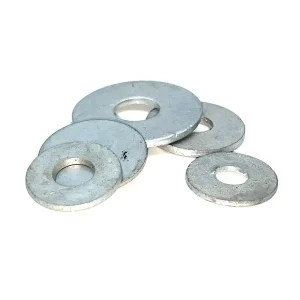
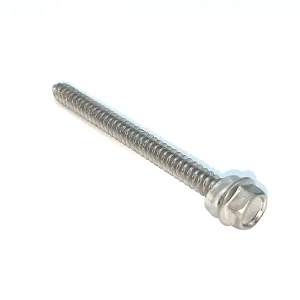
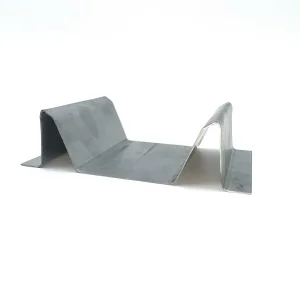
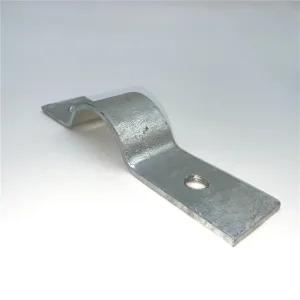
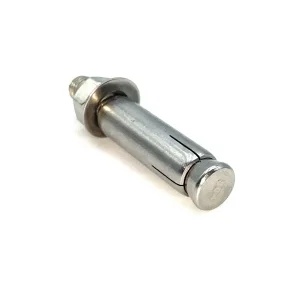
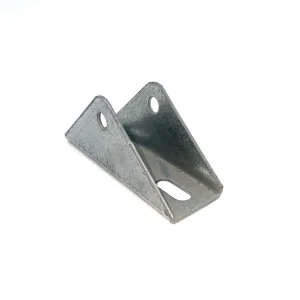
Heavy-duty clamping systems, expansion anchors, and engineered structural rails.