
Exterior Grounding Conductors & PV Structural Fastening Systems
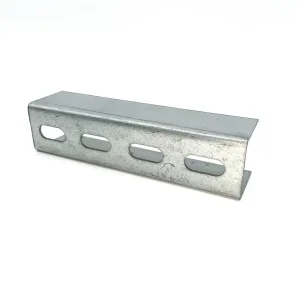
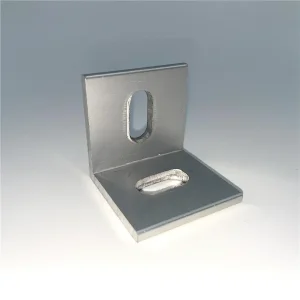
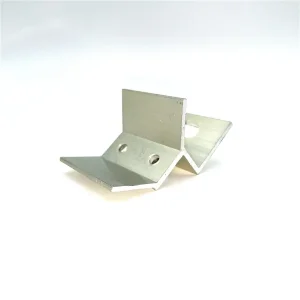
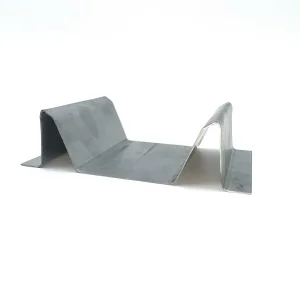
Precision-manufactured purlin connectors, mounting brackets, stainless structural anchors, and specialized grounding clamps engineered for harsh outdoor soil and atmospheric exposure.
Exterior Ground Wire Systems: The Critical Electrical Bastion
A comprehensive metallurgical and electrical safety analysis on external grounding electrode conductors (GEC), earth-termination networks, and lightning protection systems manufactured in China.
Transient Dissipation Mechanics
The ground wire outside a house serves as the low-impedance exit route for lightning strikes, grid switching surges, and accidental phase-to-ground faults. Routing along exterior foundations directly into driven ground rods ensures transient current dissipates without ionizing indoor raceways.
- Inductive reactance mitigation via direct pathways
- Zero dangerous step-and-touch potential gradients
- Surge arrestor (SPD) discharge optimization
Severe Outdoor Soil Metallurgy
Conductors routed along outer building envelopes face harsh environmental stress: salt aerosol in coastal belts, sulfur/nitrate soil acidity, UV degradation, and mechanical weed-whacker impacts. Specifying bare solid copper, tinned copper, or copper-clad steel (CCS) dictates lifecycle longevity.
- ASTM B8 Class AA & Class A stranding standards
- Electrolytic tough pitch (ETP) 99.9% pure copper
- Bimetallic corrosion protection with SS316 fasteners
Equipotential Enclosure Bonding
Exterior residential installations integrate complex distributed metallic structures: rooftop photovoltaic framing, air conditioning condenser chassis, gas entry pipe bonds, and smart subpanels. Interconnecting these outdoor components prevents destructive flashover arcs.
- NEC 250.66 GEC dimensional sizing matrices
- Direct-burial UL 467 cast bronze acorn clamps
- Perimeter ring counterpoise loop integration
Global Regulatory Compliance & Installation Standards
Deploying ground wire systems outside residential and light-commercial premises mandates rigorous compliance with destination-market electrical safety standards. Handan Youlong engineers hardware built to satisfy inspectors worldwide.
| Target Region | Primary Governing Standard | Prescribed Conductor & Hardware Spec | Inspection Mandate for Exterior Walls | Compliance Status |
|---|---|---|---|---|
| United States & Canada | NFPA 70 (NEC) Art. 250 / CSA C22.1 | Solid/Stranded Bare Cu #6 AWG (protected) or #4 AWG; UL 467 Listed direct burial clamps | Physical protection in PVC/EMT conduit if subject to physical damage; irreversibly crimped or exothermically welded | Fully Certified |
| European Union & UK | IEC 62305 / BS 7430 / BS 7671 (18th Ed.) | Minimum 16 mm² copper or 50 mm² galvanized steel tape/wire; Class H clamp testing | Equipotential bonding back to the Main Earthing Terminal (MET); loop impedance < 0.5 ohm verification | Fully Certified |
| Australia & New Zealand | AS/NZS 3000 (Wiring Rules) / AS 1768 | 6 mm² or 16 mm² green/yellow PVC insulated earthing conductor; copper-jacketed electrode rods | Corrosion sleeve over external foundation transitions; mechanical protection to 1.5m above ground grade | Pre-Audited |
| Latin America & Middle East | IEC / NOM-001-SEDE / SASO IEC 60364 | 25 mm² - 35 mm² High-strength copper-clad steel (CCS) or electrolytic copper stranded | Resistant to high soil salinity (gypsum/chloride); hot-dip galvanized coating thickness > 85 µm | Custom Batch Tailored |
The Handan Yongnian Industrial Ecosystem Advantage
Why Tier-1 global EPCs, wholesale electrical distributors, and infrastructure conglomerates source outside ground wire assemblies and mounting hardware directly from Handan, Hebei.
China's Fastener Capital Clustering
Yongnian District in Handan City represents over 55% of China's total structural fastener output. With raw steel billets, aluminum smelting, drawing mills, and surface treatment facilities clustered within a 15-kilometer radius, material supply bottlenecks are virtually eliminated.
- Sub-tier sourcing latency: < 24 hours
- Extreme scale economy minimizing raw tonnage costs
- Over 300,000 tonnes cumulative project delivery
Vertical In-House Fabrication
Unlike trading intermediaries, Handan Youlong operates fully integrated multi-station cold-heading headers, progressive stamping presses, automated CNC threading lathes, and induction brazing lines. We control the mechanical load path from foundation anchor bolt to wire clamp.
- ISO 9001 certified production oversight
- In-house tooling and custom die fabrication
- Automated optical sorting for zero defect batches
Cost Engineering & Logistics Directness
Direct highway access connecting Handan to Tianjin Port and Qingdao Port enables 48-hour container cartage from workshop floor to export container vessel. Combined with automated production, our customers gain a 20% to 35% landed cost advantage over domestic western manufacturers.
- FOB, CIF, DDP container logistics coordination
- Seaworthy moisture-barrier shrink palletization
- Flexible OEM private labeling and barcoding
B2B Sourcing Strategies: Ground Wire Metallurgy Comparison
Selecting the correct conductor and hardware metallurgy for outside building runs requires balancing current carrying ampacity, mechanical tensile durability, theft deterrent, and long-term electrochemical soil interaction.
| Conductor Material | Electrical Conductivity (% IACS) | Tensile Strength (MPa) | Corrosion Resistance (Outdoor Grade) | Theft Risk / Scrap Value | Recommended Exterior Application |
|---|---|---|---|---|---|
| Bare Solid Copper (ETP CW004A) | 100% | 220 – 260 | High in benign soils; vulnerable to direct acidic/sulfur backfill | Extremely High | Standard residential main service panels, NEC 250 ground rods, short exposed runs |
| Tinned Stranded Copper | 96% – 98% | 240 – 290 | Superior against atmospheric sulfur and coastal maritime salt mist | High | Exterior coastal residences, solar combiner grounding, industrial chemical zones |
| Copper-Clad Steel (CCS 40% / 21%) | 21% or 40% | 450 – 850 (High Tensile) | Excellent; metallurgical molecular copper bonding prevents peel | Zero (Non-recyclable scrap) | High-theft public areas, exterior down conductors, perimeter utility solar fencing |
| Hot-Dip Galvanized Carbon Steel Tape | 10% – 12% | 350 – 550 | Good in alkaline soils; heavy zinc sacrificial coating (>85 µm) | Low | European IEC lightning down-leads, foundation Ufer earthing networks |
| Marine Stainless Steel (SS316 / A4) | 2.5% (Non-conductor; clamping only) | 600 – 800 | Impervious to chloride pitting, extreme soil acidity, and ammonia | Moderate | Bimetallic isolation washers, grounding lug mounting bolts, expansion anchors |
Typical Exterior Ground Wire Installation Typologies
From suburban service drop entrances to rooftop photovoltaic interconnections, exterior grounding conductors must bridge complex electrical and structural interfaces without physical or galvanic degradation.
1. Service Meter Base to Driven Earth Rods
The standard residential GEC originates at the exterior meter socket or service disconnect enclosure, travels downward across the masonry stem wall, and terminates onto two 5/8" x 8-foot copper-bonded earth rods spaced at least 6 feet apart. Handan Youlong provides heavy bronze clamps and stainless concrete anchors for rigid vertical mounting.
2. Rooftop PV Array Exterior Perimeter Down-Lead
Solar modules and aluminum guide rails (such as our PV 3040 profile) accumulate heavy electrostatic potentials. Continuous #6 bare copper wire clips into anodized aluminum rails using bimetallic stainless grounding lugs with sharp integral teeth that penetrate oxide coatings, dropping along the outer siding directly to earth.
3. Exterior Heat Pump & Inverter Chassis Bonding
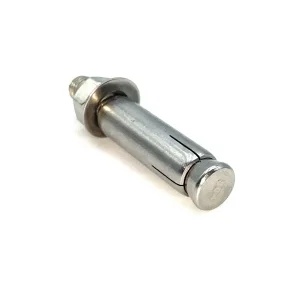
High-voltage variable-speed heat pump compressors and grid-tied solar string inverters mounted on exterior concrete pads require secondary supplementary equipment grounding to eliminate stray AC ripple and lightning surge risk. Our stainless expansion anchors securely bond foundation baseplates.
Technological Innovations in Modern Outdoor Grounding
Emerging grid dynamics, distributed rooftop solar-plus-storage microgrids, and severe climate shocks are reshaping how exterior grounding infrastructure is manufactured and deployed.
IoT-Enabled Impedance Telemetry
Traditional installations inspect soil grounding resistance every few years. Next-generation exterior systems integrate low-power LoRaWAN clamp-on current transformers that continuously measure ground loop impedance and leakage currents, streaming live safety telemetry to solar asset managers.
Copper-Clad Steel (CCS) Anti-Theft Pivot
Surging global copper commodities pricing has caused rampant roadside and residential grounding wire theft, leaving properties dangerously unbonded. Dead-soft annealed high-strength CCS conductor provides identical surge impedance under transient lightning speeds while presenting zero scrap value to metal recyclers.
Advanced Chemical Ground Backfills
Rocky, sandy, or desert soil conditions display high native resistivity (> 1000 Ω·m). Factories now co-package exterior ground wires and deep-driven electrodes with conductive carbonaceous bentonite minerals that retain soil moisture, dramatically cutting grounding resistance to < 5 ohms.
Factory Verification & Laboratory Test Protocols
Every component manufactured at our Handan complex undergoes rigorous chemical, mechanical, and environmental endurance tests to ensure a minimum 30-year operational life outside the building envelope.
1. ASTM B117 Salt Fog Chamber
Fasteners, clamps, and bonding lugs are exposed to a 5% NaCl aerosol environment at 35°C for 500 to 1,500 continuous hours. Zero red rust or pitting guarantees survival in seaside coastal housing and corrosive atmospheric zones.
2. Universal Tensile & Pull-Out Rig
Grounding conductor connectors and concrete expansion anchors undergo rigorous mechanical tension testing. Hardware must withstand shear and pull-out forces exceeding structural wind-uplift and mechanical frost-heave thresholds.
3. Micro-Ohm Loop Resistance Testing
Using 4-wire Kelvin digital low resistance ohmmeters (DLRO), we verify that crimped and bolted contact junctions exhibit less than 50 micro-ohms resistance, preventing dangerous I²R localized thermal hotspots during high-current short-circuits.
Frequently Asked Questions (Technical & Procurement FAQ)
Clear, authoritative technical answers addressing common questions from electrical engineers, electrical inspectors, and international procurement managers.
Why is the ground wire outside a house typically bare copper rather than insulated?
Bare copper exterior Grounding Electrode Conductors (GEC) maximize surface contact with the earth foundation and allow immediate visual confirmation of physical continuity by electrical inspectors. Eliminating polymer jackets also prevents sunlight UV embrittlement and ensures immediate thermal energy dissipation during direct lightning strikes.
What is the proper AWG wire gauge for exterior residential grounding?
Under NEC 250.66, for residential 100A–200A services with copper entrance conductors, a #6 AWG copper wire is permissible if securely clipped flush along the building face. If exposed to potential mechanical impact (driveways, lawn equipment), #4 AWG bare solid copper or protective non-metallic Schedule 80 PVC conduit is strictly required.
How do Handan factories resolve galvanic corrosion between copper wire and aluminum PV rails?
Direct physical contact between copper and aluminum triggers violent galvanic cell degradation in outdoor moisture. Handan Youlong engineers tin-plated copper grounding lugs and SS304/SS316 stainless steel serrated star washers that mechanically penetrate the aluminum's insulating oxide skin while serving as a chemically non-reactive physical barrier.
Can your factory produce custom OEM ground clamps stamped with our brand?
Yes. We provide complete OEM/ODM manufacturing including custom tooling, laser part etching, embossed die casting, custom gauge drill tap sizing, and specialized packaging (retail clamshell, barcoded contractor packs, bulk pallet crates). Tooling lead times average 12 to 18 days with sample approval prior to full container fabrication.
What is the standard production lead time and minimum order quantity (MOQ)?
For standard catalog items (brackets, connectors, expansion bolts), standard stock is maintained with immediate dispatch within 7 days. For custom ground wire clamps or project-specific stamping brackets, our standard batch MOQ is 1,000 to 5,000 units, with typical production completion in 15 to 25 business days.
What documentation accompanies an export shipment of grounding fasteners?
Every shipment includes an EN 10204 3.1 Certified Material Test Report (MTR), raw material chemical composition analysis, heat-treatment hardness records, ASTM B117 salt spray endurance certificates, and comprehensive dimensional optical inspection reports.
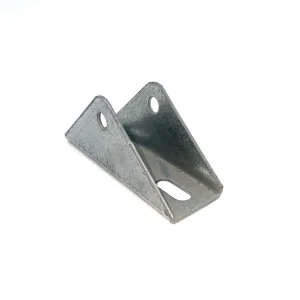
Exterior Structural Anchors, Fasteners & Rail Accessories
Heavy-duty expansion anchors, cylindrical hex drive bolts, three-hole splice connectors, and self-drilling screws engineered for exterior electrical grounding and solar mounting integrity.
Accelerate Your Hardware Procurement with Factory-Direct Engineering
Partner directly with Handan Youlong Fastener Co., Ltd. for project drawing evaluations, custom tooling feasibility, salt-spray testing data, and container-load competitive price quotations.