
Certified Photovoltaic & Structural Mounting Hardware
Engineered to support ground fault path integrity and load resistance in high-stress outdoor clean energy operations.
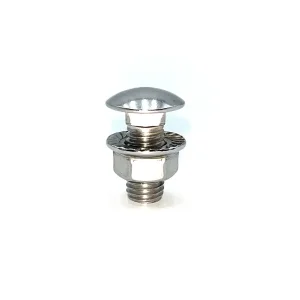
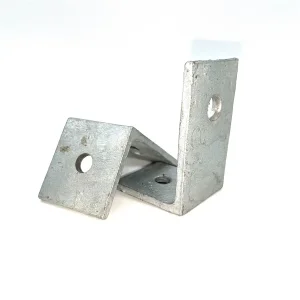
Engineering Resilience in Modern Ground Fault & PV Structural Wiring
An engineering analysis of galvanic protection, ground-path integrity, and supply chain scalability in global electrification and utility-scale installations.
Global Procurement Evolution
Global infrastructure standards now require integrated mechanical bonding and continuous ground fault dissipation. Sourcing partners demand precision components that guarantee low contact resistance across thermal cycles without mechanical fatigue.
China Factory 4.0 Efficiency
Located in Yongnian—China's Fastener Capital—our manufacturing integrates automated cold heading, progressive stamping, and computerized laser verification to maintain dimensional tolerances within ±0.02mm across high-volume production batches.
Galvanic Barrier Metallurgy
Direct contact between aluminum racking and steel structural supports risks galvanic corrosion. Our specialized hardware line includes custom EPDM/nylon dielectric barriers, preserving electrical grounding continuity while preventing chemical degradation.
Quality & Standards Compliance
Components comply with UL 467 grounding guidelines, IEC 61730-2, and ISO 9223 corrosion ratings (C2 through C5-M). Batch tensile test certifications and spectrometer alloy analyses are supplied with every export shipment.
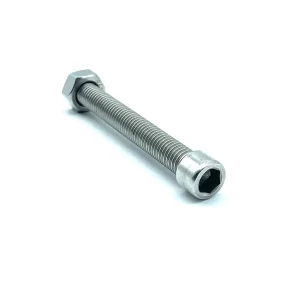
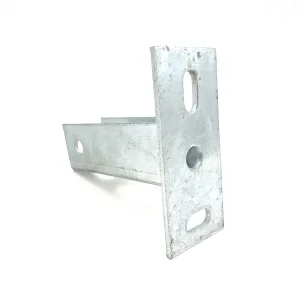
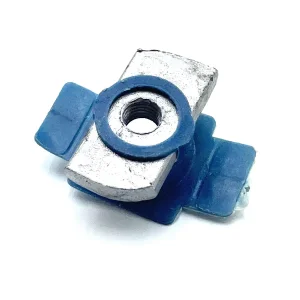
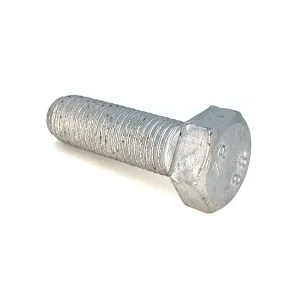
Heavy-Duty Connection, Grounding & Mounting Sets
Engineered for seamless integration into utility racking, rooftop arrays, and commercial electrical distributions.
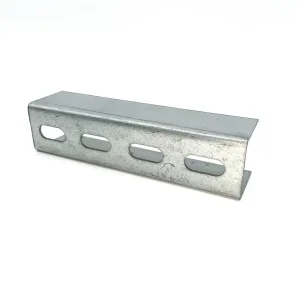
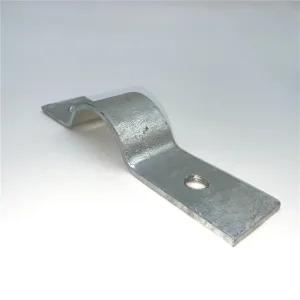
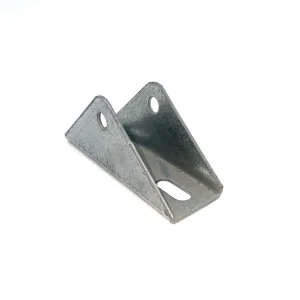
Application Scenarios Across Global Commercial Climates
Tested across extreme temperatures, seismic zones, and corrosive industrial atmospheres to ensure continuous mechanical stability and electrical safety.
Desert Utility Installations
Components undergo extended thermal shock testing (-40°C to +85°C) to withstand desert conditions. Fasteners feature anti-loosening thread geometries to resist cyclic wind-induced micro-vibrations across extensive solar arrays.
Coastal & Offshore PV Arrays
For high-salinity C5-M marine zones, we manufacture with marine-grade SS316 (A4-70/A4-80) fasteners and passivated coatings. These eliminate intergranular corrosion along electrical grounding pathways near sea spray.
Commercial Rooftop & BIPV
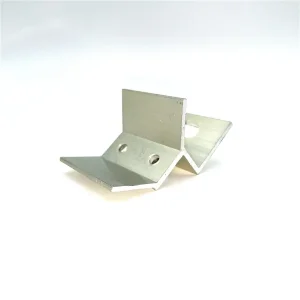
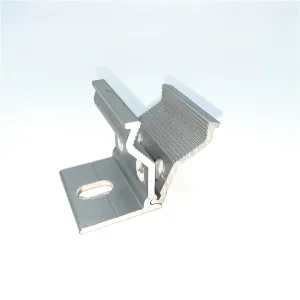
Non-penetrating trapezoidal roof clamps and clip-lock assemblies maintain roof membrane integrity. They provide a low-resistance path to earth without compromising water-tight building enclosures.
Heavy Industrial & Chemical Zones
Engineered for sulfur- and ammonia-rich manufacturing sites, our heavy hot-dip galvanized finishes (≥85μm thickness) and fluoropolymer-treated hardware resist chemical degradation and reduce maintenance overhead.
Frequently Asked Technical & Procurement Questions
Answers to common structural design, electrical bonding, and international trade compliance inquiries.
How is electrical bonding continuity maintained through anodized aluminum profiles?
Anodized coatings act as electrical insulators. Our mounting clamps and pressure plates incorporate serrated grounding pins or stainless steel bonding washers that pierce the anodized barrier during tightening, establishing a continuous copper-equivalent ground path below 0.1 ohms in line with UL 2703 standards.
What measures prevent galvanic corrosion between stainless steel fasteners and aluminum rails?
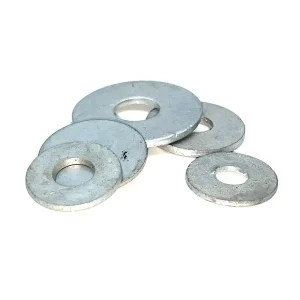
We supply UV-stabilized nylon/EPDM isolating washers along with specialized geometry-matched flat washers. In harsh marine environments, our dual-finish DACROMET or GEOMET anti-corrosion coatings provide cathodic protection that minimizes galvanic potential differences without breaking the grounding circuit.
Can your facility produce customized stamping profiles and bolts to custom engineering drawings?
Yes. We operate in-house tooling workshops, cold heading stations, and multi-axis CNC machines. We review CAD/STEP drawings, conduct FEA stress simulations, build prototypes within 5-7 business days, and provide complete metallurgical mill test reports (EN 10204 3.1) before production.
What are your batch testing procedures for tensile strength and corrosion resistance?
Every production heat undergoes automated optical sorting, micro-hardness checking, and hydraulic pull-out proof loading. For corrosion resistance, production samples run continuously in internal salt spray chambers according to ASTM B117 / ISO 9227 standards to ensure long outdoor service lives.