
High-Integrity Anchorage & Structural Components
Engineered for high-stress curtain walls, stone facade undercut systems, photovoltaic ground arrays, and industrial assembly.
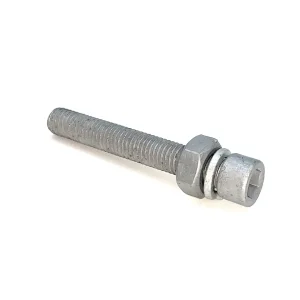
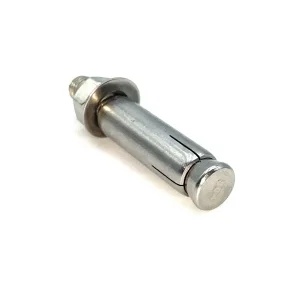

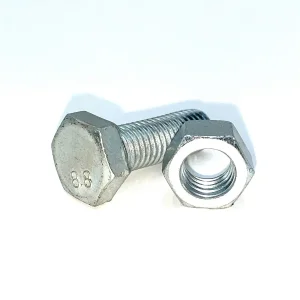

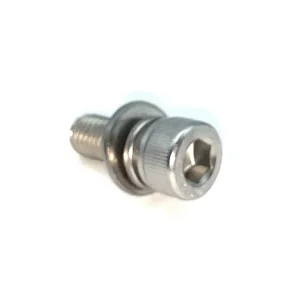
Granite Anchor Screws: Modern Engineering & Cladding Anchors
A comprehensive examination of undercut anchoring mechanics, austenitic metallurgical formulations, seismic dynamic shear load behavior, and global building envelope certifications.
The contemporary architectural and structural engineering landscape relies heavily on ventilated stone cladding facades, high-rise granite panelling, and reinforced stone-to-steel substructures. Behind every enduring stone facade lies the crucial interface of Granite Anchor Screws (often classified under rear-cut undercut stone anchors, expansion anchoring sleeves, and precision tie-back bolts). When affixing natural granite—a crystalline, heterogeneous igneous rock with high compressive resistance but distinct brittleness under localized shear—traditional pin and mortise systems induce excessive localized stress concentrations. China's premier fastener manufacturers, led by industrial engineering hubs like Handan, have revolutionized anchor screw metallurgy, manufacturing automation, and geometric anchoring design to prevent catastrophic stone spalling, thermal shear failure, and seismic pull-out.
1. Macro Industry Solutions & Mechanical Physics of Granite Anchoring
In exterior building envelopes, wind uplift pressures, positive windward gusting, thermal expansion cycles, and seismic horizontal acceleration subject exterior granite panels to multi-axial dynamic loading. Traditional dry-hanging stone systems using kerf cuts or edge pins introduce significant edge-splitting risks. Undercut granite anchor screws solve this by drilling a calibrated cylindrical hole into the back of the granite slab, which is subsequently expanded at its base into a conical geometry through precision diamond undercutting tools.
When the granite anchor bolt is driven and torqued into position, its expanding stainless steel sleeve spreads uniformly into the conical undercut chamber. This achieves a mechanical form-fit interlock free from radial outward expansion pressure during static resting states. Unlike standard expansion anchors that rely solely on continuous friction—which causes radial tensile stress cracks in brittle natural stone—undercut granite anchor bolts engage the internal shear cone of the granite matrix. The result is superior pull-out resistance (often exceeding 8.5 kN to 15 kN depending on granite slab thickness and embedment depth), high seismic ductility, and zero stone splitting.
Zero Radial Stress (Form-Fit)
Conical rear-cut anchoring distributes wind loads across the internal stone cone, preventing corner fracturing and surface spalling under cyclic loads.
Seismic Shock Dissipation
Integrated EPDM isolating dampeners and calibrated austenitic steel sleeves absorb lateral inter-story drift during seismic category D, E, and F events.
Dynamic Fatigue Resistance
Engineered to withstand over 2 million load cycles of alternating wind pressure and suction without micro-cracking the surrounding granite matrix.
2. Global Commercial & Industrial Status: China Fastener Ecosystem
The global facade fasteners market is undergoing rapid evolution. While European manufacturers pioneered the original undercut anchor designs, Chinese industrial manufacturing clusters—particularly located in Yongnian District, Handan City, Hebei Province ("China's Fastener Capital")—have developed advanced cold forging, precision multi-station CNC threading, and automated stamping lines that meet stringent international performance standards while maintaining high manufacturing throughput.
Handan Youlong Fastener Co., Ltd. sits at the heart of this manufacturing cluster. With direct supply chain links to premier domestic steel mills (delivering certified 304, 316, and high-tensile alloy carbon steels) and in-house surface treatment installations, Chinese manufacturers can supply full-system assemblies—including undercut stone anchors, sub-frame aluminum rails, stainless angle brackets, and heavy-duty expansion hardware—under a unified quality control system. This vertical integration drastically reduces the cross-component galvanic corrosion risks commonly encountered when contractors purchase fasteners, sub-framing rails, and clamps from fragmented suppliers.
| Fastener Parameter / Grade | Standard Grade 304 (A2-70) | Marine Grade 316 (A4-80) | High-Tensile Carbon Steel (8.8 / 10.9) |
|---|---|---|---|
| Tensile Strength (Rm) | 700 MPa min. | 800 MPa min. | 800 – 1040 MPa |
| Yield Stress (Rp0.2) | 450 MPa | 600 MPa | 640 – 940 MPa |
| Recommended Environment | Urban, Commercial, Low-Chloride | Coastal, Offshore, High-Chloride Industrial | Internal Structural Framing, Foundations |
| Corrosion Resistance Class | CRC II / C3 Moderate | CRC III / C5-M Extreme | Hot-Dip Galvanized / Dacromet Coated |
| Primary Application | Standard Granite Facades & Cladding | Coastal Facades & Marine PV Substructures | Structural Steelwork & Base Plate Expansion |
Global Standards & Localized Regulatory Assurances
Stringent compliance verification ensuring seamless design approval across European, North American, Middle Eastern, and Asian building codes.
ETA & EAD 330030-00
Complies with European Assessment Documents for anchors in natural stone, ensuring CE compliance across EU jurisdictions.
ASTM C1201 & C1354
Tested in accordance with American testing protocols for structural performance of individual stone facade anchorages.
ISO 9227 Salt Spray Tested
Laboratory salt mist exposure testing exceeding 1,000 to 2,000 hours without red rust initiation on A4 stainless components.
EN 10204 3.1 Traceability
Complete mill test certification, heat number tracking, and chemical composition analysis with every dispatch batch.
For international general contractors and building envelope consultants, securing product approval from local municipalities (such as Dubai Municipality, Singapore BCA, German DIBt, or US IBC reviewers) requires documented mechanical calculations. Handan Youlong Fastener provides localized engineering verification support, including Finite Element Analysis (FEA) pull-out models, concrete foundation expansion load calculations, and site pull-out test protocol documentation. Our factory conducts regular internal lot inspections: hardness testing (Rockwell/Brinell), coating thickness verification (electromagnetic eddy current), and ultimate shear stress proofing before shipment release.
Specialized Field Application Scenarios
From complex architectural facades to utility-scale ground structures, our anchors solve critical structural challenges.
Curtain Wall Ventilated Granite Cladding
Rear-cut anchor screws provide concealed, aesthetically flawless anchoring for polished granite, limestone, and engineered ceramic facades, delivering thermal insulation continuity and moisture drainage.
Solar PV Mount Foundation Anchoring
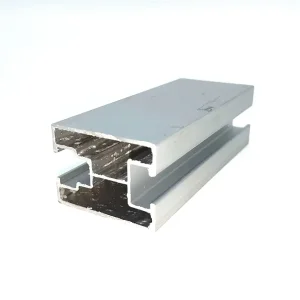
Heavy-duty stainless steel expansion bolts and anchor screws lock structural aluminum rails (such as the PV 3040 profile) to concrete foundation slabs, ballast blocks, and commercial rooftop parapets.
Industrial Infrastructure & Dynamic Machinery
High-strength grade 8.8 and 10.9 hex socket bolts connect heavy purlin brackets, vibratory machinery bases, and structural steel connections that undergo cyclic harmonic motion.
Technology Roadmap & Metallurgy Evolution
The next decade of building envelope fasteners: smart monitoring, ultra-duplex alloys, and green manufacturing.
Duplex & Super-Duplex Stainless Steels
Integration of 2205 (EN 1.4462) and 2507 super-duplex stainless alloys for offshore wind platforms and coastal granite envelopes, doubling yield strength while eliminating stress corrosion cracking (SCC).
Sensor-Integrated Smart Fasteners
Development of piezoelectric and RFID torque-sensing anchor screws capable of transmitting real-time clamping force telemetry via IoT networks to monitor facade structural health post-seismic events.
Eco-Friendly Low-Carbon Metallurgy
Adoption of electric arc furnace (EAF) recycled stainless billets, water-based non-electrolytic zinc flake coatings (Cr6+-free), and closed-loop degreasing processes that reduce fastener carbon footprints by 42%.
Precision Extrusions, Clamps & System Interlocks
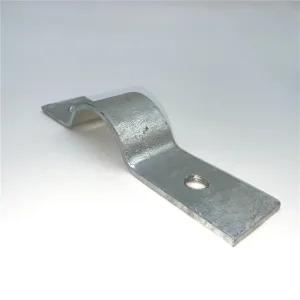
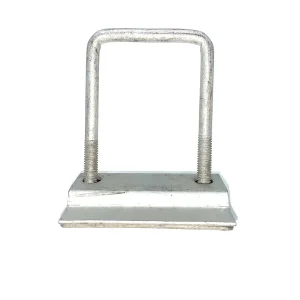
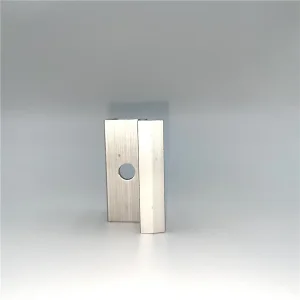
Complete structural hardware for turnkey solar PV racking arrays, facade grid connections, and heavy purlin support.

Engineering Questions & Procurement Guidelines
Addressing structural, metallurgical, and installation queries raised by facade consultants, structural engineers, and global procurement directors.
A standard expansion bolt generates continuous outward radial pressure against the borehole wall through friction, which readily causes brittle stone like natural granite to fracture. An undercut granite anchor screw utilizes a specialized geometric borehole that is widened at the base. When the anchor expands, it locks geometrically into the conical chamber (a positive mechanical form-fit) with zero expansion pressure in its resting state, maximizing pull-out capacity without splitting the stone.
Embedment depth is calculated based on stone slab thickness. Generally, the embedment depth ($h_s$) should satisfy $h_s \ge 2/3 \times d_{stone}$, leaving at least 8 mm to 10 mm of remaining stone thickness ($d_{stone} - h_s$) at the front face. For a standard 30 mm exterior granite slab, typical embedment ranges between 15 mm and 20 mm, ensuring the breaking load of the stone cone exceeds design wind uplift values.
For coastal installations located within 10 km of seawater, or in urban industrial areas with high sulfur dioxide ($SO_2$) concentrations (ISO 9223 Category C4 or C5), Grade 316 (A4-70 or A4-80) austenitic stainless steel containing 2.0% - 3.0% Molybdenum is required to resist pitting and crevice corrosion. For inland installations, Grade 304 (A2-70) provides durable structural integrity.
When aluminum alloy mounting profiles (e.g., 6005-T5 / 6063-T6) contact stainless steel fasteners in the presence of an electrolyte (rainwater/humidity), galvanic corrosion can degrade the aluminum. This is prevented by inserting non-conductive, UV-stabilized EPDM washers, polyamide isolators, or Dacromet-coated isolating barriers between the dissimilar metals.
Standard inventory items (such as standard expansion anchors, hex bolts, and angle brackets) ship within 7 to 10 days. Custom OEM orders requiring proprietary cold-heading tooling, non-standard lengths, or specific alloy stampings typically require 15 to 25 business days, including third-party chemical spectrography and tensile verification testing.
Yes. Handan Youlong Fastener collaborates with accredited structural testing laboratories to deliver full engineering documentation, including yield strength certifications, static and cyclic shear load reports, and pull-out test sheets per project specification to streamline engineer-of-record (EOR) submittal approvals.