
Precision Transmission & PV Mounting Components (Group I)
Engineered to withstand rigorous tensile loads, cyclic mechanical oscillation, and severe atmospheric exposure in transmission corridors and solar tracking arrays.
Mechanical Kinetics & Holding Principles of Fixed Dead End Clamps
A comprehensive examination of wedge mechanics, axial tensile retention, and stress dissipation in modern utility-scale electrical grid infrastructures and solar installations.
Self-Tightening Wedge Kinetics
Fixed dead end clamps operate under a foundational mechanical dynamic: self-locking taper engagement. As tensile loads increase on the suspended conductor or guy wire, the internal conical wedges migrate axially within the tapered body housing.
This kinetic transformation converts linear cable tension into proportional radial clamping force, securing the conductor without crushing delicate outer conductor strands or damaging optical fiber cores in composite designs.
- Holding tension exceeding 95% of cable Rated Tensile Strength (RTS)
- Controlled radial pressure gradients eliminate strand deformation
Aeolian Vibration & Fatigue Damping
Overhead transmission lines and exposed solar tracking linkages are perpetually subjected to laminar wind flows, creating alternating aerodynamic vortices known as Aeolian vibrations. These induce cyclic bending micro-strains at the clamp mouth.
High-tier China manufacturing leverages radiused mouth geometries, cushioned elastomer insert matrices, and finite element analysis (FEA) optimized bell-mouth curvatures to effectively dampen harmonic oscillations and arrest fatigue notch development.
- Tested over 100 million oscillation cycles per IEC 61854
- Prevents localized stress concentration at conductor anchor points
Thermal Cycling & Creep Resistance
Conductors in utility installations expand and contract through seasonal thermal cycling and electrical Joule heating up to 90°C. Inferior hardware suffers from plastic stress relaxation, leading to conductor slippage or destructive runaway resistance.
Engineered dead end assemblies utilize thermally stabilized aluminum-copper alloys and heavy-duty preformed bail wires that maintain constant spring-loaded radial contact, maintaining structural integrity across temperatures from -50°C to +120°C.
- Zero mechanical hysteresis during rigorous 500-cycle heat tests
- Long-term creep rate maintained under 0.02% over 30 design years
Material Science & Advanced Metallurgical Coatings
Understanding the interplay between substrate selection, galvanic mitigation, and sacrificial zinc/composite coatings across demanding C1 to C5-M atmospheric classifications.
| Component Group | Alloy / Metallurgy | Surface Treatment / Coating | Tensile / Yield Standard | Corrosion Rating (ISO 9223) |
|---|---|---|---|---|
| Dead End Clamp Body | Cast Aluminum Alloy A356.2 / AlSi7Mg0.3 (T6 Heat Treated) | Shot Blasted + Anodized / Electrophoretic Coating | Yield $\ge$ 220 MPa; Tensile $\ge$ 290 MPa | C4 - High Industrial |
| Structural Anchor Fasteners | Medium Carbon Steel Grade 8.8 / 10.9 (Boron alloyed) | Hot-Dip Galvanizing per ASTM A153 / ISO 1461 (≥ 86 μm) | Tensile 800 - 1040 MPa; Hardness 22-32 HRC | C3 / C4 Industrial Heavy |
| Coastal Marine Hardware | Austenitic Stainless Steel AISI 316 / 1.4401 (A4-80) | Passivated / Electro-Polished Surface | Tensile $\ge$ 800 MPa; 0.2% Proof Stress $\ge$ 600 MPa | C5-M Extreme Offshore |
| Preformed Helical Dead-End Rods | Aluminum-Clad Steel (ACS 20.3% IACS) / Galv High-Carbon | Extruded High-Purity Aluminum Coating ≥ 10% Radius | Ultimate Tensile ≥ 1350 - 1650 MPa | C5 Subtropical & Saline |
| PV Isolation & Clamping Plates | Extruded Aluminum 6005-T6 / High-Grade Nylon Insulators | Clear / Black Anodized ≥ 15 μm Film Thickness | Yield $\ge$ 240 MPa; Elongation ≥ 8% | C4 / C5 Desert & Roof |
Galvanic Corrosion Isolation
When connecting dissimilar metals—such as bare aluminum conductor strands or PV mounting rails to galvanized steel dead end brackets—galvanic cell potential differentials can induce catastrophic sacrificial corrosion of the aluminum.
Premier Chinese factories eliminate electrolyte conduction through integrated vulcanized EPDM gaskets, bi-metallic friction-welded copper-aluminum transitions, and non-conductive polymer isolation sleeves.
Hot-Dip Galvanizing Metallurgy
Unlike cosmetic electroplating, structural hot-dip galvanization creates a multi-layered metallurgical bond. The steel substrate reacts with molten zinc at 450°C to form iron-zinc alloy layers (Gamma, Delta, and Zeta phases) capped by pure zinc (Eta phase).
This provides dual-action defense: an impenetrable physical barrier backed by sacrificial galvanic cathodic protection that actively seals micro-abrasions in the field.
Salt Spray & Acid Gas Verification
Exported hardware undergoes rigorous neutral salt spray (NSS) testing per ASTM B117 exceeding 1,000 to 2,000 continuous hours without red rust initiation, alongside sulfur dioxide chamber aging (Kesternich testing per ISO 6988) for heavy industrial zones.
Every shipment is authenticated with 3.1 Mill Test Certificates verifying spectrographic chemical composition, elongation, and Charpy impact resistance.
The Handan Yongnian Industrial Cluster Advantage
Strategic geographic clustering, complete vertical integration, and hyper-efficient economies of scale delivering unmatched cost-performance for global infrastructure buyers.
Cumulative Shipments
Massive logistical throughput providing continuous raw billet allocation and high-volume order execution.
Cluster Maturation
Over a decade of focused R&D specialized in renewable hardware, electrical fittings, and structural fasteners.
In-House Engineers & QC
Tooling designers, certified metallurgists, and automated stamping and forging technicians on-site.
International Buyers
Established delivery pipelines into North America, Europe, Australia, Latin America, and Southeast Asia.
Upstream Material Integration
Located in the heart of Hebei's primary steel and metal corridors, Chinese manufacturing hubs like Handan enjoy direct pipeline access to top-tier steel mills and primary aluminum smelters. This eliminates intermediary warehouse markups and insulates clients against market volatility.
Real-time melt-lot tracking ensures raw alloy traceability back to initial ladle pouring, providing unquestioned structural provenance for mission-critical infrastructure projects.
Full In-House Manufacturing Loop
Unlike brokers or assembly houses, comprehensive manufacturing plants house cold forging, hot drop forging, multi-cavity die-casting, progressive stamping presses, automated CNC thread rolling, and in-house heat treatment ovens under one roof.
This closed loop maintains end-to-end quality sovereignty, drastically compresses sample turnaround times, and cuts production lead cycles from months to days.
Eco-Compliant Automated Finishing
Modernized Chinese manufacturing centers feature fully automated, enclosed eco-friendly pickling and hot-dip galvanizing lines equipped with continuous emissions scrubbing and robotic immersion arms.
This automated immersion delivers unprecedented coating uniformity, crystal structure consistency, zero drip deformities, and complete adherence to environmental mandates without production shutdowns.
Global Procurement Specifications & Regulatory Compliance
Harmonizing factory-floor production with international technical mandates: ASTM, ANSI, IEC, BS EN, DIN, and regional grid certifications.
Grid Tender Technical Audits
International utility operators and tier-1 EPC contractors mandate stringent vendor pre-qualification before placing high-voltage transmission hardware or solar balance-of-system (BOS) purchase orders.
Our operational framework fulfills all requirements for ISO 9001 (Quality Management), ISO 14001 (Environmental Stewardship), and ISO 45001 (Occupational Safety), complete with comprehensive vendor compliance packets.
- Type test certifications verified by independent ILAC-MRA laboratories
- Full batch trace numbers stamped directly on clamp bodies and hardware
Harmonized Regional Standards
Exporting dead end clamps and structural fastening brackets demands precise multi-standard adaptability across major geographical markets:
- North America: ANSI C119.4 for electric utility connectors, ASTM A153/F2329 for hot-dip coatings, IEEE 1138 for optical ground wire (OPGW) hardware.
- Europe / UK: BS EN 61284 for overhead lines, EN 1090 structural steel CE execution classes, and BS 3288 for insulator and conductor fittings.
- Australia / Oceania: AS 1154 series for insulating and conductor fittings in high-UV, heavy-saline coastal settings.
Supply Continuity & Port Freight
Exporting tens of thousands of structural units requires sophisticated container packaging and port logistics. Heavy-duty wooden crates, reinforced heat-treated ISPM-15 pallets, and moisture-sealed vapor barrier packaging safeguard products through ocean transit.
Direct freight corridors to Tianjin, Qingdao, and Shanghai ensure rapid custom clearing, standardized Bill of Lading execution, and reliable delivery to global installation job sites.
Engineering Field Deployments & Application Scenarios
How specialized fixed dead ends and fastening assemblies are integrated into solar power stations, high-voltage corridors, and civil architecture.
Utility-Scale Photovoltaic Solar Farms
In large-scale ground-mounted and single-axis tracking solar projects, dead end clamps and anchor brackets secure continuous perimeter overhead collector wires, guyed tracker tube supports, and central inverter conduit arrays.
High thermal variations demand hardware that resists cyclic loosening without requiring continuous field re-torquing, maintaining project uptime throughout decades of solar exposure.
ADSS & OPGW Telecommunication Lines
Modern power corridors dual-purpose high-voltage towers to carry All-Dielectric Self-Supporting (ADSS) fiber and Optical Ground Wire (OPGW). Clamping hardware must anchor high tensile spans over river and valley crossings without compressing internal glass optical fibers.
Preformed dead ends distribute clamping stress evenly over hundreds of millimeters, preserving signal integrity while withstanding hurricane-force wind loads.
Substation Busbars & Industrial Plants
Substation switchyards require rigid, zero-tolerance fixed dead end anchoring for high-ampacity overhead busbars and dropper spans connecting transformers to circuit breakers.
Heavy cast aluminum dead end clamps with multi-bolt tension pads maintain continuous mechanical grip while minimizing eddy current heating and inductive power losses.
Technological Trends in Transmission & Fastening Hardware
Next-generation innovations reshaping mechanical infrastructure: smart tension sensing, high-entropy metallurgy, and automated production.
Integrated IoT Strain & Tension Sensors
The transition toward smart power grids is driving integration of miniaturized, passive piezoelectric and RFID load cells within the dead end clamp body. These smart hardware units transmit continuous, real-time cable tension and icing-weight data to remote SCADA monitors.
Maintenance teams can immediately pinpoint conductor sagging, line breaks, or abnormal wind-induced buffeting before catastrophic tower collapses occur.
High-Entropy Alloys & Low-Carbon Steels
With international carbon border adjustment mechanisms (CBAM) coming into focus, leading Chinese manufacturers are adopting green hydrogen-reduced iron and low-carbon aluminum casting processes.
Concurrent metallurgical advances in nano-composite coatings provide equivalent corrosion protection to heavy zinc dipping with lower applied mass and dramatically smaller environmental footprints.
Modular Tool-Free Rapid Clamping
Field labor costs represent the fastest-rising line item in overseas project deployments. Next-generation dead end clamps focus on ergonomic, tool-free locking designs and pre-torqued shear-head bolts.
This guarantees that installation crews achieve factory-specified clamping tension without relying on calibrated torque wrenches, cutting installation hours by up to 40%.
Precision Transmission & PV Mounting Components (Group II)
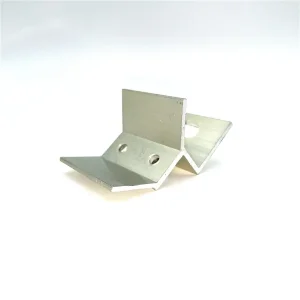
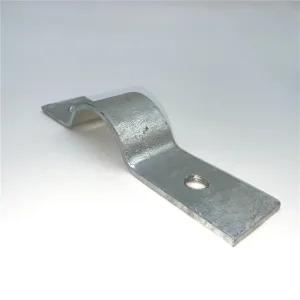
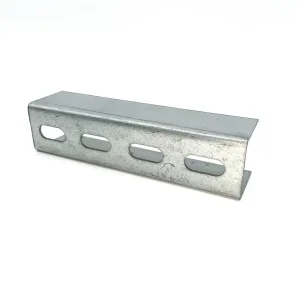
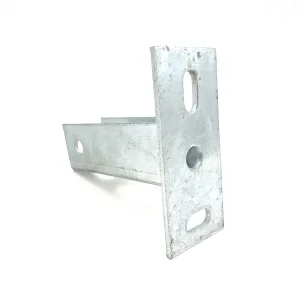
Comprehensive fastening, structural anchoring, and purlin interconnection solutions engineered for utility projects worldwide.
Technical & Procurement FAQ
Expert answers addressing the primary design, metallurgy, and supply inquiries encountered by global utility engineers and procurement managers.
What is the difference between a bolted wedge dead end clamp and a preformed helical dead end?
Bolted or wedge dead end clamps utilize a rigid mechanical housing (frequently cast aluminum or ductile iron) where mechanical wedges directly grip the conductor. They are preferred for high-current terminations, substation busbars, and distribution dead-ends where mechanical tension can be decoupled from jumper electrical leads. Preformed helical dead ends consist of high-tensile spring wires wound around the conductor over a long distance, distributing axial grip without localized pinching, making them ideal for fragile optical cables like ADSS and OPGW.
How do Chinese factories verify the 95% Rated Tensile Strength (RTS) holding requirement?
Holding capacity is certified through calibrated horizontal tensile testing benches in accordance with IEC 61284 and ANSI C119.4. A sample conductor is fitted with the clamp and subjected to incremental tensile loading: held at 75% RTS for sustained stabilization, then stepped to 95% RTS and held continuously for 60 seconds without conductor slippage or component fracture. Destructive ultimate yield tests are also run to document physical safety margins.
What measures prevent galvanic corrosion between aluminum conductor strands and steel fasteners?
Preventing galvanic decay requires isolating dissimilar metals with differing electrochemical potentials. Chinese manufacturers employ heavy hot-dip galvanizing (≥86 μm) on steel bolts, along with thick insulating EPDM, nylon, or PTFE isolating washers. For direct electrical joints, bi-metallic friction-welded inserts or high-dielectric neutral grease compounds are applied to seal voids against moisture and airborne salt ingress.
Can custom dimensions and stamped project markings be accommodated for international tenders?
Yes. Utilizing internal CNC tooling workshops and programmable forging molds, our engineering teams produce tailored geometries based on client 2D/3D CAD drawings. Customized die-cast markings, part serial numbers, conductor diameter ranges, utility logos, and batch QR codes can be cast or laser-engraved directly onto the clamp bodies to simplify on-site auditing.
What documentation accompanies export shipments for customs and engineering sign-off?
Every industrial export package includes comprehensive quality verification dossiers: EN 10204 Type 3.1 Mill Test Certificates (MTC) detailing spectrographic chemical composition and physical properties, ASTM B117 Salt Spray test results, magnetic thickness gauge coating logs, Certificate of Origin (Form E, CO, etc.), and third-party inspection certifications (SGS, TÜV, BV) upon request.
Request Technical Specifications or Factory-Direct Quotation
Partner directly with China's leading fastener and transmission hardware cluster. Our engineering division reviews conductor specifications, structural load matrices, and custom manufacturing requirements within 24 business hours.