
Featured Overhead Anchoring & PV Mounting Hardware
Factory-direct structural assemblies manufactured under rigorous ISO/TS certified lines, tested for tension extraction, cyclic vibration, and dynamic ceiling pull-out loads.
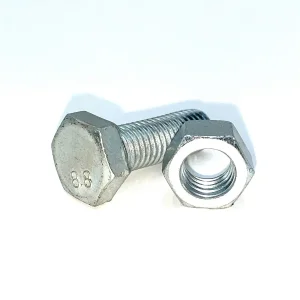
Best High-Strength Hex Bolt - Durable Carbon Steel Fasteners
Source Product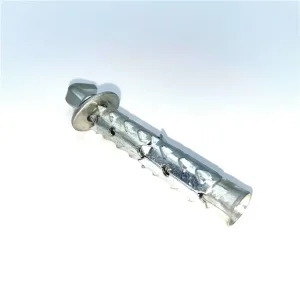
Best China Heavy-Duty Fish Scale Expansion Bolt - High-Stability Fasteners
Source Product
China High-Strength Hex Bolt from China Factory - Reliable Fasteners
Source Product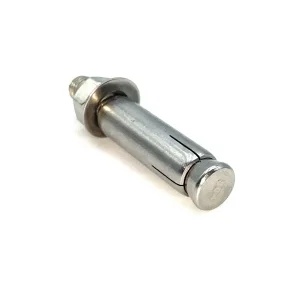
Buy Heavy-Duty Stainless Steel Expansion Bolt – Concrete & Brick Wall Fixings
Source Product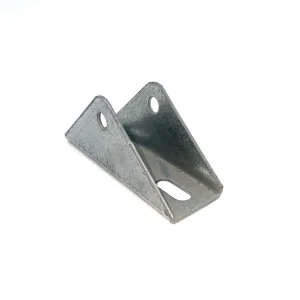
Three-Hole Mounting Connector for Solar PV Systems - Aluminum Alloy
Source Product
High-Strength Hex Bolt Suppliers in China - Durable Carbon Steel
Source Product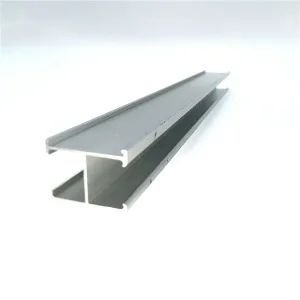
Buy 3040 Aluminum Alloy Guide Rail - Lightweight PV Mounting System
Source Product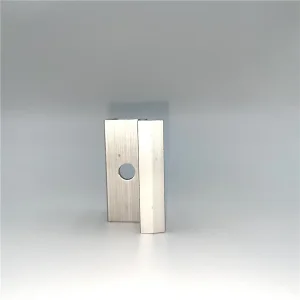
Premium Aluminum Alloy Side Clamp for Solar PV Panel Installation
Source ProductOverhead Expansion Anchor Mechanics & Ceiling Structural Dynamics
Ceiling-mounted expansion fasteners operate in critical tension zones subject to sustained dead-loads, cyclic wind uplift, thermal contraction, and continuous dynamic vibration.
Tensile Pull-Out & Cone Failure Mechanics
Ceiling anchor design deviates fundamentally from vertical wall mounting. In cracked concrete tension zones (governed by ETAG 001 Option 1 / EN 1992-4), internal stress fields induce micro-fissures around the anchor sleeve. Chinese precision-machined fish-scale and wedge-sleeve anchors are engineered with optimized expansion taper angles that deliver progressive friction grip without inducing premature substrate spalling.
Seismic Shear & Dynamic Cyclic Fatigue
Overhead MEP ducting, solar canopy framework, and industrial ceiling trackways undergo sinusoidal and stochastic vibrations. Anchor metallurgical ductility is vital: Handan Youlong's high-tensile cold-forged 8.8 and 10.9 grade carbon steels, combined with austenitic 304 and 316 stainless alloys, maintain minimum elongation rates exceeding 14%, eliminating catastrophic brittle detachment under seismic category C1/C2 events.
Micro-Corrosion & Stress Cracking Mitigation
Suspended ceilings often entrap warm, humid air containing chlorides and industrial sulfides. Standard zinc electroplating exhibits rapid white rust failure. High-performance ceiling fasteners leverage specialized continuous hot-dip galvanizing (≥55μm thickness) or multi-layer zinc-nickel thermal diffusion coatings, passing 1,000 to 2,000 hours of ASTM B117 neutral salt spray without hydrogen embrittlement.
China Factory 4.0: Supply Chain Resilience & Clustered Metallurgy
Situated in Yongnian District, Handan—internationally recognized as "China's Fastener Capital"—our production clusters integrate continuous raw wire spheroidizing, multi-station cold-forming, smart heat treatment, and automated optical sorting.
Raw Material Upstream Synergy
Immediate proximity to top-tier steel mills allows precise metallurgical control of raw carbon rod (ML40Cr, 10B21, 35CrMo) and pure stainless wire (AISI 304/316). Decarburization depths are verified within ≤0.02mm before cold heading.
Multi-Station Cold Heading Lines
Equipped with 5-station and 6-station high-speed cold heading formers running up to 180 units/minute. Tooling grain flow follows anchor profiles continuously, yielding superior fatigue threshold limits compared to machined alternatives.
Continuous Mesh Belt Quenching
Automated atmosphere-controlled mesh belt furnaces eliminate surface decarburization during heat treatment. Core hardness and case depth adhere to strict Rockwell C tolerances (HRC 32-39 for Grade 8.8; HRC 39-44 for Grade 10.9).
Laser & Optical Sorting Systems
Every batch undergoes multi-camera 360-degree high-speed optical inspection. Sleeve dimensional concentricity, thread pitch conformity, and expansion slot geometry are verified to guarantee zero-defect insertion for robotic installation.
| Anchor Configuration | Material Class | Tensile Yield (MPa) | Standard Surface Finish | Seismic Rating | Application Scope |
|---|---|---|---|---|---|
| Fish Scale Heavy-Duty Expansion Bolt | Carbon Steel Q235 / 35# / 45# | ≥ 420 - 640 | HDG ≥55μm / Yellow Zinc | Category C1 Approved | Heavy HVAC ducting, ceiling cable ladders |
| Stainless Steel Wedge Ceiling Anchor | Austenitic SS 304 / SS 316 | ≥ 550 - 750 | Electropolished / Passivated | Category C1/C2 Approved | Marine solar canopies, high-humidity cleanrooms |
| Internal Threaded Drop-In Ceiling Anchor | Cold-Heading Alloy 1008A / 10B21 | ≥ 480 | Geomet / Zinc-Nickel Plating | Static & Cyclic Rated | Suspended fire sprinkler pipelines, acoustic baffles |
| 3040 Reinforced Guide Rail Profile | Structural Aluminum AL6005-T5 | ≥ 260 | Clear Anodized ≥12μm (Class 1) | Wind Zone 4 / Marine | Solar PV mounting framework & ceiling structural tracks |
Macro Industry Solutions: Mission-Critical Suspended Frameworks
Engineered overhead fastening systems deployed across enterprise infrastructure sectors requiring non-negotiable pull-out reliability and longevity.
Hyperscale Data Center Overhead MEP Infrastructure
Hyperscale server halls suspend multi-tier fiber race-ways, heavy busway trunks, and chilled water lines from post-tensioned concrete ceiling slabs. Youlong's high-torque expansion anchors ensure zero slip under vibrating air handler flows, supporting modular unistrut channel profiles with validated pull-out safety factors exceeding 4:1.
Utility-Scale Photovoltaic Carports & Suspended BIPV
Solar canopies and Building Integrated Photovoltaic (BIPV) installations require ceiling-anchored framework capable of transferring localized cyclonic wind uplift downward to concrete foundations. Integrating AL6005 guide rails, M-Type water channels, and stainless expansion anchor sets delivers long-term watertight structural integrity.
Subway Tunnels, Catenary Supports & Rail Transit
Underground metro ceilings experience acute aerodynamic piston shock waves and aggressive carbon dust environments. Our fish-scale expansion bolts and hot-dip galvanized combination fasteners withstand extreme dynamic fatigue cycles (>2 million pulses), preventing loosening without the need for manual torque re-inspection.
Technical Roadmap: Smart Fastening & Decarbonized Metallurgy
The structural anchoring industry is shifting from static passive hardware toward intelligent load-monitoring fasteners, low-carbon circular steel, and autonomous installation profiles.
Phase 1: RFID & Strain Sensor Integrated Fasteners
Development of internal embedded micro-piezoelectric sensors within anchor bolt studs. Enables wireless, non-destructive torque and residual clamping force inspection across commercial facilities, eliminating manual torque wrench audit hours across thousands of ceiling anchor points.
Phase 2: Ultra-High Corrosion Nano-Composite Diffusion
Next-generation zinc-aluminum flake coatings infused with graphene oxide nano-platelets. Eliminates toxic hexavalent chromium completely while boosting corrosion resistance to >3,000 salt spray hours, preventing fastener failure in extreme coastal and offshore solar applications.
Phase 3: Scope 3 Decarbonization & Green Steel Billets
Progressive implementation of Electric Arc Furnace (EAF) steel wire sourced with certified green energy inputs. Establishing comprehensive Environmental Product Declarations (EPD) according to EN 15804 to assist EPC contractors in satisfying LEED Gold and carbon border adjustment requirements (CBAM).
Global Enterprise Procurement: Quality Governance & Supplier Auditing
How international purchasing directors, tier-1 EPC contractors, and structural engineering firms assess, audit, and de-risk OEM anchor manufacturing lines in China.
1. Factory Direct vs. Intermediary Trading Entities
Sourcing through intermediary trading companies frequently obscures raw material pedigree and leads to inconsistent batch tolerances. Handan Youlong operates dedicated stamping, forging, cold-heading, and CNC lines. Direct factory engagement grants procurement officers unhindered access to:
- Original Mill Test Certificates (MTC) following EN 10204 Type 3.1 with chemical melt analysis.
- In-house multi-axial tensile, yield, and torque tension testers with automated stress-strain logging.
- Direct engineering review of custom CAD/BIM drawing submittals with tooling turnaround in under 14 days.
2. Comprehensive Quality Control System Protocol
Zero-failure performance in ceiling suspensions mandates non-destructive testing and lot-controlled verification from billet reception to container lashing:
- Raw Wire Inspection: Eddy current crack detection and spark spectrometry alloy mapping.
- In-Process Control (SPC): Caliper and optical comparator checks at 30-minute intervals.
- Post-Coating Thickness: Magnetic induction & X-ray fluorescence plating depth certification.
- Tensile & Proof Load Verification: Real-time hydraulic extraction testing on C20/25 & C50/60 concrete slabs.
Localization Support, Global Codes & Regulatory Assurance
Navigating international construction regulations requires rigorous adherence to European, American, and Australasian engineering codes.
ETA & CE Marking (EN 1992-4)
European Technical Assessment compliance guarantees anchors satisfy design calculations for uncracked and cracked concrete, as well as seismic C1/C2 performance under fire exposure (R30 through R120 testing curves).
ICC-ES (ACI 318 Chapter 17)
North American seismic qualification per ACI 355.2 and AC193. Validated evaluation reports allow structural engineering teams in the United States and Canada to specify our concrete anchors directly on certified project blueprints.
AS 5216 & AS/NZS Standards
Fully compliant testing documentation for Australian and New Zealand building codes, addressing cyclonic wind conditions, high UV degradation parameters for isolating washers, and stringent coastal salt exposure classifications.
Structural Connection Hardware & Specialized Assemblies
Precision-stamped angle brackets, vibration-resistant combination socket bolts, PV splices, and specialized fasteners engineered for immediate export delivery.
Best Solar PV Three-Hole Mounting Connector Factory, Product
Source Product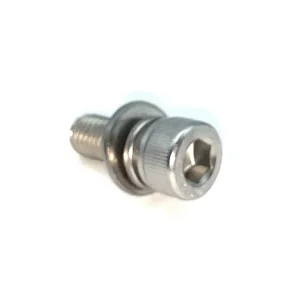
China Stainless Steel Hex Socket Combination Bolt - Anti-Loosening
Source Product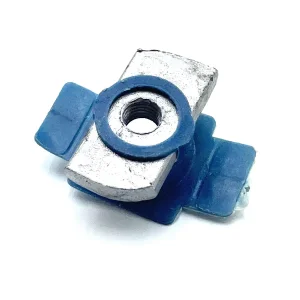
Buy Ergonomic Plastic Wing Nut Suppliers in China - Tool-Free Fastening
Source Product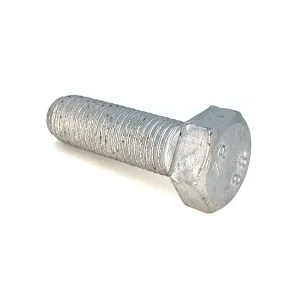
Buy Heavy-Duty Hot-Dip Galvanized Hex Bolts – Outdoor Engineering
Source Product
China Factory Premium Three-Hole Mounting Connector for Solar PV Systems
Source Product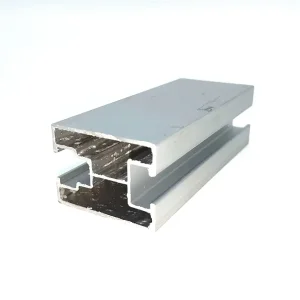
China High-Strength 3040 Reinforced Aluminum Guide Rail for Solar PV Systems
Source Product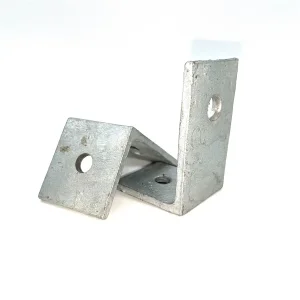
Heavy-Duty Stainless Steel Angle Bracket for Solar PV Mounting
Source Product
SS Hex Socket Combination Bolt with Built-in Washer - Anti-loosening
Source ProductFrequently Asked Questions: Industrial Ceiling Expansion Fasteners
Engineering insights addressing critical structural calculations, metallurgy selection, hole drilling tolerances, and dynamic loading limits.
What is the structural difference between wedge anchors and sleeve expansion bolts in ceiling installations?
Wedge anchors (torque-controlled expansion anchors) rely on a discrete stainless clip driven over an integrated solid cone mandrel, delivering higher ultimate pull-out capacity in solid, uncracked-to-cracked concrete slabs. Sleeve expansion bolts distribute expansion force over a larger contact surface along a split cylindrical jacket, making them better suited for base substrates with variable compressive strengths or masonry where localized concrete stress concentration must be moderated to prevent internal cone breakout.
How does base concrete cracking impact ceiling expansion anchor safety factors?
Suspended concrete ceilings invariably feature tension zones along the bottom slab face, resulting in hairline cracks (0.1mm - 0.3mm wide) under service dead and live loads. Standard non-cracked rated anchors experience substantial loss of frictional clamping force when a fissure traverses the expansion clip zone. For overhead applications, structural engineers must specify anchors validated to ETA Option 1 or ACI 355.2 with crack-widening qualification and minimum safety factors of γ = 1.5 to 2.0.
Which surface coating offers optimum defense against corrosion in overhead unconditioned spaces?
Unconditioned factory ceilings or semi-open canopy zones (ISO 9223 Category C3 to C4) require Hot-Dip Galvanizing (HDG) conforming to ISO 1461 with minimum coating thickness of 55μm, or Zinc-Nickel thermo-diffusion coatings. In marine, chemical, or coastal solar environments (Category C5), marine-grade austenitic 316 (A4-70 / A4-80) stainless steel anchors are mandatory to eliminate pitting and stress corrosion cracking (SCC).
How are galvanic corrosion risks mitigated when fastening aluminum PV rails to steel anchors?
When aluminum structural components (e.g., PV 3040 guide rails) interface with carbon or stainless steel expansion fasteners in moisture-prone zones, galvanic potential differences accelerate aluminum oxide erosion. We supply assemblies fitted with virgin EPDM or UV-stabilized polyamide insulating washers and sleeve bushings, physically isolating dissimilar metals and maintaining dielectric insulation across the joint.
What are the critical parameters for hammer-drill hole diameter and depth tolerances?
Hole geometry is paramount for mechanical expansion integrity. Carbide drill bits compliant with PGM (Prüfgemeinschaft Mauerbohrer) standards must be utilized. Over-sized holes reduce contact friction, leading to premature slippage under tensile dead-load, whereas insufficient depth prevents full expansion cone seating. Drill holes must be evacuated of concrete pulverized dust via compressed air and wire brushing (minimum 2x blow, 2x brush, 2x blow sequence).
What is the standard production and shipping lead time from Handan Youlong facility?
Standard inventory anchor bolts, hex hardware, and structural brackets ship within 3 to 7 business days. Custom drawing-specified OEM components requiring specialized cold-heading dies or stamping tooling are prototyped within 10 to 14 days, with 20GP or 40HQ container manufacturing batches completed within 20 to 25 days, dispatched via Tianjin or Qingdao deep-water ports.