
Featured Precision Fasteners & Hardware Series
Our specialized production facilities manufacture high-grade structural fasteners, corrosion-resistant hardware, and high-temperature nuts designed for rigorous industrial, automotive exhaust, and renewable energy applications.
Executive Overview: Metallurgical Precision in Extreme Thermal Environments
Exhaust manifold flange nuts represent one of the most critical structural fastening components in internal combustion engines (ICE), turbocharged diesel powerplants, heavy-duty commercial transport, and industrial power generation systems. Operating under cyclic thermal loading ranging from sub-zero ambient temperatures up to continuous working temperatures exceeding 800°C (1,472°F) to 1,050°C (1,922°F), exhaust manifold fasteners face an aggressive combination of thermal stress, high-frequency mechanical vibration, atmospheric corrosion, and intense oxidation.
As global OEM automotive manufacturers and Tier-1 engine suppliers push for higher thermodynamic efficiency, downsized turbocharged combustion chambers, and stringent Euro 7 / EPA Tier 4 emission compliances, the operational threshold for manifold flange nuts has expanded significantly. In Chinese fastener manufacturing clusters—particularly within Handan, Ningbo, and Wenzhou—specialized factories have evolved from basic carbon-steel hardware producers into high-precision, metallurgical engineering powerhouses. These facilities combine advanced multi-station cold-forming, specialized hot-forging, CNC secondary machining, and proprietary anti-galling surface treatments to deliver world-class high-temperature fastening solutions.
Max Continuous Thermal Resistance (A286 / Inconel Alloys)
Prevailing-Torque Oval Lock & Distorted Thread Tech
Automotive Quality Management Standard Certified
High-Temp Salt Spray & Oxidation Protection
Global Procurement Demand Dynamics & Market Intelligence
The international commercial landscape for exhaust manifold flange nuts is undergoing a structural shift. Procurement directors, supply chain executives, and engineering managers across Europe, North America, Japan, and Southeast Asia are actively re-evaluating vendor portfolios to balance total cost of ownership (TCO) with extreme performance reliability.
Automotive OEM & Aftermarket
Passenger car manufacturers demand lightweight, compact flange nuts capable of withstanding rapid thermal shock cycles in turbo-gasoline and hybrid engines. Aftermarket replacement brands prioritize universal DIN/ISO fitment, cost-competitive bulk supply, and rust-free storage durability.
Heavy Commercial & Off-Highway
Class 8 heavy trucks, agricultural machinery, and mining transport operate under sustained maximum torque conditions. Flange nuts must feature integrated wide-diameter washer bases to distribute clamp pressure evenly over cast-iron and stainless steel manifold flanges.
Stationary Gensets & Marine
Industrial natural gas engines, standby diesel generators, and marine propulsion systems run for thousands of continuous hours. Corrosion resistance against saltwater spray and sulfur-rich exhaust condensates requires high-nickel alloy formulations.
Technical Metallurgy, Material Selection & Engineering Standards
Selecting the appropriate alloy grade for exhaust manifold flange nuts requires precise mapping between maximum exhaust gas temperature (EGT), thermal expansion matching with stud materials, and chemical resistance to thermal galling and thread seize.
| Material / Grade | Max Temp Range | Tensile Strength | Prevailing Characteristics | Typical Applications |
|---|---|---|---|---|
| Class 8 / 10 Carbon Alloy Steel | Up to 450°C (842°F) | 800 – 1,000 MPa | Copper-plated or Zinc-Nickel plated; economical, reliable for moderate EGTs. | Standard naturally aspirated engines, light commercial vehicles. |
| Stainless Steel 304 / 316 (A2 / A4) | Up to 650°C (1,202°F) | 700 – 800 MPa | Excellent atmospheric and condensate corrosion resistance; requires anti-seize coating. | Marine engines, agricultural machinery, exhaust tailpipe joints. |
| 310S Austenitic Stainless (1.4845) | Up to 850°C (1,562°F) | 650 – 750 MPa | High nickel-chromium alloy, exceptional resistance to cyclic oxidation and scaling. | Performance turbochargers, gasoline downsized turbo manifolds. |
| A286 / 1.4980 High-Temp Superalloy | Up to 980°C (1,796°F) | 950 – 1,150 MPa | Iron-nickel-chromium precipitation hardening alloy; high yield strength at extreme heat. | Heavy-duty commercial diesel, Euro 6/7 engines, motorsport headers. |
| Inconel 718 / Nickel Alloy | Up to 1,050°C (1,922°F) | 1,200 – 1,400 MPa | Ultimate resistance to thermal creep, stress relaxation, and chemical oxidation. | Extreme duty gas turbines, aerospace exhaust stacks, racing applications. |
Surface Engineering & Anti-Galling Coatings
When stainless steel or alloy nuts are torqued onto studs under high temperatures, pressure-induced micro-welding (galling) can lock the threads permanently or cause joint relaxation. Top Chinese factories utilize advanced surface treatment technologies:
Electrolytic Copper Plating
A 5–10 µm soft copper layer acts as a lubricating sacrificial interface, eliminating thread galling during both high-torque installation and future maintenance disassembly.
Silver (Ag) Electroplating
Specified for high-performance aerospace and diesel engine applications operating above 700°C. Silver maintains a low coefficient of friction under extreme heat without burning off.
Molybdenum Disulfide (MoS2) & Geomet
Dry-film lubricant coatings bonded with silicate or resin matrices provide controlled friction coefficients (µ = 0.10 to 0.15), ensuring accurate torque-tension translation.
Advanced Manufacturing Process & Factory Automation
Leading Chinese exhaust manifold flange nut manufacturers employ rigorous, fully integrated production workflows that combine high-speed multi-station cold formers with automated optical sorting systems.
1. Precision Cold Forming & Hot Heading
High-speed 5-station and 6-station cold-forming machines shape wire rod stock into flared flange nut blanks with continuous internal grain flow, superior fatigue life, and minimal raw material waste. For difficult superalloys (Inconel, A286), induction-heated hot-heading equipment is utilized.
2. Thread Tapping & Prevailing Torque Forming
Precision tap tooling produces clean Class 6H / 2B internal threads. Prevailing torque features—such as top-oval deformation, 3-point side distortion, or integrated serrated washer faces—are formed with micro-calibrated dies to guarantee consistent clamp torque retention.
3. Automated 100% Optical Sorting & QC
Laser and CCD optical sorting machines inspect 100% of finished parts for thread pitch accuracy, flange height, overall diameter, and surface defects at speeds up to 800 pieces per minute, ensuring zero-defect delivery (PPM < 10).
Macro Industry Solutions & Application Scenarios
Chinese manufacturing companies deliver comprehensive engineering packages tailored to distinct industrial applications, solving persistent bolt-loosening and joint-leakage challenges.
High-Boost Turbocharger Manifold Joints
Modern gasoline direct-injection (GDI) engines operate with exhaust gas temperatures reaching 1,020°C. Standard nuts suffer from thread stretch and clamp load loss within hours. China-manufactured A286 distorted-thread flange nuts maintain constant axial tension, preventing gasket blowouts and maintaining boost pressure.
Heavy Duty EGR & SCR Emission Piping
Exhaust Gas Recirculation (EGR) and Selective Catalytic Reduction (SCR) systems are subject to corrosive soot, urea condensate, and extreme vibration. Heavy-series DIN 6923 flange nuts with copper plating provide a sealed, corrosion-proof connection that enables quick servicing without stud shearing.
High-Temperature Renewable & Solar-Thermal Systems
Beyond automotive, high-temperature flange nuts are essential in concentrated solar power (CSP) molten-salt piping, industrial heat exchangers, and biomass incinerators. Chinese suppliers provide specialized alloy nuts tested under continuous 2,000-hour thermal creep protocols.
Localization Support, Compliance & Quality Assurance
Navigating global supply chain regulations requires transparent quality documentation, environmental compliance, and agile commercial support. Chinese manufacturers offer robust international partnership frameworks:
IATF 16949 & ISO 9001 Audits
Factories maintain full IATF 16949 automotive certification, enforcing strict Advanced Product Quality Planning (APQP), Production Part Approval Process (PPAP Level III), Failure Mode and Effects Analysis (FMEA), and Statistical Process Control (SPC).
RoHS, REACH & IMDS Compliance
All surface coatings (electroplating, zinc flake, copper) are 100% free of Hexavalent Chromium (Cr6+). Full chemical compliance data is registered directly into the International Material Data System (IMDS) for global OEM tracking.
VMI & Global Logistics Support
To mitigate geopolitical supply disruptions, major Chinese exporters partner with international logistics providers to offer Vendor-Managed Inventory (VMI), safety buffer stocking in European and North American warehouses, and flexible DDP/DDA delivery terms.
Technology Roadmap & Industry Vision (2025–2035)
As the global mobility and industrial energy sectors transition toward hybrid powertrains, hydrogen combustion, and ultra-efficient thermal systems, Chinese fastener companies are pioneering next-generation manufacturing innovations:
Hydrogen ICE Fastening Solutions
Hydrogen combustion engines generate higher peak flame temperatures and increased water vapor in the exhaust stream. Fasteners are evolving with specialized nickel-based coatings to resist high-temperature steam oxidation and hydrogen embrittlement.
Smart Thread Monitoring & AI Forging
Integration of AI-driven closed-loop sensor monitoring in cold-forming presses ensures real-time die-wear detection, maintaining tight internal thread tolerances (Class 6H) continuously across multi-million-unit production runs.
Ultra-Lightweight High-Strength Designs
Flange geometry optimization utilizing finite element analysis (FEA) allows a 15% reduction in nut mass while increasing bearing surface contact area, aiding overall engine mass reduction and thermal response time.
Complete Structural & Mounting Component Portfolio
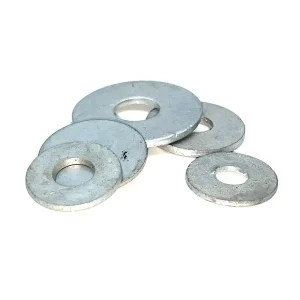
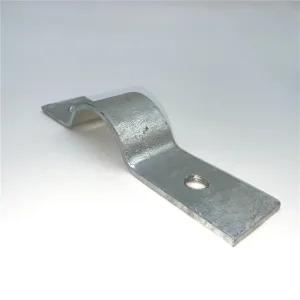
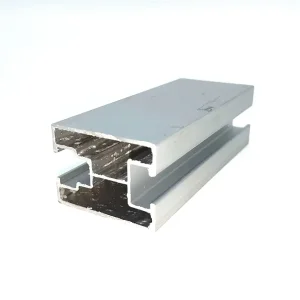
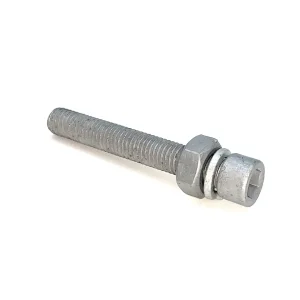
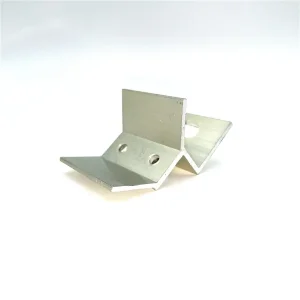
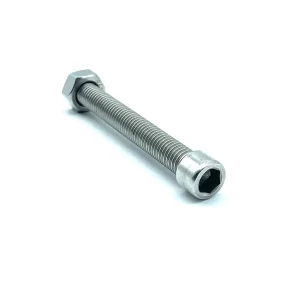
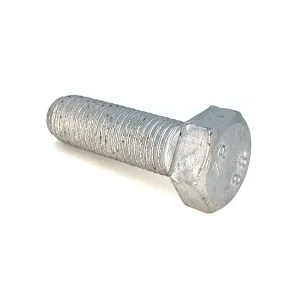
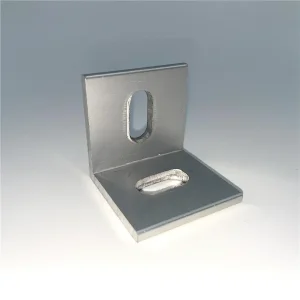
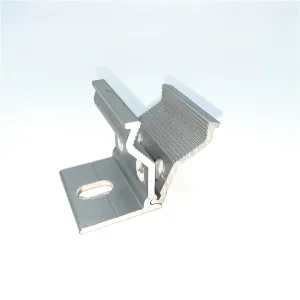
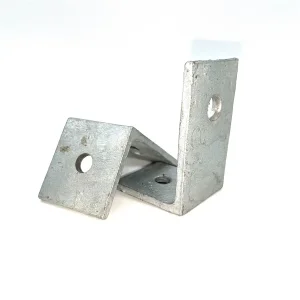
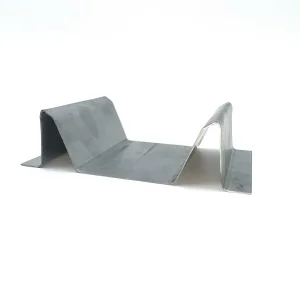
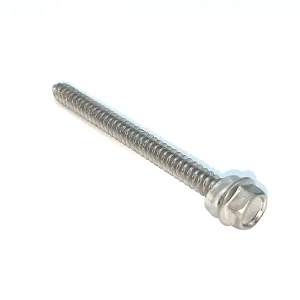
Explore our full line of engineered fasteners, structural angle brackets, and extruded aluminum mounting profiles designed for long-term outdoor and high-load environments.
Frequently Asked Questions & Procurement Insights
Essential technical and sourcing answers for automotive engineers, purchasing managers, and industrial equipment distributors.
Standard carbon steel nuts undergo severe thermal tempering loss above 300°C, causing them to lose their mechanical yield strength. Furthermore, non-specialized coatings burn off rapidly, resulting in extreme oxidation, thermal relaxation, and thread galling that makes non-destructive removal impossible during maintenance.
Unlike nylon-insert locknuts (which melt above 120°C), all-metal prevailing torque nuts utilize structural deformation—such as an ovalized collar or 3-point top indentations. This creates a permanent, spring-loaded interference fit against the stud thread that maintains prevailing torque across thousands of thermal cycles.
For temperatures up to 600°C, electrolytic copper plating (5–10 µm) is the most cost-effective and widely adopted solution in Chinese OEM factories. For extreme temperatures exceeding 700°C (e.g., turbocharged gasoline or race applications), electroplated silver or specialized MoS2 solid-film lubricants are recommended.
Yes. Premier Chinese manufacturers operate dedicated tool-and-die shops capable of producing custom flange diameters, non-standard thread pitches (e.g., M8x1.0, M10x1.25), specialized washer face serrations, and custom alloy formulations with full PPAP Level III approval.
Standard QC protocols include Chemical Composition Spectrometry, Vickers/Rockwell Hardness Testing, High-Temperature Creep and Stress Relaxation Testing, Salt Spray Testing (ISO 9227), Prevailing Torque / Clamp Load Torque Tension Testing (ISO 16047), and 100% Optical Sorting for dimensional compliance.
DIN 6923 is the traditional European metric standard widely specified in automotive applications; ISO 4161 provides modernized width-across-flats and tolerance specifications; ASME B18.16.4 governs inch-series prevailing torque flange nuts common in North American commercial trucks and heavy industrial machinery.