Engineered Mounting Components & Heavy Industrial Anchors
Integrate our precision-stamped solar rails, double-nut anchoring systems, and connection brackets designed specifically for structural safety and accelerated jobsite assembly.
Engineering Mechanics of Double Nut Anchor Bolt Assemblies
In high-load infrastructure, mechanical anchoring stability cannot rely on simple single-nut torque. A double nut anchor bolt configuration provides precision height adjustment and absolute mechanical lock-off against cyclic vibration and uplift forces.
Leveling Nut Mechanics
The lower nut sits directly underneath the steel baseplate, threaded onto the embedded anchor rod. It establishes precise elevation and planar leveling across complex foundations without necessitating messy grout shims.
- Micro-leveling range: up to 100mm clearance
- Direct vertical dead-weight support
- Prevents local foundation spalling
Clamping Jam-Nut Preload
The top tightening nut secures the baseplate, creating tension against the bottom leveling nut. This compressive clamping action wedges threads in opposite directions, creating absolute resistance to harmonic shaking.
- Eliminates cyclic wind-load loosening
- Even clamping stress transfer
- Meets ASTM F1554 Grade 36/55/105
Moment Transfer & Ductility
Modern structures must handle lateral shears and overturn moments simultaneously. Double nut systems allow moment transmission into the concrete pier via anchor rod tension and bearing, verified according to ACI 318 Chapter 17.
- Certified for Seismic Design Categories C-F
- Ductile steel tensile failure verification
- Supports heavy non-shrink grout integration
China Supply Chain Superiority: Yongnian Manufacturing Powerhouse
Located in Yongnian District, Handan City—internationally recognized as the "Fastener Capital of China"—our manufacturing base leverages vertical industrial integration to minimize lead times, control metallurgy, and slash procurement overhead.
Upstream Raw Material Access
Proximity to first-tier domestic steel mills ensures instantaneous access to structural carbon steels (Q235B, Q355B, 40Cr, 42CrMo) and certified stainless coils (SUS304/SUS316), shielding overseas clients from fluctuating billet spot markets.
Automated Heading & CNC Lines
Equipped with progressive multi-station cold-heading machines, deep-draw thread roll lines, and custom CNC lathes capable of executing tight pitch tolerances (Class 2A/6g) on M12 up to M100 anchor assemblies.
Integrated Surface Finishing
Continuous hot-dip galvanizing lines (HDG per ASTM A153 & ISO 1461), mechanical zinc-plating, and Dacromet coating yards ensure rapid, non-interrupted production cycles without relying on outside coating contractors.
Export Rail & Port Logistics
Streamlined logistics routes connecting Yongnian directly to Tianjin and Qingdao ports guarantee flexible container loading, reduced inland carriage costs, and fast vessel dispatch to Europe, North America, Southeast Asia, and the Middle East.
Material Grades & Protective Treatment Matrix
Cross-reference global standards to ensure full site compliance for utility-scale PV foundations, telecommunication poles, and substations.
| Material Standard | Nominal Yield (MPa) | Tensile Strength (MPa) | Surface Treatment Options | Corrosion Class (ISO 12944) | Primary Industrial Use-Case |
|---|---|---|---|---|---|
| ASTM F1554 Gr. 36 | 250 (36 ksi) | 400 – 550 | HDG (ASTM A153), Geomet, Plain | C2 to C4 (depending on coating) | Light commercial framing, standard PV tracker posts |
| ASTM F1554 Gr. 55 | 380 (55 ksi) | 515 – 600 | Hot-Dip Galvanized, Zinc Flake | C3 to C4 | Structural column bases, highway signage, high-wind solar |
| ASTM F1554 Gr. 105 | 724 (105 ksi) | 860 – 1035 | Zinc Flake (Dacromet), Electro-Galv | C3 to C5-I | Wind turbine ring foundations, heavy crane runways |
| ISO 898-1 Gr. 8.8 | 640 | 800 – 1000 | HDG (ISO 10684), Zinc Nickel | C3 to C4 | Global standard for infrastructure baseplates & bridges |
| AISI 316 / A4-70 Stainless | 450 | 700 | Passivated, Electropolished | C5-M (Marine Coastal) | Offshore solar arrays, coastal chemical plants, waterworks |
Engineered for Demanding Global Site Environments
From saline coastal installations to desert thermal shocks, discover how Youlong double nut anchor bolts guarantee lifetime structural security.
Utility-Scale Desert Solar Farms
Desert solar facilities in the Middle East and Western Australia experience severe diurnal thermal fluctuations (from 0°C up to 55°C). Temperature cycling causes continuous micro-expansion and contraction in concrete piers. Our double nut assemblies maintain constant thread contact pressure, avoiding base loosening caused by continuous thermal stress shifts.
High-Wind Coastal & Typhoon Zones
Solar arrays deployed in Florida hurricane belts or Southeast Asian typhoon zones face extreme cyclic uplift and dynamic fluttering forces. Double nut connections eliminate reliance on chemical adhesive cure times and provide verifiable structural ductility, keeping base plates anchored even under sustained category 5 gale forces.
Heavy Industrial Substations
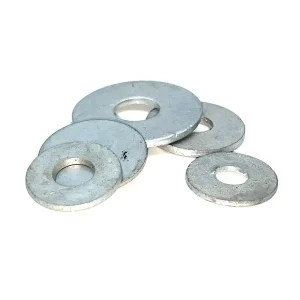
Substation bus supports, transformers, and switchyards generate constant mechanical humming and magnetic vibrations. In these mission-critical facilities, our hot-dip galvanized double nut anchor bolts—mated with ASTM F436 hardened flat washers—prevent vibration migration and foundation loosening.
Global Buyer Verification: Mitigating Fastener Procurement Risk
Overseas project procurement teams face severe regulatory and financial risks if sub-standard anchoring materials cause structural cracking or project shutdown. Youlong enforces strict quality governance across the entire production cycle.
EN 10204 Type 3.1 Traceability
Every shipped batch includes an authentic 3.1 Mill Test Certificate detailing spectral chemical breakdown, yield limit, elongation percentage, and Charpy impact values matched precisely to individual steel heat numbers.
Neutral Salt Spray (NSS) Testing
In-house ASTM B117 salt spray chambers verify coating integrity up to 1,500+ hours with zero red rust emergence, guaranteeing hot-dip galvanized and zinc-flake fasteners outlast harsh atmospheric exposure categories.
Third-Party Inspection Support
We welcome third-party agencies such as SGS, TÜV Rheinland, BV, and Intertek on-site to inspect dimensional thread pitch, thread chamfering, tensile destruction loads, and packing condition prior to export container sealing.
Emerging Engineering Trends in Infrastructure Fastening
The structural fastening landscape is transitioning toward ultra-durable eco-coatings, prefabricated anchor cages, and automated torque tracking.
Prefabricated Foundation Anchor Cages
EPC contractors are moving away from positioning single anchor bolts on site. Modern projects demand pre-welded, template-aligned anchor cages where multiple double nut rods are rigidly fixtured in factory conditions, cutting foundation setup labor by over 60%.
Hydrogen Embrittlement Mitigation
High-strength anchors (Gr. 105 / Class 10.9) are susceptible to hydrogen embrittlement during acid pickling and electroplating. Forward-thinking Chinese factories are replacing electro-galvanizing with mechanical blast cleaning and non-electrolytic zinc flake coatings.
Torque-Indicating Direct Tension Washers (DTIs)
To eliminate errors associated with pneumatic torque guns, utility plants are standardizing on DTI washers installed directly under the top jam nut, providing clear physical validation that required bolt preload has been fully achieved.
Frequently Asked Questions on Anchor Fastener Procurement
Expert engineering insights addressing structural standards, galvanic isolation, ordering parameters, and export packing.
Why is a double nut configuration preferred over a single nut with lock washer?
Single nut configurations paired with standard spring lock washers fail reliably under long-term cyclical loads. Double nutting creates opposing internal thread clamping forces that mechanically lock the fastener in place, maintaining post elevation and eliminating loosening from gust-induced vibrations.
How do you resolve galvanic corrosion between steel anchors and aluminum brackets?
When connecting hot-dip galvanized or stainless steel anchor bolts to aluminum mounting brackets (such as our 3040 guide rails or bases), electrolytic reactions can rapidly degrade the aluminum. We provide heavy-duty isolating EPDM washers or non-conductive PA66 sleeves to break metallic contact and permanently stop galvanic action.
What is the standard embedment depth ratio for double nut anchor rods?
As a rule of thumb under ACI 318 design principles, minimum effective embedment depth should be 12 to 15 times the nominal bolt diameter (12d to 15d), ensuring the steel yields in tension before concrete cone pullout occurs. Final depths depend on concrete compressive strength (f'c) and edge distances.
How does Youlong prevent thread damage on hot-dip galvanized threads?
Hot-dip galvanizing deposits a thick zinc coating (typically 45-85μm). To maintain smooth thread mating without peeling the protective layer, our factories tap the heavy hex leveling nuts oversize per ASTM A563 (oversize allowance up to 0.4-0.6mm), and all threaded studs are ship-protected with heavy plastic thread caps.
Can Youlong fabricate bent anchor bolts (L-type, J-type) with dual nuts?
Yes. Our in-house bending and cold-heading workshops fabricate custom L-shaped, J-shaped, and straight anchor bolts with welded bearing plates. We produce threaded lengths up to 400mm to accommodate dual leveling and jam nuts plus leveling grout pads.
What are the minimum export ordering lead times from your Yongnian plant?
Standard dimension M16 to M36 carbon steel double nut anchors typically dispatch within 10 to 15 working days. Custom lengths, specialized stainless steel (SS316), or high-tensile Gr. 105 rods requiring third-party testing require approximately 20 to 25 days from drawing sign-off to port loading.
Complete Rooftop & Ground-Mount Mounting Inventory
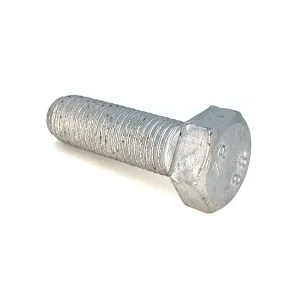
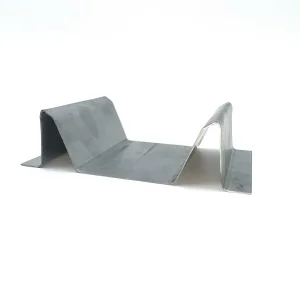
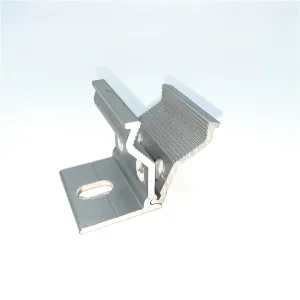
Explore our export-ready inventory spanning heavy-duty hot-dip galvanized hex hardware, structural aluminum channels, and non-drilling clip-lock clamps.