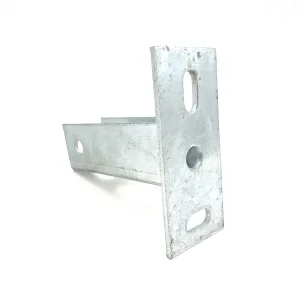
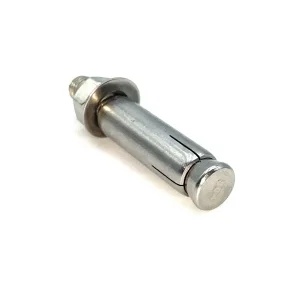
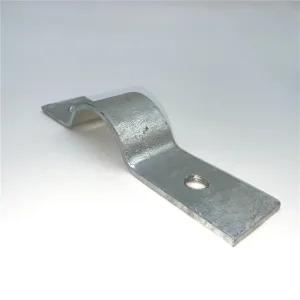
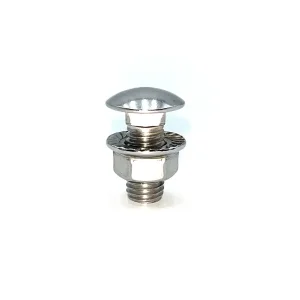
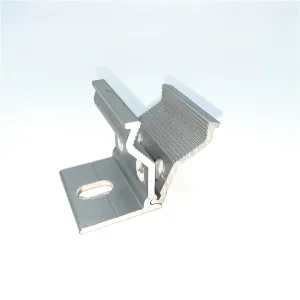
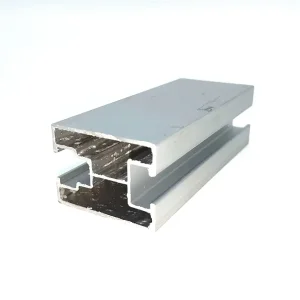
Featured Anchors & Solar Mounting Assemblies
Precision-machined countersunk anchors, stainless tension hardware, and structural roof interface components designed for zero-obstruction flush mounting and resilient heavy shear transfer.
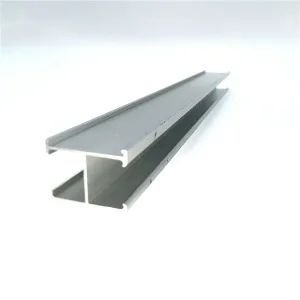
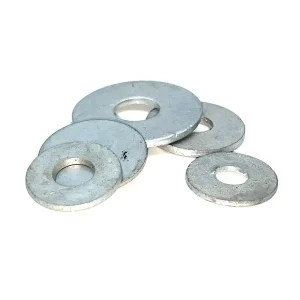
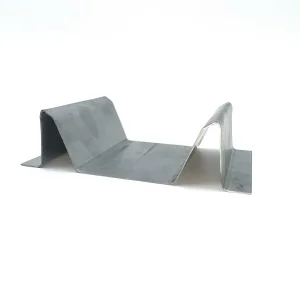
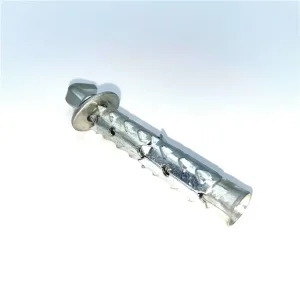
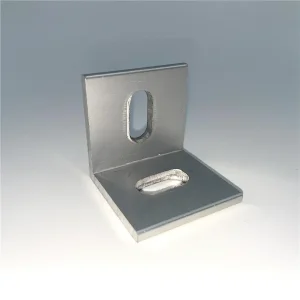
Engineering Principles: Flush Geometry & Expansion Wedge Mechanics
Countersunk expansion anchors (flush sleeve anchors) represent a vital mechanical anchoring category where spatial tolerance, structural shear transfer, and architectural clearance converge. Engineered for critical fastening into solid concrete, natural stone, and dense masonry substrates.
Coplanar Clearance Mechanics
Featuring a 90° or 100° countersunk conical head, these fasteners allow the head of the bolt to rest flush with or below the surface of the affixed fixture. This coplanar seating eliminates mechanical interference for rolling doors, curtain wall tracks, robotic logistics walkways, and rail glide plates.
Tri-Segmented Sleeve Deformation
Upon torquing, the internal conical expander pulls into the sleeve, forcing the segmented expansion collar against the inner diameter of the drilled concrete hole. The friction-lock mechanism transitions into radial compression, effectively dispersing compressive loads along the concrete anchor cone without premature micro-cracking.
Combined Shear-Tension Resilience
Because the countersunk head fills the chamfered hole in the fixture plate, shear loads are directly transferred into the bolt shank with zero lever-arm bending. This increases ultimate shear resistance under dynamic vibration, seismic oscillations, and pulsating wind vortex shedding.
Localized Application Scenarios: Where Flush Anchoring is Mission-Critical
Civil engineering specifications dictate precise anchoring geometry depending on edge distances, surface planarity, and cyclic thermal stresses across high-stakes industrial environments.
Solar PV Tracker & Canopy Foundations
In utility-scale photovoltaic infrastructure, ballast blocks and foundation pedestals require flush anchor anchoring to prevent contact with pivoting torque tubes and seasonal cable trays. Anchors must sustain constant micro-vibration from high-velocity wind loads across 25+ year outdoor life cycles.
Curtain Wall & Unitized Façades
High-rise curtain walls utilize structural transom and mullion brackets fastened to perimeter edge beams. Countersunk sleeve expansion anchors ensure thermal expansion gaps and architectural cladding can seal tightly without protruding bolt heads piercing weather-tight gaskets or insulation wraps.
Automated Logistics & Rail Guides
Modern smart distribution hubs utilize Automated Guided Vehicles (AGVs) and stacker cranes running along floor rails. Countersunk bolts guarantee an uninterrupted horizontal surface, eliminating equipment tire damage, track misalignment, and impact shear during continuous high-tonnage cargo handling.
Handan, Hebei: China's Fastener Epicenter & Metallurgical Agility
Understanding China’s manufacturing superiority requires examining the Yongnian industrial cluster in Handan. Accounting for over 45% of China's total structural fastener production, this concentrated hub provides unrivaled raw material access, advanced heat treatment lines, and streamlined deep-water export lanes.
Upstream Integration
Direct adjacency to major North China steel production mills ensures immediate access to continuous wire rod supplies in carbon steel Q235, high-tensile 35CrMo, and certified austenitic stainless steel wire (AISI 304, 316, 316L).
Multi-Stage Cold Heading
High-speed 6-station progressive cold-forming machinery stamps precision countersunk geometry and sleeve segments at speeds up to 120 pieces/min, eliminating structural micro-voids and optimizing grain-flow fiber lines for maximal shear yield.
Certified Surface Metallurgy
From modern multi-metal Sherardizing to continuous Hot-Dip Galvanizing (HDG compliant with ISO 1461) and zinc-flake Geomet finishes. These surface treatments survive over 1,500 hours of ASTM B117 neutral salt spray without base metal corrosion.
Intermodal Logistics Speed
Equidistant connectivity to Tianjin Port and Qingdao Port enables high-efficiency containerized freight dispatch. Bulk palletization, specialized shrink-wrap crating, and direct electronic EDI customs clearing streamline global delivery timetables.
Technical Specification Matrix & Modern Technology Roadmap
Standardization ensures mechanical reproducibility. The following reference data reflects structural anchor metrics based on international standard benchmarks (DIN 7991, ISO 10642, and ETA/ICC concrete criteria).
| Anchor Size | Drill Dia. (d₀) | Min. Embedment (hₑϥ) | Countersunk Angle | Char. Tensile (kN, C20/25) | Char. Shear (kN) | Recommended Finishes |
|---|---|---|---|---|---|---|
| M6 x 60 | 10 mm | 40 mm | 90° / 100° | 6.8 kN | 7.2 kN | Zinc Plated / SS304 |
| M8 x 80 | 12 mm | 50 mm | 90° / 100° | 11.4 kN | 12.8 kN | HDG / SS304 / SS316 |
| M10 x 100 | 14 mm | 60 mm | 90° | 16.2 kN | 19.5 kN | HDG / SS316 (A4-70) |
| M12 x 120 | 16 mm | 70 mm | 90° | 23.5 kN | 28.1 kN | Geomet / Zinc-Nickel |
| M16 x 140 | 20 mm | 85 mm | 90° | 35.8 kN | 44.2 kN | High Tensile Class 8.8 / A4-80 |
Smart Torque-Indicating Sleeves
Development of dynamic colorimetric and shearing collar mechanisms that visually confirm that precise expansion torque has been transferred to the internal cone, eliminating human installation error during high-speed field installation.
Micro-Alloyed Austenitic Steels
Advanced deployment of Super Duplex (2507) and specialized stainless alloys engineered with increased pitting resistance equivalent numbers (PREN > 42), targeted at offshore wind turbine footings and coastal photovoltaic arrays subjected to hyper-saline spray.
Seismic C1/C2 Cracking Qualification
Next-generation sleeve geometry designed to retain holding friction in tension zones under dynamic concrete crack cyclings up to 0.8 mm, complying with strict seismic anchoring regulations in geotechnical risk zones.
Global Compliance, Inspection Frameworks & Localized Engineering
International EPC contractors and distributor networks require unwavering verification before shipment. Our manufacturing infrastructure integrates multi-tier test protocols to eliminate liability risk.
EN 10204 Type 3.1 Traceability
Every export lot is dispatched with documented raw material heat certification, spectrometer chemical verification, yield strength tensile reports, and hardness distributions across Rockwell C and Vickers scales.
Destructive Pull-Out Testing
In-house mechanical laboratories conduct continuous calibrated direct-tension extraction and concrete cone failure tests, cross-referencing embedment depths with concrete compressive strengths ranging from C20/25 to C50/60.
OEM Engineering & Tooling
Custom sleeve cut-lengths, distinctive knurling profiles, proprietary drive styles (Torx, Hexagon Socket, or Pozidriv), and project-specific private label packaging are prototyped and delivered within short turnaround times.
Frequently Asked Questions for Importers & Structural Engineers
Direct technical clarifications addressing mechanical installation parameters, substrate capacities, and international standards verification.
The primary advantage is its flush, coplanar seating with the surface of the mounted fixture. In applications like rolling gate tracks, structural façade seals, automated warehouse guide rails, and specialized solar frames, protruding fastener heads create mechanical interferences and concentrated lever-arm bending moments. Countersunk anchors absorb direct shear stresses along the fixture plane without rotational friction.
The characteristic pull-out resistance (N_Rk,p) of a mechanical sleeve anchor is intrinsically linked to the concrete matrix strength. In lower strength concrete (such as C20/25), radial expansion generates a broader failure cone compared to C50/60. Consequently, minimum edge distances (c_cr,N) and critical center-to-center spacing (s_cr,N) must be strictly maintained according to structural engineering tables to avoid premature concrete splitting or corner breakout.
For industrial zones with atmospheric sulfur or coastal sites located within 5 kilometers of the shoreline (ISO 9223 Category C4/C5), Grade 316 (A4-70 or A4-80) austenitic stainless steel is strongly specified due to its 2-3% molybdenum content, which combats pitting and crevice corrosion. For hyper-saline offshore wind splash zones, Super Duplex (1.4410 / 2507) offers superior durability.
Handan’s Yongnian District concentrates raw wire rod rolling, multi-die cold heading machinery, continuous electroplating and hot-dip lines, and certified mechanical testing labs within a 20-kilometer radius. This industrial clustering eliminates domestic freight overheads, lowers energy consumption, accelerates production cycles, and provides unmatched supply chain resilience.
Galvanic corrosion occurs when dissimilar metals with distinct electrochemical potentials contact in the presence of an electrolyte. To prevent galvanic degradation of aluminum guide rails when anchored by stainless or carbon steel fasteners, non-conductive dielectric isolation washers (such as EPDM, UV-stabilized nylon, or specialized polymer sleeves) must be integrated into the mechanical connection assembly.
Structural Hardware & Renewable Infrastructure Fastening Systems
Explore our full engineering portfolio: heavy-duty concrete anchor bolts, stainless carriage hardware, specialized mounting bases, and non-penetrating rooftop installation clamps.