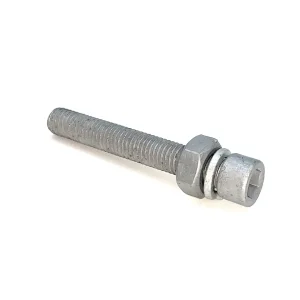
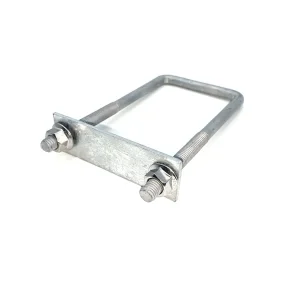
High-Integrity Photovoltaic & Anchor Deployments
Direct supply from production lines engineered for mechanical shear stability, micro-vibration resistance, and long-term tensile endurance in harsh outdoor environments.
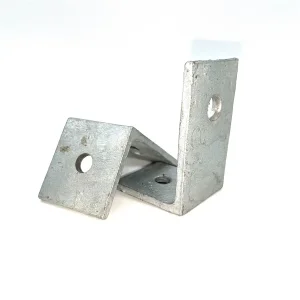
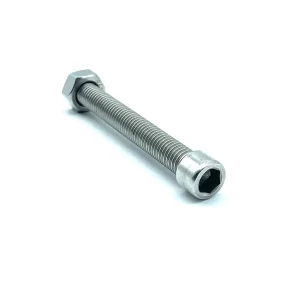
Macro Dynamics & Global Sourcing Paradigms
Analyzing structural demand patterns for butterfly expansion bolts, toggle wings, and hollow-base anchorage across critical international infrastructure.
Civil Infrastructure & Drywall Anchoring
Butterfly expansion bolts—often designated in Western procurement standards as gravity toggles or spring-wing toggle bolts—represent a fundamental fastening mechanism where base substrates lack solid solid-pour thickness. In high-density commercial drywall, precast autoclaved aerated concrete (ALC), and fiber-cement cladding, solid concrete wedge anchors fail due to internal spalling. The spring-actuated butterfly wing spreads static and dynamic tensile loads over a 300% wider surface area behind the board, preventing shear pull-out failure.
- High surface contact load distribution
- Eliminates localized punching shear
Solar PV Hollow Section Interlocking
As utility and distributed commercial solar expand across complex surfaces, contractors frequently mount cable conduits, lightweight inverter sub-brackets, and secondary perimeter flashing onto hollow structural steel (HSS) profiles or corrugated composite decking. Standard through-bolting requires structural access to both sides—an impossibility inside sealed structural tubes. Spring-loaded butterfly anchors allow rapid blind installation from the outside skin while meeting wind-uplift shear standards.
- 100% blind installation for enclosed tubular purlins
- Mitigates galvanic risks via nylon barrier sleeves
Supply Chain Resilience & Handan Cluster Advantages
Yongnian District in Handan produces over 55% of China's total fastener output. Sourcing through integrated manufacturers like Handan Youlong Fastener Co., Ltd. collapses procurement lead times. Direct proximity to steel rod smelting, cold-heading toolmakers, continuous electroplating troughs, and third-party mechanical verification labs creates an ecosystem capable of rapid tooling reconfiguration for custom metric and imperial threading.
- Direct mill steel sourcing ensures low alloy variability
- Shorter supply cycles with consolidated freight options
Metallurgical Formulations & Environmental Fit
Reference technical matrix for mechanical designers, structural specifiers, and procurement managers targeting compliance under ISO 3506 and ASTM standards.
| Alloy & Finish Variant | Yield Strength (Rp0.2) | Tensile Strength (Rm) | ISO 9223 Category | Typical Industrial Target Application |
|---|---|---|---|---|
| Austenitic SS 316 (A4-70 / A4-80) 2.5% Molybdenum Alloy |
≥ 450 MPa | 700 – 800 MPa | C4 – C5 Marine | Offshore coastal solar racking, chemical plants, wastewater splash zones. Resists chloride-induced pitting and crevice corrosion. |
| Austenitic SS 304 (A2-70) 18/8 Chrome-Nickel Base |
≥ 450 MPa | 700 MPa | C3 Urban / Light Ind. | Commercial rooftop PV racking, electrical conduit anchoring, architectural interior drywall and curtain wall backing. |
| Hot-Dip Galvanized Carbon Steel (Gr 4.8 / 8.8) HDG Zinc Layer ≥ 55μm |
320 – 640 MPa | 400 – 800 MPa | C3 – C4 Rural / Ground | Ground-mount PV tracker foundation tie-backs, agricultural framing, utility wind turbine auxiliary bracket mounting. |
| Electro-Galvanized + Geomet® Flake Zinc-Aluminum Dispersion |
≥ 640 MPa | ≥ 800 MPa | C4 Industrial | Automotive framing, HVAC suspended ducting, seismic-rated interior drop ceiling systems requiring non-electrolytic coatings. |
| Polymer-Wing Hybrid (Nylon 66 Body) Dielectric Isolation Core |
N/A (Shear: 1.2 kN) | Tensile: 0.85 kN | Non-Corrosive Barrier | Telecommunications, sensitive switchgear partitions, electrical enclosures requiring complete dielectric isolation to eliminate eddy currents. |
Next-Generation Mechanical Anchor Evolution
Tracking the structural engineering breakthroughs transforming blind fasteners, seismic resilience, and smart tracking arrays.
Self-Aligning Torsional Wings
Traditional butterfly anchors suffer from wing misalignment if installers overtighten before full clearance expansion is reached. The next iteration of Youlong-engineered toggle systems utilizes asymmetrical return springs paired with dual detent notches. The wings lock into place with tactile feedback once fully pivoted 90 degrees behind the mounting plate, preventing dynamic slippage under cyclical wind-vibration loading.
- Tactile tactile feedback confirmation
- Zero back-spin during mechanical torquing
Integrated Dielectric & Moisture Seals
Galvanic reactions between structural aluminum rails and cold-forged zinc-plated or stainless expansion bolts can shorten connection lifespans. Advanced butterfly configurations are now forged with integrated, vulcanized EPDM collar gaskets and non-conductive PA66 shoulder bushings. This creates a water-tight seal against roof deck penetration points while isolating dissimilar metals, eliminating galvanic current transfer.
- Vulcanized EPDM roof-penetration gasket
- Eliminates separate insulating washer placement
Finite Element Seismic Verification
As international construction codes (such as Eurocode 8 and ASCE 7-22) demand rigorous seismic accountability, mechanical blind anchors are moving away from purely static load tables. We apply Finite Element Analysis (FEA) to our butterfly wing designs to predict cycle-fatigue micro-cracking across high-stress stamping radii. This ensures anchors withstand high cyclic accelerations without catastrophic wing deformation.
- Validated under cyclic tension-shear loading
- Optimized stamping contours prevent stress risers
Strict Quality Control & Global Certifications
Ensuring compliance across critical mechanical, metallurgical, and international regulatory domains for seamless import workflows.
Automated Tensile & Shear Verification
Every cold-headed batch at our Yongnian facility undergoes destructive load validation on calibrated universal tensile machines. Butterfly toggle wing assemblies are pulled against hollow steel fixtures to confirm ultimate tensile capacity and ultimate shear before shipping. All lot certificates (EN 10204 3.1) track material chemistry, yield point, elongation, and Rockwell hardness.
- Traceable EN 10204 3.1 inspection paperwork
- Universal machine tension-to-destruction tests
Standardized Salt Spray Chambers
To verify our corrosion claims under ISO 9227 and ASTM B117, random production samples run through accelerated neutral salt spray (NSS) chambers. Hot-dip galvanized anchors must pass a minimum of 720 hours without red rust, while A4-80 stainless components endure over 1,500 hours of continuous saline atomization without surface degradation.
- ISO 9227 / ASTM B117 protocol execution
- Thickness validation via magnetic induction gauges
Complete Global Trade Compliance
Navigating global border clearances requires rigorous compliance documentation. We provide verified Country of Origin certificates, full chemical mill sheets, and declarations of conformity for RoHS and REACH directives. Our logistics teams coordinate pallet loading, moisture barrier desiccant bags, and heavy-duty ocean freight crating to prevent handling damage during transport.
- Full REACH & RoHS environmental compliance
- Heavy wooden-case export packaging
Frequently Asked Questions (FAQ)
Technical guidance for EPC buyers, structural engineers, and commercial fastener importers.
How does a butterfly expansion bolt differ mechanically from a standard concrete wedge anchor?
A concrete wedge anchor relies on outward radial friction against the internal walls of a precision-drilled hole in solid cured concrete. If installed in hollow brick, ceiling panels, or structural sheet profiles, there is no solid medium to generate compressive friction, leading to immediate pull-out failure. A butterfly expansion bolt (or spring toggle bolt) features dual mechanical wings that compress during insertion through a pre-drilled aperture, then spring open flat across the unreachable reverse face of the wall. Tensile loads are resisted via direct bearing against the backside substrate, providing reliable holding capacity in hollow or thin-walled assemblies.
What critical factors prevent galvanic corrosion between aluminum PV brackets and steel expansion bolts?
Galvanic corrosion occurs when two metals with different electrochemical potentials (e.g., aluminum and carbon steel) are in direct electrical contact within an electrolyte like rainwater. To prevent rapid oxidation of the aluminum mounting plate, Youlong supplies isolating solutions: heavy EPDM bonded washers, UV-stabilized nylon flat washers, or non-conductive plastic sleeves. For coastal or high-salinity arrays, our team recommends pairing anodized aluminum brackets with Grade 316 (A4) stainless steel fasteners separated by non-conductive polymeric isolating discs.
Can Handan Youlong manufacture custom butterfly bolts according to client drawings and OEM tolerances?
Yes. As an integrated factory in Handan's fastener manufacturing hub, we operate automated progressive cold headers, multi-station stamping presses, and thread-rolling equipment. We routinely produce custom thread profiles (Metric coarse, Metric fine, UNC, UNF), non-standard stud lengths up to 300 mm, custom wing span profiles, and varied head configurations (Hex, Pan, Countersunk, Flanged). Clients simply provide their CAD files (DWG, STEP) or physical samples along with required material grades and batch quantities.
What is the typical lead time and minimum order quantity (MOQ) for international container shipments?
Standard warehouse catalog specifications typically maintain continuous buffer stock in Handan, enabling consolidation and export container dispatch within 7 to 10 days. For custom OEM runs—requiring specialized die fabrication, heat-treatment cycles, or high-thickness hot-dip galvanizing—lead times typically range from 20 to 30 business days. Standard MOQ starts at 5,000 to 10,000 units depending on thread diameter, but mixed-container shipments combining mounting brackets, expansion bolts, washers, and channel nuts are readily accommodated.
What third-party quality verification procedures can international buyers request before dispatch?
Beyond our internal QA testing (salt spray chamber logs, Rockwell hardness, optical coordinate dimension inspection, and universal tensile yield curves), we support third-party agency inspections including SGS, TÜV, BV, and Intertek. Inspectors can conduct random on-site product sampling, witness tensile pull-tests, confirm plating thickness via X-ray fluorescence spectrometry, and verify export packaging before sea containers are sealed.
Precision Structural Anchors & Solar Assemblies
Explore complementary components engineered for photovoltaic racking, mechanical enclosures, and general structural engineering.