
High-Integrity Fixing Bolts & Structural Components
Explore our foundational factory direct fasteners, solar mounting hardware, and heavy-duty expansion fixings engineered in Yongnian, China's fastener capital.
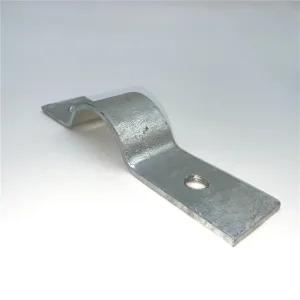
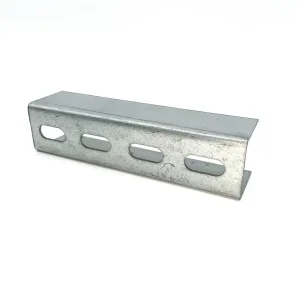
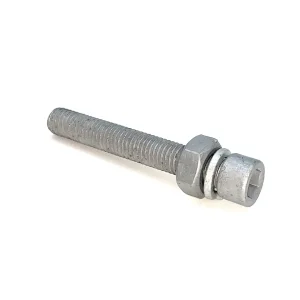
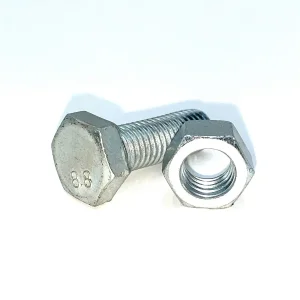
Engineering Fundamentals of Bolt Fixing Chemicals in Modern Construction
A comprehensive examination of bonded anchor systems, adhesive chemistries, micro-load transfer mechanics, and concrete base interaction.
Pure Epoxy Chemistry (3:1 / 1:1)
Pure epoxy injection mortar delivers unmatched molecular cross-linking density, zero shrinkage during hardening, and outstanding thermal stability. Formulated for heavy-duty rebar doweling, high-moment structural connections, and diamond-cored holes where smooth inner substrate surfaces require superior chemical adhesion.
- Bond Strength: τRk up to 25–35 N/mm² in C20/25 concrete
- Thermal Resistance: Continuous service at 50°C to 80°C
- Application: Deep embedment rebar and dynamic overhead fixings
Vinylester Resin (Styrene-Free)
Engineered for rapid polymerization and extreme chemical resistance against alkaline concrete pore water and atmospheric chlorides. Operating via free-radical polymerization initiated by organic peroxides, our vinyl ester formulations cure quickly in sub-zero ambient conditions and in water-saturated drill holes without degradation.
- Cure Time: Rapid initial gel in 3–6 min, full cure under 45 min
- ETA Option 1: Suitable for cracked & uncracked concrete matrices
- Safety: Low VOC, styrene-free compliance for indoor works
Spin-In Glass Chemical Capsules
Pre-measured quartz sand, micro-encapsulated peroxide hardener, and high-purity resin enclosed within hermetically sealed borosilicate glass ampoules. Driven by hammer drill rotation with chisel-ended threaded studs, the glass shell pulverizes to act as high-friction aggregate within the curing matrix.
- Precision Batching: Eliminates human error in resin/hardener mixing
- Zero Wastage: Ideal for repetitive overhead & horizontal grid anchors
- Aggregate Lock: Shattered glass fragments increase aggregate interlock
Why China's Handan Fastener Ecosystem Dominates Global Anchoring Supply
Combining heavy metallurgical integration, state-of-the-art chemical synthesis, and fully automated CNC cold-forming under one regional cluster.
Full Supply Chain Clustering
Handan Youlong Fastener operates at the strategic epicentre of Yongnian District, Handan City—internationally recognized as China's Fastener Capital. This geographic centralization guarantees direct raw material feedstocks of high-grade carbon steels (Q235, 35K, 42CrMo), duplex alloys, and stainless steels (SS304, SS316, A2-70, A4-80), cutting logistics latency to near zero.
Dual Chemical & Metal Synergy
Most chemical companies outsource steel anchor rods, while standard bolt makers buy off-the-shelf resins. Handan Youlong synchronizes in-house cold heading, CNC thread rolling, and precision heat-treating with specialized polymer chemical compounding, guaranteeing exact matching of steel mechanical properties with mortar adhesion dynamics.
Strict Quality Verification (QA/QC)
Our dedicated laboratory runs rigorous testing: continuous salt spray resistance (ASTM B117 exceeding 1000 hours for hot-dip galvanized and Dacromet coatings), computerized tensile pull-out verification, shear loading displacement tracking, and sustained long-term creep measurements under static elevated loads.
Comprehensive Chemical Mortar Specification Benchmark
Compare mechanical criteria, environmental resilience, cure characteristics, and compliance approvals across leading chemical fixing formulations.
| Anchoring Chemical Base | Bond Strength (N/mm²) | Operating Temperature | Water-Filled Holes | Seismic Resistance (C1/C2) | Ideal Application Scenario |
|---|---|---|---|---|---|
| Pure Epoxy (EP) Heavy-Duty Slow-Set |
28 – 36 N/mm² | -40°C to +80°C | Certified 100% Performance | Class C1 & C2 Approved | Post-installed rebar dowels, diamond-cored holes, nuclear, bridge engineering |
| Vinylester (VE) Styrene-Free Rapid Hybrid |
20 – 26 N/mm² | -40°C to +120°C | Certified Performance | Class C1 Approved | Rooftop solar mounting, steel structures, overhead curtain wall bracketry |
| Polyester Resin (PE) Economic Fix |
12 – 16 N/mm² | -20°C to +50°C | Unsuitable (Dry holes only) | Not Recommended | Hollow masonry with mesh sleeves, HVAC duct hangers, lightweight perimeter fencing |
| Glass Capsule (Spin-In) Precise Volume |
22 – 28 N/mm² | -40°C to +80°C | Allowable (Dry/Damp) | Suitable for Static Loads | Repetitive beam connections, vibrating conveyor rails, overhead MEP grids |
Engineered Deployments Across Heavy Infrastructure & Clean Energy
How chemical anchoring assemblies resolve structural connection challenges across demanding civil, marine, and renewable sectors.
Solar PV Infrastructure & Wind Energy
Utility-scale photovoltaic installations encounter intense aerodynamic uplifts and long-term ground vibration. Chemical studs embedded into precast ballast concrete blocks or rock foundations guarantee high-tension resistance without inducing internal tensile splitting stresses within the concrete blocks.
- Elimination of micro-fractures in concrete pedestals
- Stainless steel grade 304/316 and Dacromet 1000h finishes
- Direct integration with aluminum guide rails and pressure plates
Curtain Wall & Architectural Façade
Modern glass and stone architectural envelopes require anchor fastenings installed near the outer slab edges of multi-story buildings. Chemical bolt systems avoid expansion wedging, preventing spalling of edge concrete while supporting heavy deadweight, thermal movements, and hurricane-velocity wind shears.
- Small edge distances down to 50 mm without spalling
- Dynamic wind fatigue tolerance tested to 2 million cycles
- Isolation accessories preventing bimetallic galvanic corrosion
Seismic Retrofitting & Rebar Doweling
Earthquake strengthening demands post-installed rebars behaving identically to cast-in reinforcement bars. Our pure epoxy systems exhibit zero creep under sustained tension, qualifying for concrete structures designed in accordance with Eurocode 2 Part 4 and ACI 318 structural concrete requirements.
- Deep embedment depths exceeding 20d bar diameter
- Seismic performance categories C1 and C2 validated
- Resistant to aggressive chemical de-icing salts and sulfates
Engineering Protocol: 5-Stage High-Performance Chemical Anchoring
Field data confirms over 80% of chemical anchoring failures stem from improper hole preparation. Our technical protocol ensures zero capacity deduction on site.
Precision Drilling
Drill to the specified depth (hef) and diameter using high-tolerance SDS hammer bits. Avoid cutting through structural reinforcement steel without structural engineer sign-off.
Dust Evacuation (2x2x2)
Execute the mandatory 2x compressed air blow, 2x steel wire brush sweep, 2x final blow procedure. Residual dust acts as an adhesion barrier, reducing pull-out load by up to 60%.
Resin Dispensing
Discard the initial 10 cm of extruded mortar until a completely uniform color is achieved. Inject from the base of the hole upwards using extension nozzles to eliminate air pockets.
Stud Insertion
Slowly twist the threaded anchor rod clockwise into the borehole until it touches the base. Ensure mortar overflows slightly at the mouth, confirming a 100% annular seal.
Curing & Torque Setting
Maintain the rod completely undisturbed for the specified curing duration (tcure). Apply final tightening torque (Tinst) only after complete resin solidification.
Global Enterprise Sourcing: Navigating China's Chemical Bolt Market
A strategic handbook for multinational procurement heads, EPC contractors, and private-label distributors purchasing from China.
Shelf Life & Cold-Chain Ocean Logistics
Chemical injection mortars contain active peroxide catalysts sensitive to thermal spikes. When ordering full container loads (FCL), Youlong manages customized container stuffing, thermal insulation barrier linings, and strict seasonal formulation adjustments (summer slow-set vs winter rapid-cure) ensuring 12–18 months fresh shelf life upon dock arrival.
OEM Private Label & Co-Axial Cartridges
We provide full-spectrum OEM contract packaging in standard cartridge architectures: 300ml 10:1 silicone guns, 360ml 5:1 co-axial, 390ml side-by-side, and 585ml 3:1 jumbo pure epoxy tubes. From silk-screened client branding to bespoke multi-lingual instruction manuals and static mixers, we build your brand with factory-direct margins.
Inspection Dossiers & Traceability
Every shipment is accompanied by complete Mill Test Certificates (EN 10204 Type 3.1) detailing steel heat numbers, chemical composition (spectrometric verification), tensile strength, yield limits, and surface coating thicknesses. Chemical lots carry certified batch tracking sheets verifying viscosity, gel timing, and specific gravity.
Frequently Asked Questions on Bolt Fixing Chemicals & Anchor Systems
Authoritative technical answers covering selection, structural mechanics, installation troubleshooting, and supply-chain logistics.
What is the primary technical difference between chemical bolt fixing and mechanical expansion bolts?
Mechanical expansion bolts work by applying outward radial pressure against borehole walls via expanding clips or cones, creating high localized stress concentrations that require larger edge margins to avoid concrete splitting. Chemical fixing anchors use adhesion and chemical bonding, spreading loads continuously along the embedded shaft, allowing significantly smaller edge distances and installation in cracked or low-density concrete.
Can chemical anchors be installed in wet, water-filled, or submerged boreholes?
Yes, provided the proper chemical system is selected. Pure epoxy and select high-grade styrene-free vinyl ester mortars are specifically tested and certified for damp and fully flooded holes with zero load derating. However, polyester-based resins are prone to saponification and moisture degradation, making them unsuitable for wet installations.
How does ambient installation temperature affect resin curing and working time?
Temperature dictates reaction kinetics. Higher temperatures shorten both gel time (working window) and final cure duration, while lower temperatures prolong them. At +35°C, pure epoxy might gel in 12 minutes and cure in 6 hours; at +5°C, gel time may extend to 90 minutes with 48 hours for full cure. In freezing temperatures down to -10°C, specialized winter vinyl ester formulations are mandatory.
What steel grade should be specified with chemical anchor fixings for solar PV projects?
For standard inland commercial rooftops or solar parks (ISO 9223 C2–C3), hot-dip galvanized Class 5.8 or Class 8.8 carbon steel threaded rods provide the best balance of cost and performance. In coastal, industrial, or high-humidity regions (C4–C5), Austenitic Stainless Steel Grade 304 (A2-70) or Grade 316 (A4-80) must be specified to prevent premature galvanic and chloride pitting corrosion.
What causes sustained load creep failure, and how does factory formulation prevent it?
Creep failure occurs when a polymer softens and elongates under continuous static tensile loads over prolonged periods, leading to anchor pull-out. Handan Youlong utilizes cross-linking aromatic amine hardeners and high-density epoxy backbones that achieve glass transition temperatures (Tg) well above 80°C, preventing molecular slippage under sustained highway overhead or seismic loads.
What is the typical shelf life of chemical injection mortar and how should it be stored?
Standard shelf life ranges from 12 to 18 months from the manufacturing date, provided cartridges are stored in original packaging in cool, dry conditions between +5°C and +25°C, away from direct sunlight. Storing cartridges at temperatures exceeding +35°C accelerates degradation of the dibenzoyl peroxide curing agent, prematurely reducing working life.
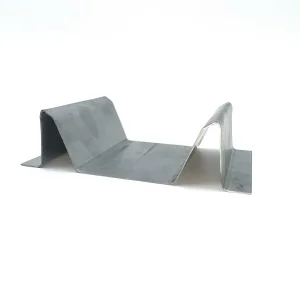
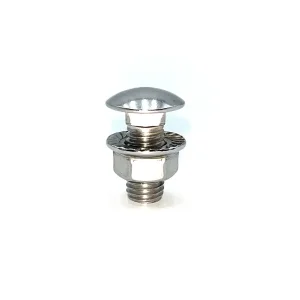
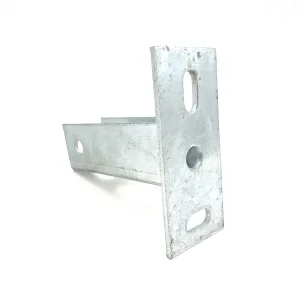
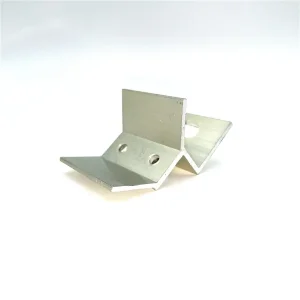
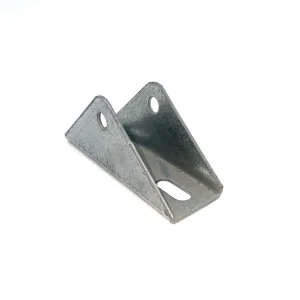
Precision Bolts, Water Channels & Specialized Fasteners
Complete your structural anchoring and photovoltaic mounting arrays with factory-direct solutions engineered to international tolerances.
Emerging Technology Trends in Chemical Fixing & Bonded Fasteners
The transformation toward zero-carbon manufacturing, smart RFID-embedded studs, and green polymer chemistry.
Bio-Based & Styrene-Free Resins
Global environmental regulations, including EU REACH and LEED green building certification frameworks, are accelerating the transition away from volatile solvents. Handan Youlong is pioneering bio-based unsaturated polymer precursors that achieve lower carbon footprints and negligible VOC emissions without compromising shear strength.
Intelligent Anchor Health Monitoring
With smart infrastructure adoption expanding rapidly across high-speed rail viaducts and offshore platforms, our research division is integrating specialized fiber-optic strain sensors and passive RFID chips into anchor studs. This enables structural maintenance teams to monitor pre-stress loss and bond integrity non-destructively.
Automated Robotics Injections
On mega-scale industrial and solar construction projects, automated drilling and chemical dispensing robots are entering field deployment. We engineer ultra-consistent viscosity profiles for our 585ml pure epoxy cartridges, ensuring smooth flow and zero air entrapment when fed through high-speed automated dispensing machinery.