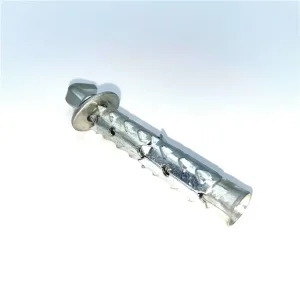
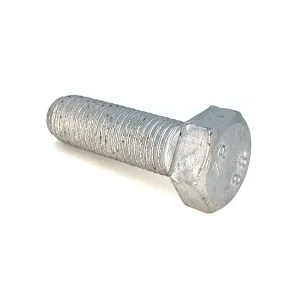
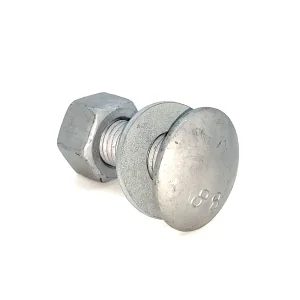
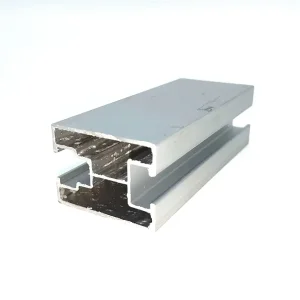
High-Integrity Base Fasteners & Mounting Components
Standard and bespoke fastener assemblies calibrated for concrete embedment, purlin attachment, heavy steel plate securing, and high-torsion structural configurations.



Base Plate Anchor Bolt Mechanics & Structural Integrity
A rigorous review of cast-in-place embedment physics, shear-cone load dissipation, brittle fracture mitigation, and standard compliance frameworks across international megaprojects.
Load Transfer Mechanics
Base plate anchor bolts are the paramount structural nexus bridging the superstructure (steel column, tracker pier, industrial crane leg) to reinforced concrete foundations. They transfer dynamic tensile uplift, catastrophic base shear, cyclic overturning moments, and prying forces.
- Tensile uplift dissipation through deep mechanical anchor heads.
- Base plate frictional and bearing shear interaction.
- Pretension retention under sustained dynamic cyclic vibration.
Concrete Failure Modes
Engineering design per ACI 318 Chapter 17 and EN 1992-4 (Eurocode 2 Part 4) governs the prevention of concrete cone breakout, edge breakout, anchor pullout, and concrete pryout through strict geometrical optimization.
- Effective embedment depth ($h_{ef}$) verification.
- Critical edge distance ($c_{cr,N}$) & spacing ($s_{cr,N}$) ratios.
- Side-face blowout suppression via welded plate anchors.
Ductile Fracture Hierarchy
In seismic and heavy blast environments, structural safety dictates that steel anchor failure occurs plastically within the shank before sudden, brittle concrete breakout takes place. Material ductility is controlled via strict elongation and reduction-of-area thresholds.
- Minimum 14-21% plastic tensile elongation guarantee.
- Charpy V-Notch impact testing verified to -20°C / -40°C.
- Controlled yield-to-tensile ratio ($f_y/f_u ≤ 0.85$).
Engineering Note: Bending Moment in Base Plate Stand-off Grout Beds
When high-density non-shrink cementitious or epoxy grout exceeds 50 mm (2 inches) under a base plate, anchor bolts must be engineered for combined axial tension, direct shear, and flexural bending. Handan Youlong engineers calculate equivalent cantilever lengths ($l_b$) to ensure the anchor's plastic section modulus ($Z$) resists combined P-M interaction stresses without premature yielding of threads.
| Standard & Grade | Yield Strength $f_y$ (MPa / ksi) | Tensile Strength $f_u$ (MPa / ksi) | Elongation Min (%) | Primary Industrial Application | Weldability Protocol |
|---|---|---|---|---|---|
| ASTM F1554 Gr. 36 | 250 MPa / 36 ksi | 400 - 550 MPa / 58-80 ksi | 23% | Light structural steel, highway signage, light standards | Readily weldable without preheat |
| ASTM F1554 Gr. 55 | 380 MPa / 55 ksi | 515 - 620 MPa / 75-95 ksi | 21% | Heavy industrial buildings, solar tracker foundations | Weldable with S1 carbon equivalent limits |
| ASTM F1554 Gr. 105 | 725 MPa / 105 ksi | 860 - 1035 MPa / 125-150 ksi | 15% | Extreme seismic columns, wind towers, offshore jackets | Non-weldable; requires heat-treated nuts |
| ISO 898-1 Class 8.8 | 640 MPa / 92.8 ksi | 800 - 950 MPa / 116-138 ksi | 12% | European precast connections, petrochemical pipe racks | Controlled low-hydrogen preheat required |
| ISO 898-1 Class 10.9 | 900 MPa / 130 ksi | 1000 - 1200 MPa / 145-174 ksi | 9% | Crane runway girders, high-speed rail electrification masts | Strictly non-weldable; prone to hydrogen embrittlement |
Localized Application Scenarios & Engineering Case Studies
Real-world structural challenges demand specialized metallurgy, bespoke anti-corrosion barrier systems, and purpose-built geometry for field environments spanning hyper-saline coastal flats to seismic zones.
1. Utility-Scale Solar PV Tracker Foundations in Saline-Alkali Lands
Single-axis solar trackers impose extreme, continuous cyclic aero-elastic torsional flutter on foundation posts during high-wind stow operations. In remote deserts or coastal mudflats (e.g., Middle East, Western Australia, Atacama), soil exhibits high chloride and sulfate concentrations.
Youlong Engineered Solution: Heavy-duty ASTM F1554 Gr. 55 double-end threaded studs hot-dip galvanized to ASTM A153 Class C (>85 μm) or coated with dual-layer Dacromet / Geomet 500 zinc-flake system. Anchor cages are fitted with positioning templates ensuring ±1.5 mm tolerance across hundreds of megawatts.
- Salt spray resistance exceeding 2,500 hours without red rust.
- Enhanced fatigue life through roll-threaded metallurgy.
2. Heavy Industrial Mill Columns & Crane Runway Anchorage
Overhead traveling cranes in heavy manufacturing, steel rolling mills, and automated distribution hubs transmit continuous high-cycle fatigue, heavy vertical wheel loads, and violent longitudinal braking shear into concrete foundation pedestals.
Youlong Engineered Solution: High-tensile ASTM F1554 Gr. 105 or ISO 898-1 Class 10.9 anchor assemblies with embedded bottom shear plates and double-nut lock systems. Bolts undergo 100% Magnetic Particle Inspection (MPI) and ultrasonic verification to eliminate subsurface micro-inclusions.
- Calibrated preload retention under > 2 million dynamic cycles.
- ASTM A563 Grade DH heavy hex nuts preventing thread stripping.
3. High-Rise Seismic Base-Isolated Structures (Category C1/C2)
Structures in seismically active circum-Pacific or Alpine-Himalayan belts utilize elastomeric rubber isolators and friction pendulum bearings that concentrate catastrophic lateral drift and tension on foundation base plates during Design Basis Earthquakes (DBE).
Youlong Engineered Solution: Cast-in-place anchor assemblies engineered with ductile mild steels complying with Eurocode seismic performance categories C1 and C2. Threaded ends feature large washer bearing plates to maximize concrete breakout cone volume without exceeding allowable bond stress.
- Predictable plastic elongation absorbing ground displacement energy.
- Full physical testing validation for post-yield cyclical hysteretic loops.
4. Petrochemical Marine Terminals & Offshore Substations (C5-M)
Offshore wind farm transition pieces, coastal LNG terminals, and marine ship-loader guide tracks endure perpetual salt spray, marine fog, constant humidity, and chemical vapor exposure classified under ISO 12944-2 as extreme corrosivity category C5 or CX.
Youlong Engineered Solution: Premium austenitic (AISI 316 / A4-80) and duplex stainless steels (UNS S31803 / S32205) anchor rods, alongside multi-layer electroplated Zinc-Nickel (Zn-Ni) coatings sealed with PTFE fluoropolymer topcoats, eliminating cathodic degradation.
- Total immunity to marine chloride stress corrosion cracking (SCC).
- EPDM and non-conductive phenolic isolation kits preventing galvanic bridging.
China Supply Chain Resilience, Vertical Clustering & Scale Efficiency
Why the Yongnian industrial ecosystem in Handan represents over 55% of global fastener manufacturing capacity, delivering unmatched cost-performance, lead-time compression, and technical consistency.
Direct Upstream Steel Synergy
Situated adjacent to premier Hebei iron and steel conglomerates (HBIS Group), Youlong accesses prime billet stock with direct heat-lot chemical traceability. Mill-certified Q235B, 45#, 40Cr, 42CrMo, and specialized boron-treated alloy steels are procured without intermediary markups or transit delays.
- Continuous wire-drawing and automated annealing on-site.
- Total chemical melt control mitigating trace sulfur/phosphorus.
Full-Cycle Automated Processing
Our workshop houses high-tonnage multi-station cold-heading machines, CNC turning centers, automatic dual-head thread rolling equipment, and mesh-belt continuous quenching and tempering furnaces. Thread rolling compresses material grain lines, boosting fatigue resistance by 30% over cut threads.
- Thread rolling up to M100 / 4-inch diameter continuous capacity.
- Computerized PLC-controlled atmosphere heat-treatment lines.
Eco-Park Surface Finishing
The Handan industrial fastener park features centralized, zero-discharge environmental galvanizing and surface treatment facilities. We provide automated hot-dip galvanizing with centrifuge spin-dry systems, electrostatic powder coating, Sherardizing, and trivalent passivation under one roof.
- Uniform zinc thickness without thread clogging or excessive buildup.
- Strict acid-pickling bake-out controls avoiding hydrogen embrittlement.
Technology Roadmap & Industry Outlook (2025–2035)
The convergence of structural health monitoring, decarbonized steel manufacturing, and ultra-high-performance alloys is revolutionizing foundation anchor engineering.
IoT-Enabled Smart Anchor Bolts
Real-time ultrasonic piezoelectric transducers and passive RFID strain sensors integrated into anchor heads to provide wireless, non-destructive bolt tension monitoring for critical infrastructure, warning of loss of preload before fatigue failure occurs.
Low-Carbon "Green Steel" Anchors
Transitioning toward 100% scrap-fed Electric Arc Furnace (EAF) steel and hydrogen-reduced iron (DRI) feedstock. By 2030, Youlong targets an embodied carbon footprint below 0.8 tonnes of CO2 per tonne of finished structural fastener, satisfying strict EU CBAM benchmarks.
Advanced Nano-Composite Coatings
Phasing out conventional hexavalent chromate passivations in favor of graphene-reinforced zinc silicates and self-healing thermal diffusion coatings. These systems offer up to 4,000 hours of neutral salt spray resistance with reduced coating thickness, maintaining critical thread tolerance.
Localized Support, Engineering Validation & Quality Assurance
Youlong combines international QA verification with localized engineering calculation packs, ensuring total risk mitigation from port clearance to jobsite torque tightening.
EN 10204 3.1 & 3.2 Certification
Every shipment is accompanied by complete chemical composition and mechanical test certificates matching the precise heat lot. We coordinate third-party inspection agencies (SGS, BV, TÜV, Intertek) for on-site witnessed mechanical proof loading and chemical spectrometry.
Jobsite Engineering Packs
We provide structural engineering consultancies and EPC procurement teams with calculation packages covering breakout capacities, required embedment depths, and recommended tightening torque tables based on friction coefficients ($k$-factors) and lubrication methods.
Heavy Export Packaging
Anchor bolts are delivered with plastic thread protectors, nested in heavy-duty wooden crates lined with waterproof VCI anti-corrosion barrier film. Custom assembly kits include pre-installed leveling nuts, heavy washers, and top clamping hardware to reduce jobsite labor.
Frequently Asked Questions (FAQ) - Anchor Engineering
Comprehensive answers addressing metallurgical tolerances, concrete design codes, anti-corrosion chemistry, and international procurement standards.
What is the key mechanical difference between ASTM F1554 Grade 36, 55, and 105?
ASTM F1554 is the governing North American standard specifically tailored for anchor bolts. Grade 36 covers ductile, mild low-carbon steel (yield strength 36 ksi / 250 MPa) with superior weldability. Grade 55 is a high-strength, micro-alloyed medium carbon steel (yield strength 55 ksi / 380 MPa) frequently specified for solar arrays and structural frames; it can be ordered with Supplementary Requirement S1 for certified weldability. Grade 105 is an alloy heat-treated (quenched and tempered) high-tensile steel (yield strength 105 ksi / 725 MPa) designed for severe overturning forces, seismic anchors, and heavy industrial machinery; Grade 105 must NEVER be welded, as intense heat alters the tempered microstructure, inducing catastrophic brittle fractures.
How does hot-dip galvanizing affect anchor bolt thread pitch fit and nut selection?
Hot-dip galvanizing (HDG) deposits a thick metallurgical zinc-iron alloy coating, typically 45 to 85 μm (300 to 600 g/m²). If standard bolts and nuts are galvanized, the threads will bind and gall. To ensure proper assembly per ASTM A563, mating nuts (such as Grade A, C, or DH) must be tapped oversize after hot-dip galvanizing using specialized oversize pitch taps (typically +0.40 mm to +0.53 mm depending on bolt diameter). Bolt threads should never be re-chased with a die after galvanizing, as this strips the protective zinc coating and exposes raw steel to rapid corrosion.
How is concrete breakout capacity calculated for base plate anchor clusters?
Concrete breakout capacity is calculated using the Concrete Capacity Design (CCD) method governed by ACI 318 Chapter 17 and EN 1992-4. The nominal tension strength of an anchor or anchor group ($N_{cbg}$) is modeled as a truncated concrete pyramid or cone with a slope of roughly 35 degrees. The equation calculates $N_{cbg} = (A_{Nc} / A_{Nco}) \cdot \psi_{ec,N} \cdot \psi_{ed,N} \cdot \psi_{c,N} \cdot \psi_{cp,N} \cdot N_b$, where $A_{Nc}$ is the actual projected breakout surface area accounting for edge distances and spacing overlaps, $N_b$ is the basic breakout strength proportional to $h_{ef}^{1.5} \cdot \sqrt{f'_c}$, and ψ factors adjust for eccentricity, edge proximity, cracked concrete condition, and splitting suppression.
What is hydrogen embrittlement and how does Youlong mitigate it in high-tensile anchors?
Hydrogen embrittlement occurs when atomic hydrogen diffuses into high-strength steel (typically steels with hardness > 32 HRC or tensile strength > 1000 MPa, such as Grade 105 or Class 10.9), causing sub-critical intergranular crack propagation under sustained tensile load. Hydrogen is introduced primarily during acid pickling prior to galvanizing. Youlong eliminates this hazard through mechanical shot-blasting or descaling rather than chemical acid immersion, alongside compulsory post-coating baking at 190°C to 220°C for 4 to 8 hours to de-gas any residual absorbed hydrogen.
Why is roll threading structurally superior to cut threading on heavy anchor rods?
Cut threading physically removes steel, severing the natural longitudinal grain flow lines of the cold-drawn rod and introducing microscopic surface fissures that act as stress concentration notches. Roll threading, by contrast, is a cold-forging process where hardened cylindrical dies displace the steel plastically into thread profiles. This cold working hardens the thread roots, leaves smooth burnished surfaces, and preserves continuous grain lines, increasing thread fatigue resistance by up to 30% and boosting ultimate shear performance.
What are the advantages of cast-in-place anchor bolts versus post-installed anchors?
Cast-in-place anchor bolts (J-bolts, L-bolts, plate-washer headed studs) are positioned prior to concrete pouring, allowing deep embedment depths, high tensile breakout capacity, and the seamless integration of heavy structural bearing plates. Post-installed mechanical expansion or chemical adhesive anchors are placed in drilled holes in cured concrete; while versatile for retrofits, they are constrained by adhesive temperature degradation (fire or extreme thermal cycling), concrete curing moisture, operator drilling errors, and shallow embedment depths.
How does Youlong guarantee batch-to-batch traceability for overseas EPC contracts?
Every production lot at our Handan factory receives a unique heat code stamped directly onto the anchor rod head or shank end. This alphanumeric identifier maps to the steel mill's ladle analysis, internal spectrographic chemical testing, automated heat-treatment furnace time-temperature logs, tensile pull test curves, Charpy impact test logs, and coating thickness reports. Documentation is compiled into an EN 10204 Type 3.1 Inspection Certificate delivered with shipping manifests.
What is the recommended installation torque ($T$) calculation for preloading base plate anchors?
Installation torque is calculated using the formula $T = k \cdot D \cdot F_p$, where $T$ is tightening torque, $D$ is the nominal bolt diameter, $F_p$ is target design preload (often 50% to 70% of bolt proof load), and $k$ is the dimensionless nut factor (torque coefficient). For dry, unplated carbon steel, $k \approx 0.20$; for hot-dip galvanized threads, friction rises ($k \approx 0.25$ to $0.28$) unless an anti-seize wax or molybdenum disulfide lubricant is applied, which reduces $k$ to $0.12 - 0.16$. Applying excessive torque with an unverified $k$-factor risks stripping oversized galvanized nuts or exceeding the bolt's yield point.
How do leveling nuts under the base plate affect structural load distribution?
Leveling nuts allow precision leveling of base plates prior to non-shrink grout placement. When leveling nuts are utilized, the anchor bolt acts as a short structural column carrying axial compression as well as tension during initial alignment. If the stand-off distance exceeds the bolt diameter, bending moments are introduced. Once the high-strength cementitious grout cures, compressive axial loads transfer directly from the base plate to the concrete footing via bearing stress, relieving the leveling nuts of primary compressive load.
Can Youlong fabricate custom anchor bolt cages with welded positioning ring templates?
Yes. For wind turbine towers, utility-scale solar tracker pier foundations, and heavy column pads, Youlong pre-fabricates complete bolt cage assemblies. These incorporate CNC-laser-cut top and bottom steel positioning templates, internal reinforcement rebar tie-ins, heavy bottom anchor rings, and PVC sleeve wraps that permit post-pour horizontal bolt adjustment (±10 mm) to compensate for construction placement tolerances.
Heavy-Duty Fasteners, Expansion Anchors & Structural Mounts
Complete your structural bills of materials with factory-direct carriage bolts, anti-slip expansion assemblies, purlin connectors, and aluminum mounting channels.