Precision Fasteners & Structural Hardware Systems
Direct supply from Hebei fastener manufacturing hubs: cold-forged, stamped, and extruded components engineered to integrate with high-capacity structural anchoring assemblies.

Global Commercial & Industrial Landscape of 6x6 Post Base Connectors
From mass-timber architecture to utility-scale renewable mounting frameworks: analyzing structural anchor performance, code compliance, and shifting macro demands.
Modern Timber & Hybrid Framing
The global structural timber market has witnessed an unprecedented revival, driven by carbon-negative building mandates, Cross-Laminated Timber (CLT) integration, and expanding outdoor commercial living footprints. Within this domain, the 6x6 post base connector (engineered to receive nominal 5.5" x 5.5" dressed lumber or full 6" x 6" rough sawn posts) serves as the primary load-bearing interface connecting vertical structural columns to poured concrete foundations or grade beams.
Critical structural design concerns include simultaneous resistance to axial compression, uplift suction forces caused by hurricane-force gusts, and lateral shear racking loads governed by International Building Code (IBC) and Eurocode 5 parameters.
Renewable Energy Infrastructure
Beyond traditional timber pergolas, decks, and carports, 6x6 base brackets have found extensive adoption within elevated solar canopies, agri-photovoltaic framing, and decentralized microgrid substations. Modern photovoltaic carports require structural footing connectors capable of anchoring composite wood-steel uprights onto concrete ballast blocks.
These connectors prevent thermal racking transfer from large-span purlins down to the foundation, ensuring structural equilibrium over 25+ years of continuous environmental exposure without micro-fracturing or catastrophic anchor pull-out.
Moisture Isolation & Standoff Design
Building inspectors and structural engineers worldwide strictly enforce building codes mandating a minimum 1-inch (25.4mm) standoff elevation between end-grain timber and the wet surface of concrete pads. Direct contact causes capillary wicking of moisture, accelerating fungal decay and rot inside the post heartwood.
Leading China post base suppliers have pioneered stamped, heavy-gauge elevated saddles with built-in drainage weep ports that mechanically separate end fibers from standing surface water while preserving bolt shear capacities.
China Factory Efficiency: Yongnian Fastener Hub & Scale Superiority
How concentrated supply chain clusters, continuous coil stamping, and integrated metallurgical processing create insurmountable quality-to-cost advantages.
Industrial Cluster Economics
Situated in the heart of Yongnian District, Handan City—recognized globally as the premier fastener and structural steel processing capital—manufacturers benefit from immediate, same-day access to raw sheet coils (Q235B, Q355B structural steel, and SS304/SS316 stainless). Freight lead times for hot-rolled pickled coil inputs are reduced to zero, eliminating raw inventory volatility and guaranteeing stable procurement schedules.
- Direct mill contracts with HBIS Group and regional steel mills
- Concentrated industrial ecosystem minimizing tooling & die costs
Multi-Stage Automated Stamping
Modern Chinese tier-1 factories utilize 400-ton to 800-ton multi-station progressive stamping presses. A single continuous steel coil undergoes precision blanking, CNC punching for screw and anchor slots, embossing for stiffening ribs, and 90-degree cold forming within a unified line cycle. This eliminates manual labor tolerances, ensuring that every 6x6 post base connector retains an exact inside clearance of 5-9/16" (141mm) or 6-1/16" (154mm) within ±0.3mm tolerance.
- Automated robotic welding cells for base plates and vertical side flanges
- 100% automated optical inspection (AOI) verifying hole placement
Surface Galvanization & Powder Coating
Corrosion failure is unacceptable in life-safety timber assemblies. Chinese manufacturers operate in-house hot-dip galvanizing baths that comply strictly with ASTM A153 Class B and ISO 1461 standards. By controlling flux chemistry, zinc bath temperature (445°C - 455°C), and post-dip centrifugal spin-off, connectors achieve uniform zinc coating densities exceeding 610 g/m² (85 µm nominal thickness).
- Architectural thermoset matte black architectural powder coating
- Certified dual-stage protection: E-coating under architectural topcoats
Information Gain: The Metallurgical Anatomy of a Structural 6x6 Post Base
A true commercial-grade 6x6 post base connector is not simply folded sheet metal. It represents a balanced structural link that transfers complex moment vectors down to concrete foundations. Engineering analysis verifies that using cold-rolled structural steel (Yield Strength $F_y \ge 235 \text{ MPa}$ to $355 \text{ MPa}$) with continuous carbon dioxide shielded arc welding creates a fracture-tough seam capable of sustaining earthquake ground accelerations without unseating the post column.
Furthermore, internal embossed stiffening ribs along the base plate increase bending rigidity by up to 340% compared to flat unembossed steel plates of identical gauge thickness, preventing plate deformation during extreme tensile uplift events.
Technical Matrix: Post Base Connector Structural Configurations
Comprehensive comparative specifications for structural timber connectors manufactured by leading Chinese export facilities.
| Series & Style | Applicable Timber Post | Steel Thickness (Gauge) | Protective Finish | Fastening Configuration | Allowable Uplift (ASD) | Target Global Application |
|---|---|---|---|---|---|---|
| ABU66 Adjustable Standoff | Nominal 6x6 (5.5" x 5.5" / 140mm) | 12 Gauge (2.7mm) Saddle + 10 Ga Base | HDG (ASTM A153) | (12) 10d Nails or (12) 1/4" SD Screws + 5/8" Anchor | 12.8 kN (2,875 lbs) | Exterior residential decks, carports, municipal walkways |
| EPB66 Elevated Pier Anchor | Nominal 6x6 or Rough Sawn 6x6 | 11 Gauge (3.0mm) Cold-Formed Plate | Hot-Dip Galvanized | Welded 3/4" Threaded Rebar Leg (Embed in concrete) | 18.5 kN (4,160 lbs) | Sloped foundations, flood-prone piers, grade beams |
| CBSQ66 Heavy Architectural | Dressed 5.5" x 5.5" or Sawn 6" x 6" | 7 Gauge (4.5mm) Heavy Structural Plate | Matte Black Architectural Powder | (4) 1/2" Through-Bolts or Heavy SDS Lag Screws | 35.6 kN (8,000 lbs) | Commercial timber pergolas, glulam posts, resort pavilions |
| CPB66 Cast-in-Place Standoff | Dressed 6x6 Timber / Composite Column | 12 Ga Flange with Cast Iron Standoff Plug | ZMAX / Triple Zinc | (8) 1/4" x 2-1/2" Drive Screws + Center J-Bolt | 15.2 kN (3,415 lbs) | High-humidity coastal balconies, ocean pier boardwalks |
| SPB66 Stainless Marine Grade | Rough Sawn 6" x 6" (152mm) | Grade 316 Stainless Steel (3.0mm) | Pickled & Passivated | (12) SS316 Hex Washers & Structural Lag Screws | 28.4 kN (6,385 lbs) | Marine docks, coastal salt spray environments, chemical plants |
Localized Engineering Applications Across International Climates
How Chinese-manufactured 6x6 post base connectors solve site-specific load, temperature, and environmental challenges around the globe.
North American Hurricane & Tornado Corridors
In Florida (Miami-Dade County high-velocity hurricane zones) and Gulf Coast states, post bases must meet stringent uplift testing standards under ASTM D1761. Connectors exported to these markets feature extended side gussets that provide critical uplift shear transfer.
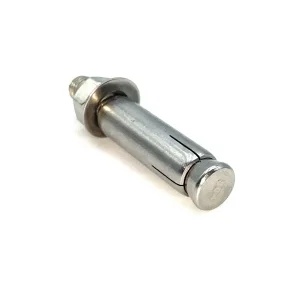
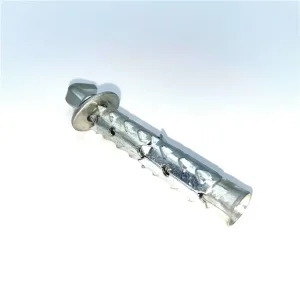
Contractors pair these bases with heavy-duty wedge anchor bolts (such as fish-scale expansion fasteners) deeply embedded into 3,000+ PSI monolithic concrete footers, ensuring outdoor structures withstand continuous wind gusts of up to 150 mph.
Pacific Rim & European Seismic Fault Lines
In seismic zones like New Zealand (NZS 3604 compliance), Japan, and Southern Europe, structural timber connectors must possess sufficient ductility to absorb cyclic lateral shock waves without brittle fracturing. Chinese suppliers employ high-ductility low-carbon micro-alloyed structural steels that yield plastically during seismic movement.
This allows the base connection to flex slightly, damping structural vibration energy rather than shearing anchor bolts clean out of the concrete foundation.
Middle Eastern & Australian High-UV / Arid Belts
In GCC markets and the Australian outback, severe diurnal temperature fluctuations (ranging from 5°C to 50°C daily) cause thermal contraction and expansion that stress mechanical fasteners. Timber elements experience profound moisture shrinkage, leading to post shrinkage and bolt loosening.
Adjustable standoff 6x6 connectors with elongated slot holes allow field technicians to retighten structural carriage bolts and leveling nuts post-season, maintaining structural integrity over decades of exposure.
Procurement Playbook & Future Industry Trends
Essential quality auditing guidelines, mill-test verification steps, and Industry 4.0 manufacturing developments for overseas structural hardware buyers.
Procurement Audit Checklist
To avoid receiving low-grade stamped brackets, procurement managers must specify the following verification criteria in their China Purchase Contracts:
- Material Test Reports (MTR): EN 10204 3.1 certification verifying carbon equivalence, yield ($F_y \ge 235 \text{ MPa}$), and elongation ($A_5 \ge 26\%$).
- Zinc Coating Gauge: Magnetic eddy-current testing confirming $\ge 85 \ \mu\text{m}$ thickness across all inner corner folds.
- Weld Penetration: Dye penetrant or ultrasonic crack testing along bottom base weld fillets.
Trend: Concealed & Architectural Flush Connectors
Architects are increasingly rejecting visible, bulky external steel flanges on high-end mass-timber columns. The fastest-growing segment is the concealed knife-plate 6x6 post base. The factory pre-slots a central vertical structural fin that slides directly into a vertical kerf cut down the center of the 6x6 timber post.
Once slotted, horizontal aluminum or stainless drift dowels are driven through pre-drilled holes, concealing all metallic hardware inside the wood while providing full axial and moment capacity.
Trend: Sustainable Eco-Galvanizing
Under tightening global ESG frameworks and EU Carbon Border Adjustment Mechanism (CBAM) regulations, leading Chinese fastener exporters are shifting to closed-loop zero-emission acid pickling plants and trivalent chromium passivation baths.
Furthermore, mechanical zinc-nickel plating and Geomet/Dacromet flake coatings are replacing traditional high-energy thermal galvanizing for specialty architectural lines, offering 1500+ hours of ASTM B117 salt spray protection with zero hydrogen embrittlement risk.
Frequently Asked Questions (FAQ) for Structural Connectors
Authoritative technical guidance compiled by senior structural fastener design engineers for procurement and engineering teams.
What is the exact internal dimension difference between nominal and rough sawn 6x6 post bases?
In standard North American and Australasian construction, a "nominal" dressed 6x6 post undergoes four-side surfacing (S4S), resulting in an actual cross section of 5-1/2" x 5-1/2" (140mm x 140mm). Thus, standard post base connectors have an internal opening of 5-9/16" (141.3mm). In contrast, "rough sawn" timber or European green-cut posts measure a true 6" x 6" (152mm x 152mm), requiring dedicated 6-1/16" (154mm) wide saddles. Chinese manufacturers offer both tooling lines; buyers must clearly specify "Dressed 5.5-inch" or "Rough 6.0-inch" upon ordering.
Why is the 1-inch standoff distance critical according to international building codes?
Both Section 2304.12 of the International Building Code (IBC) and local municipal codes require that timber structural columns supported by concrete slabs exposed to weather or water washdown must be elevated at least 1 inch above the finished floor level. This mechanical air gap breaks capillary wicking of moisture into the end-grain grain capillaries, which causes rapid fungal rot, pest colonization, and structural degradation.
Can China 6x6 post base connectors be utilized in coastal C5-M marine environments?
Standard hot-dip galvanized (HDG) steel connectors (with zinc coating thickness between 60 to 85 microns) provide satisfactory protection in inland or mild coastal zones (C3 to C4). However, for direct marine spray, harbor docks, or ocean piers classified under ISO 12944 category C5-M, we mandate using grade AISI 316 (A4) austenitic stainless steel post bases with passivated finishes to resist chloride pitting and crevice corrosion.
What type of foundation anchor bolts should be specified with post base saddles?
For retrofit installations into cured concrete slabs, heavy-duty carbon steel or stainless steel wedge expansion bolts (such as fish-scale expansion bolts or M12-M16 sleeve anchors) are standard. For new foundation pours subjected to high uplift overturning loads, cast-in-place heavy hex anchor bolts (ASTM F1554 Grade 36 or 55) or cast-in rebar tails embedded at a minimum depth of 6 to 8 inches provide optimal pullout resistance.
How do Chinese factories handle OEM custom tooling and private labeling?
Tier-1 manufacturers possess integrated in-house mold tooling workshops. Clients can supply 2D DWG / 3D STEP engineering drawings or physical samples. Typical progressive die tooling lead times range from 15 to 25 days. Factories routinely stamp client logos, part numbers, and ICC-ES / CE evaluation marks directly onto the steel saddle flanks prior to galvanizing, and provide customized retail or master pallet packaging.
Are post base connectors rated to resist rotational moment (cantilevered freestanding poles)?
Standard post bases (such as standard ABU or EPB style bases) are classified as "pinned" or "hinged" connections; they provide exceptional axial compression, uplift, and lateral shear resistance, but are not rated to resist rotational overturning moments. For unbraced freestanding carports or fences without top-beam triangulation, engineers must specify embedded moment-resisting base brackets with heavy foundation embedment channels.
Structural Anchoring Bolts & Mounting Fasteners
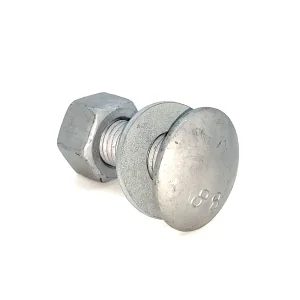
Heavy-duty carriage bolts, high-strength concrete expansion anchors, flat load-distributing washers, and mounting brackets engineered for reliable connections.