
Solar Array Grounding & Structural Mounting Hardware
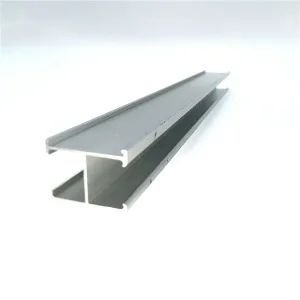
Complete structural and electrical bonding compatibility. High-conductivity 18 gauge grounding cables pair seamlessly with our standard solar PV clamping, rail channels, and structural anchoring fixtures.


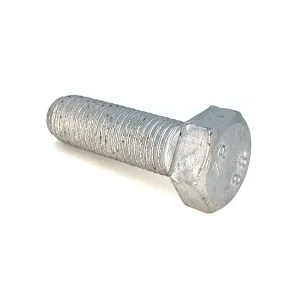
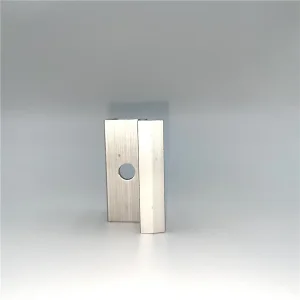
Engineering Paradigms of 18 Gauge Ground Conductors
In modern industrial safety, renewable energy plants, and electrical enclosures, 18 AWG ground wire (0.823 mm² cross-sectional area) serves as the indispensable link for auxiliary bonding, signal referencing, and fault mitigation.
Solid vs. Stranded Conductor Topologies
The structural composition of 18 gauge wire dramatically alters mechanical flex life and fault handling across outdoor solar arrays and industrial control cabinetry.
- Solid Core (1/18 AWG): Highest resistance to mechanical crushing, ideal for static grounding clips and permanent conduit runs.
- Stranded Formats (16/30 or 19/30): Excellent flex life, dampens wind-induced vibration in single-axis solar trackers and dynamic robotics.
- Skin Effect & RF Attenuation: Superior transient high-frequency dissipation under static lightning discharges.
Tinned Copper vs. Bare Copper Metallurgy
Galvanic isolation between copper grounding wires and aluminum mounting frames (such as 6005-T5 aluminum rails) is vital to stop galvanic corrosion.
- ASTM B33 Tin Electro-Plating: Forms an electrochemical buffer barrier, dramatically lowering anodic index differences against aluminum rails.
- Sulfur & Salt-Mist Resilience: Blocks copper oxide (patina) formation in harsh coastal (C5) and agricultural ammonia environments.
- Low Contact Resistance: Delivers sub-milliohm interface bonding when clamped with stainless steel serrated star washers.
Dielectric Sheathing & Bare Conductor Selection
Balancing non-insulated continuous bare copper runs with jacketed equipment grounding conductors (EGC) for targeted mechanical deployment.
- Green/Yellow Dual Extrusion: Complies with IEC 60446 and NEC Article 250 coding for instant inspector verification.
- Cross-Linked Polyethylene (XLPE): Flame-retardant, UV-stabilized jacket withstands direct sunlight on utility PV strings.
- Bare Soft-Drawn Copper: Delivers flexible, continuous bonding loops clamped beneath multi-hole pressure plates.
Global EPC Procurement Criteria & Certifications
Purchasing teams must verify electrical continuity, mechanical pull-out strength, and environmental longevity against major global standards before approving bulk wire and fastener consignments.
| Evaluation Parameter | American Standard (NEC / UL) | European / Global (IEC / EN) | China National Standard (GB/T) | Industrial Significance |
|---|---|---|---|---|
| Conductor Sizing & Geometry | UL 83 / ASTM B8 (18 AWG) | IEC 60228 Class 2 / Class 5 | GB/T 3956 (0.75 - 1.0 mm²) | Guarantees exact cross-sectional mass to carry prospective ground fault currents without thermal runaway. |
| Grounding & Bonding Systems | UL 467 & NEC Article 250 | IEC 60364-5-54 & EN 50522 | GB 50057 / GB/T 21431 | Validates short-time withstand current rating (STWCR) and low millivolt-drop clamping across joints. |
| Flame Retardancy & Rating | UL 1581 (VW-1 Vertical Flame) | IEC 60332-1-2 / EN 50399 | GB/T 18380.12 | Ensures fire-extinguishing self-containment inside electrical conduits, combiner boxes, and cable raceways. |
| Environmental & Chemical Safety | RoHS 3 (2015/863) / California Prop 65 | REACH (EC 1907/2006) / CE LVD | GB/T 26572 | Restricts hazardous heavy metals (lead, hexavalent chromium, mercury) in wire jackets and terminal platings. |
| Corrosion Resistance Testing | ASTM B117 (Salt Fog Spray) | ISO 9227 NSS / C4-C5 Heavy Industrial | GB/T 10125 | Verifies 1000+ hours of continuous salt spray exposure without base metal pitting or tin flaking. |
Integrated Engineering Solutions Across Macro Industries
18 gauge grounding conductors integrate directly with structural fastening systems, safeguarding capital assets against surge surges, electrostatic accumulation, and stray currents.
Utility-Scale & Commercial Rooftop Solar
In photovoltaic installations, 18 AWG ground jumper assemblies link adjacent anodized aluminum frames, purlin connectors, and tracker torque tubes.
- Micro-Inverter Ground Referencing: Connects microinverters to trunk ground leads, neutralizing ground potential rise.
- Anodization Piercing: Paired with stainless steel tooth grounding clips to pierce non-conductive oxide layers on PV module frames.
- Thermal Cycling Toughness: Absorbs daily thermal expansion cycles (-40°C to +85°C) without terminal fatigue or mechanical loosening.
Industrial Automation & Control Switchgear
Within high-density PLC racks, motor control centers (MCC), and robotics, 18 AWG flexible jumpers drain static and eliminate ground loops.
- DIN-Rail Bonding: Fast bonding of sub-panels to main PE (Protective Earth) busbars via screw-mounted M4 eyelet terminals.
- EMC Noise Shielding: Dissipates induced electromagnetic field interference from high-frequency variable frequency drives (VFDs).
- Vibration Immunity: High-strand copper preserves wire integrity even under continuous machinery shock and vibration.
Telecommunications & EV Charging Hubs
Grounding and bonding in high-throughput 5G base transceiver stations (BTS), edge compute cabinets, and Level 2/3 DC fast chargers.
- Surge Protection Device (SPD) Paths: Provides low-inductance discharge leads to surge arresters protecting sensitive transceiver ICs.
- Chassis-to-Ground Equipotential: Eliminates touch-voltage hazards on exterior metallic EV charging bollards.
- Outdoor Weatherability: High-grade insulation prevents moisture wicking beneath crimp sleeves in unconditioned outdoor kiosks.
The Handan / Yongnian Fastener & Hardware Advantage
Direct manufacturing synergy from China's premier fastener industrial cluster: integrated supply chains that cut transit lead times, ensure strict traceability, and deliver proven competitive advantages.
Industrial Cluster Density
Yongnian District in Handan City accounts for the world's most concentrated fastener and structural hardware supply chain, driving deep manufacturing efficiencies.
- Immediate proximity to first-tier oxygen-free copper drawing plants and precision cold-heading alloy mills.
- Integrated surface treatment plants: hot-dip galvanizing, mechanical zinc sherardizing, and tin electrodeposition.
- Streamlined component bundling: source 18 AWG ground cables, clamps, rails, and bolts in a single consolidated container.
Cost Optimization & Raw Material Stability
Direct-from-factory procurement avoids multiple trading tiers, delivering reliable and predictable pricing models for long-term multi-megawatt project supply agreements.
- Transparent raw copper index hedging (LME / SHFE matching) locks BOM costs against spot market spikes.
- Automated high-speed terminal crimping, ultrasonic wire welding, and automated wire-stripping lines.
- Lower scrap rates through precision CNC automated blanking and continuous inline laser diameter gauging.
Rigorous E-E-A-T Quality Inspection
Every wire spool and grounding jumper batch is inspected across all mechanical, electrical, and environmental performance checkpoints.
- Micro-Ohm Continuity Testing: Verified using 4-wire Kelvin bridges to guarantee negligible contact resistance across crimp barrels.
- Terminal Crimp Pull-Off Test: Exceeds UL 486A-486B mechanical tensile limits before elongation.
- Optical Metallography: Inspects cross-sectional crimp compaction to verify gas-tight, zero-void wire-to-lug interfaces.
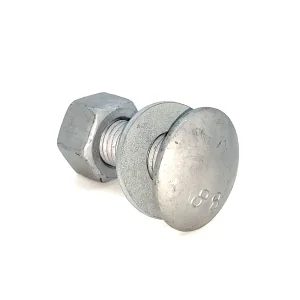
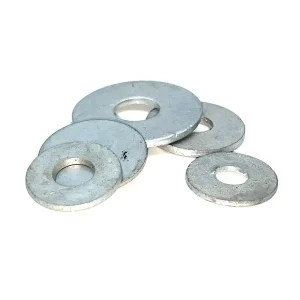
Photovoltaic Mechanical & Structural Fastener Systems
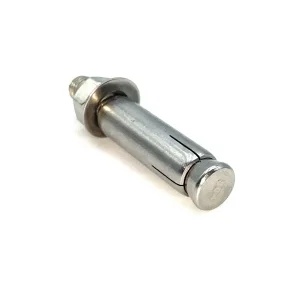
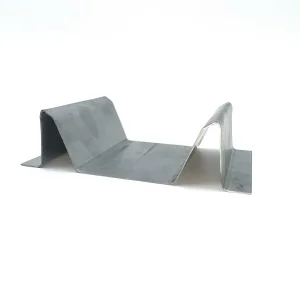
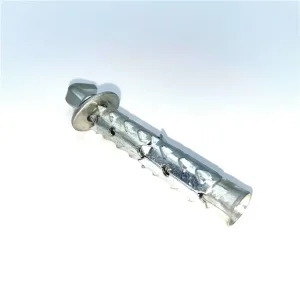
Certified anchor hardware, purlin clamps, and precision washers designed to complete durable, code-compliant equipment grounding and racking connections.
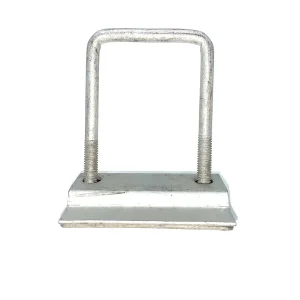

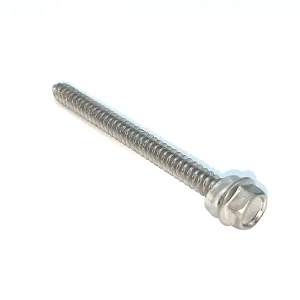
Technological Roadmap: The Evolution of Industrial Grounding
Next-generation electrical grounding technology is advancing beyond passive copper conductors toward smart, monitored, and automated bonding systems.
Micro-Alloy High-Tensile Stranding
Micro-alloying pure electrolytic copper with trace amounts of silver and tin improves mechanical tensile strength by up to 25% without sacrificing IACS electrical conductivity standards.
Tool-Free Fast-Lock Assemblies
Pre-crimped 18 AWG ground jumper assemblies featuring spring-steel snap-in claw clips eliminate the need for manual torque wrenches during solar field installation, saving up to 40% in labor costs.
Embedded Continuity Sensors
Integrating passive RFID and thin-film resistance sensing into continuous bonding runs enables real-time SCADA monitoring of ground loop resistance across multi-gigawatt solar plants.
Halogen-Free Bio-Polymer Jacketing
Next-generation 100% recyclable, zero-halogen, low-smoke bio-based insulation jackets engineered to resist UV solar degradation for up to 35 years of uncompromised service.
Frequently Asked Questions: 18 Gauge Grounding Systems
Authoritative technical insights for electrical engineers, EPC contractors, quality assurance inspectors, and global procurement directors.
What are the maximum current-carrying and fault limits of 18 AWG ground wire?
Under steady-state continuous chassis power transmission (e.g., NEC Table 310.16 at 60°C to 90°C ambient ratings), 18 AWG copper conductors handle between 7 to 14 Amperes depending on insulation jacket thermal ratings (such as 105°C UL 1015 PVC or XLPE).
However, when deployed as an Equipment Grounding Conductor (EGC), its primary duty is safely discharging transient short-circuit ground faults until upstream circuit protective devices (breakers or fuses) trip. Per UL 467 and IEEE 80 standards (using the Onderdonk short-time melting calculation), an 18 AWG copper conductor can withstand a 500A ground fault for roughly 0.03 seconds without conductor fusion or thermal insulation degradation.
Is 18 gauge wire code-compliant for solar PV array module grounding?
Compliance depends on whether the installation falls under Equipment Grounding or Main System Grounding Electrode Conductors (GEC):
Under NEC Article 250.122, an 18 AWG conductor is permissible for equipment grounding when incorporated into factory-certified class-rated assemblies or for sub-circuits protected by 10A to 15A fuses (such as specific microinverter drops, optical sensors, and tracking controller boards). For main structural string runs exposed to physical damage, NEC Article 690.45 commonly requires 10 AWG to 6 AWG copper. Nevertheless, 18 AWG tinned jumpers are universally specified for internal module-to-module bonding clips and junction box surge referencing.
How do you prevent galvanic corrosion when terminating copper wire to aluminum PV rails?
Direct contact between bare copper and aluminum in humid or coastal environments creates a severe electrochemical potential differential exceeding 0.50V, rapidly accelerating galvanic pitting on aluminum rails. To prevent this, our engineering protocols mandate:
1. Tin-Plated Copper Lugs: Tinning lowers the electrochemical potential differential against aluminum to within safe operational margins (< 0.15V).
2. Stainless Steel (SUS304 / 316) Transition Washers: Placing a stainless steel star washer or Belleville disc between the terminal lug and aluminum profile acts as an electrochemical buffer.
3. Anti-Oxidant Penetrating Compounds: Using zinc-suspended conductive grease seals joint surfaces against moisture while cutting electrical resistance.
What are the key differences between UL 1007, UL 1015, and UL 1429 18 AWG wire?
These designations identify common Underwriters Laboratories Appliance Wiring Material (AWM) insulation specifications:
• UL 1007: Rated for 300 Volts and 80°C or 105°C. Features a thinner PVC jacket (approx. 0.38 mm wall thickness), making it popular for compact control cabinets and space-constrained electronics.
• UL 1015: Rated for 600 Volts and 105°C. Built with a thicker heavy-duty PVC insulation (approx. 0.76 mm wall thickness), delivering higher mechanical abrasion resistance for industrial panels and power gear.
• UL 1429: Irradiated cross-linked PVC (XLPVC) rated for 150 Volts and 105°C. Resists soldering iron heat during custom terminal assembly without insulation shrink-back.
Can Youlong customize 18 AWG wire assemblies to specific technical drawings?
Yes. Our Handan facility houses dedicated automated cutting, stripping, terminal crimping, and packaging lines. We support comprehensive OEM/ODM custom requirements, including:
• Length & Stripping Configurations: Custom-cut wire runs from 20 mm to continuous bulk reels, with partial, full, or stepped multi-core stripping.
• Terminal End Options: Pre-crimped closed-loop ring terminals (M3, M4, M5, M6, M8), spade terminals, ferrule pins, or custom stamped bonding clips.
• Custom Jacketing & Printing: Custom stripe combinations, project-specific wire markings, flame-retardant ratings, and branded packaging.
What documentation and inspection certificates accompany export shipments?
All export consignments include a comprehensive Quality Assurance Inspection Dossier, containing:
• EN 10204 Type 3.1 Mill Test Certificates: Confirming chemical purity of the copper cathode feedstock (OFC Cu ≥ 99.99%).
• Salt Spray (ISO 9227 / ASTM B117) Test Reports: Validating corrosion resistance on tin-plated copper and matching stainless fasteners.
• Crimp Tensile Pull-Force & Electrical Continuity Reports: Certifying compliance with international UL and IEC electrical performance criteria.
Connect Directly with Our Hardware Engineering Team
Whether you require complete utility-scale solar PV mounting structures, precision 18 AWG grounding jumpers, or custom structural fasteners, Handan Youlong Fastener delivers factory-direct pricing, certified quality, and dependable global logistics.