
Precision Wall Plate Fixings & Structural Mounting Hardware
Engineered cold-formed, forged, and CNC extruded connections designed to withstand high cyclical tension, heavy deadweight loads, and aggressive atmospheric exposure across building envelopes and utility infrastructure.
The Global Industrial Reality of Wall Plate Fixing Bolts
A comprehensive examination of dynamic building loads, structural fastening physics, and the worldwide evolution toward high-tensile, corrosion-resistant anchoring assemblies.
Structural Interface Physics
Wall plate fixing bolts represent the primary structural load path transferring moments, uplift forces, and horizontal shear from roof trusses, floor joists, and facade brackets into supporting masonry or concrete cores. Engineering tolerances must mitigate anchor creep, micro-cracking, and shear fatigue under high wind turbulence.
Global Market Expansion
Driven by rapid commercial prefabrication, industrial logistics warehouse expansions, and large-scale solar array installations, the worldwide demand for certified wall plate fasteners is expanding at an annualized 6.8% CAGR. Buyers increasingly mandate full material batch traceability and Eurocode/ICC-ES design approvals.
Seismic & Cyclic Rigor
Modern regulatory building codes, including Eurocode 8 and ACI 318-19 Chapter 17, enforce stringent post-cracking ductile performance. Premium suppliers must guarantee minimum elongation values, crack-bridging wedge sleeves, and specialized chemical bonding agents resistant to cyclic seismic tremors.
China's Manufacturing Efficiency & Cold-Forging Supremacy
How the Yongnian Fastener Industrial Hub delivers unparalleled cost efficiency, integrated metal processing, and massive volume throughput for multinational tier-1 contractors.
Hyper-Clustered Raw Material Sourcing
Located in Yongnian District, Handan City—famed as China's Fastener Capital—our manufacturing ecosystem enjoys 15-minute logistical access to high-grade wire rod mills, certified carbon steel, and cold-heading alloy suppliers, shortening production cycles by up to 45% compared to dispersed facilities.
Automated Multi-Station Cold Heading
Our plant operates advanced multi-stage cold-forging machines capable of continuous grain-flow orientation. This preserves steel metallurgical integrity, eliminating micro-voids and delivering Class 8.8, 10.9, and 12.9 wall plate bolts with near-zero material scrap and micron-level precision.
Full In-House Chemical & Tensile Labs
Every procurement batch is validated with optical emission spectrometers, automated Vickers micro-hardness testers, and closed-loop hydraulic tensile load benches. EN 10204 Type 3.1 inspection certificates accompany every container load destined for export.
Cumulatively supplied across major infrastructure projects worldwide.
Trusted by tier-1 civil engineering and photovoltaic contractors.
Achieved via advanced Hot-Dip Galvanizing & Dacromet coatings.
Dedicated technical R&D team in Handan's fastener corridor.
Localized Engineering Applications & Critical Load Conditions
Wall plate fixing bolts and anchor assemblies must adapt to divergent substrata, varying from reinforced aerated autoclave concrete to heavy structural timber framing.
Precast Concrete Tie-Ins
Securing steel perimeter ledgers and structural wall plates to cast-in-place concrete rings requires precision expansion sleeve bolts or chemical undercut studs. These ensure high tension capacity without causing edge cone spalling under seismic accelerations.
Timber Frame Truss Anchors
In residential and commercial timber superstructures, wall plate fixing bolts clamp the continuous timber wall plate tightly to the perimeter masonry bond beam. This critical connection resists combined uplift from roof hurricane wind shear.
Solar PV Racking Parapet Walls
Flat roof photovoltaic arrays often rely on heavy concrete parapet wall clamping plates to withstand continuous micro-vibrations and aerodynamic negative pressures. A2/A4 stainless steel or thick HDG wall plate bolts prevent catastrophic frame detachment.
Heavy MEP & Cable Tray Suspension
Industrial logistics hubs utilize cantilevered wall plate brackets fastened directly to vertical masonry shear walls to support heavy HVAC chillers, conduits, and high-voltage busways, demanding certified shear capacity and fatigue endurance.
Wall Plate Bolt Metallurgical & Mechanical Performance Data
Verified technical parameters adhering to DIN, ISO, and ASTM structural fastener standards.
| Bolt Classification | Material Grade | Nominal Diameter (mm) | Tensile Strength (MPa) | Yield Strength (MPa) | Surface Treatment | Corrosion Category |
|---|---|---|---|---|---|---|
| Heavy Duty Hex Wall Bolt | Carbon Steel 8.8 | M10 – M24 | 800 – 1000 | 640 | Hot-Dip Galvanized (≥55μm) | ISO 9223 C3-C4 |
| Structural Anchor Stud | High-Tensile Alloy 10.9 | M12 – M30 | 1040 – 1200 | 940 | Zinc-Nickel / Geomet 500 | ISO 9223 C4 |
| Marine Grade Expansion Anchor | Stainless Steel A4-80 (AISI 316) | M8 – M20 | 800 – 950 | 600 | Passivated / Electro-Polished | ISO 9223 C5 Marine |
| Standard Wall Plate Stud | Stainless Steel A2-70 (AISI 304) | M6 – M16 | 700 – 850 | 450 | Clean Pickled & Passivated | ISO 9223 C3 |
| Through-Bolt Masonry Anchor | Heat-Treated Boron Alloy | M12 – M24 | 830 – 980 | 660 | Mechanical Zinc Galvanizing | ISO 9223 C3-C4 |
Emerging Technological Trends in Structural Anchoring
From micro-alloying advances to automated BIM fastener metadata, the fastening industry is transforming toward smart, resilient, and carbon-optimized assemblies.
Eco-Friendly Non-Electrolytic Zinc Flake
Environmental standards in the EU and North America are phasing out hexavalent chromium coatings. Next-generation wall plate fixing bolts utilize thin-film zinc-flake systems offering >1,500 hours neutral salt spray resistance with complete immunity to hydrogen embrittlement.
BIM-Integrated Fastener Digital Twins
Global engineering firms now specify digital product passports. Leading Chinese manufacturers are providing Revit and IFC BIM families containing accurate bolt shear deformation curves, embedment depths, and automated collision detection for building facades.
Torque-Indicating Smart Collars
To eliminate manual inspection bottlenecks and improper clamping torques on critical wall plates, newer bolt assemblies integrate calibrated shear-off torque collars or direct tension indicating (DTI) squirt washers, verifying correct preload instantaneously on-site.
How Multinational EPCs Mitigate Fastener Supply Chain Risk
Key quality verification milestones, containerized logistical packaging, and auditing requirements that define professional B2B fastener transactions.
Complete Mill Test Certification (EN 10204 3.1)
International infrastructure procurement mandates certified chemical composition analyses (C, Mn, P, S, Si, Cr) and physical tensile test reports. Handan Youlong provides fully traceable batch documentation linking raw ingot cast heats directly to the delivered pallet crates.
Corrosion-Proof Export Packaging
Long oceanic transit across tropical moisture zones demands rigorous packaging standards. We utilize heavy-gauge polybags, sealed VCI vapor-corrosion inhibiting film, rugged 25kg cartons, and heat-treated fumigated wooden pallets securely wrapped in waterproof stretch film.
Dedicated Engineering & Tooling Support
Custom plate fixing dimensions, non-standard thread pitches, and specialized collar profiles require swift tooling turnaround. Our in-house die fabrication shop produces prototype samples within 7 working days, enabling EPCs to adhere strictly to tight construction milestones.
High-Performance Structural Fasteners & Connection Elements
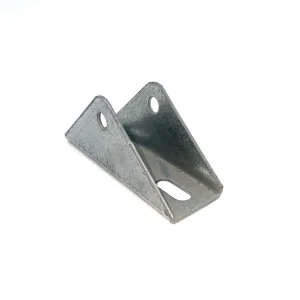
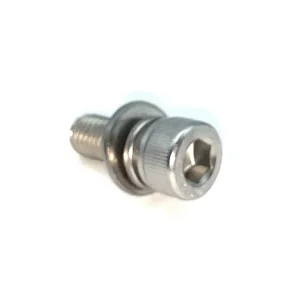
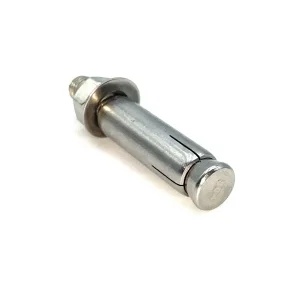
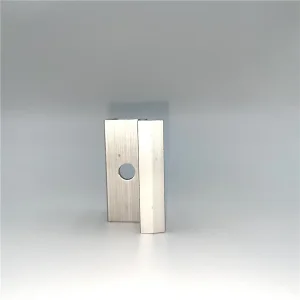
Heavy expansion bolts, anti-loosening socket screws, and solar structural clamps manufactured for enduring industrial service.
Frequently Asked Questions by Structural Engineers & Procurement Directors
Comprehensive engineering clarifications addressing embedment calculations, edge distances, galvanic decoupling, and bulk delivery logistics.
What is the standard spacing and minimum embedment depth for wall plate fixing bolts in masonry?
Under British Standard BS 5268 and Eurocode 5 guidelines, wall plate fixing bolts should typically be spaced at maximum 1.2-meter centers, with dedicated bolts situated within 150mm of every plate splice or joint. For unreinforced solid brickwork or concrete bond beams, minimum embedment depth generally ranges from 100mm to 150mm, ensuring adequate cone breakout resistance against localized tensile failure.
How do you mitigate bimetallic (galvanic) corrosion when fixing aluminum wall brackets with steel bolts?
Direct contact between aluminum mounting rails and carbon or stainless steel bolts creates an electrochemical cell in humid environments. We resolve this by providing customized pre-assembled isolation kits featuring UV-stabilized EPDM or vulcanized nylon flange washers and isolating sleeves. These components break the electrical circuit and prevent aggressive pitting of the aluminum profile.
What is the difference between mechanical expansion bolts and chemical anchor studs for wall plates?
Mechanical expansion anchors generate outward radial expansion forces that press against the masonry hole walls; they require solid, uncracked concrete and adequate edge clearance to avoid cracking the masonry substrate. In contrast, chemical anchors (vinyl-ester or pure epoxy resins) form an adhesive bond without outward expansion pressure, making them the superior choice near corners, close edge distances, or in hollow/perforated brickwork using mesh sleeves.
Can Handan Youlong manufacture custom non-standard wall plate fixing bolts to CAD/BIM prints?
Yes. Our in-house engineering team works directly with STEP, DWG, and PDF blueprints. With internal CNC die-sinking machines, automated heading machinery, and secondary CNC turning centers, we support custom knurling, specialized square collar necks, anti-rotation nibs, and metric/imperial thread lengths tailored to specific wall plate profiles.
Which surface coating should be chosen for coastal or highly saline construction sites?
For coastal structures situated within 5km of saltwater (ISO 9223 Category C5-M), we strongly recommend Grade 316 (A4-80) austenitic stainless steel. If carbon steel is structurally required for high yield properties, we apply Hot-Dip Galvanization with minimum coating thickness exceeding 65–85 microns, or multilayer zinc-nickel alloy coatings tested to withstand >2,000 hours of ASTM B117 salt spray exposure without red rust.
What are standard lead times, minimum order quantities (MOQ), and shipping terms?
Standard catalog configurations maintain an active buffer stock ready for container consolidation within 7–10 days. Customized cold-forged orders typically require 20–30 calendar days for die preparation and production. Standard MOQs are 1,000–5,000 pieces depending on bolt diameter and metallurgical grade. We offer full EXW, FOB Tianjin/Qingdao, CIF, and DDP shipping solutions with comprehensive customs clearance documentation.