
Primary Fastener & Structural Mounting Selection
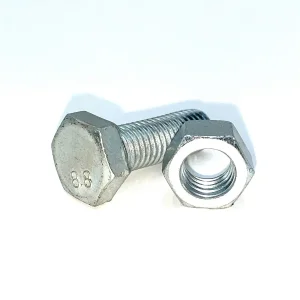
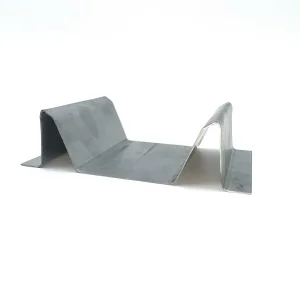
Factory-direct inventory encompassing solar mounting brackets, reinforced structural profiles, and high-strength mechanical expansion bolts built to withstand extreme dynamic loading.
Loose Bolt Shield Anchor: Metallurgical Integrity & Working Mechanism
A comprehensive examination of torque-controlled expansion mechanics, four-segment interlocking shield geometries, and cold-forged wedge dynamics in low-to-high strength base substrates.
The Bi-Directional Mechanical Expansion Mechanics
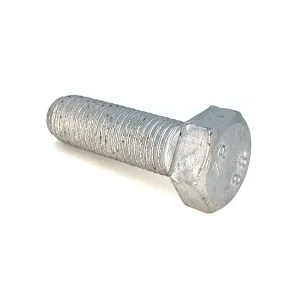
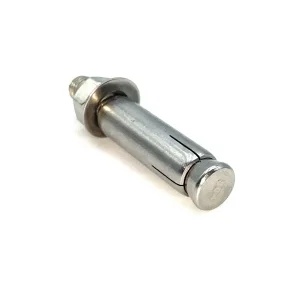
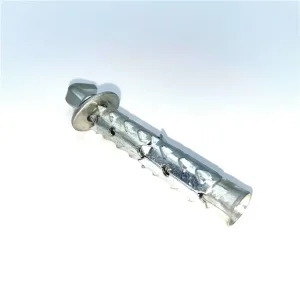
The loose bolt shield anchor represents an essential category of three-piece and four-piece torque-controlled expansion fixings, extensively relied upon for heavy-duty connections in solid masonry, structural concrete, and hard rock formations. Unlike standard direct-drive through-bolts or sleeve anchors where the threaded stud is fixed within the hole, a loose bolt shield anchor system decouples the internal threaded wedge and the expansion shield from the primary structural hex bolt.
When installation torque is applied to the hex head bolt, the precision-tapered internal conical wedge is drawn upward along the internal female thread. As this conical wedge ascends into the surrounding interlocking pressed-steel shield leaves, it exerts massive radial forces against the drilled internal bore of the concrete. The external knurling and ribbed deformations along the perimeter of the shield aggressively grip the concrete aggregate, producing a mechanical interlock that transfers tensile, shear, and combined dynamic loads uniformly across the embedment depth.
Because the bolt is removable (“loose”), contractors and structural installers enjoy remarkable operational flexibility. Fixtures, machinery beds, and photovoltaic support stanchions can be repositioned, removed for maintenance, or leveled using shims without destroying the anchor embedment. When replacement is mandated, only the loose bolt is extracted, preserving base structural continuity.
Structural Mechanics in Concrete and Masonry Substrates
Addressing structural failure modes, cracking phenomena, edge distance parameters, and seismic cyclic fatigue across commercial infrastructure projects.
Radial Pressure & Concrete Cone Failure
When loaded in pure tension, the ultimate structural resistance of a loose bolt shield anchor is determined by the compressive strength of the concrete (ranging from standard C20/25 to high-performance C50/60). As the radial expansion force exceeds concrete yield limits, tensile break-out cones form at approximately 35° angles from the wedge apex. Engineering designs must strictly respect minimum edge distances (C_cr,N) and anchor spacing (S_cr,N) to prevent premature spalling and concrete edge rupture.
Cracked vs. Non-Cracked Concrete Dynamics
Civil infrastructure subject to environmental temperature gradients, flexural dead loads, and wind vibration inevitably develops micro-fissures (cracked concrete condition). Standard friction anchors degrade rapidly under crack opening-and-closing cycles. In contrast, Youlong's loose bolt shield anchors integrate a segmented spring-tension retention ring and deeply scalloped cold-pressed outer ribs that sustain residual holding force even when concrete cracks dilate up to 0.3 mm.
Dynamic Shear & Prying Stress Mitigation
In heavy industrial plant machinery and cantilevered photovoltaic solar racking, combined shear and bending moments place immense localized shear stresses on the collar of the anchor. Our loose bolts are cold-forged using medium carbon steel (Grade 8.8) or austenitic stainless steel (AISI 304/316), delivering high ductility and shear yield limits (f_yk exceeding 640 MPa) capable of absorbing cyclic gusts and harmonic vibrational resonance without brittle fracture.
Global Commercial Landscape: Handan Fastener Cluster Advantage
Strategic procurement considerations: Total Cost of Ownership (TCO), industrial vertical integration, raw material hedging, and supply chain redundancy in the post-pandemic market.
Handan: The Epicenter of Global Fastener Manufacturing
Yongnian District in Handan City, Hebei Province, accounts for over 55% of the total fastener production output in China. Operating in this concentrated industrial ecosystem empowers Handan Youlong Fastener Co., Ltd. to leverage immediate supply chain synergies. From continuous automated wire rod drawing and spheroidizing annealing to multi-station high-speed cold heading and internal electro-galvanizing / hot-dip galvanizing lines, every stage of production occurs within a tightly controlled radius.
For international EPC contractors, tier-one distributors, and solar mounting fabricators in North America, Europe, the Middle East, and Southeast Asia, this localized integration eliminates logistical bottlenecks, mitigates raw material market volatility, and reduces manufacturing lead times by up to 35% compared to fragmented regional manufacturers.
Total Cost of Ownership (TCO) vs. Chemical Anchors
In large-scale solar farms and commercial infrastructure, project engineers frequently evaluate the trade-offs between chemical resin anchoring systems and mechanical loose bolt shield anchors. Chemical anchoring requires meticulous hole cleaning, ambient temperature cure times (often hours), and strict chemical expiration management.
In contrast, mechanical loose bolt shield anchors deliver instantaneous full load-bearing capacity immediately after reaching specified tightening torque. There are zero seasonal temperature restrictions, no chemical shelf-life risks, and significantly lower labor cost per anchor installation point. This provides EPC contractors with substantial capital expenditure (CAPEX) and operational expenditure (OPEX) reductions across multi-megawatt projects.
Loose Bolt Shield Anchor Structural Load Matrix & Installation Dimensions
Standardized mechanical performance metrics in non-cracked concrete (C20/25). Characteristic loads calculated in accordance with ETAG 001 / EN 1992-4 parameters.
| Nominal Thread Size | Shield Drill Diameter (mm) | Min. Hole Depth (mm) | Nominal Embedment (mm) | Installation Torque (N·m) | Rec. Tensile Load (kN) | Rec. Shear Load (kN) | Min. Edge Distance (mm) |
|---|---|---|---|---|---|---|---|
| M6 (Class 4.8 / 8.8) | 10 mm | 50 mm | 45 mm | 8.5 N·m | 3.8 kN | 4.2 kN | 60 mm |
| M8 (Class 4.8 / 8.8) | 14 mm | 60 mm | 55 mm | 22.0 N·m | 6.4 kN | 7.9 kN | 80 mm |
| M10 (Class 4.8 / 8.8) | 16 mm | 75 mm | 65 mm | 45.0 N·m | 9.8 kN | 12.5 kN | 100 mm |
| M12 (Class 4.8 / 8.8) | 20 mm | 90 mm | 80 mm | 80.0 N·m | 15.2 kN | 18.6 kN | 130 mm |
| M16 (Class 4.8 / 8.8) | 25 mm | 125 mm | 110 mm | 180.0 N·m | 26.5 kN | 32.0 kN | 180 mm |
| M20 (Class 4.8 / 8.8) | 32 mm | 150 mm | 135 mm | 320.0 N·m | 41.0 kN | 51.4 kN | 240 mm |
* Note: Recommended design working loads incorporate a material safety factor of γ_M = 1.8 and action factor γ_F = 1.4. Actual on-site tension capacities should be verified via non-destructive pull-out proof testing per site engineering approvals.
Localized Support, Traceability & International Compliance Assurance
Rigorous multi-stage metallurgical inspection, ISO 9001 quality governance, and comprehensive material test certifications for tier-one project submittals.
EN 10204 3.1 Mill Test Certification
Complete heat-number traceability from raw steel coil ingestion through to finished threaded fastener. Every production batch of loose bolt shield anchors is accompanied by an authentic 3.1 inspection certificate validating chemical composition (carbon, manganese, phosphorus, sulfur limits), yield strength, elongation percentage, and Rockwell hardness values.
Electrochemical & Salt Spray Validation
To survive atmospheric exposure categories up to ISO 12944 C4 (industrial coastal) and C5 (marine extreme), Youlong conducts ongoing neutral salt spray testing (ASTM B117 / ISO 9227). Our hot-dip galvanized shields undergo batch-wise coating thickness verification (averaging 55 to 85 microns), ensuring sacrificial zinc protection against corrosion for 25+ years in outdoor deployments.
Destructive Tensile & Shear Calibration
Youlong's in-house laboratory is equipped with computerized hydraulic tensile-shear test frames capable of loads up to 600 kN. Random test coupons from each manufacturing lot undergo ultimate capacity testing to verify that real-world failure modes align with predictable concrete cone breakout or steel shear rather than uncontrolled premature slippage.
Industrial Application Scenarios & Field Implementations
From solar mounting ballast fixings to heavy seismic industrial machinery foundations, examine how loose bolt shield anchors deliver vital structural integrity.
Utility-Scale & Commercial Solar PV Foundations
Photovoltaic ground-mount arrays on precast concrete footings and commercial rooftop ballasts experience severe cyclic uplift from storm gusts. M10 and M12 loose bolt shield anchors securely anchor base mounting brackets to concrete blocks, withstanding both upward tension and dynamic lateral wind shear while allowing rapid panel alignment during racking installation.
Heavy Rotating Machinery & Industrial Vibrations
Vibratory machinery, stamping presses, industrial compressors, and overhead crane rails impose constant dynamic fatigue on floor fixings. The expanding wedge geometry of loose bolt shield anchors pre-stresses the borehole concrete, dampening vibrational harmonics and preventing anchor back-out that frequently occurs with standard single-piece sleeve anchors.
Curtain Wall Substructures & Heavy Warehouse Racking
Architectural glass curtain wall brackets and multi-tier high-bay automated warehouse racking demand precision alignment and exceptional shear capacity. The detachable nature of the loose bolt allows ironworkers to erect and shim complex structural steel brackets against uneven concrete slabs before driving and torquing the final Grade 8.8 fastener.
Technical Roadmap & Future Fastening Innovations
How automated metallurgy, smart sensing, and sustainable ecological surface passivation are transforming mechanical anchoring systems.
Self-Calibrating Torque Indicating Washers
Operator error during torque wrench application remains the leading cause of anchor failures. Youlong's ongoing R&D initiative includes direct integration of collapsible micro-nodule torque indication washers. When exact engineering clamping torque is achieved, specialized silicone micro-capsules displace, giving site safety inspectors 100% visual verification without manual re-torquing.
Cr-Free Eco-Friendly Zinc Flake Coatings
To address stringent European RoHS and REACH environmental mandates, Youlong is transitioning premium fastener product lines toward non-electrolytically applied zinc flake coatings (such as Geomet and Delta-Protekt). This coating technique eliminates the risk of hydrogen embrittlement inherent in high-tensile steel acid-pickling and electroplating baths, elevating working life in salty coastal environments.
Parametric BIM Anchor Modeling Support
As modern construction embraces digital engineering workflows, Youlong delivers 3D BIM (Building Information Modeling) parametric models in Revit, IFC, and STEP formats for our entire anchor catalog. Structural engineers can drop native Youlong anchor assemblies into structural finite element analysis software to accurately model concrete edge distances, group interactions, and reinforcement clashes.
Frequently Asked Questions: Loose Bolt Shield Anchors
Comprehensive technical guidance addressing common structural queries, installation protocols, and purchasing specifications from international engineering teams.
What is the key functional difference between a loose bolt shield anchor and a wedge through-bolt?
Can loose bolt shield anchors be installed in solid clay brick and hollow masonry blocks?
How crucial is hole cleaning prior to installing loose bolt shield anchors?
What steel grades and anti-corrosion surface treatments are available directly from the factory?
What happens if a technician over-torques a loose bolt shield anchor during installation?
How does Youlong guarantee product consistency across large-volume container shipments?
Can Youlong manufacture customized anchor dimensions and OEM head stampings?
Secondary Mechanical Fasteners & Structural Hardware
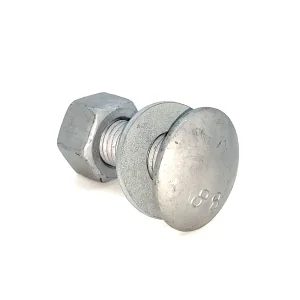
Explore our heavy-duty hot-dip carriage bolts, specialized fish-scale expansion bolts, and solar PV purlin connection hardware directly supplied from our manufacturing workshops.
Initiate Your Engineering Consultation & Bulk Procurement
Connect with Youlong's senior structural fastening specialists. Receive customized anchor calculations, CAD fabrication drawings, factory-direct wholesale pricing schedules, and physical sample kits for project qualification.
Request Factory Proposal & Technical Spec Sheet