Best Heavy-Duty Stainless Steel Expansion Bolt Suppliers in China
View Details
Explore heavy-duty fastening systems and certified mounting hardware engineered in China's fastener hub.
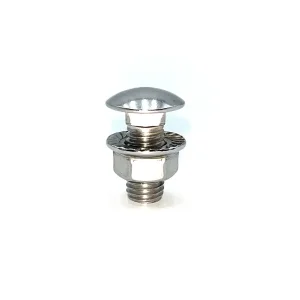
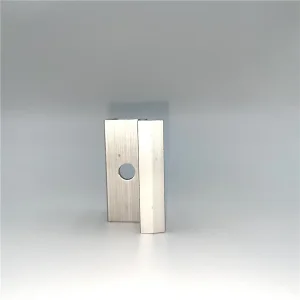
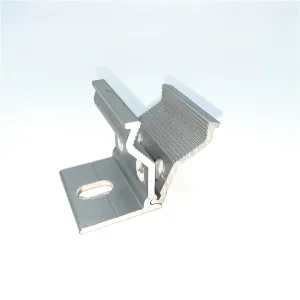
Strategic shift from traditional welded nuts and self-tapping screws toward structural blind fastening systems across automated multi-material assemblies.
The widened bearing area of the large flange design eliminates the necessity for secondary flat washers. It dissipates clamping force evenly across thin sheet metals, preventing post-torque dimpling, micro-cracks, and localized structural yields.
Engineered with straight or diamond knurled shanks—as well as full-hexagonal and half-hexagonal geometries—these fasteners offer superior push-out and spin-out torque ratings even under extreme dynamic cyclic loads.
By removing the constraint of two-sided workpiece access required by conventional nuts, blind rivet technology drastically cuts robotic cycle times and enables hollow section fastening in battery chassis, structural purlins, and enclosed rails.
How multi-tier industrial supply chains utilize customized blind rivet nuts to bridge operational gaps between lightweight structures and mechanical load integrity.
Solar tracker linkages and inverter cabinets demand electrical bonding along with IP67 sealed threads. Large flange nuts with integrated silicone/EPDM seals beneath the flange prevent galvanic corrosion when mating steel frames to anodized aluminum profiles.
Electric vehicle architectures utilize cast aluminum battery tubs and composite crossmembers. Large flange nuts provide permanent, internal M4–M12 structural threads that prevent thermal distortion often caused by welding operations.
Modern off-site construction and commercial air handling assemblies require rapid, tool-driven cold setting. Large flange rivet nuts enable instant bolted connections on roll-formed C/Z purlins without requiring skilled welders or post-weld surface re-coating.
| Base Alloy Material | Standard Yield / Tensile (MPa) | Salt Spray Performance (ASTM B117) | Ideal Substrate Application | Supply Readiness |
|---|---|---|---|---|
| AISI 316 / A4 Stainless Steel | Rp0.2: ≥ 450 / Rm: ≥ 700 | > 1,500 Hours Red Rust Free | Offshore Solar, Coastal Marine & Chemical Plants | Direct Production Run |
| AISI 304 / A2 Stainless Steel | Rp0.2: ≥ 380 / Rm: ≥ 620 | > 800 Hours Red Rust Free | Industrial Rooftops, PV Mounts, Commercial HVAC | In Stock / Rapid Dispatch |
| C1008/C1010 Carbon Steel (Zn-Ni) | Class 8 - 10 Proof Load | > 720 Hours White, 1200 Red | Automotive Chassis, Mechanical Engineering | High-Volume Cold Forged |
| Aluminum Alloy 5052 / 6061 | Rm: 210 - 260 | Anodized Passivation Layer | Lightweight Composite Panels & EV Battery Enclosures | Precision CNC & Formed |
Eliminate cross-border supply chain hazards with rigorous quality checks, global trade compliance, and customized application testing.
Every shipment is accompanied by comprehensive Material Test Reports (EN 10204 3.1), coating thickness validation (XRF eddy-current), and mechanical pull-out test data ensuring full lot traceability.
We supply sample kits with specific head clearances, flange thicknesses, and grip-range calibrations verified against your pneumatic or battery-powered spin-pull installation equipment.
From Handan to global ports, our export logistics protocol features vacuum anti-moisture plastic bags, high-strength corrugated export cartons, and fumigated euro-pallets ready for cross-border transit.
How automation, self-monitoring systems, and advanced eco-coatings are redefining large flange rivet nut manufacturing.
Development of digital installation tools with closed-loop optical feedback and load-displacement monitoring to eliminate over-collapse or loose rivets on automated assembly lines.
Re-engineering shank deformation zones to provide broader collapse footprints specifically tuned for CFRP (Carbon Fiber Reinforced Polymers) and structural glass composites.
Phasing out standard hexavalent systems in favor of trivalent zinc-nickel and micro-layer zinc flake treatments that exceed 2,000 salt-spray hours without hydrogen embrittlement risks.
Integration of machine learning algorithms within multi-station high-speed cold headers to predict tool wear, ensuring tight metric thread pitch tolerances (6H/6g) across million-unit production lots.
Key technical insights addressing installation mechanics, material choices, and enterprise supplier audits.
The large flange head profile provides significant surface contact area, doubling the push-out resistance in soft, thin, or brittle materials such as aluminum, sheet metal, and fiberglass. While countersunk nuts require secondary chamfering operations, large flange rivet nuts install cleanly onto pre-punched or laser-cut flat surfaces without extra labor.
Grip range specifies the total thickness of the mating substrate sheets. If the combined sheet thickness is 2.5mm, you must specify a fastener designed for a 1.0mm–3.0mm grip range. Setting a rivet nut outside its rated grip limits can result in an incomplete rear bulge, thread stripping, or insufficient clamp force.
When fastening dissimilar metals in outdoor solar or automotive environments, specify either 304/316 grade stainless fasteners with dielectric isolating washers, or carbon steel nuts coated with zinc-nickel plus an organic protective topcoat to interrupt direct electrochemical potential paths.
Yes. Our in-house cold heading, CNC secondary machining, and automated optical sorting systems support customized body lengths, specialized flange diameters, open or closed ends, and tailored internal thread tolerances. We also provide barcoded OEM packaging direct to international distribution centers.
Reliable components manufactured to international industrial standards for utility projects and high-volume wholesale sourcing.