Structural Support
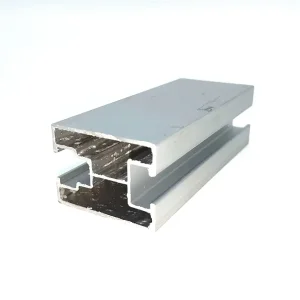
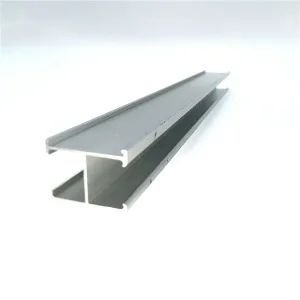
China High-Strength 3040 Reinforced Aluminum Guide Rail for Solar Panels - Trusted China Suppliers & Factory Solutions Companies, Products
View Product Specs
Explore heavy-duty installation systems engineered for seismic durability, marine wind-shear resistance, and structural integrity across utility-scale projects.
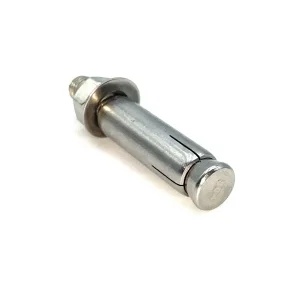


A rigorous examination of mechanical expansion dynamics, clamping force calibration, and how to avoid substrate failure in cracked and uncracked concrete matrices.
Installing expansion bolts relies on progressive mechanical wedging. As the threaded mandrel is torqued, the tapered cone pulls axially into the segmented expansion sleeve. This translates rotational torque into outward radial normal forces against the drilled borehole walls, developing high-frictional resistance and micro-interlocking engagement within the aggregate matrix.
Proper tensile preload is critical. Insufficient installation torque leads to slippage under cyclic wind uplift or vibration, whereas excessive torque induces premature concrete cone breakout failure or exceeds the yield strength (fyk) of the bolt shank. Calibrated torque wrenches are non-negotiable for critical structural baseplates.
Drill-hole preparation is the leading determinant of expansion bolt reliability. Residual debris creates a lubricating layer between the expansion sleeve and aggregate, reducing ultimate pull-out values by up to 45%. A strict "blow-brush-blow" procedure guarantees full mechanical interlocking at specified embedment depths (hef).
How Tier-1 EPCs and global distributors leverage Yongnian's dedicated industrial cluster to mitigate supply disruption, lower landed unit costs, and secure bulk batch consistency.
International engineering contractors operate on tight milestones where hardware delays cause catastrophic liquidated damages. Sourcing requires end-to-end trace documentation, EN 10204 3.1 mill test certificates, third-party tensile testing verification, and containerized palletization configured for direct jobsite deployment.
Yongnian produces over 55% of China's structural fasteners. This industrial ecosystem integrates primary wire rod rolling mills, cold-heading toolmakers, continuous heat-treatment furnaces, and automated electroplating lines within a 15-kilometer radius, slashing lead times and raw material freight overheads.
By operating multi-station high-speed cold formers producing up to 120 expansion anchors per minute, Chinese manufacturing facilities achieve unit price economics unmatchable by Western regional facilities, passing a 20% to 35% net margin advantage directly to international importers.
Engineered selection framework cross-referencing ISO 9223 corrosion categories with metallurgical grades to prevent stress cracking, galvanic decay, and structural failure.
| Atmospheric Class | Macro Environment | Recommended Bolt Grade | Surface Treatment / Coating | Service Life Expectancy |
|---|---|---|---|---|
| C1 – C2 (Low) | Inland dry solar parks, rural substations, enclosed factories | Carbon Steel Grade 4.8 / 8.8 | Electro-galvanized (5–12 µm) / Yellow Zinc | 15–20 Years |
| C3 (Medium) | Urban commercial rooftops, high-density solar carports | AISI 304 (A2-70) Stainless Steel | Passivated / Clean Pickled | 25+ Years |
| C4 (High) | Chemical processing plants, industrial corridors, railways | AISI 316 (A4-70 / A4-80) | Electropolished / High-Molybdenum Passivation | 30+ Years |
| C5 (Extreme / Marine) | Coastal wind installations, offshore PV floating rafts | AISI 316L / Super Duplex 2205 | Specialized Fluoropolymer / Dacromet Coating | 30–50 Years |
| Civil Substructures | Sub-grade foundations, reinforced mass concrete blocks | High-Strength Carbon Steel Q235B / 45# | Hot-Dip Galvanized (≥65 µm) conforming to ISO 1461 | 40+ Years |
Next-generation fastener manufacturing is transforming from passive commodities into smart, high-alloy components engineered for automated, low-labor civil installations.
Traditional hot-dip galvanizing is increasingly being replaced by eco-friendly Zinc-Nickel (Zn-Ni 12-15%) electroplating. This technology achieves over 1,500 hours in neutral salt spray testing without red rust, maintains tighter thread tolerances, and completely eliminates hydrogen embrittlement risks in high-tensile fasteners.
Zero-defect production lines integrate high-speed multi-camera optical sorters. Utilizing automated computer vision, every individual expansion bolt, sleeve, and flange nut is verified for dimensional concentricity, thread pitch integrity, and stamping burrs at speeds exceeding 600 parts per minute prior to automated boxing.
Driven by stringent building safety codes, next-generation expansion anchors feature engineered expansion clip geometries capable of re-expanding during seismic cracking events (ETA Option 1 / ACI 355.2 compliance). This guarantees that building service connections and solar mounting racking remain securely engaged even during tremors.
Real-world integration protocols for photovoltaic arrays, wind power baseplates, and commercial building curtain walls in distinct geotechnical environments.
On utility ground mounts and rooftop ballast slabs, stainless steel expansion bolts anchor aluminum mounting feet (such as 3040 guide rails). The installation requires isolating EPDM washers to eliminate galvanic potential between the extruded aluminum bracket and steel expansion collar.
High Shear ResistanceBeyond massive embedded foundation cages, expansion anchor bolts are heavily deployed inside wind turbine towers to fasten electrical switchgear cabinets, ladder supports, and cable tray bracket systems to concrete platform bases, requiring high fatigue resistance under constant vibration.
Dynamic Fatigue RatedSecuring steel perimeter plates to edge beams in multistory commercial buildings requires heavy-duty drop-in expansion anchors or undercut sleeve bolts. High pullout capacities are validated through on-site destructive testing to guarantee performance under gusting exterior suction loads.
Tensile Breakout VerifiedIn-depth responses resolving engineering questions on installation tolerances, quality verification, and custom manufacturing capabilities.
Wedge anchors consist of a threaded solid steel stud with a localized tapered mandrel and a small independent expansion clip. They require a borehole diameter equal to the bolt diameter and provide high pull-out performance in solid concrete. Sleeve anchors feature a continuous tubular sleeve running the full length of the bolt body, which distributes radial expansion stresses over a much larger surface area. This makes sleeve anchors more forgiving and reliable in hollow block, brickwork, or lower-strength concrete substrates.
Every single batch undergoes stringent internal testing in our Handan testing center. We verify raw material composition with optical emission spectrometers to guarantee nickel and chromium percentages in SS304/SS316. Physical testing includes axial tensile testing to verify ultimate tensile strength and elongation, combined with continuous salt-spray testing chambers (ASTM B117) to measure corrosion resistance against maritime red rust.
When austenitic stainless steel (such as 304 or 316) bolts are installed in direct contact with aluminum mounting profiles (like the 3040 guide rail) in moist or coastal environments, the electrochemical potential differential causes sacrificial galvanic oxidation of the aluminum. To isolate the metals, install non-conductive UV-stabilized EPDM or nylon isolation washers and sleeves, effectively breaking electrical continuity and preventing localized pitting corrosion.
Yes. Our automated stamping, cold-heading, and CNC turning facilities handle non-standard length extensions, customized expansion sleeve teeth patterns, custom head geometries (tamper-proof, countersunk, or eye-bolt heads), and imperial UNC/UNF threading. Clients can provide AutoCAD/SolidWorks files, and our engineering department will deliver tooling feasibility reviews and stamped pre-production samples within 7 business days.
As an engineering rule of thumb, borehole depth must exceed nominal embedment depth by at least 1 to 1.5 times the bolt diameter to accommodate residual drilling dust without binding. Critical edge distance (ccr) to prevent concrete edge blowout must not be less than 10 times the anchor diameter, while anchor-to-anchor spacing (scr) must remain at least 10 to 12 times the bolt diameter to ensure the overlapping 35-degree failure stress cones do not degrade ultimate shear and tension capacities.
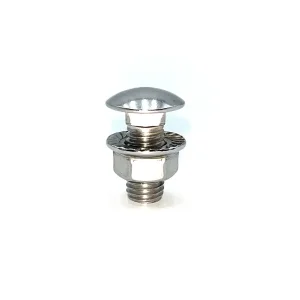
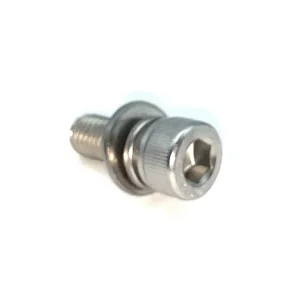
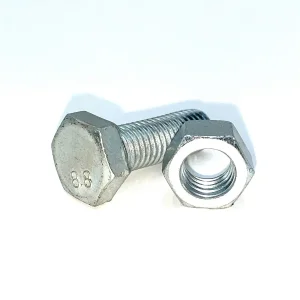
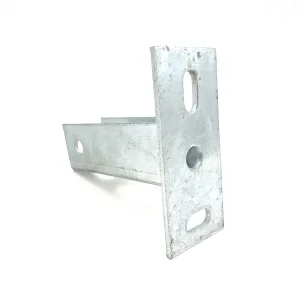
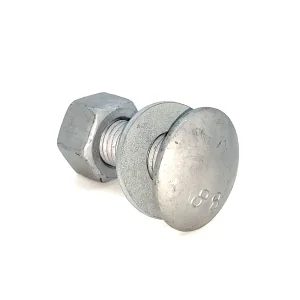
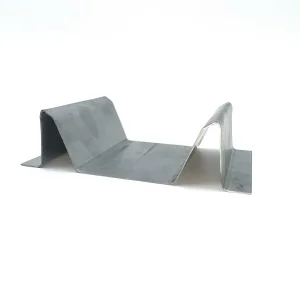
Complete your mechanical structural bills of materials with heavy-duty structural hex bolts, anti-loosening assemblies, and precision aluminum mounting brackets.