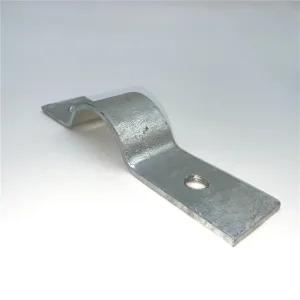
High-Strength Engineering & PV Structural Solutions
Engineered hardware certified for utility-scale energy projects, maritime environments, and heavy mechanical infrastructure.
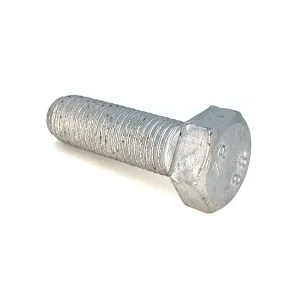
Heavy-Duty Hot-Dip Galvanized Hex Bolts
Source Specification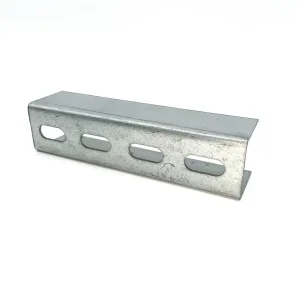
Solar PV Mounting Purlin Connector
Source Specification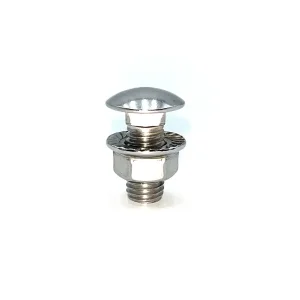
High-Quality Stainless Steel Carriage Bolt
Source Specification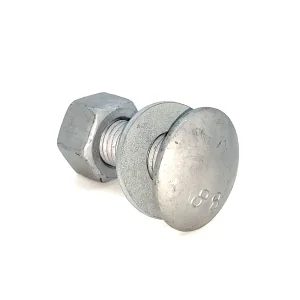
Hot-Dip Galvanized Carriage Bolt
Source Specification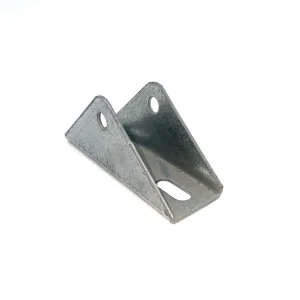
Three-Hole Mounting PV Connector
Source Specification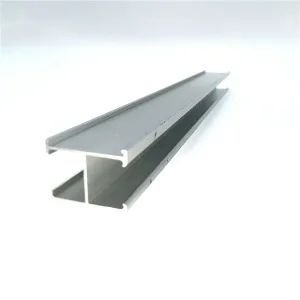
3040 Aluminum Alloy PV Guide Rail
Source Specification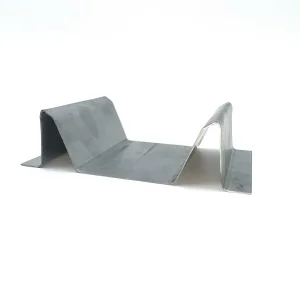
M-Type Aluminum PV Water Channel
Source Specification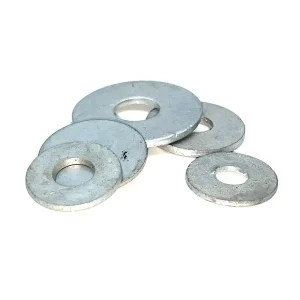
Precision Stainless Steel Flat Washer
Source SpecificationEngineering Mechanics of Inconel 718 Distorted Thread Flange Locknuts
A comprehensive examination of why precipitation-hardened nickel superalloys and prevailing torque geometry supersede conventional locking mechanisms in mission-critical installations.
Precipitation Hardening Mechanics
Inconel 718 relies on a matrix of gamma prime (γ') and gamma double prime (γ'') precipitates formed via targeted titanium and niobium alloying. This microstructural morphology provides exceptional creep-rupture strength up to 1300°F (704°C), eliminating stress-relaxation failures common in standard austenitic or martensitic hardware.
Prevailing Torque Thread Deflection
The locknut utilizes a mechanical 180° or 360° thread pitch distortion at the non-bearing top collar. Unlike polymer inserts that degrade at 120°C, all-metal thread deformation creates radial frictional drag directly across mating bolt threads, retaining initial clamping preload through intense harmonic resonance.
Integrated Flange Surface Distribution
The bottom wide-diameter flange acts as an integral load-spreading washer. By significantly expanding the contact bearing area, it drastically minimizes localized surface embedment, prevents joint loosening on softer mating alloys, and bridges slotted or oversized clearance holes seamlessly without requiring secondary loose components.
Global Industrial Procurement Realities & Demand Sectors
Enterprise procurement professionals select Inconel 718 distorted thread flange locknuts to safeguard critical capital equipment against multi-million-dollar catastrophic joint separation.
Aerospace Turbomachinery
Exhaust manifolds, afterburners, and jet engine stator vanes demand fasteners that resist self-loosening under continuous multi-axis vibration and instantaneous thermal shock transitions.
Subsea Oil & Gas Wells
Certified resistance against chloride stress-corrosion cracking and sulfide embrittlement under H2S sour gas downhole pressures according to stringent NACE MR0175/ISO 15156 directives.
Power Generation Turbines
Heavy gas turbine combustion casings, steam valve bypasses, and nuclear coolant pump loops mandate locknut alloys impervious to micro-welding, relaxation, and thermal degradation.
Extreme Renewable Tech
Supercritical geothermal extraction lines and high-wind structural pivots deploy Inco 718 hardware to circumvent rapid atmospheric saltwater pitting and corrosive mineral precipitation.
Inco 718 Locknut Metallurgy & Mechanical Specifications
Manufactured to internationally recognized aerospace and defense benchmarks (AMS, ASTM, ISO). Detailed properties validated via full dimensional, ultrasonic, and chemical spectral audits.
| Parameter | Technical Specification Value | Reference Compliance Protocol |
|---|---|---|
| Nominal Material Composition | 50.0–55.0% Ni, 17.0–21.0% Cr, 4.75–5.50% Nb, 2.80–3.30% Mo, 0.65–1.15% Ti, Bal. Fe | UNS N07718 / AMS 5662 / AMS 5663 |
| Tensile Strength (Ultimate) | 185,000 psi (1,275 MPa) min. after standard precipitation aging cycle | ASTM E8 / ISO 6892-1 |
| Yield Strength (0.2% Offset) | 150,000 psi (1,034 MPa) min. at ambient room temperature | ASTM E8 |
| Hardness Range | 36 to 44 HRC (Rockwell C Scale) uniform cross-sectional core hardness | ASTM E18 / ISO 6508 |
| Operational Temperature Range | Cryogenic -320°F (-196°C) up to sustained +1300°F (+704°C) | AMS 5596 / MIL-DTL-18240 Criteria |
| Prevailing Torque Testing | Maintains clamping retention over 5 full cycle engagement/disengagement routines | IFI-100/107, NASM 25027, DIN 980 / ISO 7040 |
| Surface Treatment Options | Silver Plating (AMS 2410/2411) to prevent high-temp galling, Passivation (AMS 2700), or Raw Pickled | ASTM A380 / AMS 2410 |
Advanced Manufacturing & Quality Assurance Trajectory
How state-of-the-art cold-forming, automated CNC tooling, and digital traceability are transforming precision superalloy manufacturing.
Net-Shape Hot Forging Protocols
Implementing near-net-shape hot-heading for Inconel 718 flange profiles eliminates continuous grain boundary shear lines, yielding optimal uninterrupted structural grain flow around the collar-flange transition area to elevate fatigue endurance under high load cycling.
Micro-Controlled Thread Deformation
Replacing manual mechanical crimping with automated multi-point hydraulic servo-deflection allows repeatable micron-level distortion depth. This eliminates thread galling while providing certified prevailing-on torque within an ultra-narrow tolerance envelope.
Mill-to-Bolt Complete Traceability
Every single batch of raw wire rod undergoes vacuum induction melting (VIM) and electroslag remelting (ESR). Fasteners are stamped with discrete heat-lot tracking numbers linking to 3.1 Mill Test Certificates (MTC) and complete destructive laboratory test records.
Global Logistics & Compliance Infrastructure
Seamless international trade supported by rapid shipping from China's primary fastener industrial hub to major ports worldwide.
Global Export Ready
Standardized packaging adhering to maritime export and airfreight specifications, including VCI anti-corrosion barrier wrapping, robust wooden crating, and full international documentation (Customs HS codes, COO, dual-use compliance filings).
Stringent Independent Testing
Batches can be third-party inspected by SGS, TÜV, or Lloyd’s Register prior to port clearing. Chemical composition checks, room/high-temperature tensile stress, and extended salt spray audits (ISO 9227) verified on request.
Bespoke Application Consultation
Our sales engineering team provides detailed joint-clamping simulations, tightening torque coefficient (K-factor) calculations, and recommendations on silver plating or specialized lubrication to prevent thread galling during installation.
Engineering & Commercial Advisory FAQ
Essential guidance for design engineers, purchasing managers, and procurement specialists specifying nickel alloy fasteners.
What is the primary operational advantage of Inco 718 over A286 or 316 Stainless Steel?
Inconel 718 offers virtually double the yield strength (150 ksi vs 85 ksi for A286) and maintains this tensile capability up to 700°C. In contrast, 304/316 stainless steels experience significant thermal relaxation above 425°C, resulting in loss of joint clamp load and catastrophic mechanical loosening.
Can distorted thread Inconel 718 locknuts be reused multiple times?
Yes. Prevailing torque locknuts conform to specifications such as NASM 25027 and IFI-100, which require the hardware to maintain a defined minimum breakaway torque through at least 5 reuse cycles. However, aerospace installations typically mandate single-use protocols for maximum reliability.
How do you prevent galling between Inconel 718 locknuts and mating studs?
Due to the high nickel content and prevailing thread interference, unplated Inconel fasteners are susceptible to galling. We strongly advise applying an electrodeposited silver plate (per AMS 2410) or dry-film MoS2 lubricant, which acts as a sacrificial solid barrier across thread contacts.
What documentation and certification are supplied with each export shipment?
Every commercial order is delivered with complete EN 10204 3.1 Inspection Certificates containing heat chemistry, tensile and hardness inspection logs, dimensional reports, prevailing torque test charts, and Certificate of Conformity (CoC).
Precision Structural Hardware & Photovoltaic Mounting Brackets
Complete structural hardware systems engineered for outdoor infrastructure, photovoltaic racking arrays, and high-tensile installations.
High-Performance 3040 PV Guide Rail
Source Specification
Direct Factory 304/316 Flat Washers
Source Specification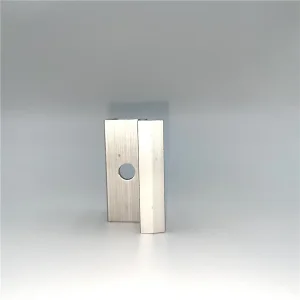
Premium Aluminum PV Side Clamps
Source Specification
Solar PV M-Type Aluminum Water Channel
Source Specification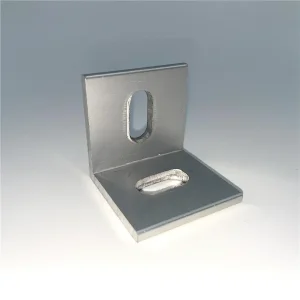
PV Aluminum Alloy Angle Bracket
Source Specification
Galvanized High-Strength Carbon Bolt
Source Specification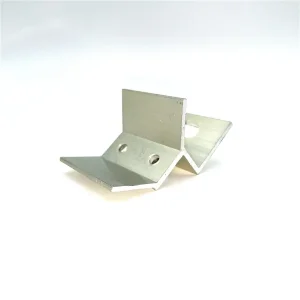
Trapezoidal Metal Roof PV Clamp
Source Specification