
Engineered PV Mounting Hardware & Heavy Fastening Systems
Explore factory-direct solar brackets, purlin splices, high-grade structural bolts, and extrusion rails manufactured to withstand rigorous environmental loads and seismic shear.
Technical Whitepaper: Decoding Property Class 12.9 Fasteners
In structural connection engineering, Grade 12.9 designates the pinnacle of standard metric alloy steel fastener performance as defined by ISO 898-1 and DIN 267. Sourcing from a verified manufacturer requires complete transparency into raw metallurgical chemistry and thermal processing controls.
Alloy Steel Microstructure & Quenching
Grade 12.9 fasteners cannot be fabricated from generic low-carbon wire. We utilize certified alloy structural steels such as 42CrMo (AISI 4140) and SCM435. Through continuous atmosphere-controlled vacuum quenching followed by precise tempering cycles, the microstructure transforms entirely into tempered martensite. This ensures a balanced yield ratio (Rp0.2/Rm ≥ 0.90) with an elongation capacity (δ5 ≥ 8%) and reduction of area (ψ ≥ 44%), mitigating catastrophic brittle fracture under extreme dynamic shock loads.
The Critical Hydrogen Embrittlement Barrier
Because core hardness ranges between 39 HRC and 44 HRC, Grade 12.9 components exhibit heightened susceptibility to Internal Hydrogen Embrittlement (IHE) and Environmental Hydrogen Embrittlement (EHE). Standard acid pickling and electro-galvanizing introduce mobile hydrogen protons that diffuse to stress concentrations. Youlong Fastener utilizes mechanical shot-blasting paired with non-electrolytic Zinc-Flake (Geomet/Dacromet) coatings and de-embrittlement thermal baking at 200°C–230°C for 8 to 24 hours immediately post-treatment.
| Mechanical Property Criterion | ISO 898-1 Class 12.9 Standard | Youlong Engineering Batch Spec | Verification Test Protocol |
|---|---|---|---|
| Tensile Strength, Rm | Nominal 1200 MPa / Min 1220 MPa | 1240 – 1290 MPa (Controlled band) | ISO 6892-1 Wedge Tensile Loading |
| Stress at 0.2% Non-Proportional Elongation, Rp0.2 | Min 1100 MPa | 1120 – 1160 MPa | Extensometer Direct Yield Mapping |
| Stress Under Proof Load, Sp | 970 MPa | 990 MPa | Axial Proof Load Fixture (15 sec hold) |
| Core Hardness Range | 39 – 44 HRC (385 – 435 HV) | 40 – 43 HRC (Reduced dispersion) | Rockwell C / Vickers Micro-Hardness |
| Impact Toughness (Charpy V-Notch) | Min 15 J at -20°C (Special Agreement) | ≥ 22 J at -40°C (Arctic Grade 42CrMo4) | ISO 148-1 Impact Pendulum Testing |
| Decarburization Depth Limit | Non-decarburized zone ≥ 2/3 thread height | ≥ 3/4 thread height retained | Metallographic Microscopic Analysis |
Global Commercial Landscape: The Grade 12.9 Paradigm Shift
Industrial demand for structural fasteners has fundamentally decoupled from low-spec hardware. The rapid evolution of high-output wind turbines, heavy-duty utility tracking arrays, and electrified heavy equipment mandates smaller, lighter bolted joints capable of sustaining multiaxial dynamic shear.
Lightweighting & Joint Compaction
By transitioning from Grade 8.8 (800 MPa) or Grade 10.9 (1040 MPa) to Grade 12.9 (1220 MPa), structural engineers reduce bolt diameters by 20% to 35% without losing clamping force. In multi-megawatt solar tracker torque tubes and slewing ring drives, smaller bolt circles reduce flange mass, minimize rotational inertia, and lower steel freight expenditures globally.
TCO Reduction in Mega-Projects
Initial bolt purchase price represents less than 3% of the total installation and maintenance budget of utility-scale energy projects. However, loose joints, fatigue shear, or corrosion-induced snapping cause millions in operational downtime. Grade 12.9 fasteners offer superior clamp load retention under cyclic thermal fluctuations, directly lowering total lifecycle servicing frequency.
Supply Chain Regionalization & Hub Integrity
Handan's Yongnian District produces over 55% of China's fastener exports. With vertically integrated steel melting, cold-heading tooling shops, automated thread rollers, and continuous mesh-belt furnace facilities located within a 15-kilometer radius, Youlong provides unmatched price stability, rapid raw material traceability, and prompt container freight turnaround.
Localized Application Engineering: High-Stress Scenarios
Grade 12.9 high-strength fasteners are explicitly specified for mission-critical joints where shear failure threatens catastrophic asset collapse or human safety.
Utility Solar Tracker Pylons
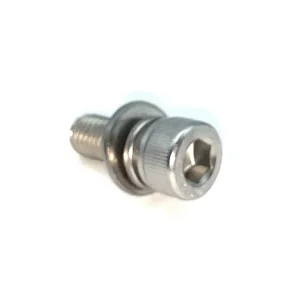
Single-axis solar trackers endure continuous torsional aerodynamic fluttering. Grade 12.9 hex socket cap screws and flange bolts secure the torque tube bearings, motor gearbox brackets, and purlin splices, preventing joint back-off under Category 3 hurricane gusting.
Wind Turbine Nacelle & Pitch Hubs
Tower yaw drives, pitch control bearings, and rotor blade adapter plates demand high yield limits. Class 12.9 stud bolts absorb tremendous cyclic bending moments while retaining clamping force without suffering thread elongation or slip.
Heavy Machinery & Mining Booms
Excavator slewing rings, hydraulic breaker hammers, and crusher chassis withstand severe cyclic impacts. Our bolts feature radiused thread runouts and cold-rolled threads after heat treatment to elevate endurance limits beyond 2×10⁶ cycles.
Stamping Dies & Pressure Tooling
Injection molding platens and automotive progressive stamping dies endure millions of pulsating tons. Standard Class 8.8 bolts deform or strip threads under internal hydraulic surge; Grade 12.9 ensures structural die stability and micron-level repeatability.
Technical Roadmap: Metallurgy, Quality Control & The Future
Building high-strength fasteners capable of zero-defect performance in overseas infrastructure demands strict adherence to comprehensive quality management from wire rod spheroidization to optical laser sorting.
1. Cold Heading & Continuous Grain Flow
Raw steel undergoes protective-atmosphere annealing to achieve 100% spheroidized pearlite before cold extrusion. Multi-station high-speed progressive cold headers form the bolt head and shank without shearing the internal metallurgical grain lines, maintaining fiber continuity along the head-to-shank fillet transition.
2. Thread Rolling Post Heat-Treatment
While industry standard Class 8.8 bolts have threads cut or rolled prior to quenching, Youlong provides high-fatigue Class 12.9 bolts with threads rolled after heat treatment upon request. This cold-work process imparts high residual compressive stress in the thread roots, tripling dynamic fatigue lifespan.
3. 100% Automated Optical Sorting
To support high-speed robotic assembly on overseas installation lines, our finished Grade 12.9 inventory passes through multi-camera 360-degree laser inspection tables. Every bolt is verified for head concentricity, thread pitch accuracy, shank straightness, and surface micro-fissures at up to 800 pieces per minute.
The Engineering Frontier: 2026–2030 Fastener Roadmap
Micro-Alloyed Boron & Vanadium Steels
Developing next-generation Grade 12.9 chemistries that replace classical Cr-Mo matrices with titanium-boron micro-alloying to raise delayed fracture thresholds above 1350 MPa.
Smart Preload Ultrasonic Sensors
Integrating piezoelectric thin-film transducers directly into the bolt heads to monitor clamping tension in real time via handheld RFID readers during field maintenance.
Low-Carbon Electric Arc Metallurgy
Transitioning 100% of alloy raw rod sourcing to certified electric arc furnace (EAF) mills powered by renewable hydro/solar grids, cutting embedded Scope 3 carbon by 48%.
Frequently Asked Questions for B2B Importers & Engineers
Detailed technical, commercial, and metallurgical answers addressing the core concerns of EPC contractors, procurement managers, and mechanical design teams.
What is the exact difference between Grade 8.8, 10.9, and 12.9 bolts?
The numbers denote tensile strength and yield ratio per ISO 898-1. Grade 8.8 has a nominal tensile strength of 800 MPa and an 80% yield limit (640 MPa). Grade 10.9 provides 1000 MPa nominal tensile with a 90% yield limit (940 MPa min yield). Grade 12.9 delivers a minimum 1220 MPa tensile strength with a 90% yield limit (1100 MPa yield). Choosing Grade 12.9 allows designers to use smaller diameter bolts, reducing total structural weight while handling higher clamping preloads.
Can Grade 12.9 bolts be hot-dip galvanized (HDG)?
Generally, no. Hot-dip galvanizing requires aggressive acid pickling (which introduces atomic hydrogen into the high-tensile steel matrix) and exposes bolts to molten zinc at 450°C, which tempers down the martensite core and causes liquid metal embrittlement. Instead of HDG, we apply Zinc-Flake coatings (Geomet, Dacromet) or mechanical zinc plating, achieving over 1,000 to 1,500 hours of neutral salt spray resistance (ASTM B117) with zero hydrogen risk.
What raw material steel grades do you specify for Grade 12.9 production?
We source certified structural alloy wire rods including 42CrMo (equivalent to AISI 4140), SCM435, and 35CrMo from top tier mills (e.g., Baosteel, Xingcheng Special Steel). Every master heat is supplied with EN 10204 3.1 chemical inspection certificates documenting exact percentages of Carbon, Manganese, Chromium, Molybdenum, and ultra-low limits on Phosphorus (≤0.025%) and Sulfur (≤0.025%).
How do you test and prevent delayed brittle fracture on high-strength shipments?
Every heat treatment batch is tested per ISO 15330 for delayed hydrogen embrittlement. Samples are loaded to 80% of minimum breaking load in specialized stress fixtures and held for 48 hours without fracture. In addition, our standard metallurgical laboratory performs mandatory micro-hardness mapping, core-to-surface decarburization analysis, and Charpy V-notch impact toughness tests.
What tightening method is recommended for Class 12.9 fasteners?
Because Class 12.9 operates at high yield thresholds, relying on uncalibrated torque wrenches creates wide clamp load scatter due to friction variations. We strongly advise calibrated torque-angle tightening or applying friction-stabilized zinc flake topcoats with defined friction coefficients (μ = 0.10 – 0.15). For critical joints, ultrasonic elongation measurement ensures precise preload without exceeding the elastic limit.
Can Youlong manufacture custom drawings, non-standard lengths, and OEM head markings?
Yes. In addition to standard DIN 912, DIN 933, and ISO 4762 configurations, our engineering department designs specialized cold-heading tooling and CNC post-machining fixtures for custom shoulder bolts, eccentric collars, and dual-thread studs. Custom head stampings showing your company brand logo and property class markings are readily accommodated.
Comprehensive Structural Fasteners & Mounting Components
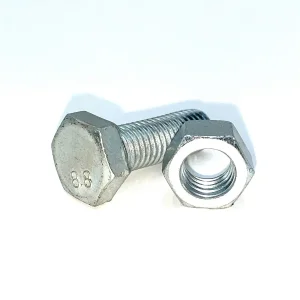
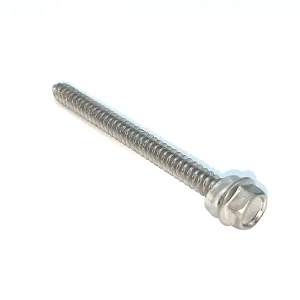
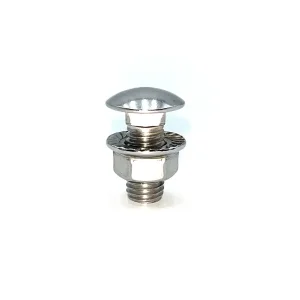
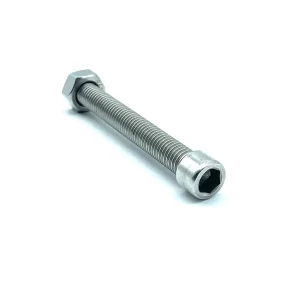
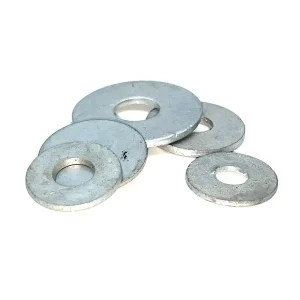
Complete your procurement package with precision-manufactured carriage bolts, high-tensile hex heads, self-drilling screws, and stainless anchoring washers manufactured under ISO 9001 quality systems.
Partner with an Authoritative Fastener Manufacturer
Get immediate mill test reports, engineering proposals, customized head-marking samples, and tiered wholesale pricing for full container loads from Handan Youlong Fastener Co., Ltd.