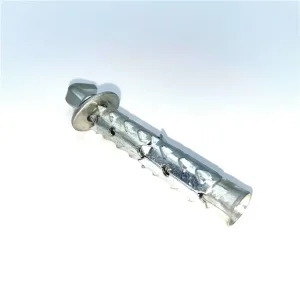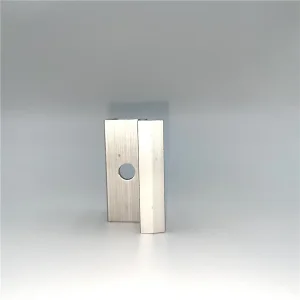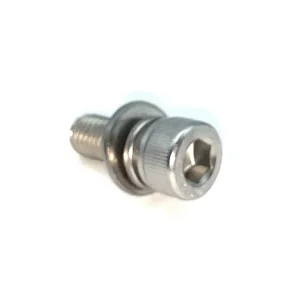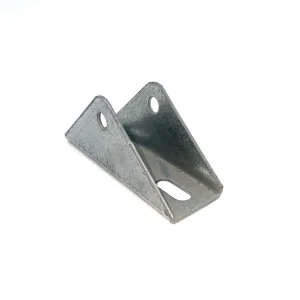
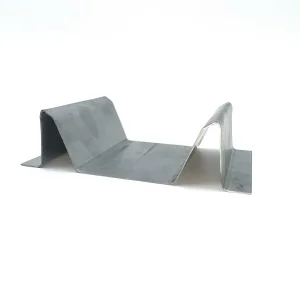
China Premium Three-Hole Mounting Connector for Solar PV Systems
Request Technical Spec
Immediate factory supply: precision cold-formed Grade 10.9 structural series, mounting assemblies, and corrosion-resistant connection systems.
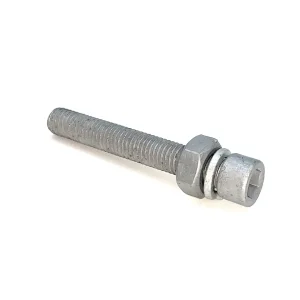
A rigorous examination of high-preload mechanical fastening standards, metallurgy, structural shear load paths, and global procurement logistics.
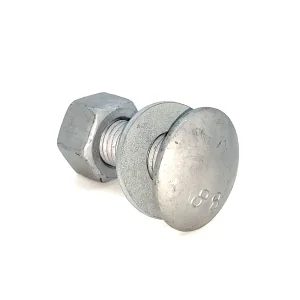
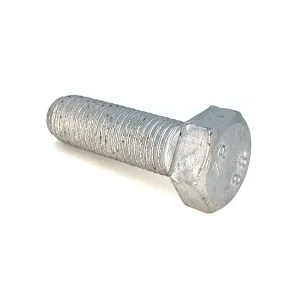
In international engineering, the "S" suffix (originating from specifications such as DIN 6914, EN 14399-4, and corresponding to ASTM A490 heavy hex structural bolts) denotes a Heavy Hex profile characterized by an enlarged width across flats (AF dimension). This dimension enlarges the bearing area beneath the bolt head by up to 25% compared to standard DIN 931/ISO 4014 fasteners. The purpose is to avoid crushing or yielding the connected base steel when the bolt is subjected to severe tightening torques required to attain full proof load clamping force.
Grade 10.9 S bolts require medium-carbon alloy steel (e.g., 40Cr, 42CrMo, or 20MnB) that undergoes precise quenching and tempering. With core hardness levels reaching 32 to 39 HRC, these fasteners are sensitive to Hydrogen Embrittlement (HE) if electroplated improperly. Factory-level mitigation dictates strict acid-pickling avoidance, the implementation of mechanical zinc deposition, or mandatory thermal de-embrittlement baking at 200°C–220°C within 4 hours of electroplating.
Civil infrastructure designs classify structural connections into bearing-type or friction-grip (slip-critical) joints. Grade 10.9 S heavy hex assemblies are specifically deployed in slip-critical connections where external forces are transferred entirely through the friction generated between clamped structural steel plates. Maintaining a strict tightening coefficient (k-factor) of 0.10 to 0.14 via controlled factory waxing and automated torque testing is required to prevent slip-induced fatigue failures.
| Property Parameter | Grade 10.9 S (Structural Preload) | Grade 8.8 Standard Hex | Grade 12.9 Socket Screw |
|---|---|---|---|
| Nominal Tensile Strength | 1,040 MPa (150 ksi equivalent) | 800 – 830 MPa | 1,220 MPa |
| Yield Point (Rp0.2 min) | 940 MPa | 640 MPa | 1,100 MPa |
| Head Profile & Geometry | Heavy Hex (Enlarged across flats AF) | Standard ISO Width | Cylindrical Internal Hex |
| Failure Mechanism Mode | Ductile shear transfer with controlled elongation (≥9%) | High ductile elongation (≥12%) | Brittle failure risks in cyclic vibration |
| Standard Harmonization | EN 14399-4 (HV) / DIN 6914 / ASTM A490 | ISO 4014 / DIN 931 | ISO 4762 / DIN 912 |
The transition toward smarter, green-coated, digitally verifiable high-tensile connection assemblies.
Hot-dip galvanizing of Grade 10.9 bolts carries thermal stress and hydrogen entrapment risks. The industry is rapidly migrating toward non-electrolytic Zinc-Flake systems (e.g., Geomet, Dacromet, Delta-Protekt). These deliver 1,500+ hours of neutral salt spray (ASTM B117) resistance without hydrogen embrittlement hazards, achieving uniform micro-thin layers of 8-15 μm that do not clog thread profiles.
Traditional torque wrenches measure friction, not actual bolt tension (clamping force). Modern wind turbines and railway bridges are adopting Squirter-style Direct Tension Indicators (DTIs) and integrated ultrasonic sensor studs. By reflecting acoustic pulses through the bolt shank, real-time clamp-load data is monitored continuously during the asset's 30-year lifecycle.
In response to global infrastructure integrity standards, manufacturers are implementing 2D direct-part marking (DPM) laser matrix codes on the head of each Grade 10.9 S bolt. This links directly to digital 3.1 Material Test Reports (MTR), heat numbers, quench cycles, and mechanical elongation curves for immediate site verification.
Real-world integration across extreme wind environments, offshore maritime hubs, and seismic construction frameworks.
Utility-scale PV tracker axes experience constant dynamic oscillation and twisting under high wind loads. Grade 10.9 S heavy structural fasteners secure main slewing drives, torque tubes, and structural steel piers. Paired with anti-vibration wedge-locking washers, they prevent thread loosening caused by aerodynamic vortex shedding.
Multi-megawatt turbine tower segments rely on massive L-flange ring joints secured by Grade 10.9 structural bolt sets (M36 up to M64). Bolted assemblies operate in high fatigue cycles and sub-zero Arctic temperatures. They require guaranteed Charpy V-notch impact toughness values of ≥27 Joules at -40°C to eliminate catastrophic cold brittleness risks.
Modern civil structures mandate pre-tensioned EN 14399 High-Strength Structural Bolting assemblies (HV and HR configurations). Under severe seismic tremors, Grade 10.9 S bolts provide structural energy dissipation across beam-column connections, maintaining joint integrity even during minor permanent deformations of building frame elements.
Critical procurement intelligence for chief structural engineers, QA inspectors, and global sourcing directors.
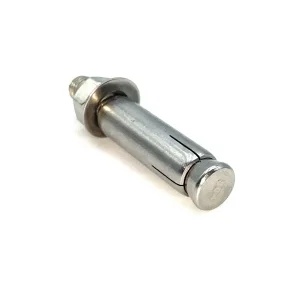
Complete secondary components, socket drive configurations, and mechanical concrete expansion anchor solutions.