
High-Spec Grounding & PV Structural Hardware
Precision-engineered brackets, high-tensile fasteners, and aluminum rail systems optimized for seamless integration with high-conductivity flexible earth bonding conductors.
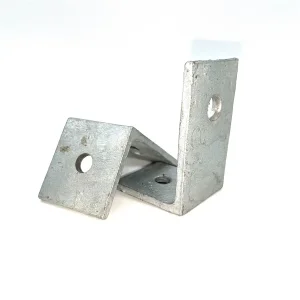
Heavy-Duty Stainless Steel Angle Bracket for Solar PV Mounting
View Product Specs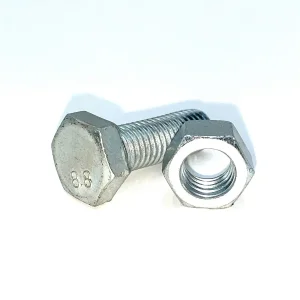
Best High-Strength Hex Bolt - Durable Carbon Steel Fasteners
View Product Specs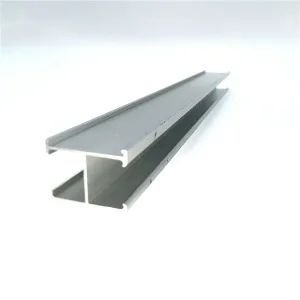
Best Solar PV 3040 Aluminum Alloy Guide Rail Company
View Product Specs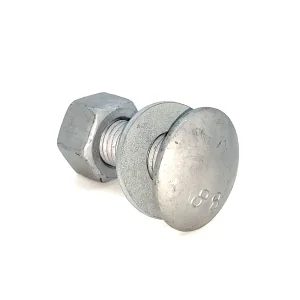
China Heavy-Duty Hot-Dip Galvanized Carriage Bolt
View Product Specs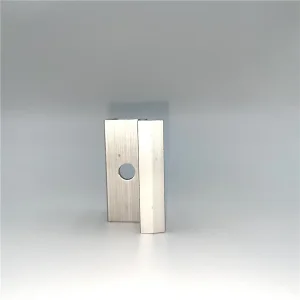
China Premium Aluminum Side Clamps for Solar Panels
View Product Specs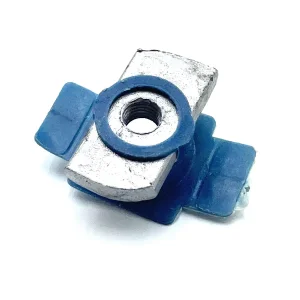
Buy Ergonomic Plastic Wing Nut - China Suppliers Factory
View Product Specs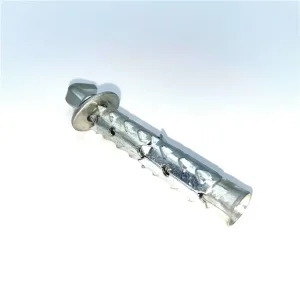
Buy Fish Scale Expansion Bolt Factories, Products
View Product Specs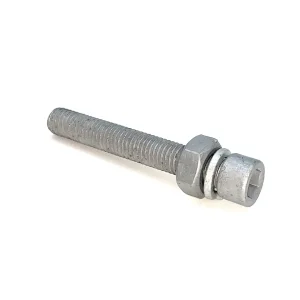
China High-Strength Hex Socket Bolt from China Suppliers
View Product SpecsFlexible Earth Cable Architecture & System Equipotential Grounding
In modern high-capacity renewable energy installations, heavy industrial automation, and battery energy storage systems (BESS), flexible earth cables (also designated as flexible copper earthing leads, grounding straps, and braided bonding shunts) serve as the vital line of defense against catastrophic electrical faults. While rigid copper tape and uninsulated busbars have historically addressed static installations, modern multi-axis solar tracking arrays, vibrating nacelles in wind turbines, and seismic-rated switchgear necessitate an ultra-pliable, fatigue-resistant conduction path.
An electrical earth cable is not merely an insulated piece of stranded wire; it is an engineered conductor calibrated to safely dissipate massive short-circuit currents (Isc) to ground within milliseconds, preventing lethal touch potentials and protecting sensitive microinverters, string controllers, and power conversion systems (PCS). By utilizing oxygen-free high-conductivity (OFHC) electrolytic copper (Cu-ETP / CW004A with purity ≥ 99.95%), these flexible leads guarantee minimum volumetric resistance, lower operating heat, and non-restrictive current redistribution during surge events triggered by lightning or phase-to-ground flashovers.
Why Sourcing Flexible Earth Cables from China Leads Global Procurement
Combining world-class electrolytic metallurgy clusters, automated wire drawing, and specialized cold-forging fastener facilities to reduce total cost of ownership (TCO) without quality trade-offs.
Full Metallurgy Vertical Integration
China operates the world's most concentrated copper refining and specialized drawing ecosystems. From continuous casting electrolytic cathode copper to high-speed multi-wire drawing lines down to 0.05 mm filament diameter, every production step is tightly co-located, reducing transport lead times and minimizing raw material scrap markups.
- Direct access to LME/SHFE certified Grade A copper cathodes
- In-house inline annealing eliminating grain boundary brittleness
Advanced Handan Fastener Synergies
Situated in Yongnian District, Handan City (China's undisputed fastener capital), our facility harmonizes flexible earth cable terminals with compatible stainless steel (304/316) bolts, Belleville conical serrated washers, and solar mounting rails, eliminating supplier misalignments and galvanic corrosion hazards before dispatch.
- One-stop procurement for grounding bonding jumpers & PV clamps
- Automated stamping, electro-tinning, and CNC custom hole punching
Stringent Automated Ultrasonic Welding
Rather than relying solely on simple crimped mechanical lugs, our advanced assembly workshops leverage high-frequency ultrasonic metal consolidation and press-forming for heavy-duty flexible braids. This fuses the individual copper strands into a monolithic solid lug tip, eliminating internal air gaps, oxidation pockets, and loose strands.
- Pull-out force exceeds IEC 61238-1 mechanical pull testing
- Zero solder flux residue, mitigating chemical pitting risks
Macro Industry Drivers Reshaping Flexible Earth Cable Specifications
The global energy landscape is undergoing rapid technological transitions that directly dictate the dimensional and chemical properties of flexible earth cables. Global EPC contractors and electrical plant designers are moving away from legacy one-size-fits-all grounding straps in favor of application-tailored solutions that anticipate specific mechanical, thermal, and atmospheric stresses.
1500V DC Utility PV & Dynamic Tracking
With string voltages shifting from 1000V to 1500V DC, potential fault energy has escalated dramatically. Concurrently, bifacial solar modules mounted on single-axis horizontal trackers undergo continuous torsional rotation daily. Earth cables must now withstand over 100,000 continuous torsional flex cycles without filament fatigue fracturing, ensuring unbroken bonding between rotating torque tubes and grounded foundation posts.
Utility BESS & Non-Flammable LSZH Insulations
Containerized Lithium-Ion Battery Storage demands extreme fire-safety precautions. Earthing jumpers deployed within rack arrays and inverter enclosures increasingly mandate Low Smoke Zero Halogen (LSZH) cross-linked polyolefin or high-temperature silicone elastomer jackets that prevent toxic halogen gas emissions (chlorine/bromine) during thermal runaway occurrences, adhering to UL 94 V-0 flame ratings.
Offshore & Harsh Coastal C5-M Resistances
Offshore floating PV (FPV) and near-shore wind substations experience aggressive marine salt aerosols. Standard bare copper oxidizes into non-conductive cuprous oxide rapidly. Modern industry demands micro-layer electro-tinning (≥ 5–10 μm) or nickel plating that withstands 1,000+ hours in ASTM B117 salt fog chambers while preserving electrical conductivity across terminal clamp contact interfaces.
Localized Engineering Application Matrix
Cross-functional analysis specifying cable metallurgy, conductor cross-sectional area (CSA), terminal lug metallurgy, and jacket material according to deployment environments.
| Application Scenario | Recommended Conductor Type | Cross Section (CSA) | Terminal Lug Coating | Dielectric / Jacket Spec | Primary Failure Risk Avoided |
|---|---|---|---|---|---|
| Utility Solar PV Trackers | Class 6 Multi-Strand Tinned Copper | 16 mm² – 35 mm² | Tinned ETP Copper Lugs | UV-Resistant Dual-Color Green/Yellow PVC | Continuous torsional mechanical fatigue snapping |
| BESS Container Modules | Ultra-Fine High-Flex Braided Shunt | 25 mm² – 70 mm² | Seamless Pressed Terminal | Halogen-Free LSZH / Silicone Sheath (UL 94 V-0) | Toxic smoke during thermal runaway; arc faults |
| Substation Medium-Voltage Switchgear | Flat Braided Copper Bonding Strap | 50 mm² – 120 mm² | Dual-Hole Compression Terminals | Bare Tinned or Clear Heat-Shrink Sleeve | Electrodynamic displacement under peak short circuit |
| Rooftop C&I Solar Installations | Class 5 Stranded Flexible Wire | 6 mm² – 16 mm² | M6 / M8 Tin-Plated Copper Ring | Weatherproof Flame Retardant PVC (IEC 60332) | Atmospheric galvanic corrosion with aluminum rails |
| Wind Turbine Tower Nacelle Loop | Extra-Flexible Rope-Lay Copper Core | 95 mm² – 150 mm² | Heavy-Duty Forged Copper Lug | High-Flex Oil-Resistant PUR Elastomer | Vibration loosening and direct lightning flashover |
End-to-End Solar Racking Equipotential Grounding Loop
A resilient grounding network requires absolute mechanical and metallurgical harmony between mounting brackets, rail extrusions, structural fasteners, and flexible earth cables. Handan Youlong Fastener bridges the interface gap by supplying synchronized structural and grounding assemblies designed to eliminate bimetallic corrosion and loose joints.
1. Anodized Rail Penetration
Aluminum rails feature anodized non-conductive oxide layers. Grounding clips with hardened teeth penetrate anodization, bonding the panel frame directly into the structural aluminum rail profile.
2. Rail-to-Rail Splice Jumper
At expansion joints between rails, thermal contraction causes micro-gaps. Flexible braided copper earth leads span across three-hole splice connectors to maintain continuous electrical equipotentiality.
3. Bimetallic Corrosion Isolation
Direct contact between bare copper terminals and aluminum rails triggers severe galvanic breakdown. Our assemblies integrate electro-tinned copper lugs with 304/316 stainless Belleville washers.
4. Earth Grid Dissipation Path
The consolidated current routes via high-spec grounding leads down through structural steel angle brackets to concrete expansion anchor bolts and driven earth rods embedded in deep soil.
Overcoming Cross-Border Procurement Friction: EPC Audit Checklist
Tier-1 EPCs, international solar developers, and electrical utility distributors face strict quality scrutiny before approving vendors. Purchasing flexible earth cables involves detailed validation of raw material pedigree, batch traceability, and environmental testing.
Full Mill Test Reports (MTR / EN 10204 3.1)
Every dispatch batch of copper braided leads and matching fasteners is accompanied by EN 10204 3.1 inspection documentation detailing chemical spectrometry, copper purity percentage, and tensile yield strength.
Export-Grade Protective Packaging
Moisture-proof vacuum-sealed internal bagging prevents surface oxidation of tinned copper during multi-week ocean transit. External containers utilize fumigated plywood pallets reinforced with steel strapping bands.
Custom Terminal Geometry & Stamping
We configure OEM terminal hole spacing (single M6/M8/M10 or dual NEMA standard hole centers), offset bending angles (45°/90°), and custom lead lengths (50 mm to 2,000 mm) tailored to proprietary racking layouts.
Frequently Asked Questions: Earth Cable Engineering & Sourcing
Comprehensive engineering clarifications covering sizing physics, bimetallic corrosion prevention, and procurement procedures.
How do you calculate the correct cross-sectional area (CSA) for a solar PV flexible earth cable?
The cross-sectional area must be sized according to the adiabatic thermal equation defined in IEC 60364-5-54: S = √(I² × t) / k, where S is the conductor cross-section in mm², I is the prospective fault current (r.m.s. in Amperes), t is the operating time of the protective disconnection device (seconds), and k is the factor dependent on conductor material and initial/final temperatures (k = 143 for PVC-insulated copper conductors). For structural equipotential bonding of solar module frames where fault currents are determined by upstream DC overcurrent protection devices (OCPD), standard engineering specs typically deploy 6 mm² or 16 mm² flexible conductors, whereas main array-to-ground connections specify 25 mm² to 50 mm².
Why is flexible braided earth cable preferred over solid copper wire in solar and industrial racking?
Solid copper conductors suffer from low fatigue thresholds when exposed to sustained cyclic mechanical movement. Solar tracking systems, wind vibration on rooftop arrays, and thermal expansion/contraction of aluminum rails introduce dynamic structural strain. Solid copper rapidly experiences work-hardening and micro-cracking at clamp terminals. Flexible braided copper shunts comprise hundreds of interlaced fine filaments (Class 5 or Class 6 strands) that distribute mechanical bending stress over thousands of microscopic contact points, preventing work hardening and maintaining low contact resistance across decades of operation.
How do you prevent bimetallic (galvanic) corrosion when connecting copper earth leads to aluminum PV rails?
Copper and aluminum possess an electrochemical potential difference greater than 0.35V (∼0.78V on the galvanic index), which precipitates rapid electrolytic corrosion of the aluminum rail in the presence of outdoor moisture. To avoid this, our flexible earth cables are supplied with electro-tin-plated terminals. Tin has an intermediate electrochemical potential that acts as a metallurgical buffer against aluminum. Additionally, our assemblies employ 304 or 316 stainless steel carriage bolts, flat washers, and Belleville disc springs to exert constant clamping pressure without directly bridging bare copper to bare aluminum.
What quality testing standards are conducted prior to factory container loading?
Every manufactured batch undergoes rigorous quality assurance protocols: (1) DC Resistance Measurement via micro-ohmmeter to confirm conductivity matches IEC 60228 standards; (2) Mechanical Pull-off (Tensile) Testing on automated crimp testing benches to ensure terminal lugs cannot be extracted below standardized Newton thresholds; (3) Salt Spray Testing per ASTM B117 (standard 500 hours; optional 1000 hours for marine C5-M ratings); and (4) High-voltage spark testing across the extruded insulation jacket to verify dielectric integrity.
Can Handan Youlong Fastener customize earth cable dimensions and terminal hole configurations?
Yes. As a direct manufacturer, our capabilities span fully customized specifications. Clients routinely provide technical drawings indicating non-standard center-to-center hole distances (e.g., M6, M8, M10, or M12 studs), dual-hole anti-rotation terminals, right-angle flag lugs, or customized braided shunt widths. Insulation sheaths can be supplied in standard Green/Yellow, solid Green, Black, or transparent UV-resistant polyolefin.
High-Torque PV Mounting Components & Fasteners
Complete your balance of system (BOS) procurement with heavy-duty stainless steel anchors, precision rail connectors, and high-strength bolts direct from our Handan manufacturing center.
Buy High-Strength Hex Bolt from China Factory - Reliable Fastening
View Product Specs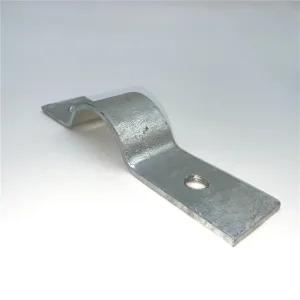
Buy China Factory Heavy-Duty Stainless Steel PV Mounting Hoop
View Product Specs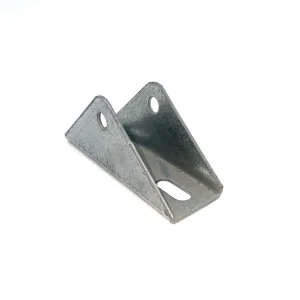
Premium Three-Hole Mounting Connector for Solar PV Systems
View Product Specs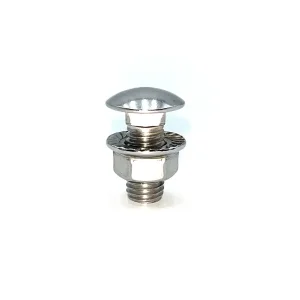
Best Stainless Steel Carriage Bolt Suppliers, Factory
View Product Specs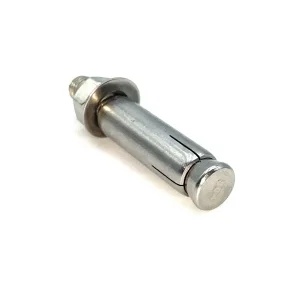
Buy China Stainless Steel Expansion Bolt Suppliers - Heavy-Duty
View Product Specs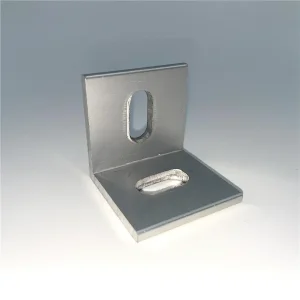
China High-Quality Aluminum Alloy Angle Bracket for Solar PV
View Product Specs
Buy China Solar PV Aluminum Alloy Angle Bracket | Durable Suppliers
View Product Specs