
High-Integrity Clamps & Structural Mounting Hardware
Engineered for mission-critical aerial fiber deployments, utility mounting systems, and severe environmental load paths.



Navigating the Global Procurement Ecosystem for Fiber Optic Dead End Clamps
In modern telecommunication networks, optical transport corridors, and electrical transmission rights-of-way, aerial cable deployment remains the most cost-effective yet structurally demanding architecture. At the heart of mechanical network longevity lies the Fiber Optic Dead End Clamp—a specialized tensioning device engineered to anchor All-Dielectric Self-Supporting (ADSS) and Optical Ground Wire (OPGW) cables to terminal, dead-end, and high-angle tension poles or towers.
International EPC contractors, telecommunication network operators (Tier 1 & Tier 2 Telcos), and regional power transmission utilities are facing unprecedented operational stresses. Extreme wind galloping, micro-vibrations, aeolian fatigue, thermal contractions, and seismic shifts demand anchoring hardware that achieves the delicate balance between maximum rated tensile strength (RTS > 95%) and zero signal attenuation. Improper clamp geometry, substandard metallurgical alloys, or mismatched rubberized cushions inevitably cause micro-bending attenuation, outer-sheath creep rupture, or catastrophic structural release under heavy ice loadings.
This technical document provides an exhaustive, data-backed procurement guide for global sourcing executives, structural design engineers, and distribution partners seeking certified manufacturing companies and Tier-1 fiber optic anchoring products.
Core Sourcing Imperatives
- Tensile Yield Retention: Maintaining continuous mechanical grip exceeding 95% of the cable's Ultimate Tensile Strength (UTS) without point-pressure sheath cracking.
- Galvanic & Atmospheric Passivation: Ensuring compliance with ISO 9223 C4/C5M corrosive criteria via heavy-duty hot-dip galvanizing (ASTM A153) and 6000-series structural aluminum alloy stamping.
- End-to-End Traceability: Full metallurgical batch certifications, computerized optical emission spectrometry (OES), and certified salt-spray validation reports.
Engineering Taxonomy: Fiber Optic Dead End Clamp Categories
A rigorous breakdown of helical preformed dead ends, conical wedge tensioners, and bolted strain clamps deployed across aerial plant infrastructures.
Helical Preformed Dead Ends
Formed from aluminum-clad steel (ACS) or galvanized steel wires, helical dead ends utilize distributed radial gripping force along the cable surface. This helical geometry prevents localized shear stress on sensitive loose tubes and buffer sleeves. Ideal for spans between 100m to 1,200m in ADSS and OPGW lines, preformed assemblies include structural reinforcing rods, dead-end components, and thimble clevis fittings.
Conical Wedge Tension Clamps
Featuring high-grade UV-stabilized thermoplastic wedges housed within an aerodynamic aluminum alloy body, wedge clamps provide tool-free, high-speed installation for FTTH round and figure-8 drop cables. The self-tightening wedge design automatically increases mechanical gripping pressure proportional to aerodynamic line tension while maintaining uniform pressure distribution across the PE/LSZH jacket.
Bolted Heavy-Duty Strain Clamps
Employed in severe short-to-medium span transmission runs, substations, and industrial plant perimeters, bolted strain clamps feature high-tensile hot-dip galvanized ductile iron or extruded aluminum clamping blocks paired with precision carriage bolts. They accommodate heavy messenger wires and high-mass composite optical-electrical cables, resisting longitudinal slip under cyclic thermal expansion.
| Clamp Typology | Applicable Cable | Span Capability | Holding Efficiency | Body Material | Corrosion Rating |
|---|---|---|---|---|---|
| Preformed Helical Dead End | ADSS / OPGW Fibers | Long Span (200m – 1200m) | ≥ 95% RTS | Aluminum-Clad Steel (ACS) | ISO 9223 C5-M (Marine) |
| Conical Wedge Clamp (PA Series) | FTTH Aerial Round Drop (3-8mm) | Short Span (50m – 100m) | ≥ 2.5 kN – 5 kN | Extruded Al-Alloy + UV PA66 | Outdoor Industrial C4 |
| Bolted Quadrant Strain Clamp | Messenger Ground Wire / Figure-8 | Medium Span (100m – 300m) | ≥ 90% RTS | Hot-Dip Galv Ductile Iron | ASTM A153 Heavy Class |
| Helical Distribution Dead End | All-Dielectric Telecom Drops | Distribution Span (70m – 150m) | ≥ 85% RTS | High-Tensile Aluminum Alloy | Salt Spray > 1000h |
China Supply Chain Power: Handan Fastener Capital Cluster
Why Tier-1 international contractors and network builders consolidate precision dead end and structural hardware orders in Yongnian, Handan.
Hyper-Concentrated Metallurgical Supply
Yongnian District, Handan, represents China's most advanced fastener and structural metal manufacturing cluster. With direct co-location beside prime hot-rolled coil steel and structural aluminum ingot smelters, raw material delivery times are compressed from weeks to hours, radically reducing freight overhead and raw-stock price volatility.
Automated Tooling & High-Speed Stamping
Our manufacturing facilities integrate multi-station cold-heading machines, progressive die stamping presses (160T to 500T), and computer-controlled helical wire forming rows. Tooling geometries are micro-calibrated in-house to achieve tight dimensional tolerances within ±0.05 mm, preventing localized pinch failures on sensitive cables.
Unmatched Cost-to-Performance Ratio
By leveraging industrialized economies of scale, extensive automated assembly, and streamlined containerized shipping via Tianjin Port, procurement teams realize a 25% to 42% total landed-cost reduction compared to Western domestic distributors, without compromising metallurgical tensile thresholds or coating thickness.
Comprehensive Load Path Hardware Sourcing
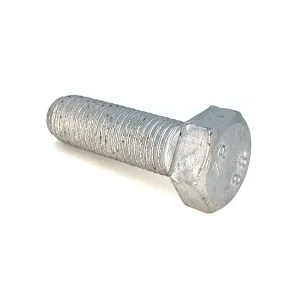
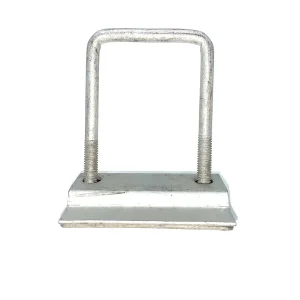
Unlike niche telecommunication traders, our Handan plants supply the entire mechanical load path: helical dead ends, pole brackets, suspension clamps, U-shackles, eye nuts, hot-dip galvanized hex bolts, and stainless expansion anchors. Sourcing all interfacial hardware from a single verified factory eliminates thread mismatch and galvanic incompatibility.
The Sourcing Executive's Checklist
Purchasing officers must protect multimillion-dollar fiber deployments from systemic premature field failures. Insist on verifying these five engineering parameters before issuing a Purchase Order:
- Optical Attenuation Testing: Verification that mechanical tensioning produces ≤ 0.02 dB insertion loss at 1310 nm and 1550 nm wavelengths during maximum simulated design load.
- Sheath Cold-Flow Resistance: Dynamic mechanical analysis ensuring polymer wedges do not squeeze or deform PE jackets under persistent 65°C ambient summer exposure.
- Grit Friction Uniformity: Uniform application of aluminum-oxide abrasive matrix on inner preformed rods to guarantee slip-free friction without outer conductor tearing.
- Fatigue Aeolian Endurance: Withstanding a minimum of 100 million vibration cycles under continuous high-frequency, low-amplitude wind resonance.
Resolving Critical Technical Bottlenecks for Global EPC Buyers
When deploying fiber cables across varied transcontinental topographies—such as the high-UV deserts of the Middle East, the monsoon climates of Southeast Asia, or sub-zero Nordic environments—procurement failures generally stem from two hidden traps: uncontrolled metallurgical micro-fracturing and galvanic cross-contamination.
Low-tier manufacturers frequently cut costs by utilizing recycled secondary aluminum billets or porous zinc casting alloys. Under heavy dynamic wind gusts, these low-ductility alloys experience sudden brittle fracture at clamp eyelets and clevis pin junctions. Furthermore, inadequate hot-dip zinc coating thicknesses (below 85 microns) lead to early red rust formation within 24 to 36 months, contaminating expensive aerial optical conductors.
At our Handan manufacturing center, all tension brackets, dead-end helical loops, and structural hex fasteners are subjected to computer-controlled load cells, 100 kN hydraulic tensile pull-off testing, and spectrum material analysis. We safeguard international projects by issuing batch-specific inspection certificates (EN 10204 3.1) with every delivery.
Localization Support, Quality Verification & Global Compliance
Stringent compliance with North American IEEE, European IEC, and global ISO testing benchmarks guarantees rapid utility audit approval.
IEEE 1222 & IEEE 1138 Adherence
Engineered specifically to fulfill IEEE 1222 (Standard for Testing ADSS Fiber Cables) and IEEE 1138 (Testing of OPGW Hardware). Clamps undergo extensive mechanical tensile testing, holding strength validation without exceeding safe radial compression limits on internal glass fibers.
IEC 61284 & IEC 60794 Standards
Complete verification of overhead line fittings according to IEC 61284. Mechanical aging, thermal cycling (-40°C to +80°C), and optical attenuation stability under continuous mechanical vibration conform to IEC 60794 international fiber testing mandates.
ISO 9001:2015 & Environmental Auditing
Our factory operates under fully certified ISO 9001:2015 Quality Management Systems and ISO 14001 Environmental frameworks. From spectrometer analysis of aluminum alloys to microscopic zinc bath thickness verification, our testing documentation stands ready for formal EPC audits.
Localized Engineering Application Scenarios
Deploying tailored fiber optic dead end clamps and heavy structural fasteners across challenging operational environments.
FTTH Aerial Drop Last-Mile Networks
Deployed on round or flat drop cables spanning 50m to 80m between distribution distribution boxes and subscriber premises. Wedge-style dead ends provide instant anchor engagement on wooden, steel, or concrete poles, resisting wind whipping while safeguarding drop fiber cores.
High-Voltage OPGW Power Corridors
Installed on 110kV to 500kV electricity transmission towers where lightning resistance and mechanical earth protection are paramount. Our preformed aluminum-clad steel helical dead ends absorb short-circuit current thermal surges without annealing or structural yield.
Co-Located Solar PV & Telecom Systems
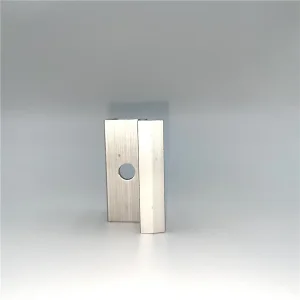
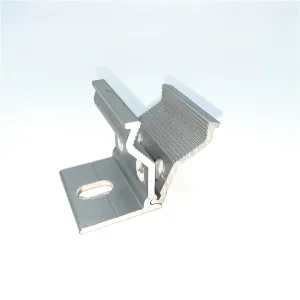
Modern utility-scale solar farms require high-speed optical monitoring networks mounted directly across solar array perimeters. Our clamps pair seamlessly with aluminum PV rails, angle brackets, and stainless expansion fasteners, maintaining shared mechanical load stability.
Coastal Marine & Severe Saline Zones
Offshore substations, sea-crossing spans, and coastal highway fiber corridors demand high-passivation stainless steel (SS316) hardware and specialized dielectric polymers. Our preformed coatings and isolating washers actively halt galvanic oxidation between mismatched metals.
Industry Evolution & Future Hardware Trends
Technological breakthroughs reshaping mechanical tensioning performance, environmental lifespan, and aerial fiber reliability.
Advanced Thermoplastic Nanocomposites
Transitioning from standard polyamide 6 (PA6) to glass-fiber-reinforced polyphenylene sulfide (PPS) and high-density fluoropolymers. These next-generation wedge materials resist thermal embrittlement down to -50°C, offering 35+ years of UV resistance in equatorial desert solar zones.
Integrated Vibration-Damping Geometries
Emerging helical dead end designs now integrate tuned harmonic dampening loops directly into the preformed rod termination. By negating the requirement for separate spiral vibration dampers (SVD) on spans below 250m, contractors reduce installation labor costs by up to 35%.
Eco-Friendly Trivalent Passivation & Geomet Coatings
To satisfy strict European RoHS and REACH directives, our finishing lines are migrating to zero-hexavalent zinc-nickel (Zn-Ni) electroplating and micro-layer zinc flake (Geomet/Dacromet) coatings. These coatings provide 2,000+ hours of ASTM B117 salt spray endurance with zero hydrogen embrittlement.
Precision Structural Fasteners & Mounting Components
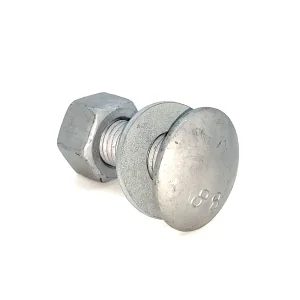
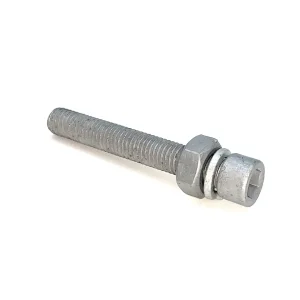
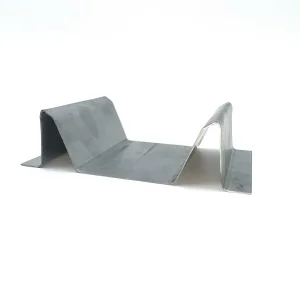
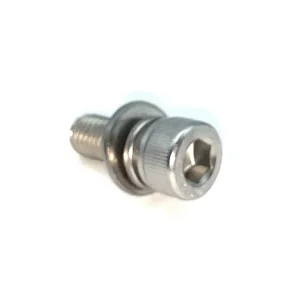
Industrial foundation anchors, carriage fasteners, water channels, and stainless steel fittings completing your project load requirements.


Engineering Inquiries & Technical Procurement FAQ
In-depth responses resolving mechanical selection, material specifications, and cross-border shipping logistics.
What is the mechanical difference between helical preformed dead ends and conical wedge clamps?
How do you prevent optical fiber attenuation increase when clamping ADSS cables under heavy line tension?
How does Handan Youlong Fastener ensure anti-corrosion protection in coastal and desert environments?
Can your factory manufacture custom OEM dead-end hardware based on our engineering drawings?
What specific quality documentation is delivered with cross-border containerized orders?
How do your structural clamps interface with solar PV mounting systems and cable tray installations?
Accelerate Your Infrastructure Procurement with Handan Youlong
Partner directly with Yongnian’s dedicated manufacturer of fiber optic dead end clamps, aerial tensioning accessories, solar mounting rails, and high-tensile anchor fasteners. Receive comprehensive technical specifications, CAD drawing reviews, and factory-direct pricing proposals within 24 hours.