
High-Torque Solar Clamps & Structural Components
Engineered for seamless compatibility across framed standard, bifacial, and utility-scale PV modules. Review technical items direct from our factory production line.
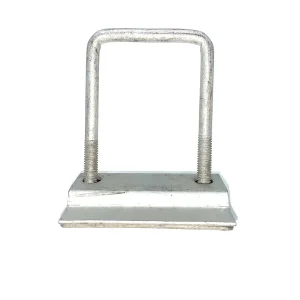
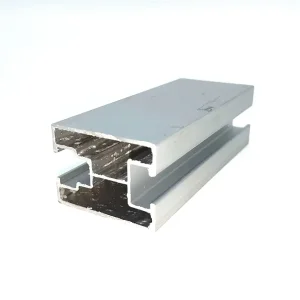
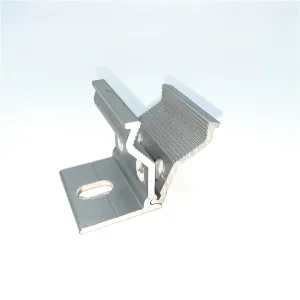
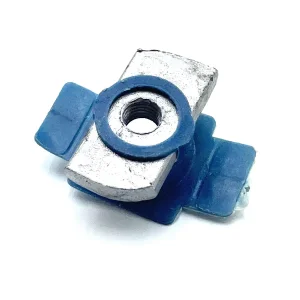
Engineering Fundamentals of Solar End Clamps & T-Clamps (Mid Clamps)
A rigorous examination of mechanical integrity, wind uplift distribution, metallurgy, and procurement optimization for utility, commercial, and industrial photovoltaic racking arrays.
In modern photovoltaic (PV) array engineering, End Clamps and T-Clamps (commonly designated as Mid Clamps or Inter Clamps) represent the critical mechanical interfaces connecting PV modules directly to aluminum or steel substructures. While seemingly modest in component volume, these hardware units absorb 100% of the dynamic mechanical stress induced by cyclic wind buffeting, aerodynamic vortex shedding, thermal expansion-contraction cycles, and asymmetric snow loads over expected 25 to 30-year operational lifecycles.
A structural failure within an end clamp or T-clamp connection does not merely result in a loosened fixture; it induces high-amplitude module flutter, frame deformation, microcracking across crystalline silicon solar cells, and potential module blow-off during extreme weather events. Consequently, international Engineering, Procurement, and Construction (EPC) consortiums, asset owners, and structural engineers enforce uncompromising technical parameters when they buy end clamp panel T-clamp assemblies from manufacturers and direct-export factories.
The Load-Path Continuity Rule
Under international building codes (ASCE 7-22, Eurocode 1 EN 1991-1-4, and AS/NZS 1170.2), PV clamping mechanisms are evaluated as primary load-transfer components. An end clamp must maintain a minimum pull-out resistance of 3.8 kN to 5.2 kN per fastening point without exceeding module frame allowable stress thresholds or causing plastic deformation of the clamping lip.
Why Tier-1 Solar EPCs Source T-Clamps & End Clamps from Chinese Factories
Handan Youlong Fastener Co., Ltd., situated in Yongnian District—widely recognized as China's Fastener Capital—harnesses unmatched cluster economics, continuous raw material supply, and integrated robotic production lines.
Yongnian Industrial Ecosystem
Yongnian accounts for more than 55% of China's structural fastener output. This ultra-dense geographic cluster ensures instantaneous access to high-purity aluminum ingots, stainless steel coil rod (SUS304/SUS316), and domestic surface treatment conglomerates.
- Immediate raw material access mitigates commodity price spikes
- Zero-distance logistics between extrusion plants, cold-headers, and anodizers
- Unmatched capacity scaling: 50,000 to 500,000 clamp units within 7 business days
Automated Precision Tooling & Extrusion
Our workshop integrates heavy hydraulic extrusion presses capable of outputting custom profile geometries with internal ribbed friction teeth. High-speed multi-axis CNC drilling and automatic stamping maintain sub-millimeter tolerances on slot profiles.
- Micro-groove anti-slip ridges machined into clamping edges for shear grip
- Automatic deburring and chamfering to eliminate panel frame abrasion
- Full traceability from billet heat-number to packaged carton barcodes
Rigorous Surface Treatment Lines
Outdoor exposure requires military-grade corrosion shielding. In-house continuous sulfuric acid anodizing produces a uniform, dense aluminum oxide layer (≥ 10μm standard, up to 20μm custom), backed by hot-dip galvanizing and Dacromet coating lines.
- ASTM B117 neutral salt spray test exceeding 1,000 to 2,000 hours
- Color anodizing capabilities: architectural silver and deep matte black for BIPV
- Galvanic isolation gaskets (EPDM / synthetic nylon) integrated upon request
End Clamp vs. Mid Clamp (T-Clamp) Engineering Specification
A side-by-side metallurgical and dimensional benchmark for structural engineers drafting EPC tender documentation.
| Technical Parameter | Solar End Clamp Assembly | Solar T-Clamp (Mid Clamp) Assembly | Fastening Hardware (Bolts/Nuts) |
|---|---|---|---|
| Primary Base Material | Extruded AL6005-T5 / AL6063-T6 | Extruded AL6005-T5 / AL6063-T6 | Austenitic Stainless Steel SUS304 / SUS316 |
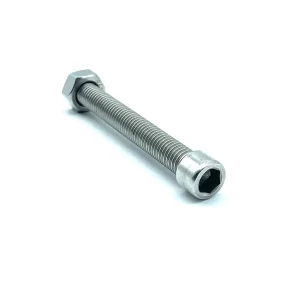
| Module Frame Thickness Fit | Fixed: 30mm, 35mm, 40mm; or Adjustable (30-40mm) | Universal for framed panels; 30mm to 50mm height | M8 DIN 912 Hex Socket Cap or Carriage Bolt |
| Anodizing Coating Depth | 10μm – 15μm (Class AA10 to AA15) | 10μm – 15μm (Class AA10 to AA15) | Passivated / Optional Geomet 500 Plus |
| Ultimate Tensile Strength | ≥ 260 MPa (Rm) | ≥ 260 MPa (Rm) | A2-70 (≥ 700 MPa) / A4-80 (≥ 800 MPa) |
| Yield Strength (0.2% Proof) | ≥ 240 MPa (Rp0.2) | ≥ 240 MPa (Rp0.2) | ≥ 450 MPa to 600 MPa |
| Standard Length / Profile Width | 40mm, 50mm, 60mm (Custom up to 120mm) | 40mm, 50mm (High-wind dual-bolt: 80mm) | Standard Lengths: 25mm, 30mm, 35mm, 45mm |
| Design Tightening Torque | 12.0 N·m – 15.0 N·m | 12.0 N·m – 15.0 N·m | Calibrated electric torque wrench validated |
| Compliance Verification | UL 2703 IEC 61215 | UL 2703 Grounding CE | ISO 3506-1 RoHS |
Technological Evolutions Shaping the PV Clamp Industry
How wafer size revolutions, bifacial dual-glass module geometry, and tracker dynamic harmonics are forcing a complete overhaul of traditional clamping hardware.
Large Format M10 & G12 Integration
With solar modules expanding beyond 2.38m × 1.13m (600W+ to 700W+), panel surface area incurs massive dynamic uplift forces. Modern clamp factories are widening profile extrusion jaws from 35mm to 50mm and 60mm to disperse localized glass bending moments.
Integrated Grounding Clips (UL 467 / 2703)
Traditional EPC operations required running external copper grounding jumpers across rails. Next-generation T-clamps embed stainless steel 304 grounding pins (SUS teeth) that pierce the anodized barrier of the aluminum frame during torquing, establishing electrical continuity.
Single-Axis Tracker Torsional Dampening
Single-axis trackers experience severe aeroelastic flutter and torsional galloping under high gusts. Specialized T-clamps incorporate stepped clamping teeth and dual-channel spring-loaded channel nuts (Z-module or roll-in nuts) to prevent bolt back-out under vibration.
Rubber-Cushioned Frameless Glass Clamps
With utility bifacial dual-glass frameless panels and architectural BIPV, metal cannot directly touch glass. Modern China factories co-extrude or assemble specialized UV-resistant, halogen-free EPDM rubber dampening strips that hold 4mm to 8mm glass modules securely.
Macro Field Solutions: Matching Clamping Hardware to Global Microclimates
Corrosion failure in solar arrays is overwhelmingly attributed to galvanic mismatch and aggressive atmospheric exposure. Standardize clamping specifications against ISO 9223 categories.
Coastal & Offshore PV (ISO C5-M / Marine)
Within 5 km of saltwater shorelines, airborne chloride deposition accelerates crevice corrosion beneath clamp lips.
- Material Mandate: AL6005-T6 with minimum 20μm hard-anodized protective film
- Hardware: Marine-grade SUS316 (A4-80) socket bolts with molybdenum infusion
- Isolation: Anti-galvanic nylon or EPDM isolator bushings preventing direct steel-to-aluminum galvanic bridging
Arid Desert & High-Diurnal Thermal Zones
Desert solar farms (MENA, Atacama, Western China) experience thermal swings exceeding 45°C daily, alongside abrasive silica dust storms.
- Thermal Compensation: Specially slotted T-clamps permitting dynamic lateral expansion without module pinch stresses
- Abrasive Resistance: Specialized dense anodization preserving surface integrity against high-velocity sand erosion
- Dust Dispersion: Beveled outer clamp geometry minimizing sand accumulation along lower glass borders
Industrial Chemical & C&I Rooftops (ISO C4)
Manufacturing facilities emit sulfur oxides, ammonia vapors, and acidic particulates that attack standard hardware.
- Protective Shielding: Electrophoretic coating or Fluorocarbon (PVDF) surface treatments applied over AL6005
- Heavy Structural Fixation: Double-bolt end clamp assemblies providing elevated clamping friction
- Fastener Treatment: Geomet 500 / Magni coated carbon steel grade 8.8 or pure SUS316 hardware
What EPC Procurement Teams Must Verify When Auditing Clamp Factories
A systematic checklist to evaluate Chinese suppliers on production throughput, material certifications, testing rigor, and cross-border shipping reliability.
Mill Test Reports (MTR 3.1)
Never accept untracked aluminum scrap blends. Reputable factories supply EN 10204 Type 3.1 inspection certificates verifying raw chemical composition (Si, Fe, Cu, Mn, Mg, Cr, Zn, Ti) and mechanical yield parameters per batch.
Pre-Assembled Packaging
Field labor represents up to 40% of mechanical installation costs. Demand pre-assembled clamps: clamp body, SUS304 hex bolt, spring washer, and sliding channel nut retained in a single, unloosened drop-in kit.
Container Optimization & Crating
Aluminum components suffer transit gouging if improperly boxed. Insist on 5-ply export corrugated cartons packed inside fumigated plywood pallets with polyethylene vapor wrap and dessicant protection against ocean sweat.
Third-Party Laboratory Validation
Audit prospective manufacturers for accredited lab reports from SGS, TV Rheinland, or Intertek demonstrating compliance with UL 2703 (bonding impedance < 0.1 Ω) and static load testing under IEC 61215 guidelines.
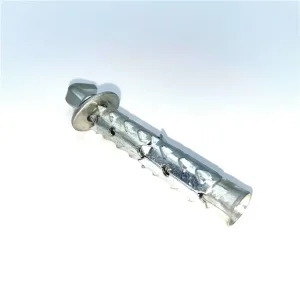
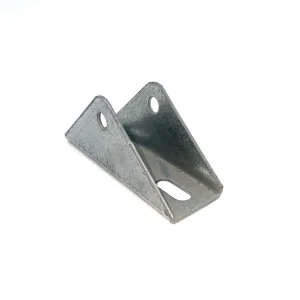
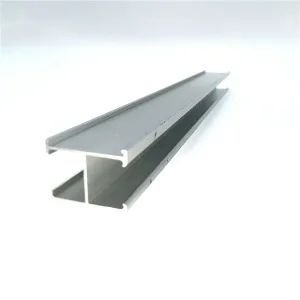
Foundation Anchor Bolts, Expansion Hardware & Splice Connectors
Complete the structural load path from concrete foundation piles and steel purlins up to aluminum PV guide rails.
Frequently Asked Questions: Purchasing Solar End & T-Clamps
Detailed technical, commercial, and engineering clarifications for solar contractors, distributors, and procurement managers.