
Engineered Fastening Solutions & Heavy Foundation Anchors
Explore our industrial-grade mounting bracket components and high-tensile anchor assemblies designed for heavy-duty load transfer across commercial structural joints.
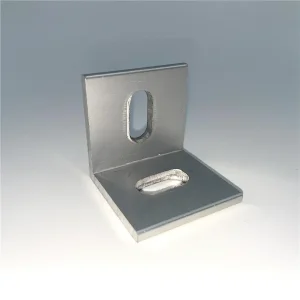
Buy High-Quality Aluminum Angle Bracket for Solar PV Mounting - Reliable China Suppliers & Factory Factories, Product
View Technical Specs
China High-Strength Hex Socket Bolt - Durable Carbon Steel Fasteners from China Suppliers & Factory for Machinery and Construction Product, Products
View Technical Specs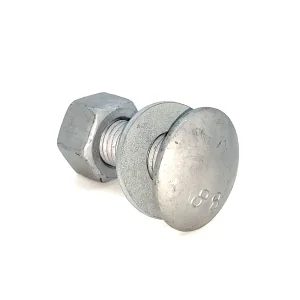
China Heavy-Duty Hot-Dip Galvanized Carriage Bolts - China Suppliers & Factory for Superior Anti-Corrosion Fastening Solutions Suppliers, Company
View Technical Specs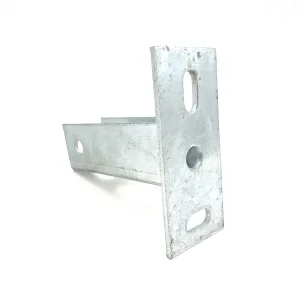
Best Solar PV Mounting Aluminum Alloy Base Manufacturers, Companies
View Technical Specs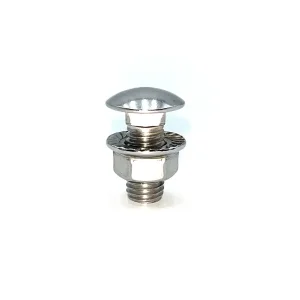
Best High-Quality Stainless Steel Carriage Bolt - China Suppliers and Factory with Superior Corrosion Resistance Factory, Products
View Technical Specs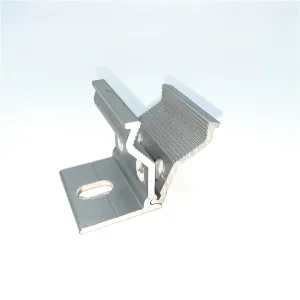
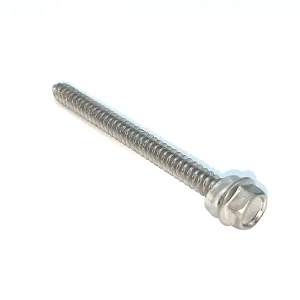
China High-Quality Stainless Steel Self-Drilling Screws - China Suppliers & Factory for Metal, Plastic, and Wood Fastening Manufacturers, Product
View Technical Specs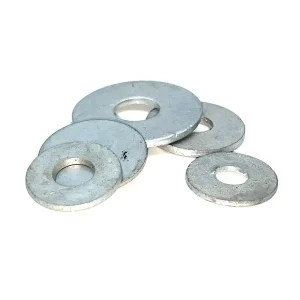
Best High-Quality Stainless Steel Flat Washers from China – Reliable Suppliers and Factory for Fastening Solutions Factory, Factories
View Technical SpecsGlobal Chemical Set Anchoring & Foundation Fastener Market Dynamics
A rigorous examination of post-installed anchoring systems, supply chain localization, high-performance bonding resins, and structural safety parameters under Eurocode and ACI codes.
The Post-Installed Anchoring Paradigm Shift
Structural engineering practices have transitioned significantly toward chemical anchoring systems (resin capsules, epoxy injection, and vinylester compounds). Unlike traditional mechanical expansion anchors, chemical set anchors distribute stress along the entire embedded length without inducing outward expansion pressures. This characteristic permits installation at minimal edge margins and tighter center-to-center spacings across cracked and uncracked concrete substrates without splitting risks.
Global Energy Transition & High-Load Anchors
The aggressive expansion of utility-scale solar arrays, offshore wind installations, and mega-transportation infrastructure requires foundation fasteners capable of enduring sustained cyclic shear, seismic displacement, and severe dynamic wind loads. B2B procurement leaders and international companies partner with vertically integrated manufacturing clusters to secure high-tensile threaded rods (Grade 5.8, 8.8, 10.9, and SS316) matched precisely to environmental site demands.
Resin Chemistry: Pure Epoxy vs. Vinylester
Specifying the optimal chemical set system mandates deep understanding of polymer formulations. Pure epoxy matrices offer zero shrinkage, unmatched bond strength, and extended open times ideal for deep diamond-cored rebar embedments and high-temperature operating regions. Conversely, styrene-free vinylester systems provide rapid curing characteristics, performing reliably in damp holes, water-filled drillings, and sub-zero winter job sites.
Chemical Set Anchor Systems vs. Mechanical Fasteners
Comprehensive engineering performance analysis under static, dynamic, and corrosive environmental constraints.
| Evaluation Parameter | Chemical Set Anchor Bolts (Epoxy/Vinylester) | Mechanical Wedge Anchors | Heavy-Duty Fish Scale Expansion Bolts |
|---|---|---|---|
| Load Transfer Mechanism | Continuous chemical adhesion & micro-mechanical interlock along hole depth | Point-contact friction grip via expansion clip against concrete wall | Surface mechanical interlocking via multiple serrated collar plates |
| Edge Distance & Spacing | Exceptional. Minimal radial stress allows ultra-close edge proximity (up to 35% reduction) | Restricted. Outward expansion force requires substantial concrete edge distance | Moderate. Distributed expansion forces allow medium edge margins |
| Cracked Concrete Performance | Seismic C1/C2 approved when using qualified high-performance pure epoxies | Prone to slippage and pull-out under fissure widening without specialized collars | Reliable secondary expansion under cyclic seismic conditions |
| Hole Water Resistance | Full cavity seal against moisture intrusion, preventing subterranean corrosion | Annular gap remains open; moisture can collect and degrade carbon steel stems | Mechanical seal only; vulnerable to pooling water in unsealed foundations |
| Typical Deployment Arenas | Vibratory equipment foundations, solar baseplates, post-installed rebar splices | Temporary shoring, standard HVAC hanging, non-critical architectural tie-ins | Heavy machinery footing, industrial warehouse racking, concrete slab fixing |
Localized Engineering Assurance & Application Scenarios
Ensuring compliance with localized safety standards, rigorous seismic certifications, and regional regulatory frameworks across major global construction territories.
Seismic Performance (ETA Category C1 & C2)
For installations situated in seismically active regions, anchor bolts must maintain bond integrity when cracks open and close under cyclic lateral reversals. Handan Youlong engineers supply chemical anchor threaded studs and adhesive compounds tested rigorously under AC308 and EAD 330499-00-0601 criteria, ensuring that structural solar racks and heavy bridge pier attachments preserve life-safety integrity during Richter 7+ shock events.
Coastal Solar Farms & Marine Substructures
Deploying anchors in marine environments (ISO 12944 Category C5-M / CX) demands materials immune to chloride-induced pitting and galvanic corrosion. Our integration of A4-70 / A4-80 (AISI 316) stainless steel studs with chemical anchoring cartridges eliminates corrosive electrolytic traps. Isolate galvanic flow via matched neoprene or fluoropolymer insulating washers when attaching to structural aluminum alloy bases.
Heavy Machinery Foundations & Retrofit Works
Dynamic reciprocating machinery, CNC gantries, and industrial crane tracks produce continuous vibrational fatigue. Mechanical anchors tend to loosen over time due to localized micro-cracking around the expansion sleeve. Chemical set anchor bolts absorb vibration through the cured polymer boundary layer, establishing a 100% monolithic connection that guarantees zero bolt self-loosening and maintains nominal pre-load permanently.
Heavy Structural Fastening Assemblies & Bracket Clamps
Reliable components manufactured directly at China's Fastener Capital, engineered to withstand extreme pull-out, shear, and corrosive stresses.
Best China Suppliers Factory Aluminum Clip Lock for Metal Roof Solar PV Installation, No Drilling Required Companies, Products
View Technical Specs
China High-Quality Aluminum Alloy Angle Bracket for Solar PV Mounting - China Suppliers & Factory Direct Offers Manufacturer, Manufacturers
View Technical Specs
Buy China Solar PV Aluminum Alloy Angle Bracket | Durable Suppliers & Factory for Photovoltaic Mounting Systems Manufacturers, Products
View Technical Specs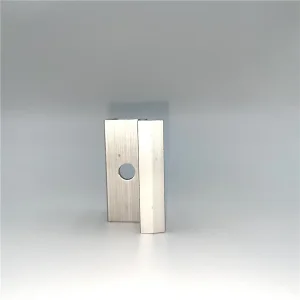
Best China Suppliers Factory Premium Aluminum Alloy Side Clamp for Solar PV Panel Installation Companies, Product
View Technical Specs
China High-Strength Solar PV Mounting Aluminum Alloy Base from China Suppliers & Factory for Stable Support Manufacturer, Factory
View Technical Specs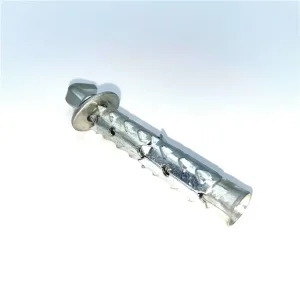
Best Heavy-Duty Fish Scale Expansion Bolt - China Suppliers & Factory, Anti-Slip Design for Strong Grip & Stability Suppliers, Company
View Technical Specs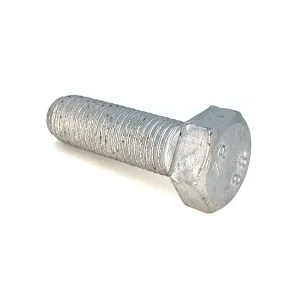
Buy China Heavy-Duty Hot-Dip Galvanized Hex Bolts - High Strength Fasteners from Leading Suppliers and Factory Supplier, Factories
View Technical Specs
China China Heavy-Duty Hot-Dip Galvanized Hex Bolts - High Strength Factory Suppliers for Outdoor Engineering Factory, Companies
View Technical SpecsThe Next Generation of Chemical Anchors: Bio-Resins & Smart Fastening
Anticipating structural engineering demands through decarbonized production, VOC elimination, and digital sensor integration.
Low-VOC & Bio-Based Formulations
Global green building directives (LEED v4.1, BREEAM) enforce rigorous indoor air quality criteria and embodied carbon caps. Fastener manufacturers are reformulating chemical capsules and cartridge resins to eliminate styrene and toxic phthalates, utilizing bio-sourced epoxy cross-linkers derived from non-petrochemical feedstocks. This transition satisfies occupational health rules during tunnel and basement work without sacrificing ultimate bond shear strength.
IoT-Enabled Smart Anchor Assemblies
The convergence of predictive structural health monitoring and civil foundation engineering has stimulated the evolution of "smart" chemical anchor studs. Embedded micro-piezoelectric sensors and fiber-optic Bragg gratings provide real-time telemetry on clamp preload decay, localized foundation settling, and post-seismic micro-crack propagation directly to civil engineers via cloud-linked SCADA monitoring dashboards.
Automated Robotic Cartridge Dispensing
Human error during hole-cleaning and adhesive dispensing accounts for over 80% of anchor bond failures. Modern civil projects in automated rail transit and modular precast building are turning to robotics. High-throughput chemical set bolt systems engineered with specific viscosity profiles ensure bubble-free automated injection, exact volumetric delivery, and precise torque verification at speed.
Chemical Set Anchor Bolts: Procurement & Engineering Q&A
In-depth responses for structural engineers, project managers, and procurement officers selecting anchor systems.
How do chemical set anchor bolts compare against mechanical expansion anchors for dynamic loads?
Chemical set anchor bolts bond continuously along their full embedment length, effectively turning the steel stud and surrounding concrete matrix into a unified composite structure. Because they rely on chemical adhesion and mechanical micro-interlocking rather than localized outward expansion pressure, they do not introduce radial splitting stresses. This allows chemical anchors to endure cyclic dynamic loads, machinery vibrations, and seismic shifts far better than mechanical expansion anchors, which can work loose or crush the surrounding concrete under sustained cyclical fatigue.
What hole cleaning protocols are mandatory to achieve certified chemical bond strength?
Hole cleaning is the single most critical factor in post-installed chemical anchoring. Residual masonry dust creates a barrier that drastically reduces chemical bond strength (often by 50% or more). Industry-standard protocol mandates the 2x2x2 or 4x4x4 rule: blow out the hole using oil-free compressed air (minimum 6 bar) from the bottom up, vigorously scrub the hole walls with a calibrated wire or hybrid brush, and blow it out once more until no discernible fine dust emerges. When drilling through diamond core bits, wet slurry must be completely flushed, roughened with a specialized roughening bit, and thoroughly dried unless using an epoxy certified for submerged/wet holes.
Which steel grades and surface finishes should be specified for C3 through C5 environments?
For standard indoor commercial construction and dry, non-corrosive inland locations (ISO 9223 C1-C2), zinc-electroplated carbon steel (Grade 5.8 or 8.8) provides economical performance. For humid, urban, or industrial inland areas (C3-C4), Hot-Dip Galvanized (HDG) carbon steel with minimum 45–65 µm coating thickness or Grade 304 (A2) stainless steel is recommended. For coastal margins within 5 km of seawater, offshore substructures, chemical manufacturing zones, or road tunnels subjected to de-icing salts (C5-I/C5-M), only marine-grade A4-70 / A4-80 (AISI 316) stainless steel or specialized duplex steels (such as 1.4462 / 2205) should be used to eliminate pitting and stress corrosion cracking.
What is the distinction between gel time, working time, and full curing time in resin anchors?
Gel time (or open/working time) refers to the duration available after the two resin components mix through the static nozzle during which the anchor stud can be inserted and aligned without disturbing polymer cross-linking. Curing time indicates the required window before the anchor assembly is permitted to bear full design tensile or shear loading without risking bond slippage. Pure epoxies typically feature longer gel times (up to 30 minutes at 20°C) and cure over 12 to 24 hours, making them ideal for deep embedments in warm climates. Vinylester and hybrid methacrylate systems offer rapid gel times (3–6 minutes) and cure within 30 to 90 minutes for fast site progress.
How does Handan Youlong Fastener maintain quality and dimensional tolerances across high-volume runs?
Situated in Yongnian District, Handan City—widely recognized as China's Fastener Capital—Youlong operates an end-to-end manufacturing footprint spanning cold heading, warm forging, CNC thread rolling, and automated heat treatment. Every raw steel coil and aluminum billet undergoes spectral analysis for chemical composition and mechanical hardness. In-line laser micrometers monitor thread pitch tolerances to 6g/6H specifications, while our in-house metallurgical testing lab conducts regular salt spray testing (ASTM B117), proof load testing, and axial tensile testing. Shipments include full 3.1 Mill Test Certificates (MTC) for structural compliance and traceability.