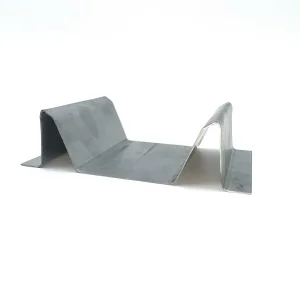
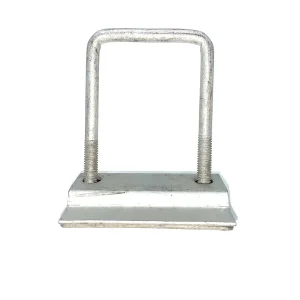
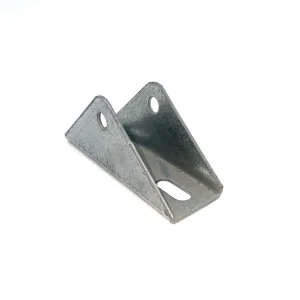
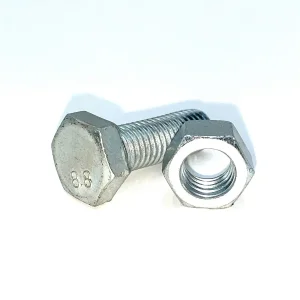
Featured Orthogonal Hardware & Precision Components
Direct-from-factory solutions offering exceptional tensile integrity, modular angle positioning, and high-performance metallic endurance.
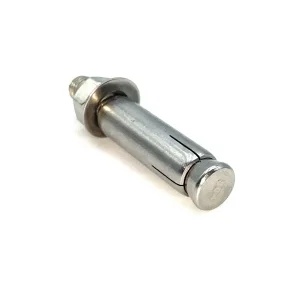
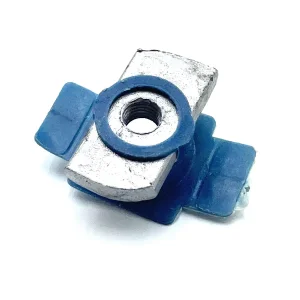
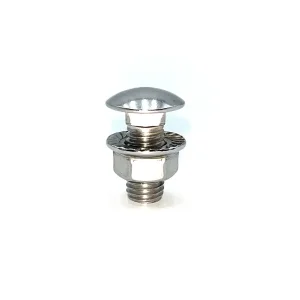


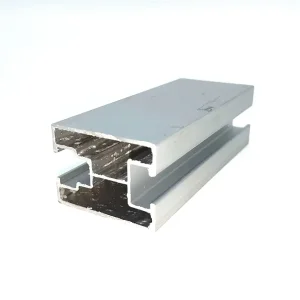
Macro-Industry Engineering Solutions: Orthogonal Precision
How modernized 90-degree welding fixture factories resolve structural divergence, thermal distortion, and repetitive mechanical misalignment across high-stakes industrial assembly.
Thermal Distortion Mitigations
Thermal gradients induced during automated MIG/TIG welding cause angular warp and transverse contraction. Dedicated 90-degree fixtures employ copper-alloy heat sinks and calibrated hydraulic clamping to counteract stress concentrations, preserving precise orthogonal geometry across intensive thermal cycles.
Modular 3D Standardization
Modern manufacturing demands flexible batch versatility. Incorporating D28 and D16 grid-pattern system boreholes, our 90-degree fixture factories engineer modular locating angles and clamping towers that seamlessly scale from prototype assembly to robotic welding automation without bespoke recutting.
Yield Optimization Protocols
Rigid geometric alignment guarantees repeatability within ±0.05 mm, driving primary rework rates down below 0.2%. Eliminating manual repositioning directly slashes post-weld machining overhead and guarantees flawless fit-up with downstream structural mating assemblies.
Global Commercial Landscapes & Manufacturing Capacities
Empirical metrics validating our production capacity, global export logistics, and automated factory output benchmarks.
The global market for structural framing, renewable mounting infrastructure, and automated welding lines is witnessing unprecedented growth. Industrial sourcing requires a direct pipeline to certified Chinese manufacturing clusters. Located strategically in Yongnian, Handan City—the epicentre of China's structural metal fabrication—our industrial plants combine raw metallurgy access with high-speed 5-axis CNC portal milling to satisfy large-scale capital infrastructure projects worldwide.
| Evaluation Parameter | Conventional Workshop Production | Certified Enterprise Factory Standards |
|---|---|---|
| Metallurgical Base | Standard Cast Iron / Untreated Mild Steel | HT300 Grey Iron / Nitrided Hardened Alloy / Q355B Quenched |
| Angular Accuracy | ±0.5° to ±1.0° Angular Drift | Orthogonal Tolerance < 0.05 mm per 1000 mm Length |
| Spatter Resistance | Requires Constant Chemical Anti-Spatter Sprays | Plasma Nitrided Surface (HV 750+) Imparting Anti-Adhesion |
| Load Deflection | High Risk of Plastic Deformation under Load | FEA Validated Ribbing Engineered for Heavy Dynamic Stress |
Localized Integration Support & International Compliance
Bridging global industrial standards with localized regulatory compliance, material traceability, and cross-border operational dependability.
ISO 9001 & CE Certified
Every structural 90-degree welding jig and clamp manufactured is calibrated against ISO 9001 quality management benchmarks and certified for CE-compliant machinery environments, safeguarding enterprise facilities from compliance liability and mechanical failures.
Salt Spray & Metallurgical QA
Comprehensive in-house material testing including optical emission spectrometry, tensile fracture analysis, and rigorous salt spray testing (ASTM B117) to guarantee long-term corrosion resistance in extreme outdoor, desert, and high-salinity maritime installations.
Dedicated Field Engineering
We supply localized CAD/CAM file integration, 3D step model verification, and customized jig engineering consulting. Our factory engineers interface directly with your onsite welding supervisors to optimize assembly throughput and cycle speeds.
Localized Application Scenarios in High-Precision Fabrications
Targeted deployment strategies of 90-degree clamping technology across automated, structural, and heavy equipment fabrication sectors.
Utility-Scale Solar Racking
Fabrication of structural sub-frames, ground-mount tracker torque tubes, and structural steel foundation piles requiring precise orthogonal rigidity under severe environmental wind and snow deadweights.
Robotic Automotive Chassis
Automated spot and continuous arc welding cell tooling. Fixtures feature pneumatic quick-clamps and sensor feedback slots for seamless handshake integration with industrial robotic end-effectors.
Heavy Equipment Enclosures
Constructing pressurized generator housings, high-voltage transformer chassis, and industrial offshore power modules that demand stringent water-tight joint integrity and minimal weld deformation.
Architectural Structural Steel
Precision square-tube truss joining, heavy flange alignment, and corner stiffener fabrication for industrial warehouse framing and prefabricated modular building units.
Technology Roadmap: Next-Generation Fixture Engineering
The confluence of additive-subtractive manufacturing, smart IIoT sensors, and robotic self-adjusting clamping matrices.
Sensorized Clamping Nodes
Incorporating embedded load cells and piezoelectric thermal sensors within the 90-degree locating faces to report real-time clamping force and temperature spikes straight to edge SCADA architecture.
Adaptive Pneumatic Reset
Automated servo-controlled positioners that dynamically compensate for dimensional variance in mill-run structural steel, locking true 90-degree corner fits without operator manual fine-tuning.
Eco-Friendly Surface Metallurgy
Eliminating hazardous electroplating through closed-circuit deep gas nitriding and vacuum chemical vapor deposition, boosting anti-weld splatter longevity while decreasing lifecycle manufacturing footprint.
Frequently Asked Questions: Sourcing & Manufacturing
Direct technical clarifications for international procurement heads, fabrication directors, and manufacturing engineers.
Industrial Mounting & Clamping Hardware Portfolio
Explore our full line of mounting connectors, pressure plates, and high-strength machine bolts engineered for extreme durability.