Primary Industrial Electrical & Structural Mounting Components
Directly integrated with high-performance physical infrastructure. Explore factory-standard components engineered to withstand extreme outdoor, underground, and high-voltage operational environments.
Comprehensive Analysis: 8/2 UF-B Wire w/ Ground Architecture
When procuring feeder lines for critical remote installations, selecting a verified 8 2 UF-B wire w ground manufacturer & factory ensures uninterrupted current carrying capacity, chemical impermeability, and strict mechanical resistance against subsurface hydraulic pressure.
Conductor Metallurgy (8 AWG Bare Copper)
Manufactured using 99.99% oxygen-free electrolytic-tough-pitch (ETP) annealed copper, conforming to ASTM B-3 (soft wire) and ASTM B-8 (concentric-lay-stranded). The dual 8 AWG current-carrying cores ensure nominal electrical DC resistance no greater than 0.6405 ohms per 1,000 feet at 20°C.
- Tensile Elongation minimum: 25% before fracture
- Cold-drawing tolerance: strictly calibrated within ±0.0008 inches
- Optimized for low thermal dissipation during continuous load
Primary Dielectric & Nylon Barrier
Each phase conductor is insulated with high-grade, virgin thermoplastic Polyvinyl Chloride (PVC) compound, rated for dry/wet performance at 90°C. An exterior clear polyamide (Nylon) skin is tightly extruded over the PVC core, providing supreme oil, chemical, and shear friction resistance.
- Dielectric breakdown strength: > 5,000 V AC in aqueous immersion
- Insulation resistance: exceeding 500 Megohms/1,000 ft at 15.6°C
- Compatible with standard THHN/THWN-2 rating characteristics
Monolithic Direct Burial Outer Sheath
Unlike standard NM-B indoor Romex cable, the outer jacket of 8/2 UF-B is molded as a continuous, solid, void-free matrix that completely encapsulates both insulated conductors and the bare equipment ground wire. This prevents subsurface moisture wicking and corrosive groundwater ingress.
- Sunlight & UV resistant (carbon-black molecular stabilization)
- Fungus, mold, and acidic soil microbial attack impervious
- UL 493 crush resistance against subsurface rock shifting
Global Commercial & Industrial Status of Direct Burial Underground Feeder
The worldwide demand for high-capacity direct burial feeder cables has grown exponentially, driven by the global energy transition, distributed renewable generation, decentralized data gathering, and rapid modernization of agricultural electrification.
Decentralized EV Infrastructure
With residential and light commercial EV charger deployments shifting to detached carports, parking pergolas, and exterior stations, 8/2 UF-B has become the global standard for 32A continuous load charging circuits (protected by a 40A dual-pole breaker), eliminating expensive conduit trenches.
Grid Modernization & Resilience
Severe meteorological events have forced utilities and structural engineering teams to move secondary lines underground. Factory-direct 8/2 UF-B wire fulfills national building code resilience mandates, resisting flood submersion, ice weight, and falling tree line shearing.
Smart Agriculture & Irrigation
Automated fertigation systems, deep-well borehole pumps, and greenhouse microclimate distribution boards require long, uninterrupted runs exposed to agricultural chemicals, nitrates, and soil dampness where conduit systems regularly fail from internal moisture condensation.
Solar PV Balance of System (BOS)
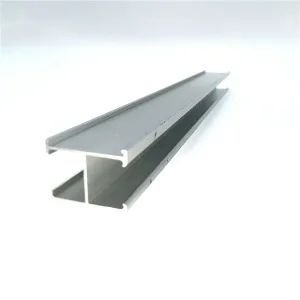
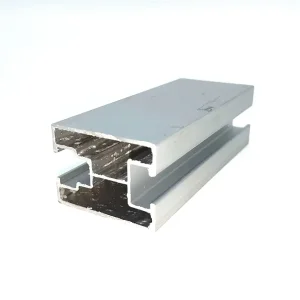
Ground-mounted photovoltaic arrays and carport solar arrays utilize 8/2 UF-B for AC collection tie-ins between microinverters, battery energy storage systems (BESS), and structural disconnect switches mounted on aluminum guide rail systems.
Engineering Matrix: 8/2 UF-B vs. Alternative Wire Standards
Evaluating technical trade-offs between standard building wire configurations to assist electrical contractors, EPC specifiers, and procurement officers in selecting the proper conductor package.
| Performance Parameter | 8/2 UF-B w/ Ground | 8/2 NM-B (Romex) | 8 AWG THHN/THWN-2 in PVC Conduit | 8/2 MC Cable (Metal Clad) |
|---|---|---|---|---|
| Direct Burial Rating (NEC 340) | Yes (Directly in Trench) | No (Prohibited by Code) | Only inside sealed liquid-tight conduit | Only with PVC outer jacket variant |
| Subsurface Moisture Impermeability | Monolithic Molded Solid Core | Porous Paper Wrap (Traps Water) | Conduit dependent (Condensation risk) | Interlocked armor void vulnerability |
| Ampacity Limit (NEC 60°C column) | 40 Amperes | 40 Amperes (Indoor only) | 50 Amperes (at 75°C terminal rating) | 50 Amperes (at 75°C terminal rating) |
| Sunlight & UV Degradation Resistance | 100% Carbon-stabilized (UL 1581) | None (Degrades rapidly in UV) | Conduit dependent / UV THWN-2 variants | UV jacket dependent |
| Labor Cost & Trench Installation Time | Lowest (Single-pass roll & backfill) | N/A (Indoor only) | High (Pipe bending, gluing, wire pulling) | Medium (Requires special anti-short bushings) |
| Subsurface Chemical & Acid Soil Resistance | High (Inert virgin polymer compound) | None | High (Schedule 40/80 PVC dependent) | Subject to galvanic aluminum corrosion |
Turnkey Macro Solutions & Localized Application Engineering
From heavy residential sub-feed circuits to harsh agricultural and utility deployments, factory-direct 8/2 UF-B wire w/ ground interfaces directly with structural mounting arrays to complete modern load paths.
Subpanel Feeder for Detached Workshops
Running electrical supply from the primary dwelling distribution panel to detached garages, woodworking studios, and secondary dwellings. Providing a dedicated 240V/40A line that directly services HVAC heat pump mini-splits, 240V air compressors, and localized branch circuits.
- Eliminates complex conduit transitions across open yards
- Direct trench burial depth at 24 inches per NEC Table 300.5
- Mechanical protection via Schedule 80 PVC sleeves at vertical entries
Coastal PV Farm Balance of System
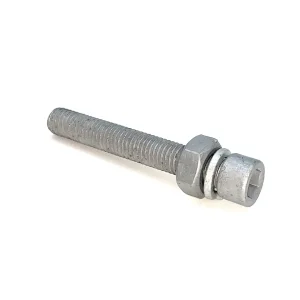
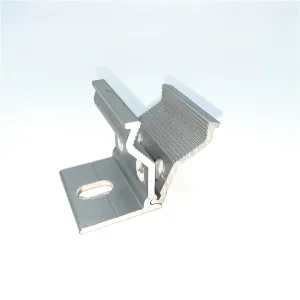
In high salinity coastal photovoltaic stations, salt spray accelerates galvanic corrosion on metal raceways. Splicing 8/2 UF-B cables alongside stainless steel fasteners, aluminum 3040 guide rails, and sealed combiner boxes creates an impervious, zero-corrosion underground collector loop.
- Resists marine sand salinity and high water tables
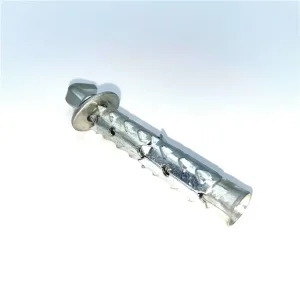
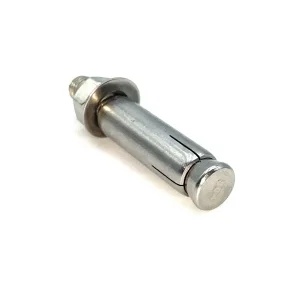
- Integrated with heavy-duty stainless expansion anchors
- Zero chemical degradation under prolonged subterranean immersion
High-Amperage Outdoor Well & Pump Motors
Agricultural water handling systems rely on sustained operational stability. 8 AWG solid copper conductors mitigate voltage drop over long linear runs up to 300+ feet, preventing motor overheat and pump capacitor failure on deep well submersible installations.
- Maintains 120V/240V voltage drop below strict 3% threshold
- Bare copper ground provides instantaneous fault trip path
- Durable sheathing survives rocky, un-sieved backfill soils
Extrusion Protocol, QC Rigor & Manufacturing Technology Roadmap
Operating advanced dual-screw co-extrusion crossheads, automated laser micrometer feedback loops, and multi-stage metallurgical annealing ovens ensures every foot of 8/2 UF-B wire surpasses international regulatory benchmarks.
Real-Time Dual-Axis Laser Gauging
Continuous closed-loop laser monitoring precisely measures conductor centricity, jacket wall thickness, and outer diameter tolerances at 1,000 scans per second during high-speed extrusion. This prevents hot-spot formation and mechanical vulnerability caused by off-center conductor positioning.
100% In-Line Spark & Hipot Testing
Every single master spool passes through a high-frequency sine-wave spark tester operating between 6,000V and 10,000V. Any microscopic pinhole, air inclusion, or micro-void in the inner dielectric triggers immediate automated cutting, ensuring zero factory defects reach shipment.
Next-Gen Sustainable Polymer Roadmaps
The manufacturing future of UF-B incorporates bio-plasticized cross-linked polyethylene (XLPE) jackets with zero heavy metals or chlorinated paraffins, achieving 105°C continuous thermal performance while cutting lifecycle carbon footprint by up to 34%.
Frequently Asked Technical & Procurement Questions
In-depth guidance covering NEC installation compliance, thermal ampacity limits, terminal sizing, and factory-direct volume purchasing criteria for engineers and certified electrical contractors.
What is the exact ampacity rating for 8/2 UF-B wire w/ ground according to the NEC?
According to the National Electrical Code (NEC Article 340.80), Underground Feeder Cable (UF-B) conductor ampacity is legally restricted to the 60°C (140°F) thermal column specified in NEC Table 310.16, regardless of whether the inner THHN conductors are individually rated for 90°C.
For an 8 AWG copper conductor at 60°C, the maximum allowable continuous ampacity is 40 Amperes. Therefore, 8/2 UF-B wire must be paired with an overcurrent protection device (circuit breaker or fuse) rated for no more than 40 Amps. The 90°C rating of the internal insulation is exclusively utilized for ambient temperature derating calculations when running through high heat zones (such as unconditioned attics before exiting subterranean trenches).
Can 8/2 UF-B wire be buried directly in the earth without conduit? What are the depth requirements?
Yes. The definitive engineering purpose of UF-B cable is direct burial without continuous raceway or conduit piping. The integral solid PVC sheath is moisture-resistant, sunlight-resistant, and engineered to withstand subterranean soil pressures and moisture.
Per NEC Table 300.5 (Minimum Cover Requirements), direct burial cables operating at 0 to 120/240V must adhere to strict burial depths:
• General soil/turf: Minimum of 24 inches (600 mm) of cover below grade.
• Under continuous 2-inch concrete slab: Minimum of 18 inches.
• Under commercial vehicular driveways or parking areas: Minimum of 24 inches.
Where the cable emerges from the subterranean trench to reach an above-ground junction box or panel, it must be sleeved in rigid metal conduit (RMC), intermediate metal conduit (IMC), or Schedule 80 PVC from 18 inches below grade up to its termination point to protect against line trimmers and mechanical impact.
What are the differences between 8/2 UF-B wire and standard 8/2 NM-B (Romex) wire?
While both cables contain two 8 AWG insulated copper conductors and a bare copper grounding wire, their mechanical construction and field application parameters are fundamentally different:
• Internal Sheath Design: NM-B cable contains insulated conductors loosely wrapped within an outer PVC jacket containing treated paper fillers. If submerged, paper wicks water through capillary action, generating dielectric breakdown and arc faults. UF-B completely encapsulates conductors in a monolithic, injection-molded PVC matrix with zero void spaces or paper.
• Environmental Capability: NM-B is strictly limited to normally dry, indoor interior building walls and ceilings. UF-B is certified for wet locations, direct earth burial, underground raceways, and exterior sunlight exposure.
• Stripping & Workability: Because UF-B forms a unified molded jacket around the conductors, stripping requires specialized UF-stripping tooling or longitudinal scoring along conductor channels, whereas NM-B outer jackets slit easily with a razor.
Can 8/2 UF-B wire be used to power a Level 2 Electric Vehicle (EV) charging station?
Yes, 8/2 UF-B is frequently specified for Level 2 EV charging stations located at exterior driveways, remote carports, and detached parking areas, within specific amperage parameters.
Because EV charging is classified as a continuous electrical load under NEC Article 625, the branch circuit conductor and overcurrent protection must be sized at 125% of the charger's continuous draw. Since 8/2 UF-B is rated at 40 Amperes (60°C column), the maximum continuous charging output permitted is: 40A ÷ 1.25 = 32 Amperes (7.68 kW at 240V). EV chargers configured to pull 40A or 48A continuous require larger 6 AWG or 4 AWG conductors.
How does voltage drop impact long direct burial runs of 8/2 UF-B wire?
The National Electrical Code recommends (via Informational Note 210.19(A)) that overall branch circuit voltage drop should not exceed 3%, and combined feeder/branch circuits should not exceed 5% for optimal efficiency.
For an 8 AWG stranded copper conductor operating at 240V with a 32A load, the one-way distance to reach a 3% voltage drop (a 7.2V drop) is approximately 140 feet (42.6 meters). If your direct burial distance from the main panel to the detached structure exceeds 140 feet, upsizing the conductor from 8 AWG to 6 AWG or 4 AWG is mandatory to prevent motor burnout, LED flicker, and electronic subpanel undervoltage shutdowns.
What certifications, tests, and marks must a verified UF-B manufacturer provide?
When purchasing factory-direct 8/2 UF-B wire, international engineering specifiers and importers should verify full testing compliance against standard international cable benchmarks:
1. UL Standard 493: Standard for Safety for Thermoplastic-Insulated Underground Feeder and Branch-Circuit Cables.
2. UL Standard 83: Verifying THHN/THWN-2 dielectric physical properties.
3. UL Standard 1581: Electrical Wires, Cables, and Flexible Cords test protocols (covering VW-1 flame rating and 720-hour accelerated xenon-arc UV sunlight exposure).
4. ASTM B-3 & B-8: Pure conductor elongation, chemical annealing purity, and geometric concentricity verification.
5. Mill Test Reports (MTRs): Certifying 100% copper composition, spark testing verification, and lot batch traceability from the manufacturing extrusion line.
Can 8/2 UF-B cable be deployed inside interior walls before exiting the building?
Yes. Per NEC Article 340.10(1), UF-B cable is permitted to be installed interiorly for standard branch-circuit wiring, provided it is installed in compliance with NEC Article 334 (regulations governing Nonmetallic-Sheathed Cable NM-B). This permits the cable to originate inside an interior basement or utility room panel, travel through wall studs and ceiling joists, and exit directly through an exterior rim joist into the outdoor subterranean trench without necessitating a spliced transition box.
What are the minimum bend radius and cold-weather installation limitations for 8/2 UF-B?
UF-B cable outer PVC jackets stiffen significantly in sub-freezing temperatures. Factory specifications mandate a minimum installation temperature of -10°C (14°F). Attempting to unroll or bend cold-soaked UF-B cable below this threshold risks micro-cracking the outer PVC jacket.
Per NEC standards, the minimum bending radius is 5 times the major diameter of the cable (measured across its widest flat profile). For an 8/2 UF-B cable with an approximate major dimension of 0.65 inches, the internal radius of any conduit sweep or corner bend must never be less than 3.25 inches (82.5 mm) to preserve inner conductor dielectric spacing.
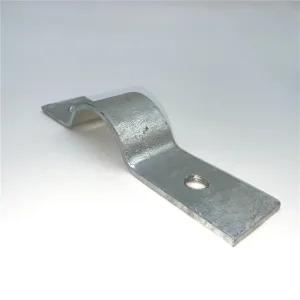
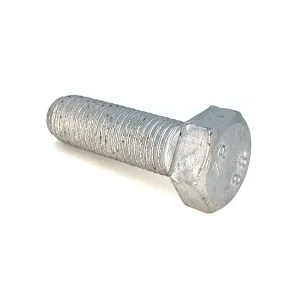
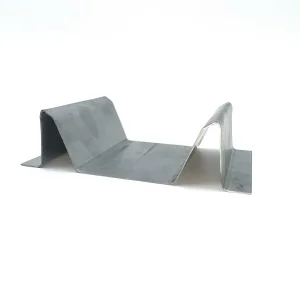
Balance-of-System Hardware & Structural Mountings
Precision fasteners, structural channels, and mounting accessories designed to mechanically secure solar balance of system electrical wiring, ground mount arrays, and industrial installations.