Precision Structural Fasteners & Rail Systems
Direct supply of precision hardware configured for equipotential bonding, solar module mounting, and corrosion-resistant mechanical assemblies.


Global Commercial & Industrial Status of Static Grounding
Analyzing cross-continental regulatory mandates (NFPA 77, IEC 60079-32-1, ATEX) driving static dissipation across energy, aerospace, and processing facilities.
Zero-Tolerance Explosion Zones
Petrochemical refiners, LNG bunkering hubs, and bulk pharmaceutical blending plants face catastrophic deflagration risks from micro-joule electrostatic discharges. Static grounding cables provide sub-10-ohm continuous loop resistance, keeping flammable vapor air-mixtures safely below the Minimum Ignition Energy (MIE) thresholds defined under ATEX Zone 0/20 protocols.
Renewable Energy Static Balancing
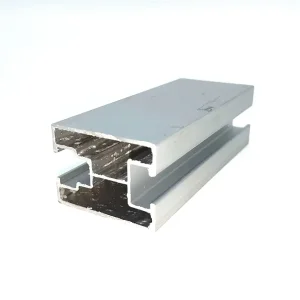
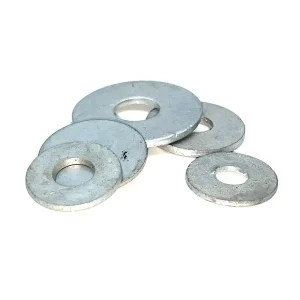
Gigawatt-scale photovoltaic fields and high-altitude wind installations encounter continuous triboelectric charging generated by high-velocity windblown particulate. Grounding bonding jumpers, solar earthing washers, and specialized flexible braided cables establish equipotential bonding across ungrounded anodized aluminum frames, eliminating inverter ground-fault tripping.
Automated Logistics & Cleanrooms
Modern semiconductor fabrication cleanrooms (ISO 14644-1) and high-speed automated storage and retrieval systems (ASRS) generate significant tribocharging along polymer belt drives and conveyance skids. Precision static grounding leads drain micro-charges before they trigger electrostatic discharge (ESD) degradation on sensitive microelectronic silicon wafers.
| Regulatory Standard | Target Industry | Electrical Resistance Ceiling | Mandated Cable & Clamp Material |
|---|---|---|---|
| NFPA 77 (Recommended Practice on Static Electricity) | Hazardous Material Bulk Transfer & Tank Trucks | < 10 Ohms to Earth | Tinned Copper Braid / 316SS with Hardened Point Clamps |
| IEC 60079-32-1 (Explosive Atmospheres Electrostatics) | Offshore Bunkering, LNG, Bulk Chemical Storage | < 10 Ohms (Monitored Systems) | High-Flexibility Stainless Steel Wire Rope with Polyurethane Jacketing |
| UL 467 / UL 2703 (Grounding & Bonding Systems) | Photovoltaic Systems & Substation Earthing | < 0.1 Ohm (Bonding Point-to-Point) | Tin-plated Copper Lugs, 304/316 Stainless Structural Fasteners |
| ANSI/ESD S20.20 (Protection of Electrical Parts) | Electronics Manufacturing & Battery Gigafactories | 1.0 × 10⁶ to 1.0 × 10⁹ Ohms (Dissipative) | Abrasion-Proof Coiled Polyurethane with Integral 1MΩ Resistor |
Handan Fastener & Metalworking Cluster Advantages
Why Tier-1 engineering procurement teams source grounding hardware directly from China's primary industrial metalworking clusters.
Raw Material Density
Positioned directly within Yongnian, Handan, factories access continuous upstream billet smelting, high-purity electrolytic copper rod supply, and certified 304/316 stainless coils within a 15 km logistics radius, slashing lead times.
Vertical Integration
In-house wire drawing, high-speed multistrand braiding, automated terminal crimping, and computerized extrusion run under a singular Quality Management System, eliminating subcontractor delays and compounding margins.
Cost-to-Performance
High automation lines reduce unit handling labor while maintaining sub-millimeter tolerances on stamped earthing lugs and extruded aluminum guides, creating a 25–40% cost saving relative to European or North American domestic distributors.
Custom Tooling Flexibility
OEM engineering support allows bespoke cable cross-sections, high-visibility UV-stabilized Hytrel/PUR sheathing, dual-core continuous monitoring configurations, and client-specified terminal geometries within 10 working days.
Engineered Deployment: Critical Use Cases
Real-world integration parameters across petrochemical transloading, utility-scale solar farms, and aerospace refueling.
Hydrocarbon Bunkering & Mobile Tankers
Static grounding cables featuring spring-loaded, dual-tungsten-carbide contact tips penetrate industrial paint, rust, and oil residues on truck chassis or railcars. Retractable spiral PUR cables stretch up to 15 meters during loading arm coupling, then retract cleanly without dragging across oil-slicked tarmac.
Photovoltaic Tracker & Substation Grounding
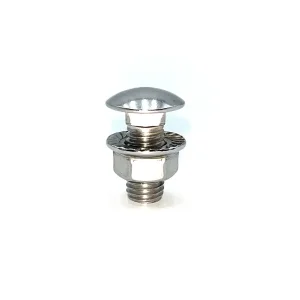
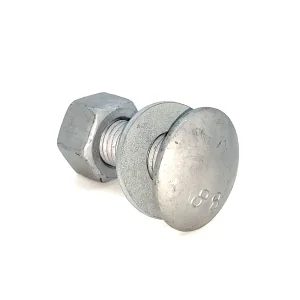
Rotating single-axis tracker torque tubes create mechanical discontinuities that disrupt electrical bonding. Heavy-gauge tinned copper flexible jumpers, combined with stainless carriage bolts and lock washers, bridge rotational torque hinges without work-hardening fatigue over 30-year operational lifespans.
Aviation Ramp & Defense Fueling
Aviation turbine fuels (Jet A-1) possess exceptionally low dielectric conductivity, making rapid fueling susceptible to electrostatic arc explosions. Mil-spec static bonding cables (conforming to MIL-C-83413) connect aircraft landing gears and refueling hydrant dispensers to earthing grids prior to opening fuel tank manifolds.
Industry Trends: The Next Generation of Grounding Cables
Evolution toward active resistance monitoring, extreme-environment fluoropolymers, and lifecycle traceability.
Intelligent Resistive Interlocks
Passive static cables are rapidly transitioning to dual-core electronic verified systems. If total circuit loop resistance exceeds 10 Ohms due to loose clamping or internal wire strand fracture, an intrinsically safe dry-contact relay trips within milliseconds, halting product transfer pumps automatically.
Advanced Thermoplastic Elastomers (TPE/Hytrel)
Conventional PVC jacketing hardens, cracks, and degrades when subjected to -40°C Arctic installations or intense UV radiation in Middle Eastern desert solar installations. Modern production implements chemical-resistant Hytrel and flame-retardant polyurethane jacketing rated for 150°C and flex fatigue cycles exceeding 100,000 pulls.
Digital Traceability & Material Passports
With tightening ESG and regulatory auditing across the EU and North America, every structural grounding reel and mechanical connector includes etched 2D Datamatrix codes linking straight to Mill Test Certificates (EN 10204 3.1), salt-spray laboratory records, and tensile yield test data.
Global Enterprise Procurement Checklist
Essential criteria EPC contractors and procurement managers must verify before approving factory-direct volume orders.
1. Material Chemistry Audit
Require X-ray fluorescence (XRF) spectrographic inspection for stainless steel alloys to verify minimum 10.5% Chromium in 304 and 2.0% Molybdenum in 316. In copper conductors, ensure electrolytic grade bare or tinned wire with an electrical conductivity index no less than 100% IACS.
2. Dynamic Fatigue & Tensile Validation
Terminal crimp joints are the primary failure point in field grounding assemblies. Certified suppliers must provide pull-off test results exceeding 1,200 Newtons per crimp lug and flex fatigue test certifications indicating survival beyond 50,000 continuous bending cycles.
3. Galvanic Compatibility Analysis
When bonding aluminum photovoltaic rails or copper braids to structural steel masts, galvanic potential differences exceeding 0.15V initiate rapid galvanic corrosion. Ensure the factory provides EPDM/nylon isolator washers, tin-plated copper lugs, or bimetallic transition washers.
Static Grounding & Bonding Systems FAQ
In-depth technical answers regarding standards, mechanical selection, and factory integration protocols.
What is the maximum allowable resistance for static grounding cables?
According to NFPA 77 and IEC 60079-32-1, static grounding circuits must maintain a direct resistance to earth of less than 10 Ohms. In electronics assembly conforming to ANSI/ESD S20.20, higher dissipative resistance ranges (10^6 to 10^9 Ohms) are utilized to prevent abrupt ESD damage to sensitive microchips.
Why is tinned copper preferred over bare copper in grounding braids?
Tin electroplating forms a stable sacrificial barrier that prevents copper oxidation, surface verdigris, and atmospheric sulfur attack. Tinned copper maintains low contact resistance over decades in coastal, agricultural, or chemical plant environments and mitigates galvanic potential shifts against aluminum fixtures.
How do static grounding clamps establish solid electrical contact on coated steel?
Heavy-duty static grounding clamps incorporate precision-machined, spring-loaded tungsten carbide or hardened stainless steel point contacts. The internal spring provides up to 50 lbs (220 N) of mechanical clamping force, punching through non-conductive epoxy paints, heavy rust scales, and stubborn grease layers.
Can standard solar mounting bolts serve as static bonding points?
Standard smooth-flange bolts do not meet grounding specifications because anodized aluminum oxide coatings act as non-conductive electrical insulators. Dedicated grounding bolts or earthing washers equipped with serrated teeth are required to bite into the anodized layer and establish equipotential metal-to-metal contact per UL 2703.
What is the difference between static grounding and equipment earthing?
Equipment earthing (fault grounding) is sized to carry hundreds of amperes of high AC fault current back to the panel to trip protective circuit breakers. Static grounding is designed strictly to drain micro-ampere electrostatic charge accumulations continuously, mitigating hazardous high-voltage static sparks.
How does Youlong guarantee batch-to-batch consistency in grounding hardware?
Every batch produced in our Yongnian facility undergoes automated dimensional inspection, ISO 9227 salt-spray corrosion testing, milliohm loop resistance verification, and mechanical pull-out destructive testing. Mill Test Certificates (MTC) with full chemical traceability accompany every sea-freight container.
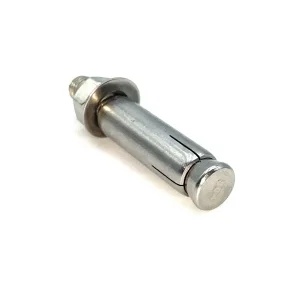
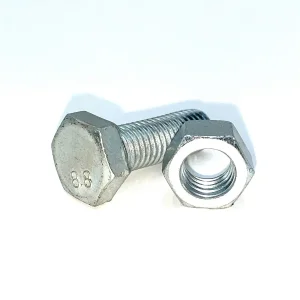
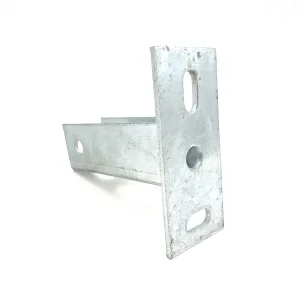
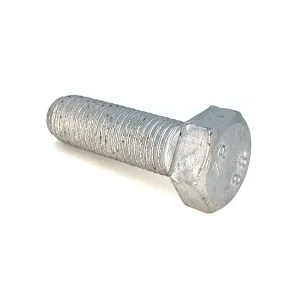
Industrial Grounding Anchors & Solar Mounting Brackets
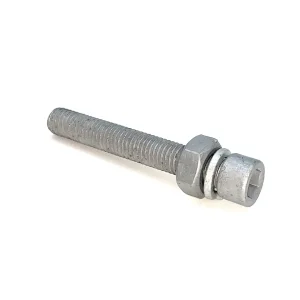
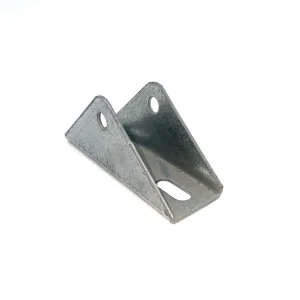
Heavy-duty structural mounting brackets, foundation expansion bolts, and engineered fastening assemblies.