
Precision Structural Hardware & Ground Connection Fasteners
Industrial-grade fastening solutions engineered to maintain structural bonding, mechanical integrity, and electrical continuity under harsh environmental exposure.
Engineering Physics: Shielded Ground Wire & Electrical Bonding Ecosystems
Mitigating electromagnetic coupling, managing fault currents, and eliminating galvanic divergence across mission-critical networks.
In modern high-voltage transmission lines, utility-scale photovoltaic infrastructure, automated industrial data centers, and advanced transportation hubs, the Shielded Ground Wire (often integrated into optical ground wires [OPGW], braided earthing straps, or continuous sheath shield grounds) serves two inextricably linked imperatives: absolute personnel safety during fault short-circuits and continuous high-frequency electromagnetic interference (EMI) attenuation. While traditional unshielded conductors provide low-resistance DC earthing, they act as inadvertent antennae in environments dominated by high-frequency inverter switching, variable frequency drives (VFD), and transient lightning surges.
Selecting top-tier shielded ground wire manufacturers and companies demands an evaluation that extends beyond copper cross-sectional area. Advanced procurement involves assessing skin-depth response under nanosecond rise-time surges, mutual coupling inductances between parallel raceways, metallurgical bonding of structural clamping systems, and chemical passivation against localized galvanic deterioration.
Transient Overvoltage Shunting
Effective shielded grounding dampens ultra-steep wave-front impulses via controlled surge impedance (Z₀). Optimized outer strand geometry distributes current uniformly, preventing premature dielectric puncture.
Continuous Faraday Shielding
Braided tinned copper and aluminum-clad steel (ACS) shields establish a low mutual inductance barrier, repelling capacitive cross-talk and industrial RFI across adjacent instrumentation circuits.
Electrochemical Equipotentiality
Hardware interfacing between copper conductors, aluminum mounting rails, and zinc-plated structures utilizes passivated stainless fasteners (A2/A4) to arrest bimetallic galvanic degradation.
Next-Generation Shielded Grounding Innovations: 2025–2035
Analyzing shifting technical paradigms across renewable energy matrices, high-voltage direct current (HVDC) systems, and smart grid digitalization.
| Development Vector | Legacy Grounding Paradigms | Next-Gen Shielded Systems | Engineering Impact & Strategic Value |
|---|---|---|---|
| Metallurgical Formulation | Standard electrolytic copper (ETP) or hot-dip galvanized steel core strands. | Micro-alloyed aluminum-clad invar & oxygen-free copper (OFHC) composite braid. | 70% reduction in thermal expansion sag; enhanced ampacity surge thresholds during line-to-ground faults. |
| High-Frequency EMI Mitigating | Single-point chassis earthing with bare stranded drain lines. | 360° concentric braided shields with dual-layer conductive thermoplastic polymer wrap. | Suppression of harmonics up to 10 GHz; elimination of ground-loop hum in SCADA and utility-scale solar telemetry. |
| Environmental Durability | Sacrificial zinc coatings (HDG) susceptible to acidic soil and ocean salt mist. | Fluoropolymer outer sheath + A4 (316) marine-grade structural bonding hardware. | Zero-maintenance life cycle rating spanning 30+ years in corrosive ISO 9223 C5-M extreme marine/industrial zones. |
| Condition Monitoring | Periodic, manual Earth Resistance testing via fall-of-potential stakes. | Embedded distributed fiber-optic temperature (DTS) and acoustic sensing (DAS) fibers. | Real-time structural health monitoring, immediate strike location pinpointing, and predictive predictive maintenance. |
Ecosystem Synergy: Industrial Resilience & Precision Manufacturing
Harnessing Handan’s Yongnian Fastener cluster and automated cold-forging, stamping, and metallurgical surface treatment capabilities.
China's advanced manufacturing capabilities have transitioned from pure labor cost arbitrage to sophisticated Factory 4.0 cluster integrations. Headquartered in Yongnian District, Handan City—recognized globally as the premier fastener and structural hardware hub—manufacturers benefit from tightly integrated upstream raw material supply chains, rapid tooling innovation, and automated surface treatment pipelines.
When executing comprehensive solar PV farms or power transmission schemes, sourcing grounding assemblies, purlin connectors, and stainless steel hardware from a unified, technologically integrated cluster removes tier-3 procurement dependencies. Standardized cold heading, multiaxis CNC profiling, and automated optical sorters guarantee strict dimensional tolerances (±0.02 mm) across multi-million piece batches.
End-to-End Grounding Deployments Across Demanding Sectors
Customized metallurgical bonding, hardware selections, and shielded routing protocols tailored to industry-specific risk profiles.
Utility-Scale Solar PV Arrays
Grounding large-scale arrays presents distinct challenges due to thermal expansion across long aluminum guide rails. Utilizing specialized purlin connectors, serrated grounding washers, and shielded continuous grounding conductors neutralizes induced voltages from string inverters and mitigates lightning strike risks across vast, open solar farms.
Wind Power Generation & Substations
Towering turbine nacelles and rotating blades require lightning protection systems capable of handling massive transient currents. High-ampacity shielded down-conductors connected via heavy-duty stainless steel anchor hardware dissipate multi-kiloampere strikes directly to deep-earth counterpoise networks without flashover.
Hyperscale Data Centers & Automation
High-density computing racks require absolute zero signal ground reference deviation. Braided, low-impedance shielded ground loops prevent logic false-triggering caused by variable frequency motor drives, high-current busway switching, and harmonic feedback loops within raised-floor structural frames.
Global Enterprise Sourcing Criteria & Audit Architecture
A rigorous quality auditing roadmap for international EPCs, system integrators, and industrial purchasing directors.
Raw Material Traceability (MTRs)
Verification under EN 10204 3.1 certification. Every production heat undergoes spectrographic chemical analysis to verify copper purity (>99.95%) and strict alloying percentages for 304/316 grade stainless steel fasteners.
Accelerated Salt Fog & Corrosion Testing
Continuous validation via ASTM B117 and ISO 9227 neutral salt spray chambers. Hardware systems and grounding terminals undergo over 1,000 hours of continuous saline atomization without base metal red-rust formation.
Short-Circuit Mechanical Proof Testing
Physical tensile and clamp pull-out verification (IEC 61238 / UL 467). Clamping components and connector brackets are tested to confirm they withstand electromagnetic repulsion forces during fault surges without mechanical slippage.
Navigating International Grounding Standards & Certification
Synchronizing global project designs with localized safety codes, mechanical directives, and electrical safety standards.
North America (NEC & UL)
Compliance with NEC Article 250 (Grounding and Bonding) and UL 467 / UL 2703 standards for grounding hardware integrated into solar racking frameworks.
European Union (IEC & EN)
Strict adhesion to IEC 62305 (Lightning Protection Systems) and IEC 62561 (Lightning Protection System Components - Terminals, Conductors, and Clamps).
Australasia (AS/NZS)
Certified against AS/NZS 1768 (Lightning Protection) and AS/NZS 5033, accounting for high ultraviolet indices and highly corrosive coastal conditions.
Customs & Environmental
Full conformance to RoHS Directive 2011/65/EU, REACH chemical registrations, and specialized factory documentation for streamlined customs clearance across international borders.
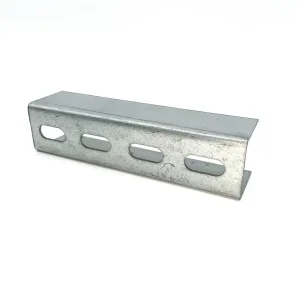
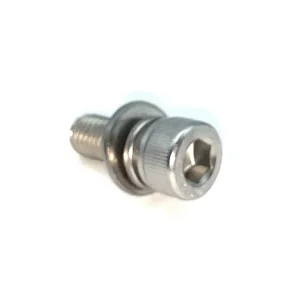
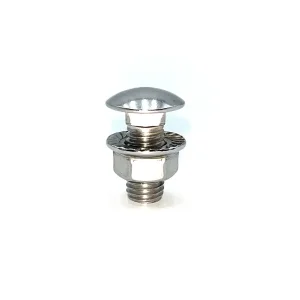
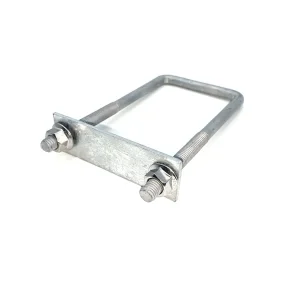
Precision Structural Rails, Clamps & Foundation Anchor Systems
Integrate your shielded electrical grounding system with high-precision structural members and fasteners engineered for decades of outdoor service.

Frequently Asked Questions: Technical Engineering & Supplier Selection
In-depth responses to direct technical questions regarding shielded ground wire systems, structural hardware compatibility, and production audits.
What is the functional difference between bare earth wire and shielded ground wire?
Bare grounding conductors provide low-resistance paths for 50/60Hz AC or DC fault currents. However, they lack protection against high-frequency electromagnetic field induction. Shielded ground wire incorporates a metallic braided, foil, or extruded outer shield that forms a Faraday cage, attenuating high-frequency electromagnetic noise (EMI/RFI) and transient surge voltages before they can couple into adjacent sensitive communication or measurement instrumentation circuits.
How do you resolve galvanic corrosion between aluminum rails and copper grounding conductors?
Copper and aluminum exhibit a significant electrochemical potential difference (>0.7V), which accelerates rapid galvanic corrosion in humid or coastal environments. This is mitigated through the use of tin-plated copper components, bi-metallic transition plates, or stainless steel (A2/304 or A4/316) grounding washers with specialized penetrating serrations that pierce aluminum's non-conductive oxide layer while providing an inert barrier between dissimilar metals.
What testing standard verifies mechanical clamp integrity under high fault surges?
Mechanical clamping systems and purlin connectors are validated under IEC 62561-1 and UL 467. These standards subject assemblies to short-time fault current pulses (e.g., 10kA–30kA for specified durations) followed by mechanical pull-out force testing to confirm that electromagnetic repulsion forces and thermal expansion during a fault will not compromise structural connections.
Why is Handan’s Yongnian district considered a core global hub for project hardware?
Yongnian produces over 45% of China’s total fastener output. This high geographic concentration creates a comprehensive manufacturing ecosystem where raw wire drawing, cold-heading, heat treatment, hot-dip galvanizing, and automated sorting take place within a compact industrial radius. The result is rapid turnaround times, high process control consistency, and significant logistics efficiencies for large-scale utility procurements.