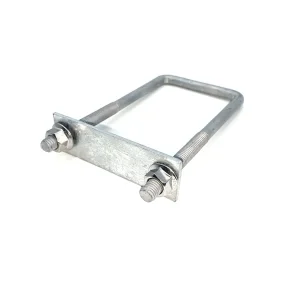
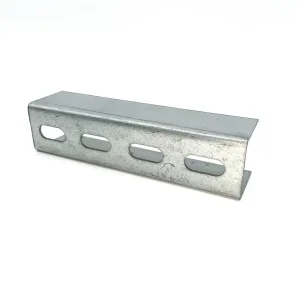
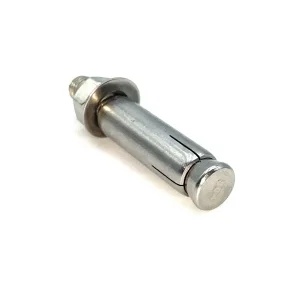
Best Pedestal Anchor Bolts Factories & Companies
A deep architectural framework on engineered concrete anchorage, smart metallurgy, high-tensile fasteners, and full-stack solar structural solutions engineered for global utility-scale resilience.
Precision Engineering Showcase: Pedestal Mounts & Fastening Hardware
Explore factory-direct engineered foundation bolts, cold-forged fasteners, and solar framing hardware verified through automated metallurgical inspection protocols.
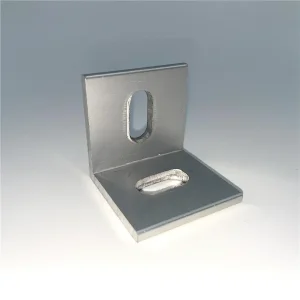
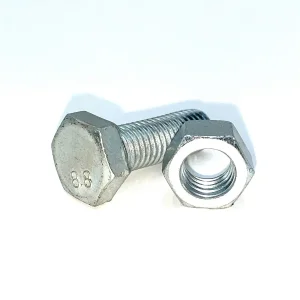
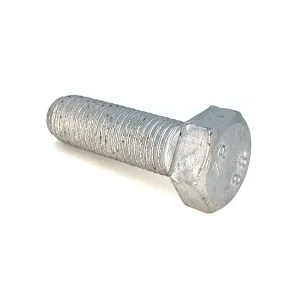
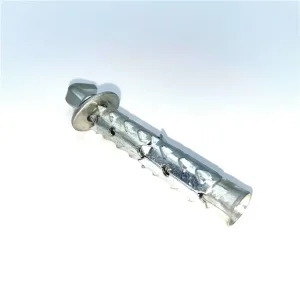
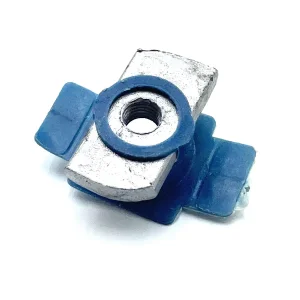
Structural Anchorage Dynamics: Foundations of Modern Critical Infrastructure
Analyzing the pivotal mechanical role of heavy-duty cast-in-place and post-installed pedestal anchor assemblies across utility-scale energy projects and heavy industrial foundations.
Shear, Tension & Uplift Balancing
Pedestal anchor bolts serve as the non-negotiable transfer nexus between structural superstructures and reinforced concrete footings. In high-wind solar parks, tracking assemblies, and wind towers, these fasteners must dissipate continuous dynamic cycloid loads, sustained tension uplift, and lateral shear stresses without brittle fractures.
- ASTM F1554 (Grades 36, 55, 105) certified tensile capacity
- Optimized embedment depths preventing concrete breakout
- Ductility retention under sudden seismic accelerations
Advanced Metallurgical Coatings
Environmental longevity in solar plants or coastal installations requires zero degradation. Surface chemistry options extend beyond standard hot-dip galvanizing into multi-layered zinc-nickel thermal electro-diffusion, Sherardizing, and specialized Dacromet coatings that offer over 3,000 hours of continuous salt-spray neutral exposure (ASTM B117).
- C4/C5 marine and industrial atmospheric resistance
- Galvanic barrier engineering for aluminum-to-steel joints
- Zero hydrogen embrittlement baking processes
25-Year Lifecycle Cost Engineering
Substandard anchor bolts can jeopardize multimillion-dollar assets through insidious micro-cracking or localized pitting. Tier-1 engineering procurement contractors (EPCs) insist on full traceability, heat-number etching, and verified Charpy V-notch impact toughness values to ensure 25-to-30-year operational lifetimes in harsh field conditions.
- Strict Mill Test Certificates (EN 10204 3.1 verification)
- Fatigue-rated thread geometries minimizing peak stresses
- Lowered OPEX by eliminating structural retrofit risks
China Factory 4.0: Supply Chain Resiliency & Handan Fastener Cluster
Leveraging deep industrial integration in Yongnian District—China's Fastener Capital—to supply high-capacity manufacturing lines, ultra-consistent tolerances, and rapid global delivery cycles.
Aggregated Raw Material Proximity
Situated within the Hebei metallurgical hub, direct partnerships with premier steel and aluminum mills allow continuous material batching, zero procurement lag, and verified chemical compositions.
Automated Multi-Stage Forging
High-speed cold headers and multi-station hot forging presses run with automated optical sorting systems, delivering anchor assemblies with thread tolerances within ISO 965-1 class 6g precision.
In-Line AI Vision Inspection
Laser triangulation and machine vision scanners continuously monitor pitch angle, head eccentricity, and plating thickness in real time, virtually eliminating defective parts across mega-scale batch orders.
Dynamic Scalability & Logistics
Equipped to manufacture thousands of metric tons per month, our logistics teams provide container optimization, seaworthy anti-moisture crating, and direct transit access to Qingdao and Tianjin ports.
Comprehensive Solutions for Global Energy and Construction Sectors
How customized pedestal anchor bolts and coordinated mounting hardware secure multi-gigawatt installations, mission-critical wind bases, and robust civil architecture.
Utility-Scale Photovoltaics
Fixed-tilt ground setups and single-axis horizontal trackers require tight foundation alignments. Ground variations require customized L-type, J-type, or welded base plate anchor bolts embedded in concrete piers or precast ballast foundations.
Key Challenge Addressed:
Minimizing micro-settlement risks and thermal fatigue caused by cyclical 120 km/h wind gusts on broad panel surfaces.
Wind Power Infrastructure
High-power wind turbine pedestal rings require Grade 10.9 and Grade 8.8 fatigue-rated anchor bolt cages. These assemblies must reliably handle continuous cyclic bending moments, deep underground concrete stresses, and ground water intrusion.
Key Challenge Addressed:
Preventing thread relaxation and corrosion-assisted cracking over decades of turbine operation through high-grade micro-alloyed steels.
Heavy Commercial & Industrial Build
Heavy steel structures, crane rails, logistics warehouses, and equipment pedestals demand post-installed chemical anchors or deeply embedded heavy hex bolts engineered to withstand continuous mechanical vibrations.
Key Challenge Addressed:
Providing certified ductility, high yield-to-tensile ratios, and certified seismic performance compliant with ACI 318 Chapter 17 criteria.
| Bolt Configuration / Standard | Common Base Alloys | Corrosion Protection | Tensile / Yield Profile | Target Operational Deployment |
|---|---|---|---|---|
| ASTM F1554 Gr. 36 / 55 / 105 Cast-in-Place Pedestal |
Low-Carbon / Medium-Carbon Alloy | HDG (ASTM A153), Zinc Flake | Yield: 240 – 724 MPa Tensile: 400 – 1035 MPa |
Solar tracker piers, structural steel columns, industrial equipment bases |
| Stainless Steel (SS304 / SS316 / A2-70 / A4-80) Marine & Coastal Grade |
Austenitic Cr-Ni-Mo Alloy | Passivated / Electro-polished | Yield: 450 – 600 MPa Tensile: 700 – 800 MPa |
Coastal PV substations, offshore equipment, chemical plant foundations |
| ISO 898-1 Class 8.8 / 10.9 High Strength Structural |
Quenched & Tempered 40Cr / 42CrMo | Sherardized, Hot-Dip Galvanized | Yield: 640 – 940 MPa Tensile: 800 – 1040 MPa |
Wind turbine cages, dynamic vibrating machinery, critical heavy framing |
| Expansion / Wedge Concrete Anchors Post-Installed Mechanical |
Carbon Steel & SS304/SS316 | Yellow Zinc, Mechanical Galvanizing | Shear/Tension capacity aligned with concrete compressive rating | Precast slab anchoring, secondary support brackets, retrofit solar setups |
Localized Engineering Support & Global Regulatory Compliance
Ensuring cross-border structural projects comply with regional building codes, documentation requirements, and international trade certifications.
Comprehensive Mill Documentation
Every delivered batch is backed by comprehensive quality records: 3.1 Material Test Reports, Spectro-Chemical Analysis, Charpy V-Notch Impact tests, and non-destructive eddy-current and ultrasonic inspection reports.
International Code Conformity
Our engineering manufacturing lines adhere to ISO 9001:2015 quality frameworks, ASTM/ASME standards, DIN/EN requirements, and Australian AS/NZS codes to streamline site-level EPC inspection and handover.
Custom OEM Tooling & Prototyping
In-house CNC machining, tool making, and stamping facilities turn CAD/BIM structural models into physical production runs within 7–12 days for urgent field pilot programs and bespoke racking profiles.
Technology Roadmap: The Next Decade in Foundation Anchorage
Anticipating structural engineering trends: Smart IoT embedment sensors, circular metallurgy, and ultra-high-durability anti-corrosion advances.
Smart IoT Strain-Sensing Anchors
We are advancing anchor bolts integrated with fiber-Bragg grating (FBG) and passive micro-sensors. These deliver real-time pre-tension and shear stress telemetry across multi-gigawatt utility plants, alerting operators to bolt loosening or seismic shifts well before structural failure occurs.
Low-Carbon "Green" Fasteners
To support global Scope 3 emissions reductions, our production lines are transitioning to electric arc furnace (EAF) low-carbon recycled steels, closed-loop water treatment, and zero-effluent hot-dip galvanizing, cutting the embodied carbon footprint per ton of steel fasteners by over 35%.
Self-Healing Nanocoatings
Collaborating with advanced metallurgical institutions, we are prototyping composite coatings with micro-encapsulated silane inhibitors. If scratched during rough construction handling, the nanocapsules rupture, self-repairing the barrier to maintain long-term C5-M atmospheric protection.
Technical & Sourcing FAQs: Expert Guidance for Procurement Teams
Comprehensive answers regarding materials, tensile ratings, corrosion options, and factory delivery workflows for solar and industrial projects.
What is the key engineering difference between cast-in-place and post-installed pedestal bolts?
Cast-in-place anchor bolts (such as J-bolts, L-bolts, and threaded rods with bearing plates) are positioned before pouring concrete, delivering maximum shear, tensile uplift, and concrete breakout capacity under high dynamic loads. Post-installed anchors (such as wedge mechanical expansion bolts or chemical capsule anchors) are drilled into cured concrete. They offer flexible field layout adjustments but require careful torque control and clean holes to reach their rated capacities.
Which anchor bolt grades are recommended for high-wind solar tracking structures?
For horizontal single-axis solar trackers subjected to significant aeroelastic vibration, ASTM F1554 Grade 55 or Grade 105 alloy bolts are commonly specified. Grade 55 provides an ideal balance of yield strength and ductility with weldability requirements. For high cyclic loading, Grade 105 quenched-and-tempered bolts paired with dual-locking nuts and heavy structural washers deliver maximum hold and fatigue resistance.
How do you prevent galvanic corrosion between aluminum solar rails and steel foundation bolts?
Direct contact between aluminum racking and carbon or stainless steel bolts creates an electrochemical cell in wet outdoor environments, which rapidly corrodes the aluminum. We prevent this by providing UV-stabilized EPDM isolation washers, specialized non-conductive nylon flanged sleeves, or zinc-nickel coatings with topcoat sealers that break the electrical circuit between the metals.
What testing procedures are performed before overseas shipment?
Every production lot undergoes rigorous laboratory verification: Universal Tensile Testing to verify proof load and ultimate tensile strength, digital Rockwell/Brinell hardness testing, ASTM B117 salt spray chamber validation for plating integrity, and metallurgical grain-structure examination. Go/No-Go thread gauge checks verify precision before wooden crating and containerization.
Can Youlong fabricate anchor bolt assemblies from custom engineering drawings?
Yes. Our in-house tooling, cold-heading, hot-upset forging, and CNC threading lines produce customized assemblies based directly on client CAD/BIM prints. We customize thread pitch, bend angle, hook length, plate dimensions, steel chemistry, and coating methods, delivering prototype samples within 5–7 working days.
Why is Handan (Yongnian) considered China's Premier Fastener Hub?
Yongnian District accounts for over 45% of China's national fastener manufacturing capacity. This industrial cluster co-locates steel raw materials, automated wire drawing, heat treatment, surface galvanizing, testing centers, and logistics hubs within a 20-kilometer radius. This delivers substantial cost efficiencies, tight delivery turnarounds, and consistent product quality for global buyers.
Complete Structural Hardware: Mounting Brackets & Concrete Fasteners
Explore our extended catalog of solar array mounts, structural brackets, channels, and heavy-duty expansion hardware for civil and renewable utility applications.