
Featured Fastening & Mounting Solutions
Engineered hardware manufactured under rigorous IATF 16949 / ISO 9001 standards for critical infrastructure applications.
-
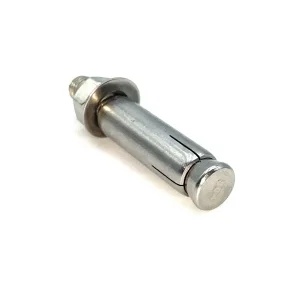 Heavy-Duty Stainless Steel Expansion Bolt for Reliable Wall AnchoringBuy Heavy-Duty Stainless Steel Expansion Bolt | China Suppliers & Factory for Reliable Fastening Solutions Company, Products
-
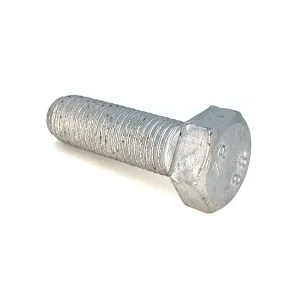 China Heavy-Duty Hot-Dip Galvanized Hex Bolts for Outdoor EngineeringChina China Heavy-Duty Hot-Dip Galvanized Hex Bolts - High Strength Factory Suppliers for Outdoor Engineering Factory, Companies
-
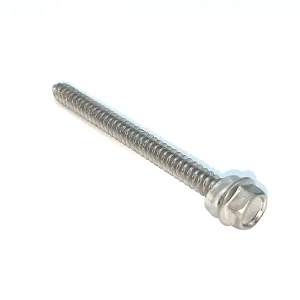 High-Efficiency Stainless Steel Self-Drilling ScrewsChina Stainless Steel Self-Drilling Screw Manufacturer, Manufacturers
-
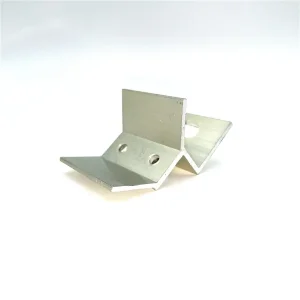 High-Strength Aluminum Trapezoidal Roof Clamp for Solar SystemsBest High-Strength Aluminum Trapezoidal Metal Roof Clamp for Solar PV Installation - China Suppliers and Factory Factory, Products
-
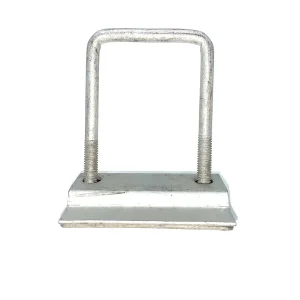 High-Strength Double-Hole Pressure Plate Mounting ClampBuy High-Strength Double-Hole Pressure Plate for Solar PV Mounting Systems - China Suppliers & Factory Suppliers, Company
-
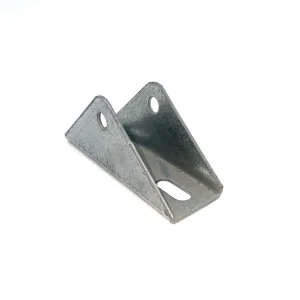 Three-Hole Mounting Connector Durable Aluminum AlloyBest China Suppliers Three-Hole Mounting Connector for Solar PV Systems - Durable Aluminum Alloy Factory Product Manufacturers, Factories
-
Standard Solar PV Double-Hole Pressure PlateBuy Solar PV Double-Hole Pressure Plate Manufacturer, Supplier
-
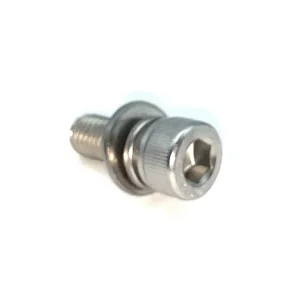 Stainless Steel Hex Socket Combination Bolt with Built-in WasherBuy China Factory Suppliers Stainless Steel Hex Socket Combination Bolt with Built-in Washer, Anti-loosening and Corrosion Resistant Manufacturer, Companies
Technical Fundamentals of Nylon Insert Flange Lock Nuts
Understanding the mechanical synergy of integrated flange load dissipation and viscoelastic polymer thread locking under severe harmonic vibration.
Prevailing Torque Mechanics
Unlike free-spinning nuts that depend strictly on preload tension, nylon insert flange lock nuts employ an unthreaded, resilient polymeric ring (typically Polyamide 6.6). As the male mating thread enters the insert, it elastically deforms the polymer, establishing continuous radial interference and generating robust prevailing breakaway torque that resists dynamic back-off without marring male threads.
Stress Redistribution via Flange
The monolithic wide circular flange acts as an integral load-spreading washer. By increasing the effective bearing area, bearing pressure on soft or slotted substrates (such as extruded 6005-T6 aluminum solar rails) is decreased by up to 45%. This prevents localized surface crushing, embedding, and consequent preload relaxation under cyclical thermal contraction and expansion.
Junker Vibration Resistance
Under rigorous transverse vibration testing per DIN 65151 (Junker Test), standard bolted assemblies experience catastrophic clamp-load loss within 300 to 500 cycles. High-grade nylon insert flange lock nuts retain over 80% residual clamp force past 2,000 cycles, providing mission-critical security against harmonic vortex shedding on high-profile infrastructure.
Macro-Industry Solutions & System Integration
Addressing structural vulnerability and galvanic degradation across demanding multi-megawatt engineering sectors.
Solar PV Racking & Trackers
Utility-scale tracking systems experience continuous cyclical wind shear and motor torque reversal. Utilizing austenitic Grade A2-70 / A4-80 nylon insert flange nuts prevents fastener detachment on torque tubes and module purlins, maintaining frame alignment across 25+ year project lifecycles without requiring periodic torque re-checks.
Wind Power & Heavy Vibratory Equipment
Internal nacelle assemblies, cable tray supports, and tower auxiliary structures encounter constant multi-axis vibrational excitation. Flange lock nuts provide lightweight, fail-safe retention that dampens low-frequency micro-shocks and eliminates the need for messy liquid threadlocking adhesives in field maintenance.
Commercial EV & Rolling Stock
Electrified transit systems and commercial EV chassis rely on high-integrity battery enclosure fastenings. Flange lock nuts provide vibration-proof clamping while the non-conductive nylon ring eliminates metal-to-metal particulate generation, mitigating short-circuit hazards in high-voltage pack assemblies.
China Factory 4.0: Supply Chain Resilience & Handan Cluster Synergy
How the Yongnian fastener hub integrates high-speed automated cold-heading with smart digital traceability to de-risk tier-one international supply chains.
Cumulative Tonnes Shipped
Large-scale global delivery capabilities built upon mature raw material access, ensuring continuous order fulfillment during supply chain crunches.
Multi-Station Cold Heading
Forming nut blanks at up to 280 pieces/min with zero material waste, achieving superior grain-flow continuity and mechanical shear resilience.
Automated Optical Sorting
Multi-camera eddy current and optical sorting platforms checking thread pitch, insert integrity, and concentricity at single-digit PPM defect rates.
C5 Salt Spray Protection
Advanced in-house multi-layer Geomet, Dacromet, and hot-dip galvanizing lines achieving extreme corrosion resistance without hydrogen embrittlement.
Dimensional & Mechanical Performance Matrix
Comprehensive engineering benchmarks for procurement teams specifying DIN 6926 and ISO 7043 compliant assemblies.
| Nominal Size | Pitch (mm) | Flange Dia dc (max) | Width Across Flats s | Total Height m (max) | Proof Load Grade 8 (N) | Prevailing Torque 1st Off (min Nm) |
|---|---|---|---|---|---|---|
| M6 | 1.00 | 14.20 mm | 10.00 mm | 9.10 mm | 16,100 N | 0.43 Nm |
| M8 | 1.25 | 17.90 mm | 13.00 mm | 11.10 mm | 29,200 N | 0.85 Nm |
| M10 | 1.50 | 21.80 mm | 15.00 mm | 13.50 mm | 46,400 N | 1.50 Nm |
| M12 | 1.75 | 26.00 mm | 18.00 mm | 16.10 mm | 67,400 N | 2.30 Nm |
| M16 | 2.00 | 34.50 mm | 24.00 mm | 20.30 mm | 125,000 N | 4.50 Nm |
Strategic Sourcing & Compliance Audit Framework
A rigorous checklist for chief procurement officers and quality managers evaluating industrial fastener suppliers.
Material Certificate Verification (EN 10204 3.1)
Demand certified mill heat numbers verifying specific chemical compositions. For solar installations, ensure carbon steel lots do not exceed maximum boron and carbon limits, maintaining ductility and avoiding delayed brittle fracture.
Polymer Insert Quality & Thermal Rating
Confirm the insert material is virgin Polyamide 6.6 with added UV-stabilizers and anti-hydrolysis agents. Low-cost recycled polymers embrittle quickly under solar UV radiation, resulting in total loss of prevailing torque within months.
Surface Finishing & Friction Coefficient
Demand documented k-factor testing. Fasteners coated with zinc flake or hot-dip galvanizing must incorporate controlled topcoats to stabilize the coefficient of friction (μ = 0.10 - 0.16), preventing thread galling during automated assembly.
Technology Roadmap: Advanced Coatings & Bio-Based Polymers
The progression of self-locking fastener technology toward carbon-neutral operations and ultra-demanding operational envelopes.
Next-Gen High-Temperature Inserts
Traditional PA6.6 is limited to continuous operational exposure of 120°C. Developing formulations utilizing polyphthalamide (PPA) and polyether ether ketone (PEEK) expand continuous service parameters to 250°C, enabling prevailing-torque locking nuts in close-coupled aerospace, turbocharger, and industrial kiln ducting applications.
RFID & Smart Fastener Integration
Emerging sensorized lock nuts embedded with passive RFID and micro-piezoelectric sensors allow remote preload auditing. Field technicians can scan joint assemblies via handheld readers to detect micro-loosening in structural wind towers and bridges before joint separation occurs.
Decarbonized Circular Metallurgy
Pioneering electric-arc furnace (EAF) steel wire rod inputs paired with 100% bio-derived polyamide collars. These materials substantially lower embedded lifecycle carbon footprints, aligning with the EU Corporate Sustainability Due Diligence Directive (CSDDD) and CBAM export declarations.
Localized Engineering Support & Global Compliance
Eliminating regulatory hurdles, import tariffs, and logistics friction for international EPC partners.
Full Regulatory Documentation
Every shipment is matched with full export documentation: RoHS & REACH compliance dossiers, IMDS submissions for automotive tier clients, comprehensive chemical composition analysis, and lot-traced salt spray corrosion reports.
Dedicated Application Engineering
Our bilingual application engineers interface directly with your CAD and structural modeling teams. From custom flange diameters to non-standard thread pitches (e.g. UNF / UNC), we perform finite-element feasibility analyses within 48 hours.
Consignment & Buffer Warehousing
To insulate our partners from global supply chain shocks, we offer managed buffer inventory agreements and localized bonded warehouse logistics, ensuring JIT (Just-In-Time) deliveries for time-sensitive utility project schedules.
Frequently Asked Technical & Commercial Questions
Essential guidance for design engineers, QA auditors, and international purchasing agents.
Can nylon insert flange lock nuts be reused during field reassembly?
Per ISO 2320 and IFI standards, nylon insert lock nuts can technically be re-threaded 2 to 5 times while still providing prevailing torque. However, prevailing breakaway torque drops by 30% to 50% after the initial mating. In critical structural connections (such as solar tracker gearboxes or high-load seismic ties), complete replacement upon disassembly is strongly recommended to guarantee design clamp security.
What is the true operating temperature threshold of nylon insert nuts?
Standard nylon (Polyamide 6.6) inserts perform reliably within a continuous temperature range of -40°C to +121°C (-40°F to +250°F). For extreme-temperature environments such as boiler flues or cryogenic applications exceeding these thresholds, all-metal prevailing torque lock nuts (cone/stover type) should be specified instead.
How does a serrated flange compare to a smooth flange with nylon collar?
A serrated flange bites into the joint surface, creating high rotational back-off resistance, but it permanently disrupts anti-corrosive coatings (e.g., anodized aluminum or zinc galvanizing). A smooth flange with a nylon insert secures the connection purely through internal thread friction without damaging external corrosion barriers, making it vastly superior for outdoor aluminum structures.
How do you safeguard against thread galling on stainless steel fasteners?
Austenitic stainless steels (A2/304 and A4/316) tend to cold-weld under friction. To prevent galling, our production processes provide specialized low-friction anti-galling wax coatings (such as Cetyl Alcohol or PTFE-based sealers). Furthermore, field installation speeds must not exceed 300 RPM, and impact wrenches should be avoided.
Associated Structural Fasteners & Hardware
Complementary fasteners and bracket components from our Handan production plant.
-
China Heavy-Duty Hot-Dip Galvanized Hex BoltsBuy China Heavy-Duty Hot-Dip Galvanized Hex Bolts - High Strength Fasteners from Leading Suppliers and Factory Supplier, Factories
-
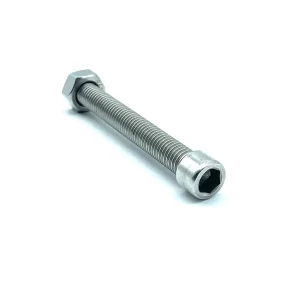 High-Strength Stainless Steel Hex Socket Cap ScrewChina High-Strength Stainless Steel Hex Socket Cap Screw - China Suppliers and Factory for Corrosion-Resistant Fastening Solutions Supplier, Company
-
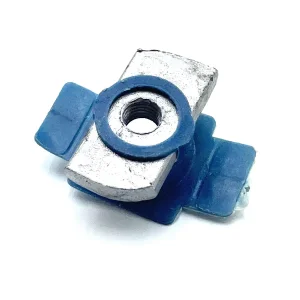 Durable Plastic Wing Nut for Tool-Free TighteningChina Plastic Wing Nut Suppliers, Factories
-
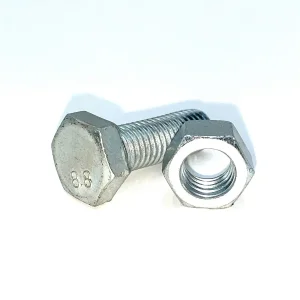 High-Strength Structural Hex Bolt From China FactoryChina High-Strength Hex Bolt from China Factory - Reliable Fasteners from Trusted Suppliers Company, Companies
-
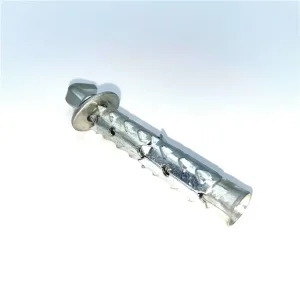 Heavy-Duty Fish Scale Anti-Slip Expansion BoltBuy Heavy-Duty Fish Scale Expansion Bolt - Anti-Slip Design from China Suppliers & Factory for Strong Wall Fixing Manufacturer, Manufacturers
-
Ergonomic Labor-Saving Plastic Wing Nut AssemblyChina Ergonomic Labor-Saving Plastic Wing Nut from China Suppliers - Durable Factory-Made Fastening Solution Suppliers, Factory
-
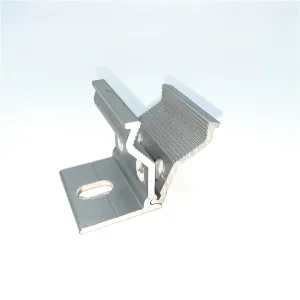 Aluminum Clip Lock for Solar PV Metal Roof InstallationBest China Suppliers Factory Aluminum Clip Lock for Metal Roof Solar PV Installation, No Drilling Required Companies, Products
-
High-Strength Stainless Steel Hex Socket Cap ScrewChina High-Strength Stainless Steel Hex Socket Cap Screw - China Suppliers & Factory for Machinery, Construction, and Electronics Company, Companies