
Best Mobile Home Tie Down Bolts Supplier & Suppliers
Precision-Engineered Structural Anchoring Systems, High-Tensile Ground Tethering Bolts, and Resilient Micro-Alloy Fasteners Built for Global Modular Housing and Photovoltaic Deployments.
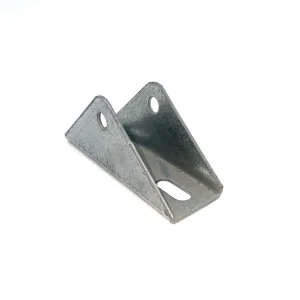
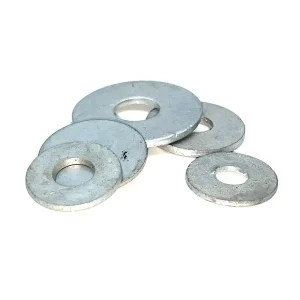
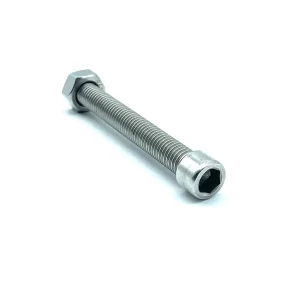
High-Integrity Fastening Systems: Batch 01
Manufactured in Yongnian, China—the capital of global fasteners. Salt-spray and tensile-tested components engineered for heavy anchoring, PV frameworks, and structural ground tie-downs.
Global Enterprise Procurement Dynamics for Mobile Home Anchoring Fasteners
How institutional builders, EPC contractors, and global disaster mitigation bodies evaluate supplier reliability, mitigate micro-cracking risks, and balance total cost of ownership (TCO).
In the prefabricated modular construction and manufactured housing sectors, anchor bolts and chassis tie-down hardware do not merely represent mechanical fasteners; they serve as the primary structural boundary condition separating catastrophic displacement from life safety during extreme climatic loads. Over the last decade, procurement mandates across Tier-1 contractors in North America, Western Europe, and Australasia have fundamentally shifted from transactional, lowest-unit-cost purchasing to algorithmic supplier risk assessments. When an extreme convective storm, straight-line derecho, or Category 3+ hurricane sweeps through a modular residential community, the tensile stresses concentrated upon ground anchors and chassis tie-down bolts reach levels of tens of thousands of Newtons per connection node.
Consequently, enterprise procurement directors face multifaceted supply chain friction. First, material consistency and traceable metallurgy have emerged as top-tier audit criteria. Sub-standard carbon steels harboring elevated non-metallic inclusions, excessive sulfur, or localized martensitic embrittlement risk sudden brittle rupture without prior plastic elongation. Handan Youlong Fastener addresses this via mill-to-finished-product heat tractability, providing full EN 10204 3.1 material test certificates (MTR) verifying strictly managed carbon equivalent values (CEV) and Charpy V-notch impact toughness.
Second, total cost of ownership (TCO) calculations now incorporate field labor costs and structural warranty liability. Poorly tapped threading, inconsistent pitch geometry, or uneven hot-dip zinc accumulation require extensive manual chase-tapping on job sites, inflating assembly hours. Our automated high-speed cold-forging and CNC chasing ensure seamless nut engagement even under field mud immersion, lowering per-unit installation cycle times by up to 28%.
Macro-Industry Engineering Solutions: Uplift, Shear, and Soil Mechanics
Navigating the complex mechanical interplay between manufactured housing I-beam chassis, ground stabilization plates, and embedded helical augers.
Aerodynamic Uplift Vectors & Wind Shear
Manufactured homes feature an elevated chassis footprint that creates high negative pressure differentials along leeward eave lines. Under ASCE 7-22 and HUD Zone III wind loads (exceeding 110 mph basic wind speed), tie-down bolts must simultaneously resist vertical axial uplift and horizontal cyclic shear. Youlong bolts utilize optimized root radius rolling to prevent stress concentrations at the first load-bearing thread.
Dynamic Ground Strut Interaction
Tie-down bolts connect structural diagonal steel straps directly to the ground anchor shaft or concrete footers. In expansive clays (Class 4B/5 soils) or loose silts, lateral ground displacement can impose severe bending moments on the anchor head. Our Grade 8.8 and Grade 10.9 hot-forged bolt configurations feature enhanced shear-yield margins exceeding 640 MPa, averting ductile necking during seismic shifts.
Corrosion-Wear Synergism in Buried Soil
Anchor shafts and foundation tie bolts operate in sub-surface micro-environments subjected to continuous moisture, chlorides, and biological soil acidity. Standard electro-galvanizing fails within 24 to 36 months under low soil resistivity. Youlong applies heavy hot-dip galvanization conforming to ASTM A153 Class C and ISO 1461, yielding minimum zinc thicknesses of 85 microns for 50-year structural design lives.
| Grade / Alloy Class | Tensile Strength (MPa) | Yield Strength (MPa) | Surface Treatment Standard | Salt Spray Resistance | Target Engineering Application |
|---|---|---|---|---|---|
| ISO 898-1 Class 8.8 Medium Carbon Q&T | 800 – 830 | 640 | HDG (Hot-Dip Galv) ISO 1461 | 1,000+ Hours | Standard HUD Wind Zone I & II Foundation Tie-Downs |
| ISO 898-1 Class 10.9 Micro-Alloy Boron Steel | 1000 – 1040 | 900 | Geomet / Zinc Flake Coating | 1,500+ Hours | HUD Zone III Hurricane Belts, Heavy Modular Anchor Struts |
| ASTM A307 Grade A Carbon Steel | 414 | 240 | Electro-Zinc Plated (ASTM B633) | 120 Hours | Temporary Modular Shoring & Non-Cyclonic Inland Ties |
| Austenitic Stainless Steel AISI 316 (A4-70) | 700 | 450 | Passivated Acid Washed | 2,500+ Hours | Coastal Salt-Spray Atmospheric Ties & Island Infrastructure |
| Duplex Stainless Steel (2205 / 1.4462) | 750 – 900 | 550 | Electropolished Cleaned | 4,000+ Hours | Industrial Marine / Chemical Environment Ground Fastening |
Technical Roadmap: Next-Generation Fastener Engineering & Smart Anchorage
The evolution from passive cold-headed steel to sensor-enabled structural anchors, decarbonized metallurgy, and robotic torque-controlled assemblies.
1. IoT Stress-Sensing Smart Anchor Heads
Working in conjunction with industrial IoT initiatives, Youlong is prototyping piezoresistive micro-strain sensors encapsulated into the bolt shank. These provide wireless pre-tension monitoring via RFID or Sub-1GHz telemetry, allowing facility managers to identify anchor looseness or soil subsidence in mobile home communities before micro-displacements cause structural framework twisting.
2. Low-Carbon Electric Arc Furnace (EAF) Green Metallurgy
In response to global Scope 3 emissions reporting and the EU's Carbon Border Adjustment Mechanism (CBAM), our production line roadmap integrates 100% EAF scrap-recycled steel billets with bio-gas annealing furnaces. This reduces the embedded carbon footprint of our tie-down bolts by over 42% without sacrificing core hardness or ultimate yield criteria.
3. Automated Torque-to-Yield (TTY) Installation Profiles
Prefabricated modular housing is adopting robotic ground-mounting and power-assisted crawler rigs. We are standardizing drive-recess geometry (internal hex and specialized flanged spline profiles) designed for zero-cam-out automated assembly, eliminating thread cross-binding and ensuring every bolt achieves precisely calculated clamping forces without manual torque wrench recalibration.
4. Multi-Layer Nanocomposite Diffusion Coatings
Replacing traditional chrome-based passivations with chromium-free, zinc-aluminum-graphene hybrid dispersions applied via dip-spin automated methods. This eliminates risk of hydrogen embrittlement in Grade 10.9 high-strength tie-down bolts while providing self-healing barrier performance against micro-scratches from soil aggregate during high-torque rotary penetration.
Global Commercial & Industrial Status: Modular Housing Infrastructure
A regional overview of market demand, building codes, and structural challenges across North America, Europe, Asia-Pacific, and Latin America.
North America: Post-Hurricane Code Hardening
In the United States, escalating severe weather patterns across the Gulf Coast, Tornado Alley, and the Atlantic seaboard have forced municipal authorities to enforce rigorous HUD 3280 and 3285 standards. Institutional land lease communities demand certified Class 10.9 foundation tie-downs with mandatory third-party pullout testing ratings exceeding 4,725 lbs (21 kN) allowable working load.
Europe: Sustainable Modular Urban Expansion
European demand focuses heavily on circular economy principles, temporary modular housing for civic infrastructure, and eco-parks. The regulatory environment prioritizes Eurocode 3 (EN 1993-1-8) compliance, demanding 100% non-toxic, lead-free, chromium-VI-free anti-corrosive finishes combined with documented life-cycle assessments (EPD declarations).
Asia-Pacific: High Seismic & Typhonic Convergence
In the Western Pacific Rim, Japan, the Philippines, and Australia, modular structures face compound seismic tremors and Super Typhoon wind shear. Australia's AS/NZS 1170.2 cyclonic tie-down criteria mandate ductile failure modes where bolts yield under sustained strain rather than snapping cleanly, protecting modular units from explosive chassis detachment.
Localized Support & Regulatory Compliance Assurance
Ensuring cross-border shipments conform seamlessly with global civil engineering, statutory building guidelines, and material verification protocols.
International fastener procurement fails most frequently at the intersection of international logistics and regional code enforcement. A shipment of tens of thousands of foundation bolts that lacks correct mill documentation or fails to pass local metallurgical bend tests can halt multi-million-dollar community developments. Handan Youlong Fastener maintains strict adherence to global conformity systems to de-risk imports for our wholesale and EPC clients.
Every manufacturing lot processed through our Handan forging lines undergoes destructive and non-destructive quality testing:
Mill Test Reports (MTR EN 10204 3.1)
Complete traceability covering raw carbon steel ladle chemistry, including carbon, manganese, phosphorus, sulfur, and micro-alloying elements like boron and chromium. Accompanied by heat-treatment furnace telemetry charts proving precise austenitizing, quenching, and tempering execution.
Neutral Salt Spray (ISO 9227 / ASTM B117)
Continuous cyclic testing in our in-house ISO-calibrated salt spray chambers. We verify our hot-dip galvanized coating thicknesses via magnetic induction and microscopic metallographic sectioning, guaranteeing zero red rust emergence through 1,000+ hours of aggressive exposure.
Wedge Tensile & Proof Load Verification
Full-size axial and wedge tensile testing conforming to ISO 898-1 and ASTM F606. By applying tensile forces through a beveled wedge placed beneath the bolt head, we verify structural integrity under eccentric loading conditions, ensuring heads do not shear during severe field ground heaving.
High-Integrity Fastening Systems: Batch 02
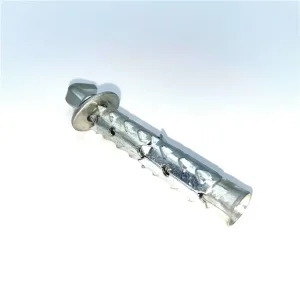
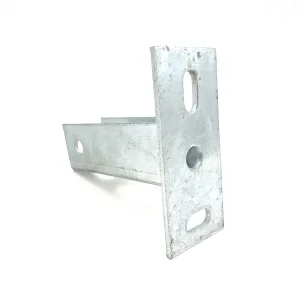
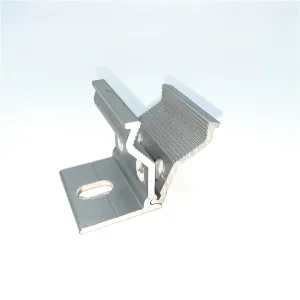
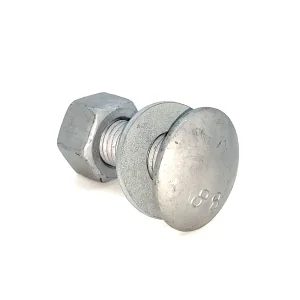
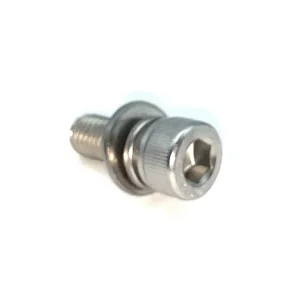
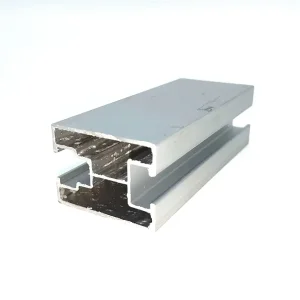
Expansion bolts, heavy-duty carriage fasteners, aluminum mounting extrusions, and specialized combination bolts engineered for maximum load retention.
Engineering Inquiries & Structural Procurement FAQ
Detailed technical answers addressing thread physics, galvanic isolation, soil torque resistance, and regulatory compliance standards.
While standard SAE J429 Grade 5 bolts are general-purpose medium-carbon fasteners offering proof load limits of approximately 85,000 psi, designated structural mobile home tie-down bolts are engineered specifically to survive compound dynamic shear and tensile fatigue. Tie-down bolts frequently incorporate cold-rolled threads with a generous root radius, preventing notch sensitivity during repetitive wind-induced rocking. In addition, certified tie-down hardware incorporates mandatory corrosion coatings (such as ASTM A153 Class C hot-dip galvanization) with thick zinc mass (minimum 610 g/m²), whereas standard Grade 5 bolts typically receive light flash electro-plating (5 to 8 microns) that fails rapidly in continuous sub-grade contact.
When carbon steel or even 300-series stainless steel fasteners directly contact structural aluminum purlins or mounting rails in the presence of an electrolyte (atmospheric moisture or rainwater containing ionic chlorides), galvanic corrosion rapidly attacks the more anodic aluminum. Handan Youlong provides two field-proven engineering mitigations: (1) integrating high-dielectric EPDM or nylon isolation washers that physically break metallic contact across the fastener head and aluminum flange; and (2) applying specialized zinc-flake (Geomet/Dacromet) coatings containing passivated aluminum particulates within an inorganic binder matrix, thereby equalizing the electrical potential between the bolt and the extruded rail.
For mechanical wedge expansion anchors (such as Youlong’s heavy-duty fish-scale expansion series) anchoring chassis tie-down straps to cured concrete footings (minimum $f'_c = 3,000 \text{ psi}$ / 20.7 MPa), tightening torque dictates expansion sleeve expansion and subsequent pull-out capacity. For M12 (1/2-inch) carbon steel anchors, torque must be maintained at 55–65 Nm (40–48 ft-lbs); for M16 (5/8-inch) heavy anchors, the required seating torque increases to 110–125 Nm (80–92 ft-lbs). Under-torquing leads to premature anchor slip during wind uplift, while over-torquing can induce localized micro-cracking in unreinforced concrete, reducing net pullout cone capacity.
Soil torque-probe tests classify soils into 5 distinct engineering tiers according to HUD 24 CFR 3285. Class 2 soils (dense sand, gravel) yield probe torques over 350 in-lbs and utilize shorter 30-inch ground augers with standard M12 tie bolts. Class 4A/4B soils (loose organic silts, soft clays) yield probe torques below 175 in-lbs, requiring double-helix 48-inch anchors paired with Class 10.9 M16 heavy tie bolts and lateral stabilization plates. The tie bolt must transfer lateral strap tension into the ground plate without bending through the shaft slot, demanding minimum yield strengths of 640 MPa.
Fasteners heat-treated to hardness levels above 32 HRC (such as Grade 10.9 or ASTM A490 equivalents) are highly vulnerable to internal hydrogen absorption during chemical acid pickling prior to galvanizing. When placed under permanent tensile pre-load, atomic hydrogen migrates to regions of triaxial stress concentration at thread roots, causing sudden, delayed catastrophic fracture. Handan Youlong eliminates this hazard through mechanical shot-blasting descaling instead of chemical acid bathing for all high-tensile components, followed by mandatory de-embrittlement baking at 200°C–220°C for a minimum of 4 to 8 hours immediately after electro-plating or galvanizing operations.
Yes. Operating our own automated cold-heading stations, hot-forging presses up to 1,000 tonnes, stamping lines, and multi-axis CNC lathes in Yongnian, we routinely manufacture bespoke foundation anchors, eccentric J-bolts, slotted carriage bolts, and custom swivel eye-bolt anchors. Our engineering team conducts initial CAD/FEA simulation reviews, validates tooling designs in-house, produces pre-production pilot batches for dimensional inspection (CMM), and submits complete PPAP Level 3 documentation with pilot-lot tensile verification prior to mass dispatch.