
High-Integrity Fasteners & Mounting Solutions (Part 1)
Explore our foundational structural hardware and PV mounting components produced under ISO 9001 certified automation systems in Yongnian, Handan.
Engineering Taxonomy of the M4 Serrated Flange Nut
A rigorous examination of kinematic anti-loosening mechanics, contact pressure distribution, and international standard harmonization across global assemblies.
| Dimensional Metric | DIN 6923 (Standard) | ISO 4161 (Revised Profile) | Tolerance Band | Functional Impact |
|---|---|---|---|---|
| Nominal Thread (d) | M4 × 0.70 mm | M4 × 0.70 mm | 6H (ISO 965-2) | Thread engagement with standard metric Class 6g bolts |
| Width Across Flats (s) | 7.00 mm | 7.00 mm | h12 (6.78 - 7.00 mm) | Wrench socket contact; pneumatic/robotic tool feeding |
| Flange Diameter (dc max) | 10.00 mm | 9.80 mm | ±0.20 mm | Bearing surface area; bridge clearance across oversized holes |
| Nut Height (m max) | 4.65 mm | 4.65 mm | ±0.15 mm | Shear thread engagement depth (minimum 4 complete threads) |
| Serration Angle (α) | 45° / 90° Ratchet | 42° / 90° Optimized | ±2° | Prevents reverse rotation without excessive substrate damage |
| Proof Load (Class 8) | 800 N/mm² (6,950 N) | 800 N/mm² (6,950 N) | Min. destructive load | Structural yield resilience under peak dynamic preloads |
Why China Handan Factories Lead Global M4 Flange Nut Manufacturing
A deep analysis of the Yongnian Fastener Industrial Cluster, cold-heading automation, raw material integration, and economic resilience.
Supply Chain Density in Yongnian
Yongnian District in Handan City, Hebei Province produces upwards of 55% of China's standard mechanical fasteners. This geographic concentration gives factories immediate, lower-cost access to coiled wire rods from major domestic steel mills (such as Xingtai Steel and Handan Steel), dedicated spheroidizing annealing facilities, and certified chemical surface-treatment parks.
Multi-Station High-Speed Cold Forging
Tier-1 manufacturing operations deploy continuous 5-station and 6-station automated cold formers capable of stamping, pre-forming the flange collar, piercing the core, and coining the locking serrations at cycle speeds exceeding 280 to 350 pieces per minute. Cold grain flow lines follow the geometric contour of the flange, maximizing yield resistance compared to turned components.
Electroplating & Eco-Coatings
Local industrial clusters host continuous barrel plating and dip-spin coating lines handling blue-white zinc (Cr3+), yellow zinc passivations, zinc-nickel alloys (12-15% Ni content for 1000+ hour salt spray protection), and non-electrolytic zinc flake coatings (Geomet, Dacromet) that avoid hydrogen embrittlement risks on heat-treated Class 10 nuts.
Material Science, Tempering Grades & Corrosion Resistance
Selecting the exact metallurgical composition and finishing process according to operational ambient environments.
Carbon Steel Class 8
Manufactured using cold-drawn 1008K, 1018K, or 10B21 low-carbon boron steel. Quenched and tempered to achieve Vickers hardness HV 200-302. Ideal for general-purpose structural chassis, internal mechanical bracketry, and consumer appliances requiring consistent clamping tension.
Alloy Steel Class 10
Constructed with cold-heading medium carbon alloy steel (SCM435 / 35CrMo / 10B21). Quenched and tempered to achieve Rockwell C hardness 26-36 HRC and proof stress of 1040 N/mm². Essential for automotive suspension brackets, commercial EV battery enclosure grounding, and high-vibration power tools.
Austenitic SS 304 (A2-70)
Forged from AISI 304 (1.4301 / 06Cr19Ni10) stainless steel with minimum 18% Cr and 8% Ni. Delivers intrinsic oxidation resistance, non-magnetic baseline properties, and 700 N/mm² tensile proof ratings without post-plating electroplating risks. Perfect for food processing lines, cleanrooms, and outdoor electronics.
Marine Grade SS 316 (A4-80)
Formulated with 2-3% Molybdenum addition (AISI 316 / 1.4401 / 08Cr17Ni12Mo2). Highly resistant to pitting and crevice corrosion under high-salinity marine environments, coastal PV installations, and chemical processing plants. Demonstrates superior lifecycle integrity in C4/C5 atmospheric zones.
| Coating / Treatment System | Typical Layer Thickness | Salt Spray Life (ASTM B117) | Hydrogen Embrittlement Risk | Primary Environmental Compliance |
|---|---|---|---|---|
| Electro-Galvanized + Clear Passivation | 5 - 8 μm | 48 - 96 Hours (White Rust) | Low (De-embrittlement baking required for >320 HV) | RoHS, REACH compliant, Indoor Dry Use |
| Yellow Zinc Dichromate (Cr6+ Free) | 8 - 12 μm | 120 - 240 Hours | Low (Post-plate 200°C baking 4h min) | RoHS, Industrial Machinery, Agricultural Tools |
| Zinc-Nickel Alloy (12-15% Ni) | 6 - 10 μm | 720 - 1,200 Hours | Minimal (Optimized chemical cathode efficiency) | Automotive OEM Specifications (VW, Ford, GM) |
| Zinc Flake (Geomet 321 / 500) | 8 - 15 μm | 1,000 - 1,500 Hours | Zero (Non-electrolytic dip-spin application) | Renewable Energy, Offshore Wind, Solar Trackers |
| Passivated Stainless Steel (Citric/Nitric) | Chemical conversion | 2,000+ Hours (Marine Atmosphere) | Zero Risk | Medical, Pharmaceutical, Marine Infrastructure |
Industrial Application Scenarios & Clamping Engineering
Real-world integration across solar balance-of-system (BOS), automotive e-mobility, electronics, and industrial automation.
Solar PV Earth Grounding & Micro-Inverters
In photovoltaic installations, M4 serrated flange nuts are standard for bonding earth grounding lugs to anodized aluminum frames. The hardened teeth penetrate the non-conductive Al&sub2;O&sub3; anodized passivation layer (typically 10-25 μm thick), establishing direct metal-to-metal continuity and achieving electrical bonding resistance well below 0.1 ohms in accordance with UL 2703 and IEC 61730.
Electric Vehicle (EV) Battery PDU Enclosures
Battery management systems (BMS), high-voltage power distribution units (PDU), and onboard chargers experience constant road vibrations and thermal shocks (-40°C to +125°C). M4 serrated flange nuts clamp internal PCB busbars, shielded wiring terminal brackets, and stamped steel chassis panels without losing preload, preventing arcing or premature signal fault codes.
Industrial Automation & Robotic Tooling
High-cycle pick-and-place end effectors, stepper motor mountings, and aluminum extrusion framing systems rely on M4 serrated nuts to resist the cyclic shear and torsional moments of high acceleration/deceleration profiles. The integrated flange bridges oversized mounting slots, distributing forces across thin-gauge sheet metal.
Global Enterprise Sourcing Architecture: Auditing M4 Nut Manufacturers
A strategic framework for procurement executives to evaluate production capacity, laboratory instrumentation, and PPAP Level 3 readiness.
1. Tooling Integrity & Die Maintenance
Examine whether the factory designs and machines cold-heading carbide dies in-house. Flange serration tooling wears rapidly; top suppliers implement strict die life tracking (replacing serration punches every 150,000 to 200,000 strikes) to prevent blurred teeth profiles that impair locking grip.
2. High-Speed Optical Glass Plate Sorting
Manual packaging cannot achieve zero-defect targets for automated robotic assembly lines. High-tier Chinese manufacturers run 100% of finished M4 nuts through 360-degree multi-camera optical sorters, inspecting thread pitch, burrs, inner diameter clearance, flange flatness, and foreign material contamination at speeds up to 800 pcs/min.
3. Metallurgical & Torque Testing Labs
Qualified vendor factories maintain on-site laboratory infrastructure including optical emission spectrometers for wire chemistry verification, digital Vickers/Micro-hardness testers, computerized tensile proof-load rigs, and motorized friction torque benches measuring nut prevailing off-torque according to ISO 16047.
4. Traceability & Certification Packs
Every export shipment should be accompanied by full 3.1 Material Test Certificates (EN 10204), chemical heat traceability, salt spray chamber test logs, and Production Part Approval Process (PPAP Level 3) packages comprising control plans, FMEA diagrams, and gauge R&R repeatability documentation.
High-Integrity Fasteners & Mounting Solutions (Part 2)
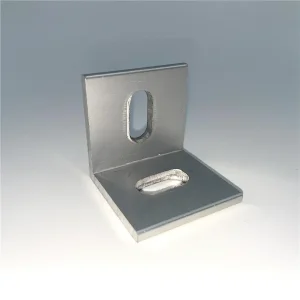
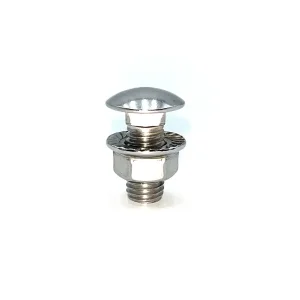
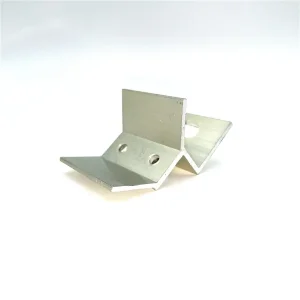
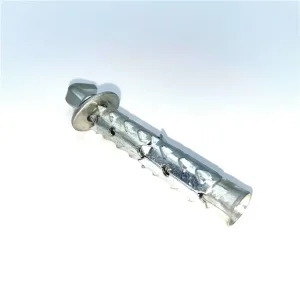
Complete structural hardware, expansion anchors, carriage bolts, and specialty roofing clips engineered for harsh utility-scale installations.
Engineering Inquiries & Technical Questions (FAQ)
Comprehensive engineering clarity addressing tightening torques, surface scarring, reuse limitations, and international specifications.
What is the recommended tightening torque for an M4 serrated flange nut?
Recommended torque depends strictly on fastener property class and coating friction coefficients (μ). For a standard Carbon Steel Class 8 M4 nut paired with a Class 8.8 metric bolt (μ = 0.14 electro-galvanized), recommended installation torque is 2.8 to 3.2 N·m. For Stainless Steel A2-70 / A4-70, recommended installation torque is 1.9 to 2.3 N·m to prevent thread galling. Always confirm that the tightening tool does not exceed proof ratings, as M4 thread cross-sections yield rapidly under over-torquing.
Can M4 serrated flange nuts be re-used after disassembly?
Engineering standards (including DIN 6923 advisory notes) advise against re-using serrated flange nuts in critical structural or electrical grounding joints. During initial tightening, the serrations gouge microscopic tracks into the bearing substrate. Upon unscrewing and re-tightening, the serrations rarely align with previous grooves, resulting in degraded breakaway off-torque ratios, micro-cracking of protective surface coatings, and accelerated galvanic or atmospheric corrosion.
What is the structural difference between DIN 6923 and ISO 4161?
While generally interchangeable in basic operations, ISO 4161 features updated flange curvature geometry, slightly reduced maximum flange diameter limits (9.80 mm versus 10.00 mm in DIN 6923 for M4), and more rigorous quality compliance metrics regarding surface imperfections according to ISO 6157-2. Global Tier-1 automotive and renewable platforms increasingly specify ISO 4161 for modern engineering drawings.
Does the serrated flange damage protective coatings on sheet steel?
Yes, by design. The teeth are intended to cut through superficial coatings (such as paint, primer, or light anodizing) to create a mechanical biting action against raw metal. Where corrosion protection of painted sheet steel is paramount and moisture exposure is severe, engineers should specify a smooth (non-serrated) flange nut paired with a bonded sealing washer or utilize zinc-flake coated fasteners with non-reactive under-head isolators.
How do Chinese factories mitigate stainless steel thread galling (cold welding)?
Galling is common in stainless fasteners due to frictional heat rupturing chromium oxide films. Leading Chinese export manufacturers apply specialized micro-wax lubrication dips, anti-galling dry films (such as MoS&sub2; or PTFE coatings), or utilize differential work-hardening techniques (matching an A4-80 nut with an A2-70 bolt) to alter relative hardness and eliminate galling during automated high-speed driving.
What is the standard lead time and Minimum Order Quantity (MOQ) for custom M4 nuts?
For standard catalog carbon steel and 304/316 stainless steel M4 flange nuts, stocked master inventories support immediate dispatch within 3-7 days. For custom production runs requiring special flange diameters, custom serration angles, or specialized finishes (e.g., Geomet 500, black zinc-nickel), typical factory MOQs range from 50,000 to 100,000 units, with tooling and mass manufacturing turnaround of 15 to 22 working days.
Global Trends: The Evolution of Industrial Threaded Fasteners
Strategic macro developments reshaping cold heading, surface chemistry, and digital quality monitoring in international fastener production.
Eco-Friendly Trivalent Passivation
The tightening of global environmental legislation, including the EU REACH Annex XVII revisions and European Green Deal directives, has phased out hexavalent chromium (Cr6+) chemistries across Tier-1 supply chains. Advanced Chinese facilities now run 100% closed-loop effluent recovery and RoHS-compliant heavy-film trivalent chromium (Cr3+) with organic sealers, achieving corrosion resistance that matches historic dichromate performance.
AI-Powered Machine Vision Sorting
Traditional mechanical roller sorting systems are being replaced by high-speed neural network optical inspection units. These multi-camera systems analyze complex thread profiles, pitch diameter conformance, internal flange concentricity, and microscopic surface fissures in real time, reducing defect rates below 10-15 PPM on high-volume production runs.
Decarbonized Cold-Heading Automation
By pairing on-site solar rooftop arrays with modernized high-speed servo-electric cold-heading machines, Chinese industrial fastener manufacturers in the Handan region are significantly reducing embedded carbon per metric ton of processed hardware. This lower carbon intensity helps global original equipment manufacturers comply with upcoming Carbon Border Adjustment Mechanism (CBAM) reporting rules.