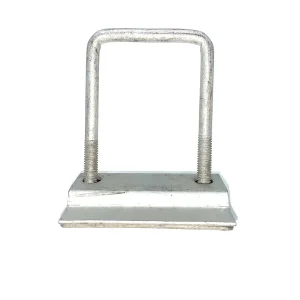
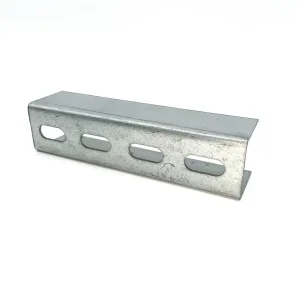
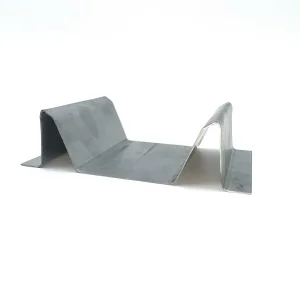
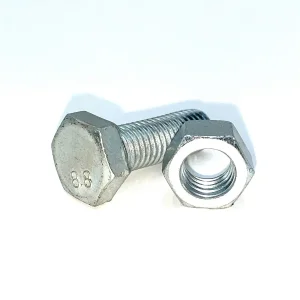
Featured Cable Ladder Mounting Elements & Heavy Fasteners
Precision-manufactured structural fixings, expansion anchors, and photovoltaic rail extrusions tested for dynamic vibration resistance, structural deflection resistance, and atmospheric longevity.
Global Landscape: Cable Ladder Routing in Modern Infrastructure
As power density escalates across utility-scale energy projects, hyperscale artificial intelligence compute centers, and heavy processing industrial facilities, the role of ladder rack cable trays has shifted from passive wiring support to critical structural and thermal management assets.
In contemporary mechanical, electrical, and plumbing (MEP) design, high-amperage distribution networks require continuous heat dissipation, predictable electromagnetic grounding, and verifiable mechanical deflection performance under seismic and environmental stress. Solid-bottom or closed-trough wireway systems cause significant joule-heat accumulation; when insulated medium- and high-voltage power cables run at operational thresholds, trapped heat increases conductor resistance, demanding up-sized cabling, driving up capital cost, and degrading dielectric insulation prematurely.
The Ladder Rack Architecture Advantage: Designed with parallel longitudinal side rails connected by structural transversal rungs (typically spaced at 6, 9, or 12 inches on center), the ladder cable tray delivers maximum structural moment of inertia with minimal physical weight. The open rung geometry ensures 100% unrestricted air movement, complying with NEC (National Electrical Code) Article 392 and IEC 61537 requirements for conductor ampacity without applying derating penalties. As a premier manufacturer headquartered in Yongnian—the world's most concentrated precision metal-forming and fastener manufacturing capital—Youlong engineers comprehensive ladder tray ecosystems, integrating extruded structural aluminum, hot-dip galvanized structural steel, and precision installation hardware into cohesive, fully certified pathways.
Thermal Ventilation Dynamics
Unimpeded cross-ventilation mitigates internal resistive heat build-up across heavy DC feeder bundles and medium-voltage three-phase AC runs. Reduces building chiller auxiliary load in enclosed switchgear vaults and battery storage enclosures.
High Strength-to-Weight Ratio
Fabricated using deep I-beam or C-channel side rail geometries. The structural section modulus allows long installation spans (up to 6 meters / 20 feet) without intermediate trapeze drops, drastically lowering field rigging labor.
Adaptive Field Splicing & Expansion
Engineered connection fittings, horizontal elbows, vertical risers, and expansion splice plates absorb structural thermal expansion and building seismic displacement, preventing fastener shear and joint failure.
NEMA VE 1 / CSA C22.2 Structural Standards & Load Classifications
Structural cable tray design requires meticulous validation against distributed dead weight, dynamic cable pull forces, wind shear, and ice accumulation. The table below outlines standard mechanical load classes and testing parameters.
| NEMA / CSA Class | Design Span (ft / m) | Working Load (lbs/ft / kg/m) | Safety Factor | Deflection Limit Criterion | Primary Industrial Sector |
|---|---|---|---|---|---|
| Class 8A | 8 ft (2.4 m) | 50 lbs/ft (74 kg/m) | 1.5 Static Load | < L/200 | Telecommunications & Commercial Hyperscale Data Centers |
| Class 12B | 12 ft (3.7 m) | 75 lbs/ft (112 kg/m) | 1.5 Static Load | < L/200 | Solar PV Inverter Stations & Wind Turbine Nacelle Runs |
| Class 16C | 16 ft (4.9 m) | 100 lbs/ft (149 kg/m) | 1.5 Static Load | < L/180 | Heavy Manufacturing, Automotive Gigafactories, Paper Mills |
| Class 20C | 20 ft (6.1 m) | 100 lbs/ft (149 kg/m) | 1.5 Static Load | < L/180 | Petrochemical Refining, Offshore Platforms, Substation Busways |
| Special Heavy 20E | 20 ft (6.1 m) | 200 lbs/ft (298 kg/m) | 2.0 Heavy Industrial | < L/240 Strict | High-Voltage Cryogenic LNG Terminals, Mining Primary Feeders |
Structural Deflection Calculation Rule (L/200 Baseline)
Deflection should not exceed 1/200th of the span length under maximum service load when aesthetic sight lines, sensitive fiber bundles, or fireproofing enclosures are mounted. For instance, across a 20-foot (240 in / 6096 mm) span, maximum mid-span deflection must remain under 1.20 inches (30.5 mm) to avoid stress concentrations on cable jackets and splice interfaces.
Electrical Grounding & Bonding Integrity: Under UL 568 and IEC 61537, ladder rack cable trays are fully recognized as Equipment Grounding Conductors (EGC). When assembled with Youlong's serrated flanged splice hardware and high-conductivity bonding jumpers, the structural side rails provide a low-impedance path to earth ground. This protects sensitive communication hardware from electromagnetic interference (EMI) while safely dissipating catastrophic fault currents without conductor arcing or mechanical separation.
Materials Engineering: Choosing the Right Alloy & Finish
Premature pathway degradation stems directly from metallurgical mismatches within localized micro-climates. Our manufacturing facility produces systems across four distinct material categories to match every atmospheric corrosivity tier (ISO 9223 C1 to C5-M).
Extruded Marine Aluminum (6063-T6 / 6005A-T6)
Optimal For: Hyperscale data centers, utility-scale photovoltaic tracking fields, and commercial buildings.
Naturally forms an amorphous aluminum oxide passive barrier upon atmospheric exposure. Offers one-third the weight of carbon steel with exceptional yield strength, making overhead suspension rapid, safe, and seismic-compliant.
Hot-Dip Galvanized Structural Steel (HDG - ASTM A123)
Optimal For: Heavy industrial process facilities, petro-refineries, and outdoor sub-stations.
Bathed in 450°C molten zinc after all stamping, punching, and welding are finalized. Generates multi-layered zinc-iron metallurgical alloys (Eta, Zeta, Delta phases) delivering exceptional scratch, chip, and sacrificial galvanic protection.
Austenitic Stainless Steel (AISI 304 / 316L)
Optimal For: Coastal marine environments, offshore wind platforms, chemical scrubbing facilities, and pharmaceutical plants.
Molybdenum-fortified 316L steel delivers outstanding resistance against aggressive chloride pitting, sulfuric vapors, and caustic washdowns with zero coating delamination risks over decades.
Pre-Galvanized Mill Steel & Powder Coated
Optimal For: Indoor climate-controlled telecommunications closets, distribution centers, and standard dry architectural routing.
Precision-slit ASTM A653 G90 sheet metal offers crisp edge tolerances, smooth radii, and aesthetic color-coding powder options for segregation of secure networks or emergency fire alarm feeds.
Localized Industrial Applications & Turnkey Supply Solutions
From single-bay telecom switchrooms to gigawatt photovoltaic installations spanning thousands of acres, our engineering team supplies integrated load-path solutions configured for specific field challenges.
Hyperscale Cloud & AI Data Centers
Accommodates intense overhead multi-tier cable bundles connecting high-density GPU server racks. Lightweight aluminum ladders allow overhead trapeze ceiling drops, while radius-controlled drop-out plates safeguard minimum bend radii for sensitive high-speed OM5 and OS2 fiber optic connections.
Utility-Scale Solar PV Farms & Inverter Hubs
Deployed along tracker torque tubes, central inverter skids, and transformer pads. High-durability corrosion-resistant coatings resist sand abrasion, UV degradation, and thermal shock between sub-zero desert nights and blistering daytime heat.
Petrochemical & Off-Shore Marine Platforms
Combines heavy-gauge hot-dip galvanized steel or AISI 316L stainless steel with marine-grade fasteners. Resists saltwater spray, sulfur dioxide fumes, and continuous mechanical wave-action vibration across bridge connectors and pipe racks.
Electric Vehicle & Battery Gigafactories
High-capacity tray systems route busway feeders and automation control networks over vast manufacturing spans. Wide rungs with pre-punched mounting slots facilitate rapid grouping using cable ties, cleats, or saddle clamps.
Technology Roadmap: Intelligent Cable Containment for Industry 4.0
Emerging industrial challenges demand more than simple static steel forms. Our R&D engineering department is actively progressing smart tray infrastructure to optimize lifetime operational expenditures.
Zn-Al-Mg (Zinc-Aluminum-Magnesium) Coatings
Replacing traditional post-weld hot dip galvanized steel with revolutionary alloy sheet forming. Zn-Al-Mg provides self-healing cut-edge corrosion resistance in marine environments while significantly lowering embodied carbon footprints during manufacturing.
Modular Tool-Free Snap-Lock Rungs
Advanced mechanical clinching and swaged rung connections eliminate high-heat welding distortions. Allows custom field adjustments of rung spacing without hot-work permits in live refinery or data center halls.
Integrated IoT Thermal & Vibration Telemetry
Integration of distributed fiber Bragg grating (FBG) optical sensors alongside ladder side rails allows live temperature monitoring across high-voltage distribution networks, predicting cable insulation breakdown before fires occur.
Frequently Asked Technical & Procurement Questions
Straightforward, engineering-backed answers addressing the most critical specifications, installation dilemmas, and code compliance queries faced by EPC project managers.
Why choose ladder rack cable trays over solid-bottom or perforated wireway channels?
How is thermal expansion and contraction managed over continuous long-span runs?
Can ladder rack cable trays be safely used as an Equipment Grounding Conductor (EGC)?
What are the key prevention methods against galvanic corrosion in coastal installations?
What documentation and inspection protocols accompany factory-direct shipments?
Structural Splice Connectors, Brackets & Anchoring Systems
Complete your cable pathway and framing installations with certified high-load mechanical hardware, drainage sections, and structural clamping brackets produced in China's Fastener Capital.