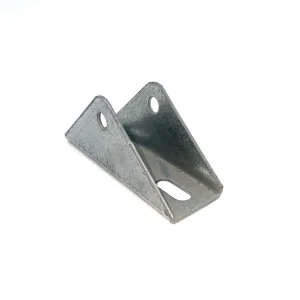
High-Wind Structural Hardware & Precision Anchor Assemblies
Explore our foundational structural anchors, specialized self-drilling fasteners, and engineered aluminum PV framing components designed to resist extreme windborne loads and seismic stresses.
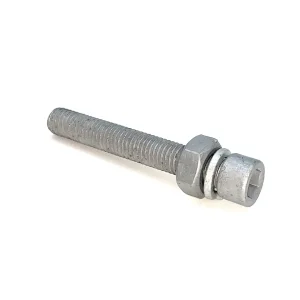
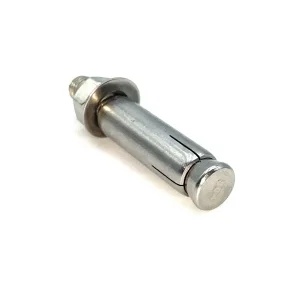
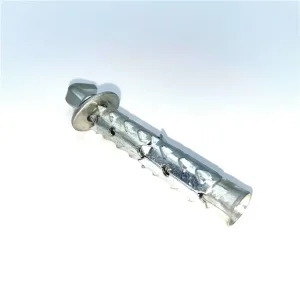
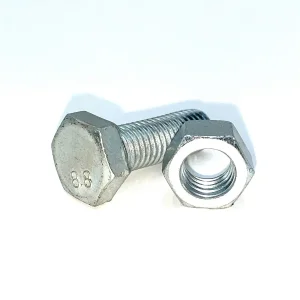
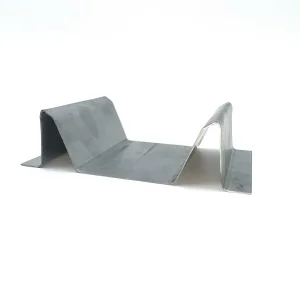
Macro Industry Solutions: Engineering Resilient High-Wind Load Paths
Mitigating extreme wind damage demands an unbroken load path from the structural apex down to the bedrock or reinforced concrete foundation. As hurricane intensities escalate globally, standard anchorage calculations are yielding to dynamic cyclonic fatigue models.
Certified resistance under continuous cyclic pressure and localized wind tunnel aerodynamics.
Utility-grade fasteners and mounting components deployed across five continents.
Marine-grade hot-dip galvanization and 316 stainless metallurgy tested to 3,000+ salt-spray hours.
Batch-level EN 10204 3.1 chemical analysis and tensile yield certification on every production heat.
Continuous Load Path Integrity
Hurricanes exert combined three-dimensional forces: lateral shear, high-velocity overturning moments, and severe aerodynamic uplift. Youlong hurricane anchor bolts bridge cold-formed steel framing, timber sill plates, and solar mounting rails directly into reinforced concrete footings, eliminating catastrophic structural separation.
Cyclic Pulsation Resilience
Unlike static gravity loads, hurricane gusts generate turbulent, low-frequency cyclic fatigue that causes standard friction anchors to slip and lose pre-tension. Our cold-forged fish scale and wedge anchors incorporate aggressive serrated geometries that dynamically re-expand under concrete micro-cracking.
Coastal Marine Micro-Climates
Hurricane zones naturally coincide with high-salinity oceanic environments (ISO 9223 C4 to C5-M). Handan Youlong provides specialized metallurgy—including Hot-Dip Galvanizing (HDG) exceeding ASTM A153 specifications and marine-grade AISI 316/316L stainless steel—preventing galvanic embrittlement.
Commercial Status: Infrastructure Hardening Across Typhoon & Hurricane Corridors
Across the North American Atlantic coast, the Caribbean basin, East Asia, and the Australian cyclonic belts, regulatory bodies and institutional investors are mandating resilient infrastructure. Substandard anchor bolts represent the primary failure vector in modern catastrophic wind events.
North America: FBC & HVHZ Standards
The Florida Building Code (FBC) and High-Velocity Hurricane Zone (HVHZ) jurisdictions (Miami-Dade and Broward counties) enforce the world’s strictest structural requirements. Procurement requires anchors capable of resisting 3-second gust wind speeds exceeding 175–185 mph with zero allowable slippage in cracked concrete substrate.
Asia-Pacific: Typhoon & Clean Energy
Japan, Taiwan, and the Philippines regularly confront Category 4 and 5 super typhoons. Utility-scale coastal solar PV plants require foundational cast-in-place anchor bolts and M-type drainage channel brackets that endure cyclic harmonic vibration, prevent panel peel-off, and safeguard multi-million-dollar generation assets.
Supply Chain Cluster Advantages
Situated in Yongnian District, Handan—the fastener capital of China—Handan Youlong Fastener integrates smelting, cold heading, precision CNC machining, and automated continuous hot-dip galvanizing within a 15-kilometer radius, delivering institutional quality with rapid lead times.
Hurricane Anchor Bolt Engineering Matrix & Structural Ratings
Review standard physical specifications, mechanical yield strengths, tensile breakout thresholds, and protective surface treatments across our heavy-duty anchor bolt portfolio.
| Anchor Configuration | Primary Material Grade | Tensile Strength (Fu) | Embedment Depth (hef) | Corrosion Protection | Cyclic Wind Code Suitability |
|---|---|---|---|---|---|
| Heavy-Duty Expansion Anchor (Fish Scale) | AISI 304 / 316 Stainless or Q235B HDG | 700 – 850 MPa | 80 mm – 220 mm | 316 Passivated / HDG ≥86μm | ASCE 7-22 / FBC Cat 5 |
| Cast-In-Place J-Bolt / L-Bolt System | ASTM A36 / A307 Grade C / ASTM F1554 Gr 55 | 400 – 650 MPa | 150 mm – 600 mm | Hot-Dip Galvanized (ASTM A153) | IBC Chapter 16 / ACI 318 |
| High-Strength Hex Structural Anchor | Grade 8.8 / 10.9 Medium Carbon Alloy | 830 – 1040 MPa | 100 mm – 350 mm | Zinc Flake / Dacromet / HDG | AISC 360 / Eurocode 3 |
| Stainless Steel Wedge / Through-Bolt | Marine Grade AISI 316 / A4-80 | 800 MPa | 65 mm – 180 mm | Electro-Polished Passivation | Miami-Dade HVHZ / ISO 9223 C5 |
| PV Guide Rail Foundation Fastener Set | 6005-T6 Extruded Aluminum & 304 SS Bolt | 260 MPa (Rail) / 700 MPa (Bolt) | N/A (Superstructure Tie) | Anodized 15μm / SS Passivated | UL 2703 / ASCE 7-22 Wind Load |
Localized Support & Jurisdictional Regulatory Assurance
Structural engineers and general contractors cannot risk non-compliant anchors. Youlong provides full engineering verification and localized technical documentation conforming to North American, European, and Australasian building codes.
Miami-Dade NOA & Florida FBC
Fabricated to satisfy the extreme uplift and missile-impact mandates of the High-Velocity Hurricane Zone (HVHZ), addressing ASTM E488 cyclic pullout and concrete edge-distance breakout limitations.
ACI 318 & ICC-ES AC193
Engineered design values compliant with ACI 318 Chapter 17 (Anchoring to Concrete), accounting for cracked concrete stress distribution, seismic shear amplification, and post-installed mechanical anchor mechanics.
Eurocode EN 1992-4 (EC2 Part 4)
Full design calculation support under European technical standards for post-installed and cast-in fasteners in concrete, delivering ETA-equivalent quality controls and fatigue loading parameters.
Australia AS 1170.2 Cyclonic C & D
Engineered for Region C and D cyclonic zones across Queensland and Western Australia, providing ultimate limit state (ULS) pull-out capacity under severe pulsating gust factors.
High-Risk Field Application Scenarios
From coastal renewable energy utility farms to reinforced industrial chemical warehouses, Youlong anchor bolts and mounting assemblies are deployed where structural failure is not an option.
1. Utility-Scale Coastal Solar PV Farms
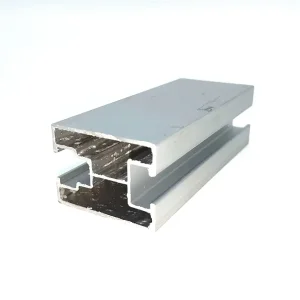
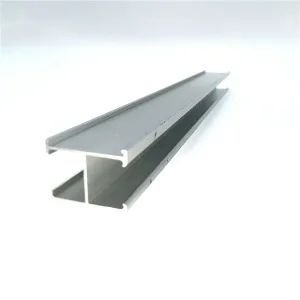
Ground-mounted solar arrays act as massive sails in high-wind conditions. When positive pressure converts rapidly into negative aerodynamic suction, uplift forces can exceed tens of kilonewtons per foundation pile. Youlong 3040 reinforced guide rails paired with heavy-duty concrete expansion anchors create rigid foundation clamps that resist dynamic vibration, vortex shedding, and ground ballast shifting.
2. Commercial & Residential Roof Sill Plate Anchorage
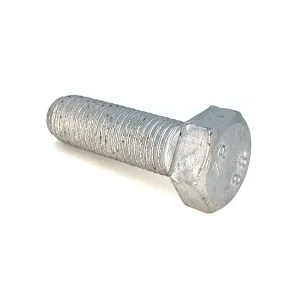
Building code mandates require timber or steel wall sill plates to be securely tied down into concrete foundations at designated intervals (e.g., 4 to 6 feet on center and within 12 inches of every joint). Our heavy-duty hot-dip galvanized hex bolts and fish scale expansion anchors prevent whole-structure lateral sliding and vertical foundation separation during severe cyclonic events.
3. Industrial Pre-Engineered Metal Buildings (PEMB)
Warehouses and distribution facilities in hurricane zones feature large open bays vulnerable to internal pressurization if an opening is breached. High-strength Grade 8.8 and 10.9 structural foundation bolts secure column base plates to concrete grade beams, sustaining extreme bending moments and cyclic shear reversals.
Inside the Youlong Factory: Precision Fastener Engineering
Combining world-class cold heading, automatic multi-station forging, precision CNC threading, and rigorous metallurgical laboratory testing to ensure zero defect rates under cyclonic stress.
Automated Forging Lines
Equipped with modern high-speed multi-station cold-heading machines and induction hot-forging presses capable of producing M6 through M64 structural bolt diameters with grain-flow optimization.
Precision Thread Rolling
Threads are cold-rolled rather than cut, creating continuous uninterrupted metal grain lines that provide over 30% higher fatigue resistance and superior pullout strength under wind pulsation.
Continuous Hot-Dip Galvanizing
In-house computerized hot-dip galvanizing baths control temperature and immersion times to produce uniform zinc-iron alloy layers (≥86μm thickness) that satisfy ASTM A153 Class C and ISO 1461.
In-House Testing Laboratory
Every heat treatment lot undergoes universal tensile testing, Charpy V-notch impact validation at sub-zero temperatures, salt-spray corrosion chamber exposure, and Rockwell hardness verification.
Technical Roadmap: The Next Generation of High-Wind Anchoring Systems
As extreme weather events become more frequent and structures become smarter, fastener technology is evolving beyond passive steel rods into intelligent, highly ductile structural elements.
1. IoT Smart Strain-Sensing Fasteners
Youlong is actively researching integrated piezoelectric and fiber-optic strain sensor embeds within heavy-duty foundation anchor bolts. These smart fasteners enable structural health monitoring (SHM) in real time, alerting facility managers to anchor pre-tension loss, concrete creep, or severe post-hurricane plastic elongation before catastrophic failure occurs.
2. Nano-Ceramic Hybrid Surface Treatments
To exceed traditional hot-dip galvanizing performance in severe C5 marine-industrial atmospheres without hydrogen embrittlement risks, Youlong is deploying multi-layer micro-zinc flake and nano-ceramic topcoats. These dry-film coatings withstand 4,500+ hours of ASTM B117 salt spray while maintaining precise thread tolerances without thread chasing.
3. High-Ductility Hybrid Energy-Dissipating Anchors
Extreme cyclonic storms generate dynamic shock reversals akin to low-level seismic events. Future product releases incorporate calibrated yield zones within the anchor shank, allowing controlled plastic deformation that absorbs kinetic energy and protects surrounding concrete slabs from explosive breakout failure.
Frequently Asked Questions: Structural Hurricane Anchor Bolt Engineering
Comprehensive engineering insights into embedment calculations, material selections, installation torques, and international regulatory compliances.
What is the structural difference between a standard anchor bolt and a hurricane-rated anchor bolt?
Standard anchor bolts are designed primarily for static gravity dead-loads and moderate lateral shear. Hurricane anchor bolts are engineered for high combined tensile uplift and dynamic cyclic shear under extreme wind gusts (ASCE 7-22). They incorporate deeper effective embedment (hef), proprietary anti-rotation or fish-scale expansion sleeves, certified ductility, and cold-rolled threads to resist low-cycle fatigue and concrete micro-cracking.
How does concrete breakout capacity factor into hurricane anchor design?
Under ACI 318 Chapter 17, the tension strength of an anchor is governed by steel yield, concrete breakout, pullout, or concrete side-face blowout. In high-velocity hurricane zones, shallow embedment causes concrete cone breakout long before the bolt's tensile steel strength is reached. Designers must verify effective embedment depth, edge distance (c1, c2), and anchor spacing (s) to ensure ductile steel failure occurs before brittle concrete breakout.
Which material should be specified: Hot-Dip Galvanized Carbon Steel or 316 Stainless Steel?
For inland and moderate industrial zones (ISO 9223 C1 to C3), hot-dip galvanized (HDG) carbon steel (ASTM A153 with ≥86μm zinc) provides excellent structural strength and 25+ years of corrosion protection. For coastal zones within 5 to 10 miles of breaking saltwater surf (C4 to C5-M marine environment), marine-grade AISI 316 (A4-80) stainless steel is strongly recommended to prevent pitting and stress-corrosion cracking.
How do you prevent galvanic corrosion between aluminum solar rails and steel anchor bolts?
When dissimilar metals such as aluminum (anodic) and stainless steel or carbon steel (cathodic) contact each other in a humid or saline environment, accelerated galvanic corrosion occurs. Youlong solves this by integrating UV-stabilized EPDM or non-conductive nylon isolating washers and dielectric sleeves, completely isolating the aluminum mounting profile from the structural anchor.
Why is installation torque critical for hurricane expansion anchors?
Mechanical expansion anchors rely on precise radial expansion of the sleeve against the drilled concrete hole wall. Under-torquing leaves the anchor under-expanded, causing premature slip and catastrophic pullout under dynamic hurricane uplift. Over-torquing damages the concrete substrate and strips bolt threads. Every Youlong product specification sheet includes calibrated installation torque (Tinst) values verified by our quality lab.
Can Handan Youlong manufacture custom anchor dimensions and OEM geometries?
Yes. As a direct manufacturer in Yongnian, Handan, Youlong operates complete in-house tooling, cold-heading, hot-forging, and CNC machining lines. We produce custom foundation bolts (J-bolts, L-bolts, double-ended studs, fish-scale anchors) according to engineer-stamped CAD/BIM drawings with full Mill Test Reports (MTR) according to EN 10204 3.1 standards.
Structural Clamps, Pressure Plates & Heavy Expansion Hardware
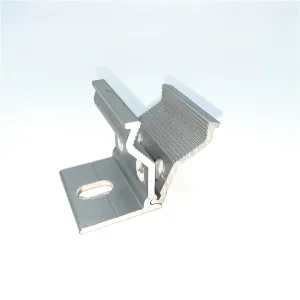
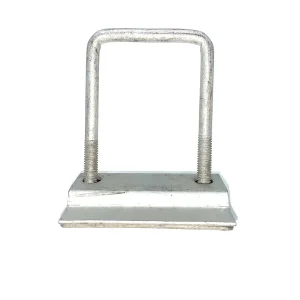
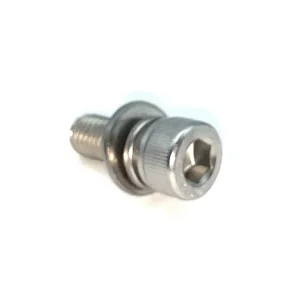
Explore our specialized range of anti-loosening combination fasteners, metal roof seam clamps, and reinforced aluminum guide rails designed for uninterrupted load path transfer.