
Featured Industrial Structural Fasteners & Mounting Modules
High-integrity anchoring components, precision brackets, and engineered mounting hardware verified through tensile load testing and strict salt-spray metallurgical verification.


State of Expansion Shield Anchor Manufacturing: Industrial Analysis
Expansion shield anchors represent the core of mechanical post-installed fastening systems in solid masonry, structural concrete, and heavy infrastructure frameworks across modern civil engineering.
Yongnian Fastener Cluster Superiority
Handan's Yongnian District produces more than 55% of China's structural fasteners. Handan Youlong Fastener Co., Ltd. harnesses direct integration with tier-1 metallurgical rolling mills, automated cold heading, and precision casting lines to optimize production cycles and eliminate intermediary cost layers.
Cracked vs. Uncracked Concrete Demands
Engineers worldwide specify single expansion and double expansion shield anchors for base materials with variable compressive strengths (C20/25 to C50/60). Modern projects mandate strict compliance with ETA Option 1 and ACI 318-19 Chapter 17 anchorage provisions to withstand dynamic seismic cyclic loads.
Expanding Mechanical Load Dissipation
Unlike chemical capsules or light drop-in anchors, heavy-duty expansion shields utilize malleable iron, zinc die-cast Zamak alloy, or ductile steel sleeves. When the tapered cone is drawn into the expansion body, it delivers uniform radial hoop stress without inducing localized substrate spalling.
Physics of Expansion Anchoring: Radial Expansion & Friction Lock
An expansion shield anchor derives its ultimate tensile strength ($N_u$) and shear resistance ($V_u$) through controlled frictional grip and partial mechanical interlock against the drilled borehole walls.
Single vs. Double Expansion Mechanics
Single Expansion Shield Anchors: Feature a single tapered nut at the bottom of the shield. As the matching machine bolt or threaded stud is torqued, the nut travels upward into the split sleeve, expanding the base of the shield. This creates a conical compression zone ideal for hard stone and dense, uncracked concrete where bottom-anchoring achieves maximum depth engagement.
Double Expansion Shield Anchors: Incorporate two opposed conical wedges positioned at the bottom and top of the segmented shield. Torque forces drive both wedges inward simultaneously, expanding the sleeve along its entire length. This dual-point contact distributes radial pressure evenly, preventing substrate breakout in softer brick, mortar joints, porous masonry, or concrete of lower compressive grade.
Critical Edge Distances ($c_{cr}$) & Spacing Ratios ($s_{cr}$)
Because expansion shields exert substantial outward hoop stress upon tightening, improper placement leads to concrete edge blowout or overlapping stress cones:
- Minimum Edge Distance ($c_{min}$): Must not fall below $1.5 \times h_{ef}$ (effective embedment depth) to prevent pre-mature shear breakout along unreinforced slab perimeter edges.
- Critical Spacing ($s_{cr}$): Recommended minimum center-to-center distance is $3.0 \times h_{ef}$. Spacing anchors closer than $s_{cr}$ requires a group reduction factor under fib Model Code 2020 calculations.
- Hole Cleaning & Drill Diameters: Borehole diameter tolerances must adhere strictly to ANSI B212.15 or ISO tolerances. Uncleaned drill dust decreases pull-out friction resistance by up to 42%.
| Anchor Shield Category | Common Metallurgy | Suitable Substrates | Tensile Capacity Range | Shear Resistance Profile | Seismic & Dynamic Suitability |
|---|---|---|---|---|---|
| Single Expansion Shield | Zamak 3 / Malleable Ductile Iron | Hard Concrete, Solid Granite | 8.5 kN – 32.0 kN | High Static Shear | Non-Critical Static |
| Double Expansion Shield | Zamak 5 / Carbon Steel Class 5.8 | Hollow Block, Brick, Medium Slab | 6.2 kN – 24.5 kN | Balanced Radial Distribution | Moderate Dynamic |
| Stainless Steel Wedge Bolt | AISI 304 (A2) / AISI 316 (A4) | Cracked / Uncracked C20–C50 | 12.0 kN – 58.0 kN | Ultra-High Cyclic Shear | ETA C1 / C2 Seismic |
| Heavy Sleeve Anchor Bolt | Zinc-Plated High-Tensile Carbon Steel | Concrete Pavements, Precast Slabs | 10.0 kN – 46.0 kN | Medium to Heavy Lateral Loads | Industrial Heavy Duty |
Macro-Industry Solutions Powered by Expansion Anchoring
From utility-scale solar arrays to rail electrification and marine petrochemical terminals, Youlong expansion anchors anchor multi-million-dollar infrastructure investments.
Utility-Scale Solar PV & Ballast Roofs
Flat-roof commercial and utility ground arrays face extreme aerodynamic uplift. Youlong supply chains pair corrosion-resistant stainless expansion bolts with aluminum guide rails and three-hole connectors, maintaining zero movement under 140 mph localized wind shears while preventing galvanic degradation through nylon isolating washers.
Tunneling, HVAC & Rail Electrification
Overhead catenary supports, emergency ventilation shafts, and cable routing brackets inside transit tunnels require non-combustible, tamper-proof mechanical anchors. Our double expansion anchors absorb the continuous acoustic vibrations and air pressure waves generated by high-speed trains passing at 350 km/h.
Heavy Machine Tool Base Anchoring
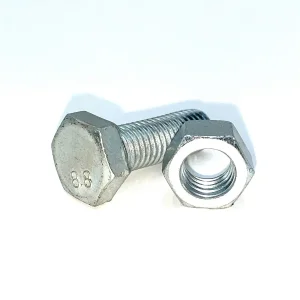
Industrial stamping presses, automated CNC centers, and injection molders generate high dynamic shear oscillations. Single expansion anchors installed with high-tensile Grade 8.8 and 10.9 hex bolts ensure fixed clamping force, minimizing machine bed alignment drift and maintaining sub-millimeter manufacturing tolerances.
Corrosion Resistance Chemistry: ISO 9223 C1 to C5 Standards
Corrosion is the primary failure mode of structural fasteners. Youlong implements rigorous surface engineering protocols to safeguard mechanical anchors across aggressive microclimates.
Critical Galvanic Isolation Advisory for PV Installers:
When mating stainless steel (304/316) expansion anchors or bolts with extruded aluminum alloy (AL6005-T5) mounting brackets in coastal or humid outdoor environments (ISO 9223 C3-C5), the galvanic potential difference exceeds 0.50 V. This accelerates aluminum oxidation around connection slots. Youlong provides UV-stabilized EPDM flat washers, non-conductive nylon sleeves, or zinc-nickel sacrificial barriers to eliminate direct bimetallic contact and ensure structural integrity over the full 25-year asset lifecycle.
Global Localization, Building Codes & Regulatory Compliance
Navigating global structural codes demands technical fluency in regional certification frameworks. Youlong supports procurement teams with full audit compliance.
North America: ICC-ES & ACI 318
All anchorage into structural concrete within the US and Canadian jurisdictions must conform to ICC-ES AC193 (mechanical anchors in concrete elements) and ACI 318 Chapter 17. Our technical documentation includes cracked concrete capacity metrics, pull-out test data under ASTM E488, and seismic category C through F qualification data sheets.
European Union: CE & ETA Option 1/7
European installations require European Technical Assessment (ETA) aligned with EAD 330232-00-0601 (formerly ETAG 001). We supply fasteners with verified Characteristic Resistance ($N_{Rk}$, $V_{Rk}$) values, material traceability (EN 10204 3.1 inspection certificates), and CE Declaration of Performance for structural steel CE marking under EN 1090-2.
Middle East & APAC Requirements
High ambient thermal cycling in GCC deserts (UAE, Saudi Arabia) requires anchor coatings that withstand temperature swings from 0°C to 55°C without sleeve embrittlement. Australian projects require conformity with AS 5216:2021 (Design of post-installed and cast-in fastenings in concrete) to withstand extreme UV and maritime salt atmospheres.
Technology Roadmap: Next-Generation Mechanical Fasteners (2026–2035)
Smart structures, green circular metallurgy, and automated robotic installation are reshaping post-installed anchorage engineering.
Smart IoT Structural Health Monitoring
Integration of micro-piezoelectric sensors and passive RFID chips into expansion shield cones. These enable contactless, wireless ultrasonic inspection of pre-tension clamping torque, allowing bridge and offshore wind turbine inspectors to detect loose anchors without costly physical scaffolding.
Zero-Carbon Recycled Metallurgy
Handan Youlong is transitioning toward scrap-fed electric arc furnace (EAF) carbon steels, cutting embodied fastener carbon emissions by 68%. New chromium-free, eco-friendly dip-spin coatings surpass RoHS and REACH standards while outperforming legacy hexavalent electroplating in acidic environments.
Robotic Installation Tolerances
Autonomous site-drilling robots in solar and tunneling applications demand fastener components with ultra-strict dimensional tolerances (±0.1 mm). Youlong's CNC production lines integrate automated laser vision sorting to ensure zero-defect insertion during high-speed mechanized placement.
Frequently Asked Engineering & Sourcing Questions
Definitive answers addressing installation mechanics, substrate failure prevention, and bulk factory purchasing protocols.
What is the mechanical difference between a single expansion shield and a double expansion shield anchor?
How do you calculate the correct drill bit diameter and hole depth for expansion shield anchors?
What torque specifications should be applied to prevent concrete cone blowout?
How does Handan Youlong Fastener ensure batch-to-batch metallurgical consistency?
Can expansion shield anchors be removed and reused after installation?
What is the standard lead time and OEM customization capacity for bulk orders?
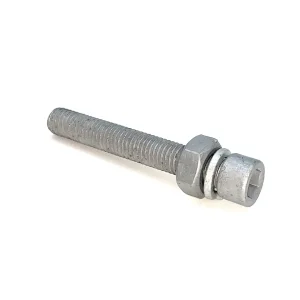
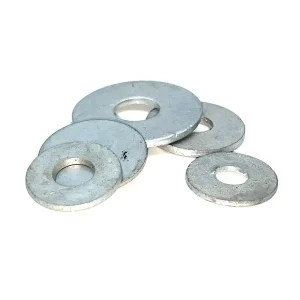
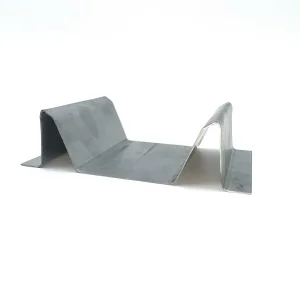
Structural Bolts, Washers & Roof Clamping Assemblies
Heavy-duty carbon and stainless hardware designed to complement expansion anchoring systems in complete building load paths.
Handan Youlong Fastener Co., Ltd.
Headquartered in Yongnian District, Handan City, Hebei Province — China's Fastener Capital. Over a decade of specialized industrial manufacturing, shipping 300,000+ tonnes of structural hardware to over 100 international procurement clients. Our engineering plant combines high-speed stamping, automated cold-forging, and multi-axis CNC tooling under ISO 9001 quality management.
Request Technical Catalog & Direct Quotation
Connect with our structural fastening engineering division for OEM custom drawings, anchor design calculations, load test certificates, or container-load FOB/CIF price proposals.