High-Integrity Fastening & Mounting Portfolio
Engineered to deliver high mechanical holding resistance, vibration dampening, and electrochemical stability for heavy utility solar arrays and transmission cross-arms.
Tonnes Shipped
Global cumulative structural hardware exports
Global Partners
Tier-1 utilities, EPCs, and hardware distributors
Rated Tensile Strength
Guaranteed dead-end mechanical hold efficiency
Atmospheric Class
Tested for extreme marine & industrial resistance
Evolution of Dead End Strain Clamps in Modern Utility & Renewable Infrastructure
In modern overhead electrical transmission networks, high-voltage distribution lines, and utility-scale photovoltaic structural frames, dead end strain clamps (often designated as tension clamps or dead-end anchors) fulfill an indispensable engineering imperative: absorbing mechanical line tension while preventing fatigue damage and electrical flashover.
Wedge vs. Bolted Topology
Historical reliance on heavy malleable iron bolted strain clamps has rapidly shifted toward self-tightening conical wedge and preformed helical systems. While bolted clamps require precise torque validation, wedge designs utilize the physical tension of the conductor (ACSR, AAAC, ACSS) to increase mechanical grip dynamically under dynamic wind and ice loadings.
Grid Modernization Demands
As transmission operators repower aged rights-of-way using High-Temperature Low-Sag (HTLS) conductors, dead-end hardware must withstand operating temperatures exceeding 150°C to 210°C without mechanical creep, metal softening, or thermal micro-arcing between the clamping body and the tension strand.
PV Mounting Convergence
Utility solar cable arrays and multi-span tracker support cables now deploy dead-end anchoring mechanics to suspend DC home runs, string harnesses, and wind-mitigation guy lines. The integration of corrosion-resistant structural aluminum alloys (A356, 6061-T6) ensures 30-year lifecycle maintenance parity.
Procurement Drivers & Industry 4.0 Supply Resiliency
International infrastructure procurement involves navigating geopolitical shifts, material volatility, and rigorous non-destructive evaluation standards. Leading buyers partner directly with precision clusters capable of end-to-end metallurgical tracing.
The Handan Fastener & Hardware Cluster
Situated in Yongnian, Handan—China's recognized Fastener Capital—Youlong leverages immediate access to domestic hot-rolled steel coils, high-purity aluminum ingots, localized hot-dip galvanizing baths, and dedicated logistics routes. This colocation shrinks raw-material-to-dock cycle times by up to 35% compared to fragmented production regions.
Automated Forging & CNC Tolerancing
Industry 4.0 automated stamping, closed-die forging, and CNC milling cells eliminate manual deviations. Every dead end clamp body and U-bolt assembly achieves strict dimensional tolerances within ±0.2mm, preventing uneven mechanical stress distribution along the conductor outer strands.
Total Metallurgical Traceability
Procurement specifications demand verified chemical analysis (OES spectrometry) and batch-specific tensile testing. From raw billets to finalized electro-galvanized or hot-dip coated finishes, each production run is tied to Mill Test Certificates (MTC EN 10204 3.1) guaranteeing non-porous castings and zero micro-fissuring.
| Clamp Architecture | Common Materials | Grip Holding Power | Installation Speed | Primary Industrial Application |
|---|---|---|---|---|
| NLL Bolted Strain Clamp | High-Strength A356 Aluminum Alloy | ≥ 90% Conductor RTS | Manual (Torque Wrench Required) | Distribution networks up to 35kV; ACSR conductors |
| NXJ Wedge Type Clamp | Extruded Aluminum & Weatherproof Polymer | ≥ 95% Cable RTS | Rapid (Tool-free wedge insertion) | Low-voltage ABC (Aerial Bundled Cables) & service drops |
| Helical Preformed Tension Clamp | Aluminum-Clad Steel (ACS) / Galvanized Wire | ≥ 98% Conductor RTS | Manual Wrap (Uniform stress dissipation) | Ultra-long span transmission, OPGW & ADSS fiber optic cables |
| PV Modular Tension Clamp | Anodized AL6005-T5 & SUS304 / SUS316 Hardware | Engineered for dynamic wind uplift | Standard Hex / Torx Fastening | Utility solar ground mount, carport water channels & roof clips |
Mission-Critical Operational Environments
Strain hardware operates under continuous physical tension, Aeolian vibration, and harsh environmental attacks. Our assemblies are deployed across demanding geographical and structural topologies.
Coastal & Offshore Substation Corridors
Marine salt atmospheres degrade non-passivated hardware through pitting and galvanic corrosion. Youlong utilizes grade A4 (SUS316) fasteners combined with heavy hot-dip galvanizing (≥86μm thickness according to ASTM A153) and dielectric EPDM isolators to completely neutralize bimetallic corrosion cells.
High Aeolian Vibration River Crossings
Long conductor spans across rivers, gorges, and valley passes induce intense cyclical vortex shedding and high dynamic bending strains. Dead-end tension clamps engineered with rounded keeper plates and bell-mouthed clamp exits eliminate stress-concentration notches, preventing premature conductor strand fatigue.
Desert High-UV & High-Temperature Solar Plants
Ground-mounted photovoltaic trackers in desert environments experience diurnal temperature swings exceeding 45°C. Structural clamp connectors and guide rails (such as the 3040 reinforced aluminum series) maintain thermal expansion compliance without shearing anchoring anchor bolts.
Industrial Rooftops & Waterproof Solar Carports
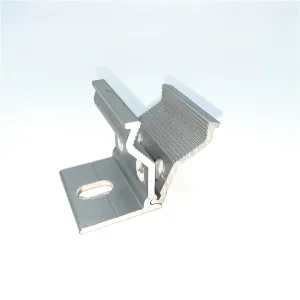
Commercial BIPV projects deploy non-penetrating aluminum clip locks and M-type water channels. Dead-end mechanical anchoring brackets lock continuous rail arrays to steel purlins, providing structural water channels that double as load-bearing structural members under high snow loads.
Standardized Testing & Verification Protocol for Dead End Clamps
Reliability is substantiated through standardized mechanical, electrical, and environmental testing. Sourcing managers evaluate supplier credibility via documented compliance with international benchmarks.
Tensile Holding Load (Proof Test)
Conducted in accordance with IEC 61284 and BS 3288 on calibrated hydraulic horizontal test beds. The dead end clamp must support 95% of the conductor's rated ultimate tensile strength (RTS) for a sustained duration of 60 seconds without conductor slippage, keeper displacement, or crack initiation.
Cyclic Salt Spray Fog Exposure
Accelerated corrosion testing performed according to ASTM B117 and ISO 9227. Hardware is continuously exposed to a 5% NaCl neutral salt solution at 35°C for over 1,000 to 2,000 hours. Zero red rust on carbon steel hot-dip galvanized parts and zero pitting or loss of clamp torque integrity must be maintained.
Electrical Resistance & Heat Cycle
For current-carrying dead-end and terminal clamp setups, the DC electrical resistance through the clamp assembly must not exceed that of an equivalent length of conductor. The clamp undergoes 500 thermal current cycles ensuring contact resistance stability without thermal runaway.
Technical FAQ: Engineering & Procurement Considerations
In-depth insights designed to resolve common structural engineering and international supply chain inquiries.
What is the fundamental difference between strain clamps and suspension clamps?
Suspension clamps support the vertical weight of overhead conductors on tangent poles where line angles remain under 5° to 10°, allowing small longitudinal shifts. In contrast, dead end strain clamps anchor full longitudinal line tension at termination poles, high-angle turn towers (>30°), and dead-end spans, demanding mechanical grip strength up to 90%–95% of conductor RTS.
How do you mitigate galvanic corrosion when attaching aluminum clamps to steel towers?
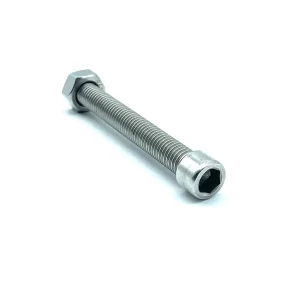
Galvanic corrosion occurs when metals with distinct electrochemical potentials contact electrolyte solutions. To protect against this, aluminum dead-end clamp hardware utilizes heavy hot-dip galvanized carbon steel clevis fittings, passivated SUS304/SUS316 stainless bolts, or dedicated EPDM dielectric insulating barriers to maintain long-term metallurgical integrity.
Can dead-end strain clamp castings be customized for non-standard conductor profiles?
Yes. Our in-house tooling division, gravity die-casting cells, and high-precision CNC machining centers develop custom keeper profiles and wedge grooves engineered to match specific conductor diameters (e.g., specialized ACSR, AAC, AAAC, or composite carbon core cables) without causing outer-strand crushing or deformation.
What role do fasteners play in mounting solar systems with dead-end cable runs?
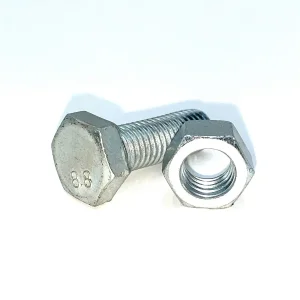
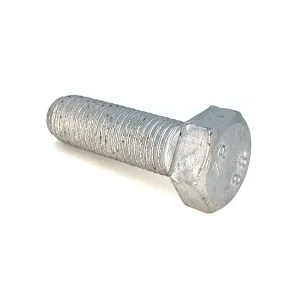
Utility-scale tracking frames and high-wind solar tables rely on heavy-duty hot-dip galvanized hex bolts, stainless expansion anchors, and double-hole pressure plates to secure guy cables and rail assemblies. Fastener grade selection (such as 8.8, 10.9, or SS 316) ensures that dynamic wind uplift forces transfer safely into concrete foundations.
Precision Structural Hardware & Heavy Fastening
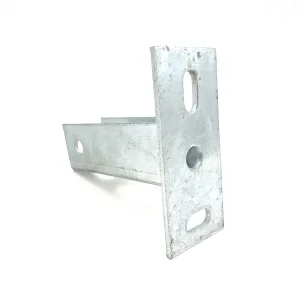
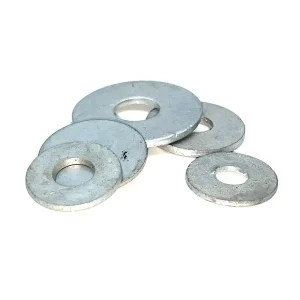
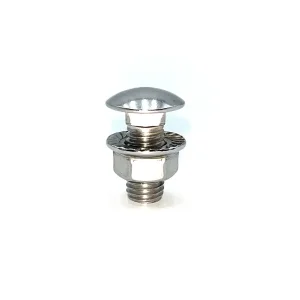
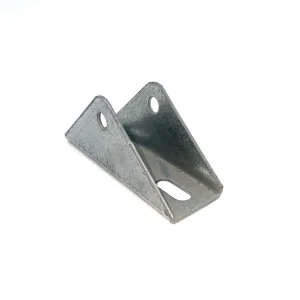
Explore our fully certified line of structural mounting plates, carriage fasteners, heavy anchor bolts, and precision clamping assemblies.