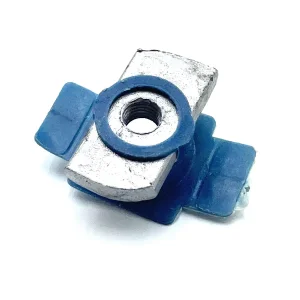
Precision Structural Facade & Mounting Fasteners
Engineered connection brackets, load-bearing purlin joints, high-tensile carriage fasteners, and concrete anchoring assemblies manufactured under stringent ISO 9001:2015 metallurgical tolerances.
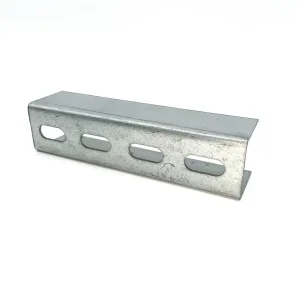
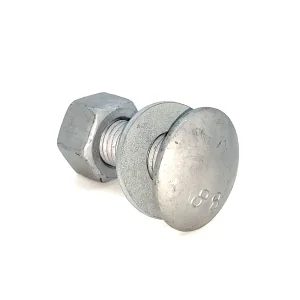
The Global Landscape of Curtain Wall Hardware & Accessories
An authoritative review of industrial demand, metallurgical supply chains, and geographical manufacturing clusters delivering structural envelope safety worldwide.
The contemporary architectural facade has evolved from a passive weather barrier into a dynamic, hyper-engineered structural skin. Behind every soaring glazed skyscraper and high-efficiency Building Integrated Photovoltaic (BIPV) facade lies a critical matrix of curtain wall accessories—anchorage plates, cast-in channels, mullion-transom brackets, expansion joints, shear blocks, pressure plates, and high-tensile stainless steel fasteners. According to international construction economics, the global architectural curtain wall market surpassed USD 55 billion in recent valuations, directly fueling exponential demand for specialized, high-load facade accessories that must endure continuous positive and negative wind pressures, seismic inter-story drifts, and cyclic thermal expansion over 50-year structural service lifespans.
Within this macroscopic framework, the procurement supply chain has shifted significantly toward specialized industrial clusters capable of vertically integrated metallurgy. The Yongnian district in Handan, widely acknowledged as China's Fastener Capital, represents the epicenter of structural cold-heading, multi-axis CNC machining, hot-dip galvanizing, and automated stamping. Direct factory manufacturers in this cluster combine access to prime hot-rolled billets, proprietary extrusion tool-die casting, and localized surface treatment ecosystems. This geographic concentration gives premier manufacturers the capacity to fulfill complex ASTM, EN, and GB standard specifications while compressing procurement lead times by up to 40% compared to fragmented regional suppliers.
Global Urban Densification
Megacities throughout the Asia-Pacific, Middle East, and North America demand higher wind-load tolerances at elevations exceeding 300 meters, requiring tested shear capacities exceeding 45 kN per anchoring node.
Supply Chain Verticalization
Tier-one curtain wall contractors have moved away from third-party trading intermediaries in favor of factory-direct partnerships that provide mill test certificates (MTC 3.1) and batch-specific tensile testing.
Unitized Modular Transition
The transition from stick systems to prefabricated, unitized curtain wall assemblies has elevated the necessity for ultra-tight dimensional tolerances (±0.2mm) in interlocking brackets and thermal isolators.
Key Technological Trends Transforming Facade Engineering
Evaluating the convergence of Building Information Modeling (BIM), environmental sustainability, dynamic thermal performance, and automated precision manufacturing.
BIM LOD 400 Integration
Modern accessories are no longer selected from static 2D paper catalogs. Leading manufacturers furnish detailed 3D digital-twin families with embedded parametric data, mechanical strength limits, and collision-detection geometries for Autodesk Revit and Tekla structures.
Galvanic Decoupling Systems
Direct contact between aluminum mullions and carbon steel brackets triggers galvanic electro-potential corrosion. Modern factories co-mold polyamide 66 (PA66 GF25) thermal isolators and vulcanized EPDM barrier pads directly into structural fastener sets.
Low-Carbon Metallurgy (EPD)
With strict European and LEED v4.1 embodied carbon thresholds, tier-one factories utilize electric arc furnace (EAF) recycled billet steel and recycled 6063-T6 aluminum alloys accompanied by certified third-party Environmental Product Declarations (EPD).
Self-Locking Anti-Vibration
Micro-vibrations induced by vortex shedding and aerodynamic resonance cause fastener back-out. Modern accessories incorporate serrated contact surfaces, built-in Nord-Lock style wedge-locking washers, and micro-encapsulated anaerobic thread-locking compounds.
Localized Application Scenarios & Environmental Solutions
Evaluating structural hardware configurations across varied geographic microclimates, seismic fault lines, and marine corrosive atmospheres.
| Geographic / Climatic Zone | Primary Stress Vectors | Recommended Alloy & Coating | Critical Accessory Assemblies | Compliance Standards |
|---|---|---|---|---|
| C5-M Coastal & Marine Zones (Offshore, Gulf Coast, Singapore, Miami) |
Chloride pitting, high humidity, cyclical saltwater spray fog | SS316 (A4-70 / A4-80) Delta-Protekt / Dacromet 1500h |
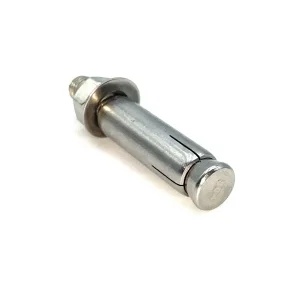
Heavy-duty 316 expansion anchors, neoprene isolating grommets, 316 carriage bolts | ISO 9223 C5-M, ASTM B117 |
| Seismic Belts (Zones 3 & 4) (Japan, California, New Zealand, Chile) |
Inter-story lateral drift, dynamic shear distortion, cyclic pull-out | Q355B / S355JR Hot-Dip Galvanized ≥85μm |
Slotted structural angle brackets, ductile cast-in anchor channels, spring-loaded T-bolts | AAMA 501.4, ASCE 7-22 |
| Hyper-Arid Desert High Altitude (Riyadh, Dubai, Phoenix, Atacama) |
Extreme diurnal delta-T (Δ50°C), particulate sand abrasion, UV | 6063-T6 / 6005A-T6 Anodized ≥25μm Class 1 |
Sliding slotted purlin splices, PTFE slip-bearings, UV-stabilized fluoropolymer washers | ASTM C1193, EN 13830 |
| Super-Tall Building Envelopes (Elevations >250m Global) |
Excessive negative wind suction (>5.5 kPa), vortex buffeting | Grade 8.8 / 10.9 Alloy Zinc-Nickel Sherardized |
Serrated face plate brackets, torque-controlled undercut anchors, reinforced pressure plates | EN 1993-1-8, ASTM A325 |
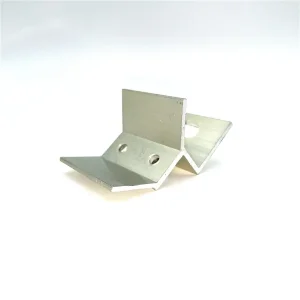
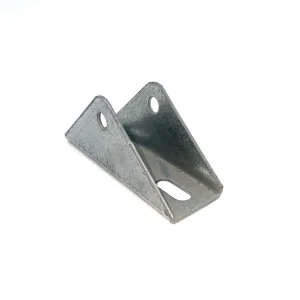
In high-seismic configurations, rigid anchoring is fundamentally hazardous. Curtain wall attachments must accommodate horizontal building frame deformation without brittle fracture of the glazing lite. To resolve this, premier factories produce precision-stamped serrated angle brackets with engineered elongated slots. The connection permits controlled lateral translation during an earthquake event while preserving structural containment of the curtain wall mullion under subsequent gravitational and wind forces.
Metallurgical Quality Assurance & Manufacturing Roadmap
From raw rod spheroidizing to multi-station progressive cold forming, our metallurgical pipeline ensures zero-defect structural integrity.
Phase 1: Raw Material Ingot Verification
Spectrographic chemical assays ensure silicon, manganese, chromium, and molybdenum levels strictly meet international chemistry thresholds. Rod coils undergo ultrasonic non-destructive testing (NDT) to prevent internal micro-fissures.
Phase 2: Multi-Station High-Speed Forging
High-tonnage cold headers form bolt blanks with unbroken metal grain lines, yielding superior fatigue resistance compared to turned bar stock. CNC turning centers cut thread profiles to precise 6g/6H tolerances.
Phase 3: Automated Optical Sorting & Proofing
Laser vision sorters inspect 100% of fastener outputs at 800 parts per minute, eliminating thread pitch discrepancies or head concentricity defects. Destructive tensile test frames confirm ultimate breaking load (kN) values.
Holistic Commercial Solutions for Contractors & EPCs
Streamlining the procurement ecosystem from engineering drawing validation to containerized phased job-site delivery.
For international facade engineering firms, sourcing curtain wall accessories presents multifaceted challenges: fragmented supplier networks, non-standardized dimensional deviations, uncertain raw material traceability, and prolonged logistics bottlenecks. Handan Youlong Fastener Co., Ltd. addresses these operational bottlenecks by providing an integrated, single-source manufacturing platform that consolidates structural engineering design, custom die tooling, volume fabrication, and certified quality verification.
OEM Blueprint Customization
We review and optimize contractor CAD/BIM shop drawings, advising on draft angles, minimum bend radii, and fastener pitch to maximize structural performance while lowering production cycle costs.
Phased Job-Site Logistics
Curtain wall installations cannot store surplus components on congested urban sites. We coordinate staged containerized shipments indexed to the contractor's floor-by-floor panel installation timeline.
Full Batch Traceability
Every export crate is tracked back to its original heat treatment batch, steel melt number, and galvanizing bath parameters, protecting developers and facade consultants against latent material liabilities.
Frequently Asked Technical & Procurement Questions
In-depth answers addressing design limits, material standards, galvanic isolation, and export delivery parameters.
What essential accessories make up a typical unitized curtain wall system?
How do you prevent bi-metallic (galvanic) corrosion between aluminum extrusions and steel bolts?
What are the differences between 304 and 316 stainless steel for facade fasteners?
Why is hot-dip galvanizing (HDG) preferred over zinc electroplating for embedded brackets?
Can Youlong produce custom brackets and connector hardware to bespoke drawings?
What documentation and quality testing certificates accompany export shipments?
Engineered Clamps, Plates & Specialized Hardware
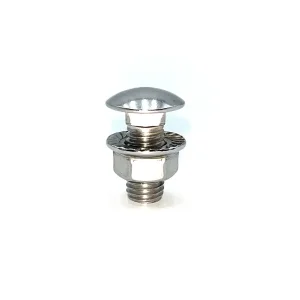
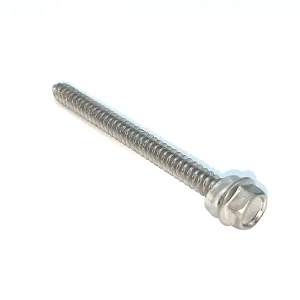
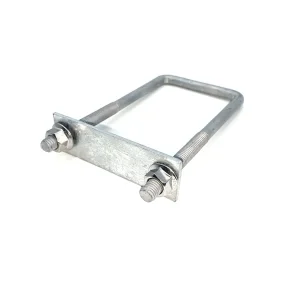
Expanding structural envelope integrity with specialized roof clamps, anti-loosening washer-bolt sets, double-hole pressure plates, and self-drilling facade screws.