
Engineered Chemical & Mechanical Fastening Components
Direct factory supply featuring cold-forged and precision-machined threaded hardware, structural brackets, and heavy expansion systems engineered for high-shear, dynamic, and vibrating infrastructure installations.
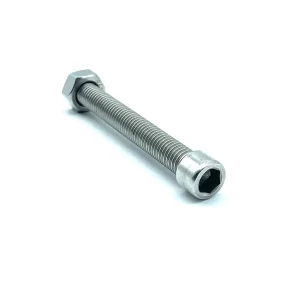
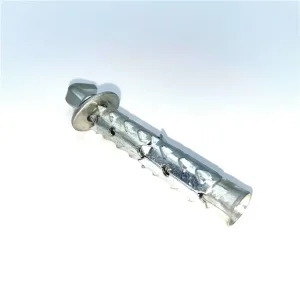
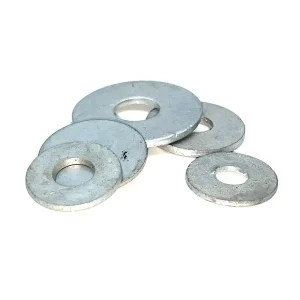
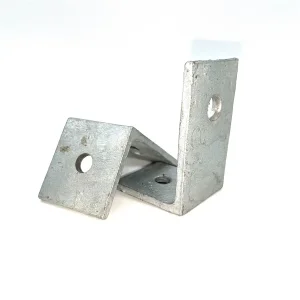
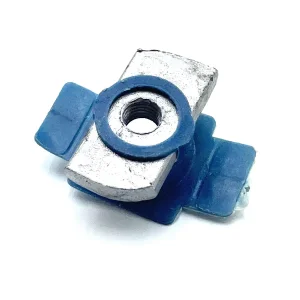
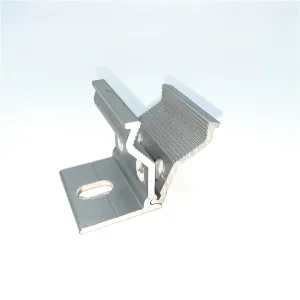
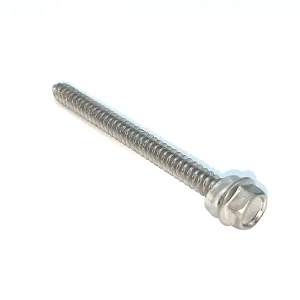
Evaluating the Best Chemical Bolt Anchor Companies: Global Procurement Demands
In mega-infrastructure, civil engineering, and renewable utility installations, chemical bolt anchors (bonded anchor studs and injectable polymer mortars) bear severe tensile pull-out, cyclic seismic shears, and sustained environmental stressors. Selecting the optimal manufacturing enterprise requires auditing deep chemical synthesis capabilities, metallurgy standards, and traceable compliance frameworks.
Mechanical & Chemical Integrity
Post-installed chemical anchoring relies on adhesion to the concrete substrate and mechanical thread interlock. Leading companies ensure precision-rolled 5.8, 8.8, 10.9 grade carbon steel or A4-70/A4-80 (AISI 316) stainless steel threaded rods coupled with resin mortars that withstand high bonding stresses without creep failure.
- Zero outward radial expansion stress on concrete edges
- High shear capacity in close-edge and narrow-spacing grids
- Traceable 3.1 chemical mill certificates for steel stocks
Total Cost of Ownership (TCO)
Procuring structural anchors is a life-safety decision. While baseline fastener costs represent under 1.5% of total capital expenditure in power plants or rail viaducts, anchor failure produces catastrophic downtime, structural decommissioning, and catastrophic legal liabilities. True tier-1 suppliers deliver verified longevity.
- 50 to 100-year design working life certifications
- Rapid-curing formulations reducing installation labor costs
- Bulk containerized volume packaging minimizing waste
Seismic & Environmental Approvals
Industrial anchors must strictly satisfy European Technical Assessment (ETA Option 1 for cracked and uncracked concrete) and ICC-ES AC308 standards. Under seismic performance categories C1 and C2, chemical anchors must maintain bonding even as crack widths pulse dynamically from 0.5mm to 0.8mm during tectonic shocks.
- ETA-approved under EAD 330499-01-0601 guidelines
- Seismic C1 & C2 cyclic load resistance protocols
- Fire resistance compliance according to DIN EN 1363-1
Macro-Industry Solutions Powered by Chemical Bolt Anchors
From renewable solar arrays to high-speed rail viaducts and marine ports, bonded anchors solve critical load transmission challenges where conventional expansion bolts fail due to concrete splitting or high vibration levels.
Utility-Scale Solar PV & Carport Foundations
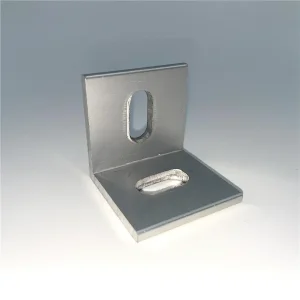
Photovoltaic mounting systems installed on reinforced concrete footings, rooftop ballast slabs, and commercial carports endure relentless, alternating uplift forces generated by severe wind vortexes. Chemical bolt anchor assemblies, coupled with high-strength carbon steel hot-dip galvanized or AISI 304/316 stainless studs, eliminate internal bursting forces in thin-edge concrete piers. Handan Youlong Fastener Co., Ltd. produces precision mounting rails, angle brackets, and foundation anchors that seamlessly absorb these dynamic uplift and shear loads across utility solar parks globally.
Wind Energy Turbines & Power Substation Infrastructure
Wind turbine foundation pediment anchors and high-voltage transformer gantry pads experience non-stop harmonic vibrations, cyclic overturning moments, and extreme temperature swings. Pure epoxy chemical anchor systems provide exceptional bonding performance under sustained fatigue conditions, preventing bond slippage or micro-fracturing of the grout-concrete interface throughout multi-decade operating cycles in remote high-wind corridors.
Tunneling, High-Speed Rail & Catenary Gantry Systems
In metro tunnels and high-speed rail tracks, anchors are exposed to aggressive piston effect pressure waves, sulfur gas emissions, and extreme moisture. Chemical capsules and injection systems utilizing vinyl ester urethane hybrid resins deliver lightning-fast curing alongside unmatched corrosion resistance. They anchor tunnel fire safety boards, heavy overhead contact system (OCS) masts, and acoustic barrier walls without damaging delicate precast tunnel segmental lining rings.
Industrial Plant Retrofit & Heavy Heavy-Duty Crane Rails
When adding heavy automated gantry cranes, robotic stamping lines, or steel mezzanine frameworks to aged industrial slabs, edge distances to preexisting columns are frequently minimal. Chemical anchors provide 100% stress-free anchorage across short embedment depths, ensuring full transfer of dynamic braking forces without cracking adjacent reinforced concrete beams.
Technical Roadmap: The Chemistry Behind Peak Anchoring Strength
The engineering capability of a chemical anchor enterprise is fundamentally governed by polymer chemistry. Modern bonded anchors are classified across three core resin technologies, each engineered for distinct thermal, curing, and load criteria.
| Resin Chemistry System | Primary Polymer Base | Cure Time (20°C) | Bond Strength (Cracked Concrete) | Key Application Profile | Environmental Classification |
|---|---|---|---|---|---|
| Pure Epoxy System (1:1 or 3:1 Coaxial Injection) |
Bisphenol-A/F Epoxy Resin & Polyamine Hardener | 7 – 12 Hours (Slow, High Bond) | Exceptional (>18 N/mm²) | Heavy civil foundations, diamond-cored holes, rebar post-installation, water-submerged holes | 100% Solids, Ultra-Low Shrinkage, Zero VOC |
| Vinyl Ester Hybrid (10:1 Injection & Glass Ampoules) |
Styrene-Free Vinyl Ester Methacrylate | 35 – 50 Minutes (Rapid) | High (14 – 16 N/mm²) | High-speed installation, seismic C1/C2 retrofits, overhead structural installations, cold weather down to -10°C | LEED v4 Compliant, A+ Indoor Emission |
| Epoxy Acrylate System (Pre-portioned Glass Capsules) |
Modified Urethane Acrylate Resin with Quartz Sand | 15 – 25 Minutes (Ultra-Fast) | Medium-High (12 – 14 N/mm²) | Rotary hammer drilling capsule drive, structural steel columns, PV solar mounting bases | Styrene-Free, High Alkaline Resistance |
| Polyester Resin (Standard Cartridge) |
Unsaturated Polyester in Styrene or Methacrylate | 40 – 60 Minutes | Standard (7 – 9 N/mm²) | Hollow brick with sleeve, light mechanical anchoring, secondary non-structural fixings | Economy residential grade |
Sub-Zero & High-Temperature Curing
Next-generation chemical mortars engineered by leading enterprises contain specialized micro-promoters capable of polymerizing at temperatures down to -20°C in Arctic conditions, while remaining thermally stable without sagging up to +120°C in desert solar installations.
Nanotech Aggregate Reinforcement
By integrating silanized nano-silica and optimized graded quartz aggregate particles into the mortar matrix, the cured resin exhibits higher modulus of elasticity, dramatically lower thermal shrinkage (<0.05%), and impervious barrier protection against salt-water chloride ion intrusion.
Eco-Friendly Bio-Based Resins
Global carbon taxation and LEED/BREEAM green building protocols are accelerating the shift away from volatile petrochemical monomers toward high-purity, bio-sourced polyols, providing non-hazardous work environments during enclosed tunnel and basement installations.
Handan Yongnian: Global Epicenter of Heavy Industrial Fastening
The global supply chain for structural bolts and anchor hardware centers around the Handan fastener industrial cluster in Hebei, China. As an established leader in this cluster, Handan Youlong Fastener Co., Ltd. combines raw billet direct sourcing, multi-station cold-forming, automated heat treatment, and precision CNC threading under one strict quality management ecosystem.
Cumulative precision hardware supplied to international utility and industrial projects.
Trusted by Tier-1 contractors, rail developers, and solar racking distributors worldwide.
Dedicated focus on structural connection reliability and anti-corrosion science.
Specialized personnel operating cold-heading, stamping, forging, and CNC machining lines.
In-House Metallurgical & Salt-Spray Testing
Each production lot undergoes strict internal lot acceptance testing (LAT): spectrometer chemical verification, core Vickers hardness profiling, calibrated axial tensile testing up to 1,000 kN, and continuous neutral salt spray testing (ASTM B117 / ISO 9227) reaching up to 3,000 hours without red rust for hot-dip galvanized and DACROMET/GEOMET coated anchors.
Single-Source Load Path Optimization
Procuring chemical anchor rods, companion hex nuts, heavy washers, structural bracket assemblies, and solar PV rails from different vendors leads to dimensional mismatches, thread galling, and galvanic corrosion risks. Youlong engineers manufacture the complete load path—from concrete anchor embedment to rail mounting clamps—under unified dimensional tolerances.
Drawing-Based OEM/ODM Customization
Standard anchor lengths often fail when designing for seismic edge setbacks or thick mortar leveling screeds. Youlong's flexible automated threading and metal stamping workshops support custom threaded stud chamfers, depth verification markings, specific double-nut setups, and custom steel alloy specifications tailored to client design drawings.
Compliance Engineering: ETA, Seismic & Fire Performance Guarantees
Structural anchors are subjected to complex, combined shear and tension loads. Top chemical bolt anchor enterprises demonstrate absolute transparent compliance with international building codes (IBC), Eurocodes, and extreme environmental durability benchmarks.
Seismic Qualification: C1 vs. C2 Performance
In regions subject to earthquakes (such as the Pacific Rim, Southern Europe, and Latin America), anchors cannot be specified purely on static uncracked concrete values. Under EN 1992-4 (Eurocode 2 Design of Fastenings in Concrete), anchors must maintain design load resistance while seismic ground acceleration opens alternating crack widths in the foundation concrete:
- Category C1: Verified for non-structural connections in low to moderate seismicity with dynamic crack oscillations up to 0.5mm.
- Category C2: Rigorously qualified for primary structural joints under high seismic hazards with pulsing crack widths up to 0.8mm.
Fire Rating & Sustained Elevated Temperatures
Because organic polymer resins soften when approaching their glass transition temperature (Tg), high-performance chemical anchors incorporate proprietary inorganic fire retardants. Tested in accordance with TR 020 and DIN EN 1363-1 standard ISO temperature-time curves, qualified chemical anchor systems sustain design tension loads for 30, 60, 90, or 120 minutes (R30 – R120) during tunnel or building blaze emergencies.
- Standard fire resistance ratings certified up to R120 for tunnel escape paths
- Glass transition temperatures (Tg) engineered past 85°C to 110°C
Frequently Asked Questions: Chemical Anchor Engineering & Global Sourcing
Detailed answers curated by structural engineers and export directors to address key specifications, installation criteria, and procurement processes.
What are the definitive advantages of chemical bolt anchors over mechanical expansion anchors?
Which steel material grade should be specified for chemical anchor studs in coastal solar PV plants?
How does diamond core drilling affect chemical anchor bond strength, and how is it addressed?
Can chemical bolt anchors be installed in water-filled holes or submerged marine structures?
What quality documentation and testing reports should buyers request with every shipment?
What are the lead times and container shipment capacities for custom project orders?
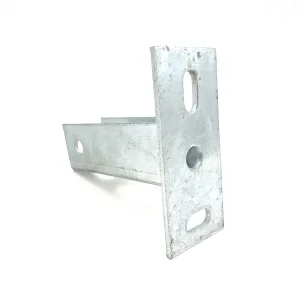
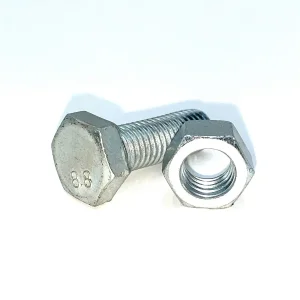
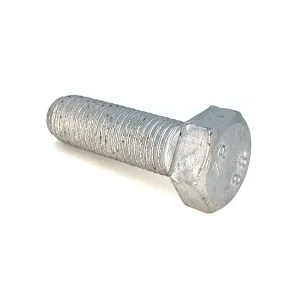
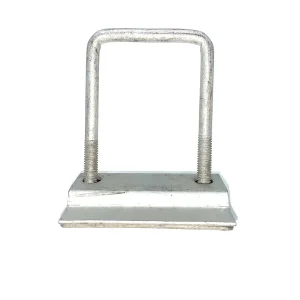
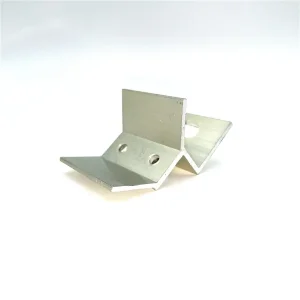
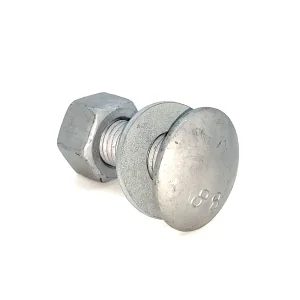
Specialized Mounting Clamps, Structural Hex Bolts & Racking Hardware
High-strength structural connections designed to integrate seamlessly with chemical anchor foundation studs, ensuring structural integrity across large-scale renewable power installations.
Request Complete Technical Specifications & Sourcing Proposal
Collaborate directly with Handan Youlong Fastener's structural engineering team. Submit your project design criteria, embedment calculations, material standards, and target delivery schedule for rapid technical review and direct factory pricing.