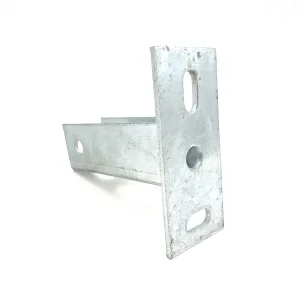
Featured Industrial Mounting & Chemical Anchor Components
Engineered in Yongnian District, China's Fastener Capital. High-tensile, corrosion-resistant anchor systems tested rigorously for extreme seismic and wind load envelopes.
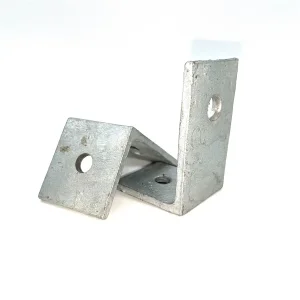
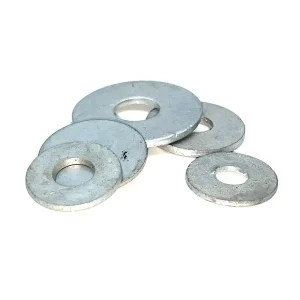
Best High-Quality Stainless Steel Flat Washers from China Suppliers | Durable Factory Direct 304/316 Washers Product
Explore Product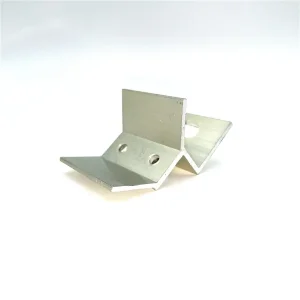
Buy China Suppliers Factory Trapezoidal Metal Roof Clamp for Solar PV Installation - High-Strength, No Drilling Required
Explore Product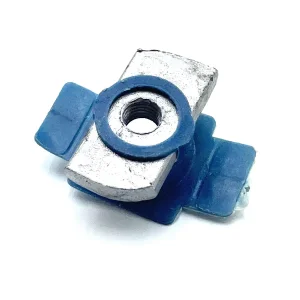
Buy Ergonomic Plastic Wing Nut - China Suppliers Factory for Tool-Free Fastening in Machinery and Furniture
Explore Product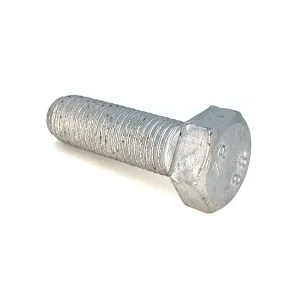
Buy Heavy-Duty Hot-Dip Galvanized Hex Bolts from China Suppliers – Reliable Factory for Outdoor Engineering
Explore Product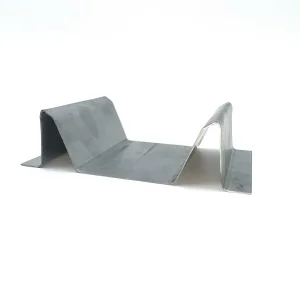
Buy Durable M-Type Aluminum Water Channel for Solar PV Systems - High-Quality Solutions Manufacturer
Explore Product
Buy High-Quality Stainless Steel Flat Washer from China Suppliers - Durable Factory Direct 304/316 Washers
Explore Product
Buy Ergonomic Plastic Wing Nut from China Suppliers - Durable, Hand-Tightenable Design for Factory Use
Explore ProductEngineering Chemical Anchorage for Megawatt-Scale Infrastructure
As civil infrastructure expands into challenging geotechnical terrains and high-vibration renewable zones, the demand for stress-free anchor installation has elevated chemical anchoring from an auxiliary fastening tactic to a mission-critical structural connection protocol.
Stress-Free Load Dispersion
Unlike standard mechanical expansion bolts that exert massive radial bursting forces on the concrete substrate, chemical anchor studs transfer shear and tensile stresses uniformly along the entire bonded depth via thermosetting resin polymers.
- Minimizes concrete edge cracking risk
- Permits ultra-close anchor spacing (critical in dense arrays)
- Eliminates cyclic expansion decay under fatigue
High-Seismic Dynamic Resistance
Modern utility-scale solar farms and coastal transport bridges operate under aggressive dynamic wind loads and seismic shifts. Pure epoxy formulations provide continuous bonding even in cracked concrete conditions under seismic category C1/C2 requirements.
- Certified for sustained cyclic loads
- Resistant to concrete micro-fissure expansion
- Zero creep under sustained tensile shear tension
Environmental Sealing Protection
Drill holes secured with injectable mortar or chemical glass capsules become 100% airtight and watertight. This prevents ambient moisture, acid rain, chlorides, and subterranean chemicals from entering the concrete borehole and accelerating internal rebar decay.
- Impermeable seal against salt spray
- Prevents galvanic degradation inside foundation cores
- Protects deep structural slabs for 50+ year lifespans
Handan Youlong Fastener: Precision Manufacturing from China's Fastener Capital
Headquartered in Yongnian District, Handan City, Hebei Province, Handan Youlong Fastener Co., Ltd. anchors international industrial supply chains. Combining comprehensive cold-forging, stamping, CNC machining, and automated hot-dip galvanizing lines, we fulfill strict international engineering criteria with verified quality assurance.
Metallurgical Integrity
Every threaded chemical stud is forged from certified carbon steel (Grades 5.8, 8.8, 10.9) or austenitic stainless steel (SS304/A2-70, SS316/A4-80). Raw material batches undergo spectrometer analysis before cold heading.
Certified Salt-Spray Endurance
Our fasteners endure rigorous neutral salt spray (NSS) chamber testing exceeding 1,000+ hours. Hot-dip galvanized finishes deliver coating thickness compliant with ASTM A153 and ISO 1461 standards.
Full Traceability & MTR
We supply EN 10204 3.1 Mill Test Reports (MTR) with heat numbers, mechanical yield-to-tensile load tests, and torque shear verification for every production run leaving Handan to global project sites.
Chemical Adhesive Selection Matrix for Structural Engineers
Anchorage security relies on the adhesive matrix that bonds the fastener to the substrate. Below is an engineering evaluation across base chemistry, load dynamics, temperature profiles, and environmental exposure.
| Adhesive Chemistry | Bond Strength & Load Class | Cure Time & Gel Window | Substrate Conditions | Ideal Industrial Application |
|---|---|---|---|---|
|
Pure Epoxy (1:1 / 3:1) High Structural |
Highest ultimate shear & tensile capacity. Extremely low shrinkage factor (<0.05%). | Slow cure (12 - 24 hrs). Extended gel window ideal for deep embedments. | Dry, water-saturated, and diamond-cored wet boreholes; cracked & uncracked concrete. | Heavy plant machinery, post-installed rebar connections, high-seismic C2 anchor foundations. |
|
Vinyl Ester (Styrene-Free) Fast Cure Dynamic |
High chemical resistance; superior performance in acidic and alkaline environments. | Rapid cure (30 - 60 mins). Short working gel time for efficient workflow. | Solid concrete, solid masonry, damp boreholes. Low odor for indoor installation. | Industrial chemical plants, marine splash zones, rapid-installation curtain wall brackets. |
|
Hybrid Polyester / Acrylate Economic Utility |
Medium load class; optimized for general commercial building services. | Ultra-rapid cure (15 - 30 mins depending on ambient temp). | Dry masonry, hollow brick (with sleeve), solid structural concrete. | Solar PV rooftop ballast fixing, HVAC cable tray suspension, structural stair handrails. |
Localized Engineering Support & Global Compliance Assurance
Navigating structural fastener compliance requires adherence to local building codes, customs clearance standards, and environmental certifications. Handan Youlong provides direct documentation support to prevent jobsite delays.
International Building Codes
Our anchor studs are manufactured to align with European Assessment Document (EAD 330499) standards, ACI 318 Chapter 17 (American Concrete Institute), and ISO 898-1 mechanical classifications, streamlining submission to lead engineering consultants.
Export Packaging & Sea Freight
Export shipments feature moisture-sealed palletization, fumigated hardwood skids, inner anti-rust VCI film bags, and heavy-gauge carton protection to safeguard threads from impact damage across international ocean routes.
Complete Audit Dossiers
Factory audits are simplified with access to verified ISO 9001 quality management procedures, third-party tensile pull-out verification sheets, dimensional tolerance inspection charts, and raw material heat certificates.
Localized Application Scenarios & Load Environments
Chemical anchor fastener bolts deliver stability across critical sectors where structural integrity cannot be compromised.
Utility-Scale PV Racking
Ground-mount concrete ballast blocks and commercial rooftop foundations secured with M12–M20 chemical studs resist high wind uplift forces without cracking the concrete blocks.
High-Speed Rail & Subways
Fastening sound barriers, overhead catenary system (OCS) masts, and trackbed switches subject to continuous high-frequency dynamic vibrations and air-pressure shockwaves.
Heavy Machinery Mounts
Anchoring automated stamping presses, turbine beds, and robotic assembly bases where sustained cyclic resonance would loosen standard mechanical friction anchors.
Structural Curtain Walls
Connecting exterior architectural glass, aluminum mullions, and stone panels to building slab edges, where limited edge clearance excludes mechanical anchors.
Technological Roadmap: The Future of Chemical Anchorage
Anchorage systems are evolving alongside advanced material science, automated jobsite tools, and strict environmental standards.
Zero-VOC & Bio-Sourced Polymers
Transitioning toward LEED-accredited styrene-free formulas and bio-resin hardeners that eliminate harmful jobsite emissions in confined spaces without sacrificing ultimate pull-out strength.
Nano-Composite Zinc-Nickel Coating
Developing micro-thin zinc-nickel composite plating that achieves 2,500+ hours in salt spray chambers while matching standard internal thread tolerances, eliminating manual re-tapping after hot-dip coating.
RFID Sensor-Embedded Studs
Integrating miniature RFID strain sensors into critical structural anchors, enabling non-destructive ultrasonic torque verification throughout a project's decades-long service life.
Frequently Asked Technical Questions
Clear answers to common questions about selecting, calculating, installing, and procuring chemical anchor bolts.
What is the key difference between chemical and mechanical anchor bolts?
Mechanical anchors generate holding force through outward friction against the borehole wall, creating high internal radial bursting stresses. Chemical anchors rely on adhesive bonding between the threaded rod and the concrete. This bond distributes loads uniformly across the entire embedment depth, allowing closer edge distances and tighter hole spacing without splitting the concrete.
Why is borehole cleaning considered critical for chemical anchoring?
Residual concrete dust forms a barrier between the adhesive resin and the aggregate walls. If a borehole is not cleaned (typically following the "2x Blow, 2x Brush, 2x Blow" sequence), the anchor's ultimate tensile pull-out strength can drop by up to 50–70%, regardless of resin grade or steel specification.
Can chemical anchors be installed in diamond-cored or water-saturated holes?
Yes, but material choice is vital. Standard vinylester adhesives can suffer reduced bond strength in smooth or damp core-drilled holes. For wet or flooded conditions, pure epoxy adhesives designed for submerged curing are recommended, and diamond-cored holes should be roughened with an approved roughening tool.
What steel grades should be specified for coastal outdoor installations?
For marine, coastal, or industrial zones classified under ISO 9223 as C4 or C5 corrosive environments, use marine-grade SS316 (A4-70 / A4-80) austenitic stainless steel. For inland C1 to C3 applications, hot-dip galvanized carbon steel (Class 8.8) with an average zinc coating of 45–55 microns provides solid long-term protection.
How does ambient temperature impact the chemical anchor curing cycle?
Curing speed depends on ambient temperature. In cold environments below 0°C (32°F), standard epoxies slow down significantly, requiring sub-zero formulations or heated cartridges. In warm climates above 35°C (95°F), resin gel time shortens considerably, requiring smaller batch setups to avoid premature setting during stud placement.
Can Handan Youlong Fastener manufacture custom-dimensioned anchor studs?
Yes. Backed by our automated cold-heading and CNC workshops in Handan, we produce custom anchor rods from M8 to M64, featuring special chisel tips, double-chamfered profiles, depth markers, and custom drive heads in carbon steel, 304, 316, and high-strength alloy steels.
Heavy Structural Fasteners & Mounting Brackets
Direct factory distribution from Yongnian industrial cluster. High-strength bolts, rail profiles, base connectors, and specialized structural assemblies ready for phased project shipments.
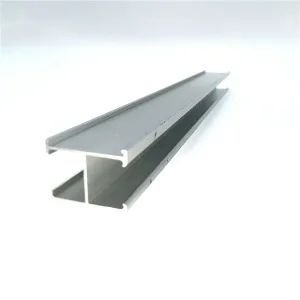
Buy Premium 3040 Aluminum Alloy Guide Rail for Solar Panels - Reliable China Suppliers and Factory Solutions
Explore Product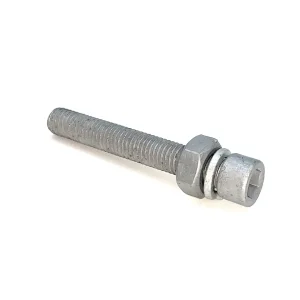
China China Suppliers Factory High-Strength Hex Socket Bolt with Cylindrical Head & Internal Hex Drive
Explore Product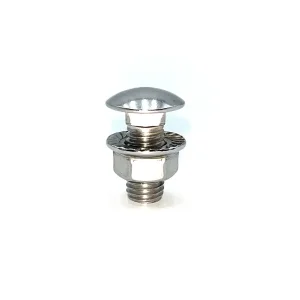
Buy High-Quality Stainless Steel Carriage Bolt Suppliers in China - Durable Fasteners for Construction
Explore Product
China China Suppliers Factory Trapezoidal Metal Roof Clamp for Solar PV Installation – High-Strength No-Drill
Explore Product
Best High-Strength Hex Socket Bolt - Durable Carbon Steel Fasteners from China Suppliers and Factory
Explore Product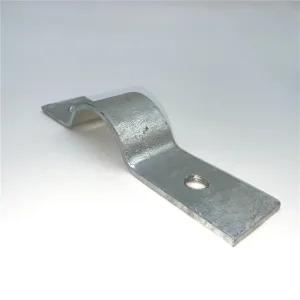
China China Suppliers Factory Heavy-Duty Stainless Steel Solar PV Mounting Hoop for Round Pipe
Explore Product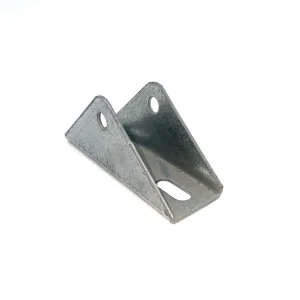
China China Factory Premium Three-Hole Mounting Connector for Solar PV Systems - Top Suppliers
Explore Product